
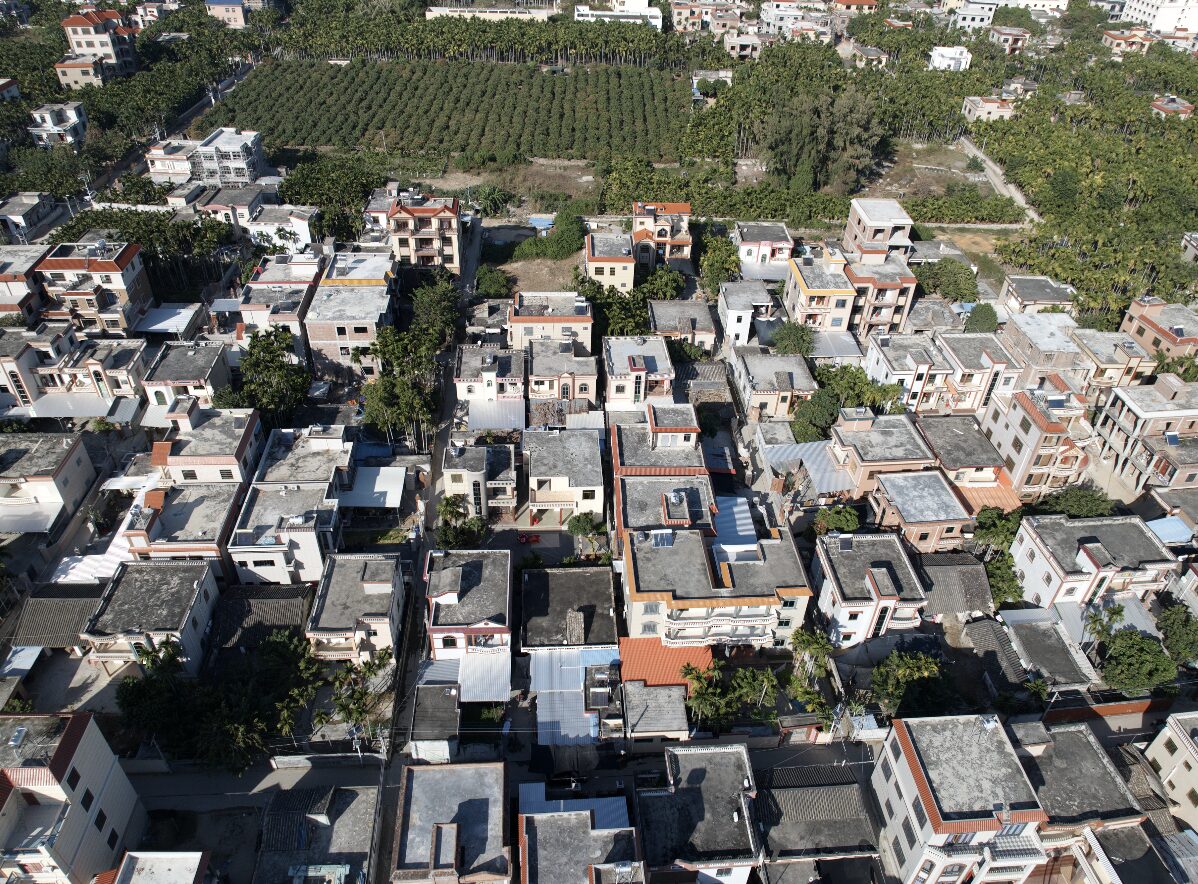
Everyone flies to Hainan for the beach. Turn inland and the island is rice terraces, rubber plantations and Li and Miao villages in forested mountains — and almost nobody goes.
Hainan’s coast gets essentially all of the visitors. The interior — mountainous, forested, and the homeland of the island’s indigenous population — gets almost none, and it’s a twenty-minute drive from the hotels.
Who lives inland
The Li are Hainan’s indigenous people, on the island for something like three thousand years, speaking a language in the Tai–Kadai family — related to Thai and Zhuang rather than to Chinese. There are around 1.5 million of them, concentrated in the central and southern hills. Miao communities arrived later and hold ground alongside them.
Two Li traditions are worth knowing about:
Brocade weaving. Li textile technique predates cotton cultivation in China and is a recognised piece of intangible cultural heritage. The patterns are geometric, dense and clan-specific, woven on a body-tensioned loom.
Boat-shaped houses. The traditional dwelling is a low thatched structure with a rounded roof reaching nearly to the ground, resembling an upturned hull. Very few remain in use; a handful of villages have preserved examples, and they’re genuinely worth the detour.
The agriculture
The inland economy is plantation and paddy, and it’s visually distinctive:
- Rubber — hillsides of tapped trees, each with a spiral cut and a cup. Tapping happens before dawn.
- Betel nut — tall thin palms in rows, the nut chewed across the island and a significant cash crop
- Coconut — everywhere, and in everything you eat
- Rice — terraced in the valleys, two or three crops a year in this climate
- Mango, pepper, banana, pineapple
Where to go
Wuzhishan (Five Finger Mountain) is the island’s high point and the centre of the interior — rainforest, waterfalls, a climbable peak, and Li villages in the surrounding valleys. The town of the same name is the practical base.
Baisha and Qiongzhong counties are the least-visited parts of the island: tea, rubber, hot springs and mountain road.
The Wanquan river through Qionghai can be run by raft or bamboo pole, and the villages along it are a good day.
Anywhere off the ring road, honestly. The island is small, the roads are good, and the county lanes go through country nobody photographs.
Practical notes
Getting around: the high-speed rail rings the coast and doesn’t help inland. Hire a car — you’ll need a Chinese licence — or a motorbike, which is what a lot of people do; see Hainan by motorbike. Buses run between county towns and stop everywhere.
Where to sleep: county-town hotels and an increasing number of village guesthouses. Wuzhishan has the best selection.
When: November to April, dry season. Summer is wet and the mountain roads suffer; typhoons hit between August and October.
Eating inland: different from the coast — mountain vegetables, free-range chicken, river fish, wild honey, and rice wine. Excellent, and cheap.
Being a good visitor: ask before photographing people and houses, buy brocade from the weavers rather than a gift shop, and pay the asking price. Our rural China guide covers the general etiquette.
For more of the same island: village life in Hainan and the floating village at Lingshui.
- #hainan
- #rural china
- #li people
- #wuzhishan
- #plantations