
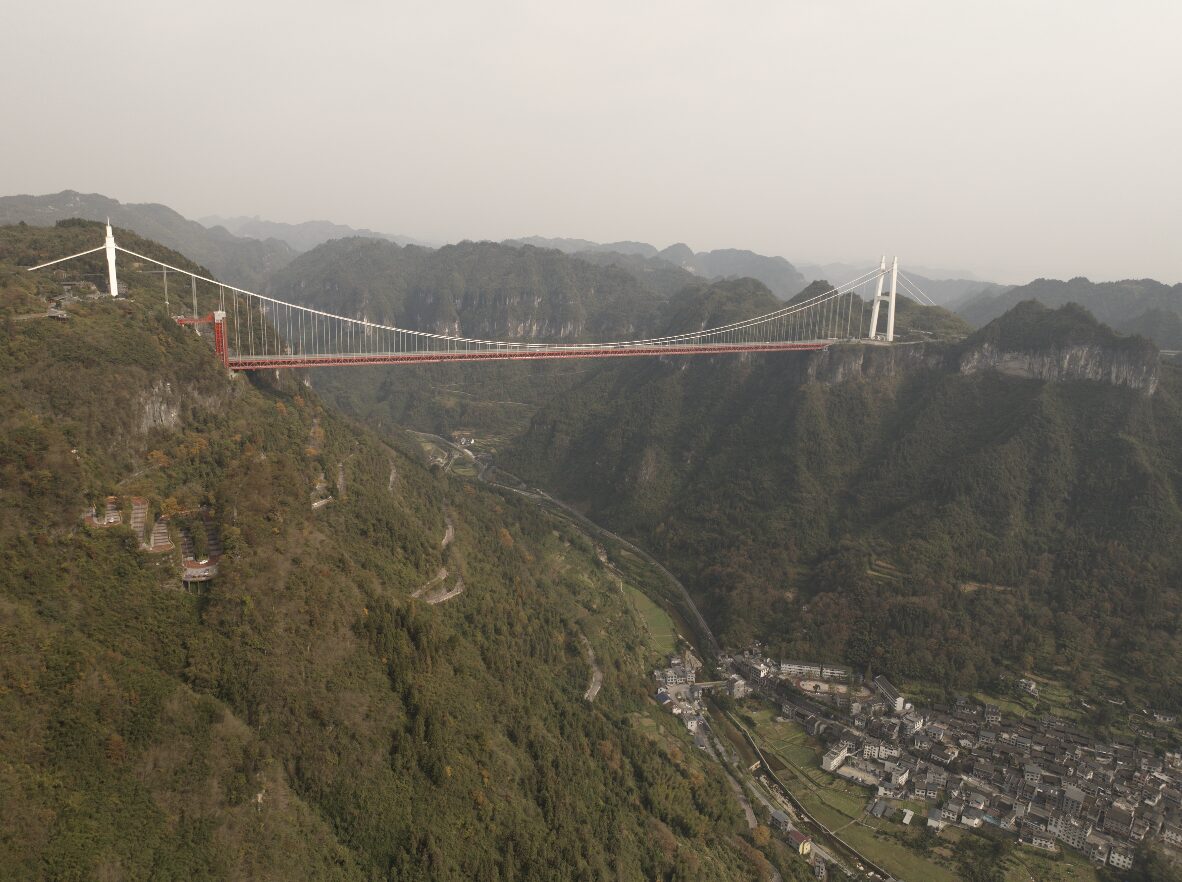
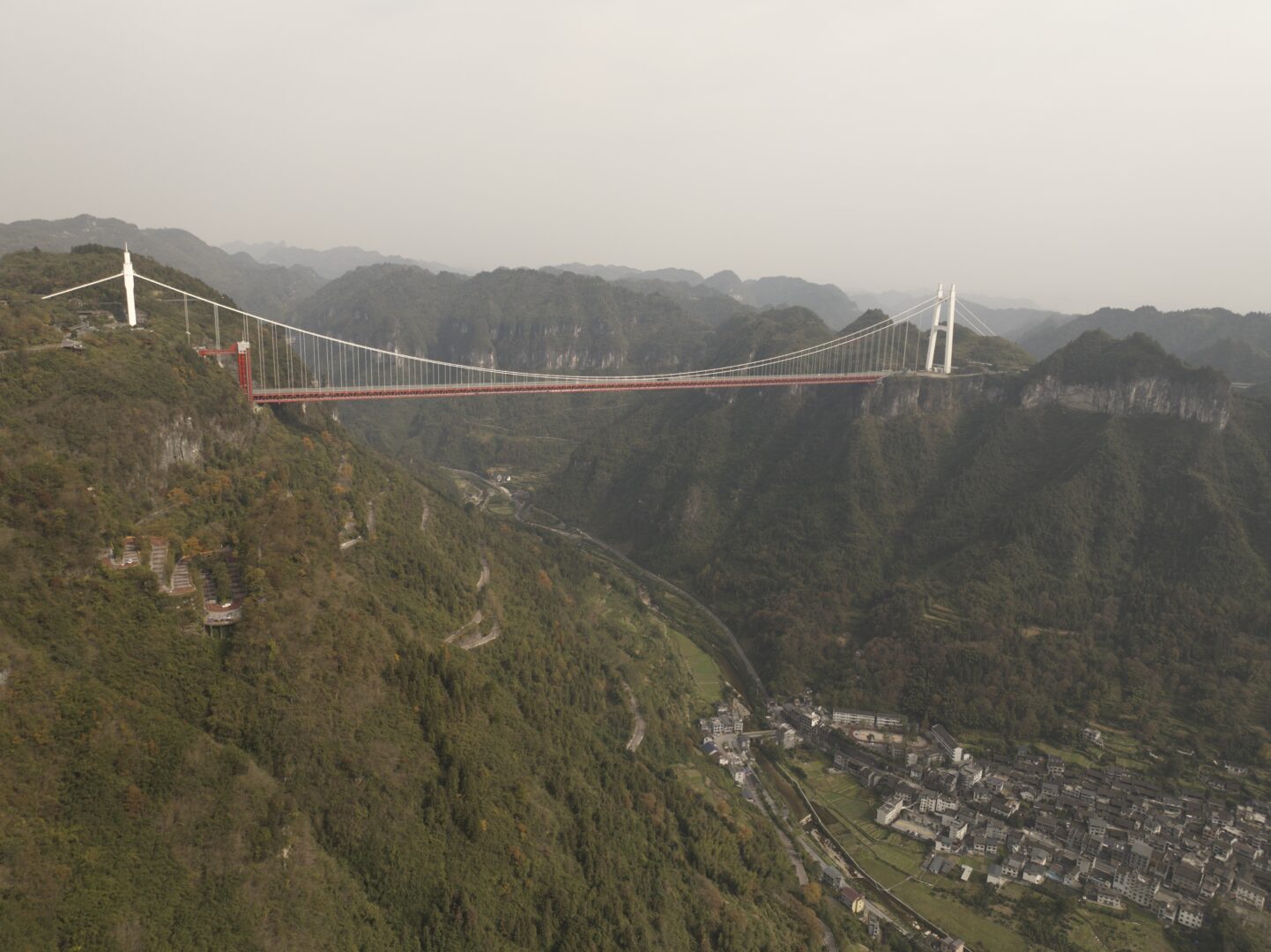
The Aizhai bridge spans 1,176 metres across a canyon in western Hunan with its deck 336 metres above the floor, and both ends disappear straight into tunnels. It cut a four-hour drive to under one.
China builds a lot of impressive bridges. This one is worth stopping for because of the geometry: the Aizhai bridge in western Hunan is a suspension bridge whose deck runs from one tunnel mouth directly into another, across a canyon, with nothing on either bank to build an approach road on.
The numbers, completed March 2012:
- Main span: 1,176 metres
- Deck height above the canyon floor: 336 metres
- A steel truss girder roughly 1,000 metres long, weighing around 8,000 tonnes
- Main cables 85 cm in diameter, each made of 169 strands
At the time it opened it was the highest and longest tunnel-to-tunnel bridge in the world.
How they built it
The site allowed nothing conventional. No room for staging areas, no bank to assemble a girder on, and a 300-metre drop underneath.
Two solutions stand out. The girder sections were delivered using a track-cable sliding method — a first — hauling them out along the cables rather than lifting them from below or cantilevering out from the towers. And carbon-fibre prestressed cables were used in the rock anchorages, which is unusual for a structure at this scale.
The result is a bridge that, from the viewing area, looks less like an engineering project than like a line drawn between two holes in a mountainside.
What it changed
The bridge carries the Changsha–Chongqing expressway through western Hunan, and the practical effect was immediate: the drive between Jishou and Chadong dropped from around four hours to under one.
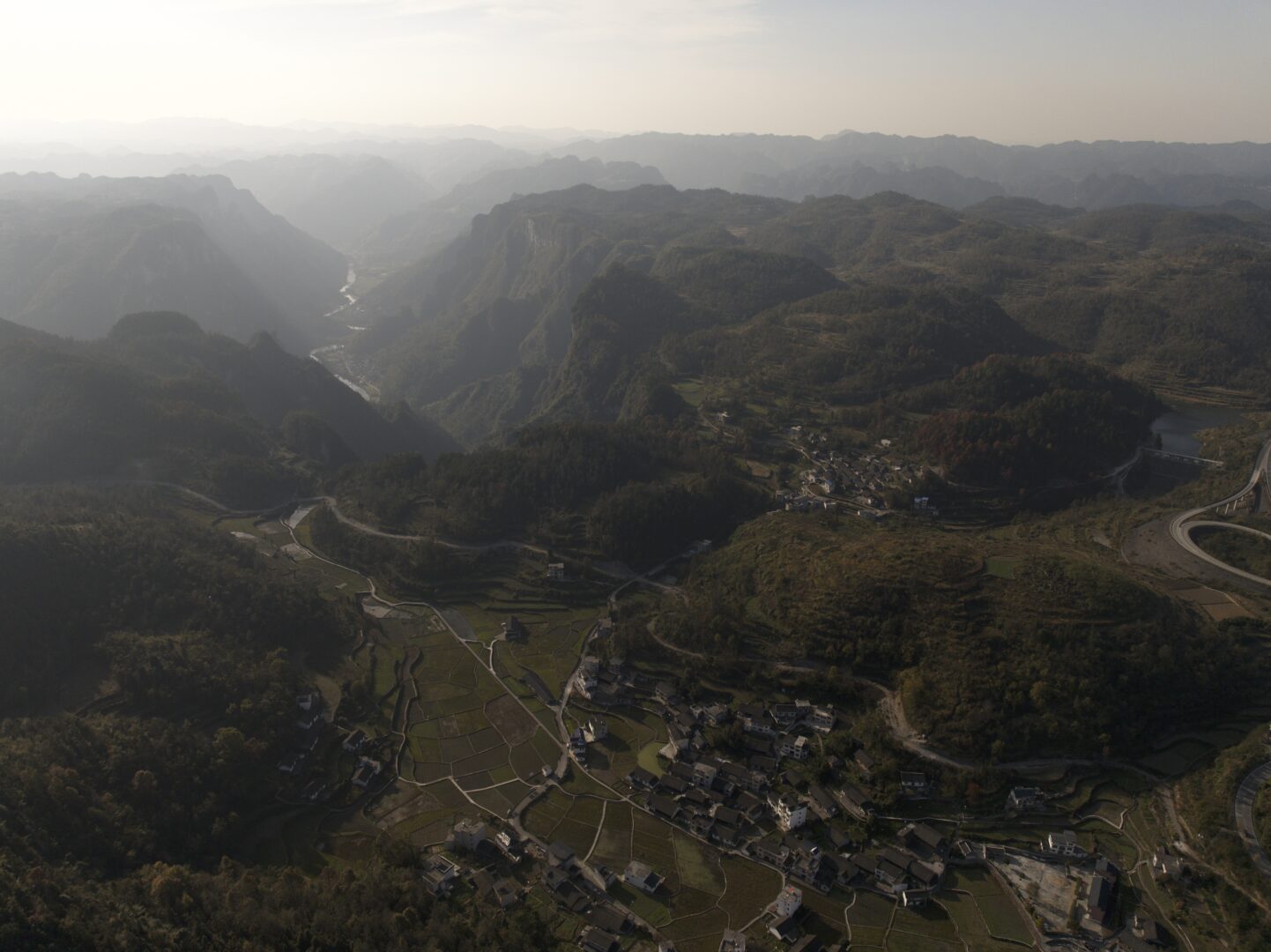
That’s the point of the whole exercise. This is Xiangxi — western Hunan — a mountainous, historically poor, largely Miao and Tujia region where terrain, not distance, was the constraint on everything. A canyon four hours wide by road is an economic wall.
Whatever you think about infrastructure-led development, standing under this bridge is the clearest possible statement of the argument for it.
Seeing it
There’s a viewing walkway suspended beneath the deck, which is the reason to make the stop rather than just driving over. You walk out under the roadway with the canyon dropping away below and the cables overhead, and the sense of scale is entirely different from the top.
There’s also a service area with viewpoints at deck level, and paths on the canyon rim.
Nearby
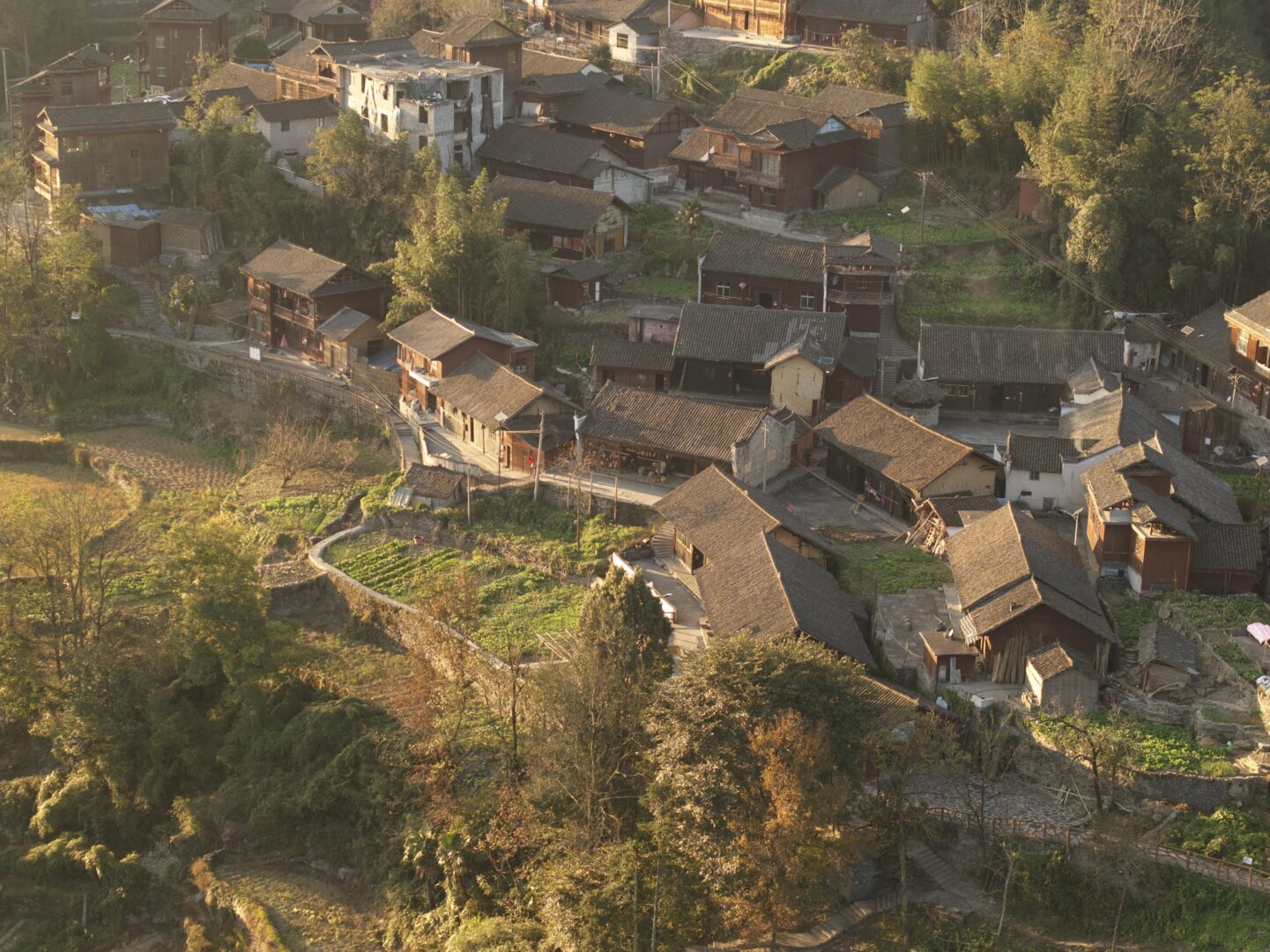
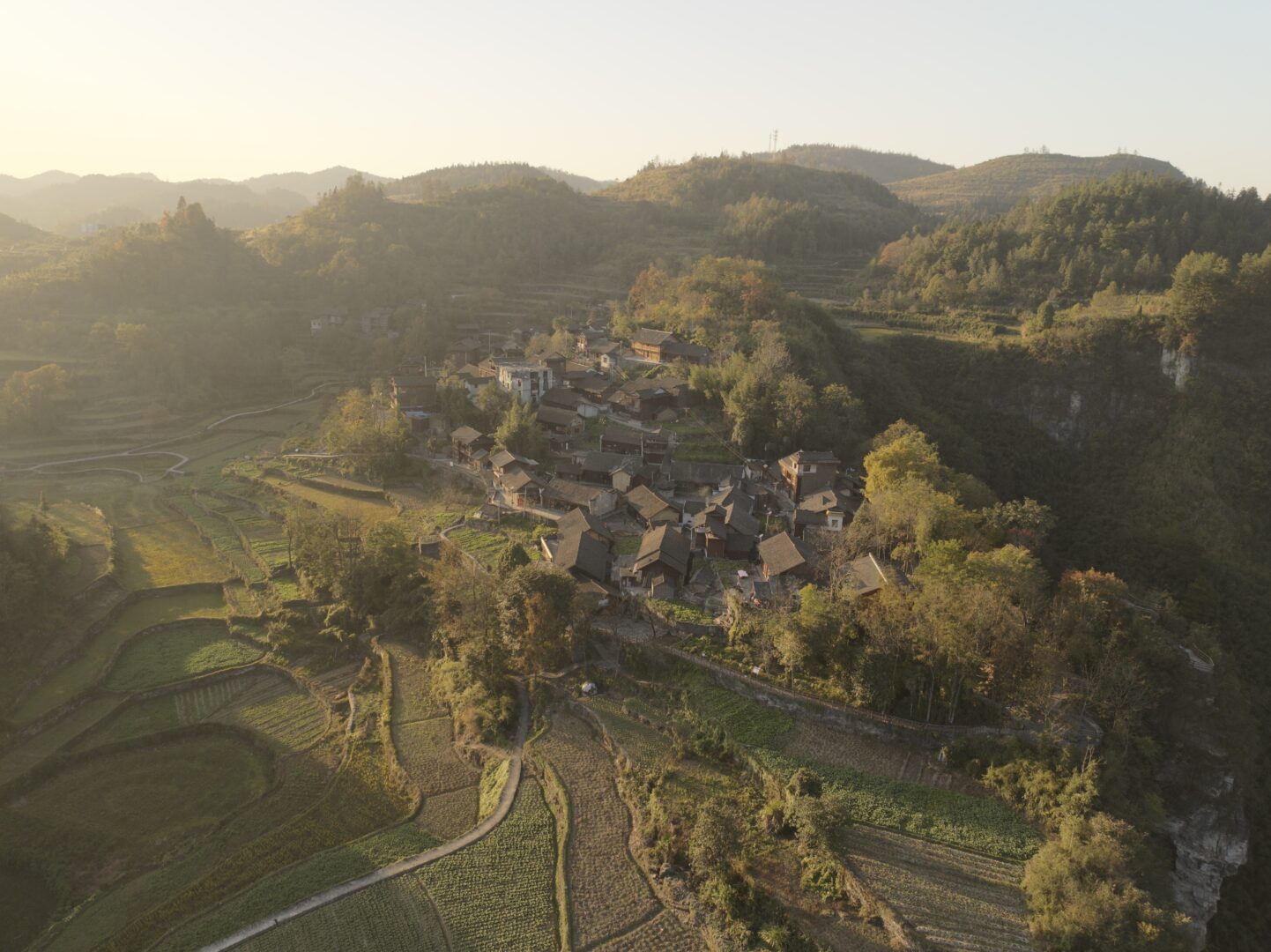
Dehang Miao village sits in the canyon system just below — waterfalls, stone houses, terraced fields, and a walking route through the gorge. The contrast between the village and the bridge overhead is the best thing in the area, and worth half a day.
Jishou is the local city. Zhangjiajie is a couple of hours north, and Fenghuang old town about the same distance south.
Practical notes
Getting there: on the G65 expressway between Jishou and Chadong. Rail to Jishou, then local transport, or stop here on the drive between Zhangjiajie and Fenghuang.
When: any time. Autumn gives the clearest views into the canyon; summer mist has its own appeal and can hide the whole thing.
More of the region in western Hunan’s countryside.
- #hunan
- #aizhai
- #bridge
- #engineering
- #xiangxi