
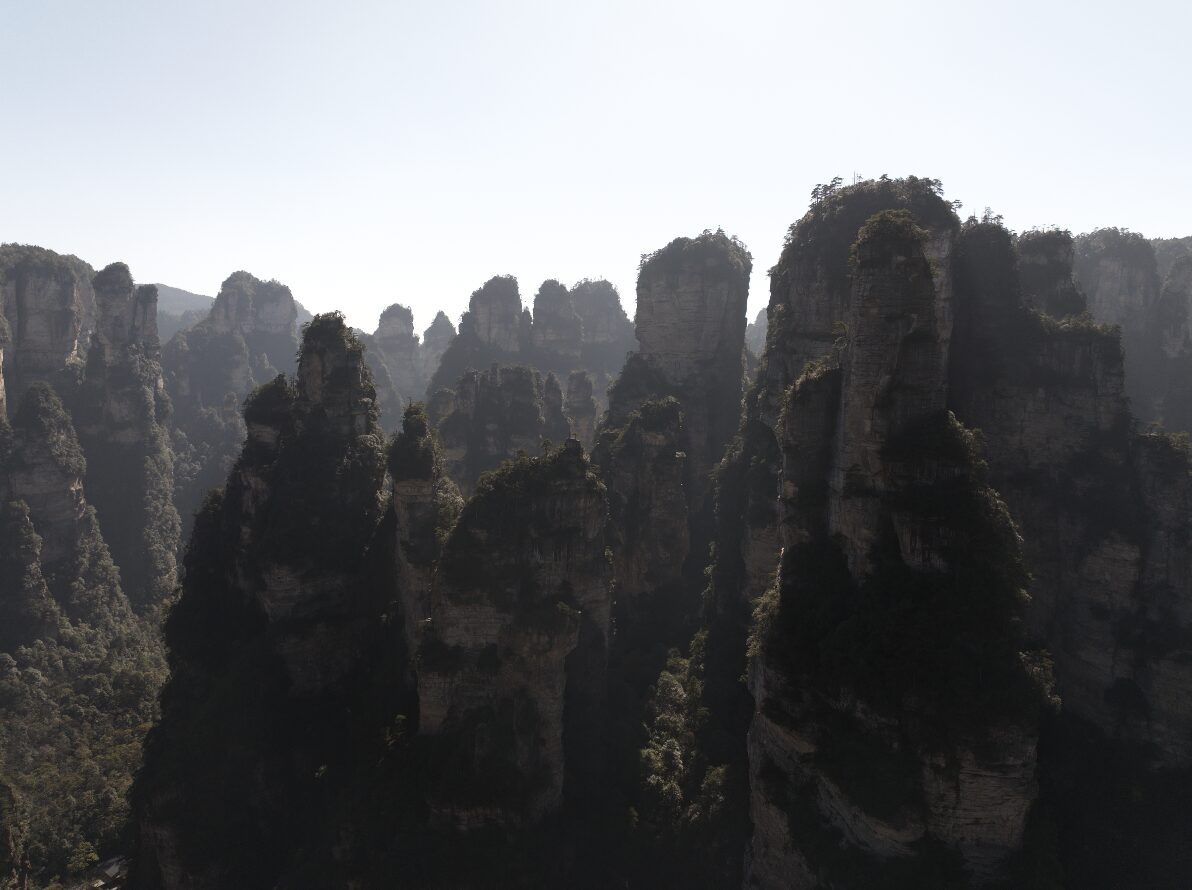
Zhangjiajie's quartz sandstone pillars are the real version of Avatar's floating mountains. It's also one of the most heavily engineered landscapes in China — lifts, cable cars and glass walkways included.
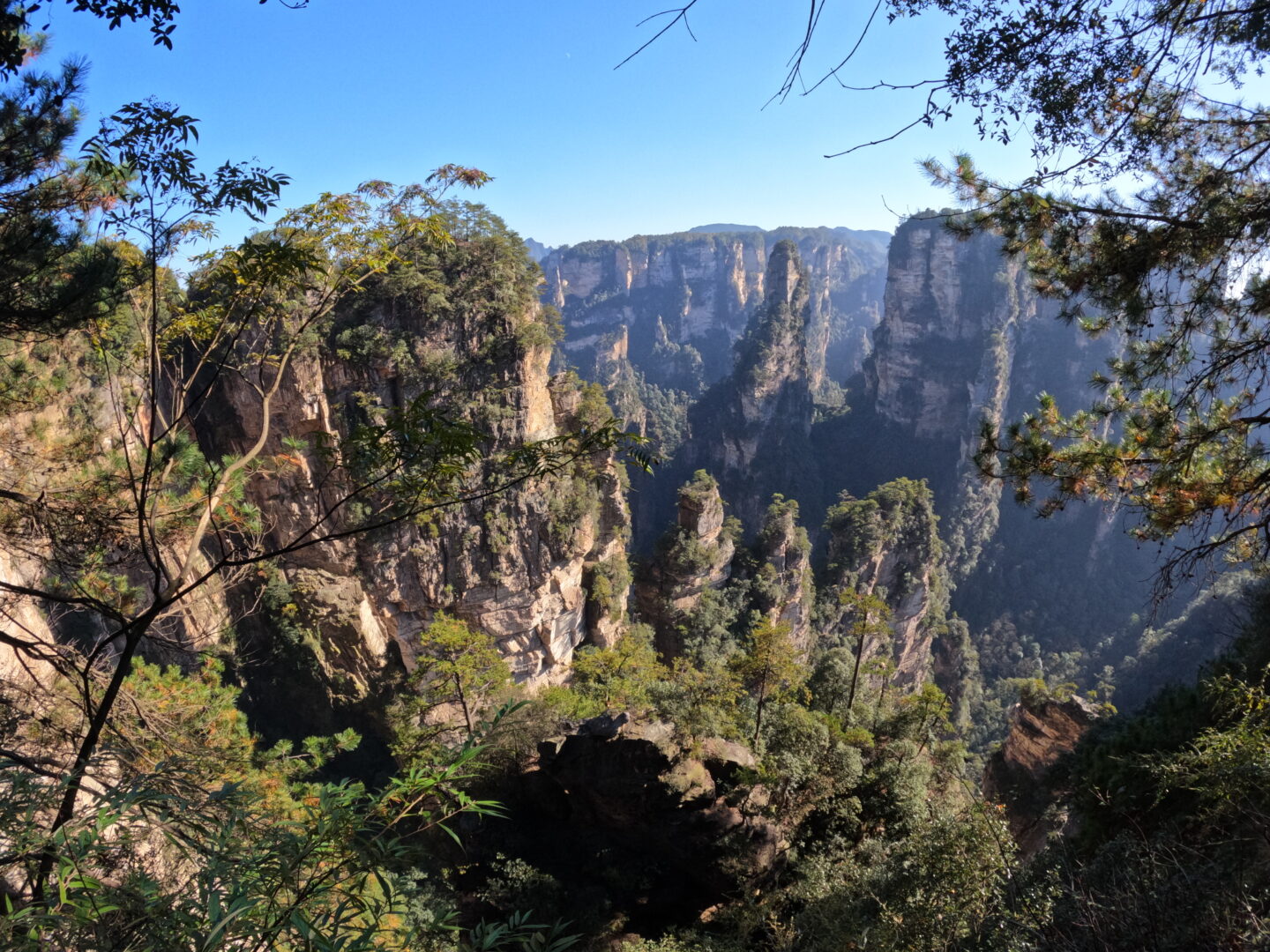
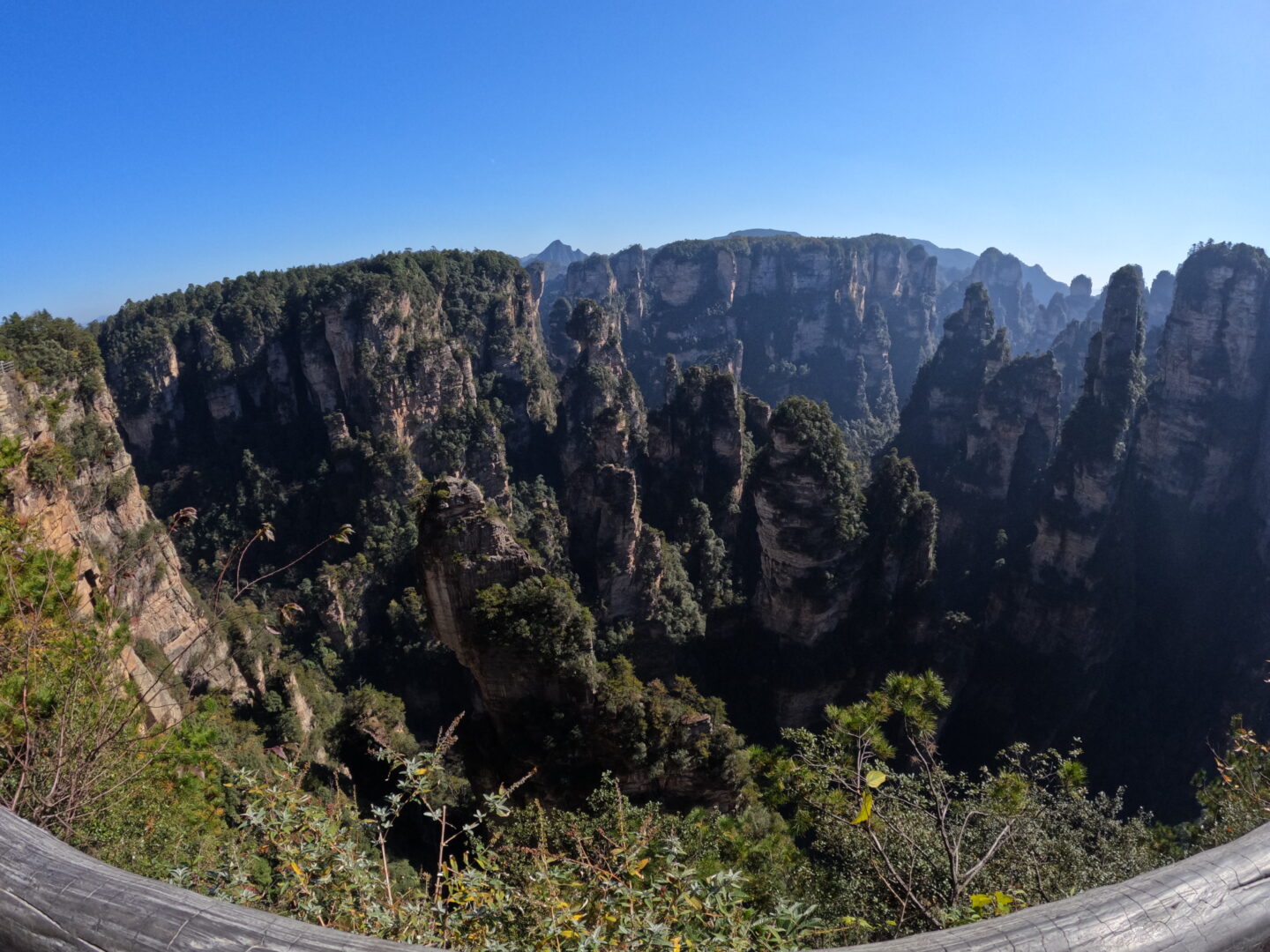
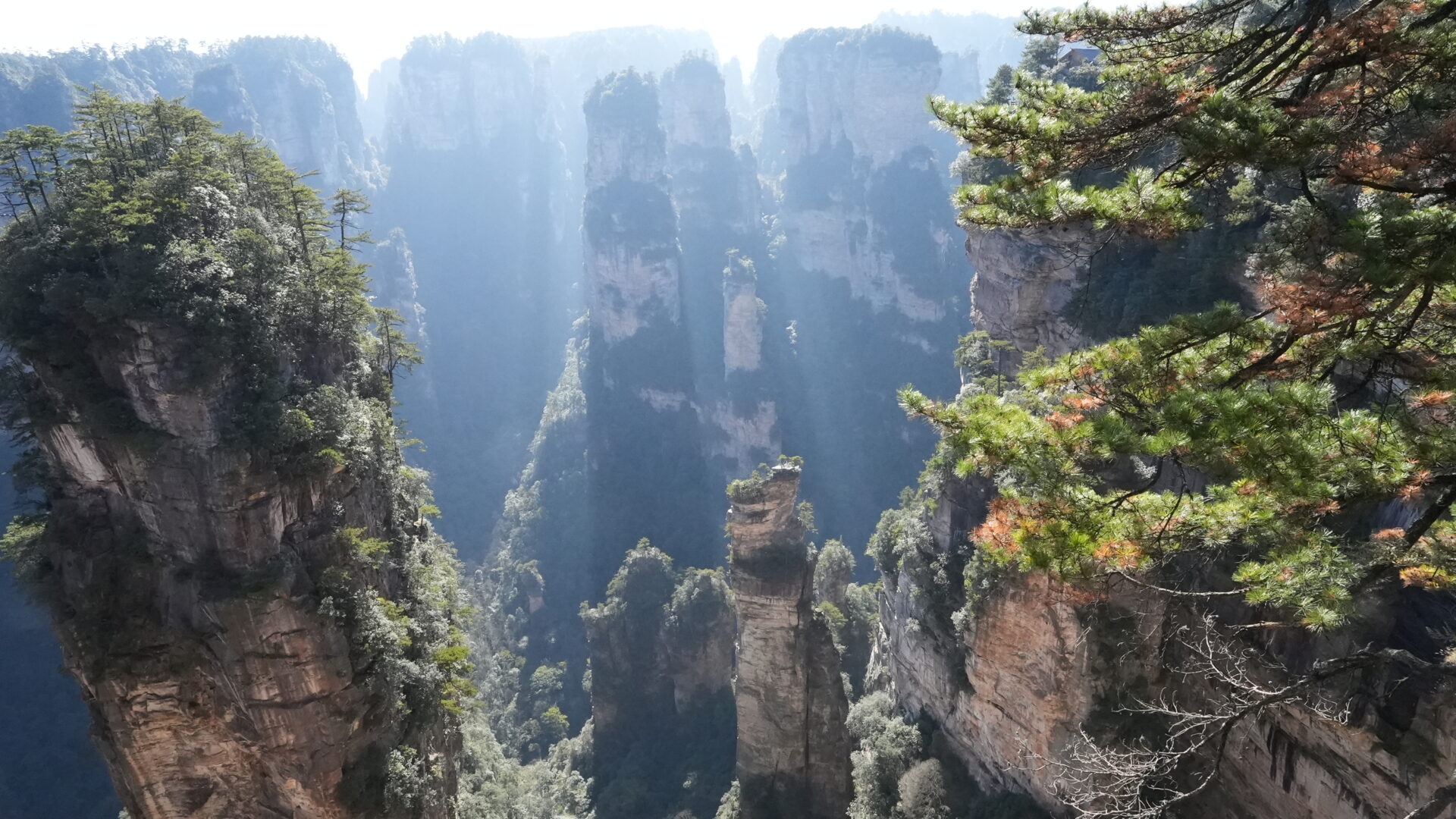
Around three thousand quartz sandstone pillars, many over 200 metres tall, standing in dense subtropical forest, with cloud regularly filling the gaps between them so the tops appear to float. That’s Zhangjiajie, and the resemblance to Avatar’s Hallelujah Mountains is not coincidental — the production team visited, and one column has since been renamed accordingly.
The geology: horizontally bedded quartz sandstone, uplifted, then eroded along vertical joints by water rather than dissolved like karst. Different rock, different process, and a genuinely different look — sheer-sided columns with trees on top.
The area was inscribed as Wulingyuan by UNESCO in 1992.
Three separate places
People conflate them and then wonder why the tickets don’t work. They are distinct.
Zhangjiajie National Forest Park (Wulingyuan)
The pillars. Inside it:
- Yuanjiajie — the Avatar viewpoints and the natural bridge
- Tianzi Mountain — the widest panorama of the pillar field
- Golden Whip Stream — a flat, easy valley walk along a creek between the columns, and the best part of the park for anybody who wants to look up rather than down
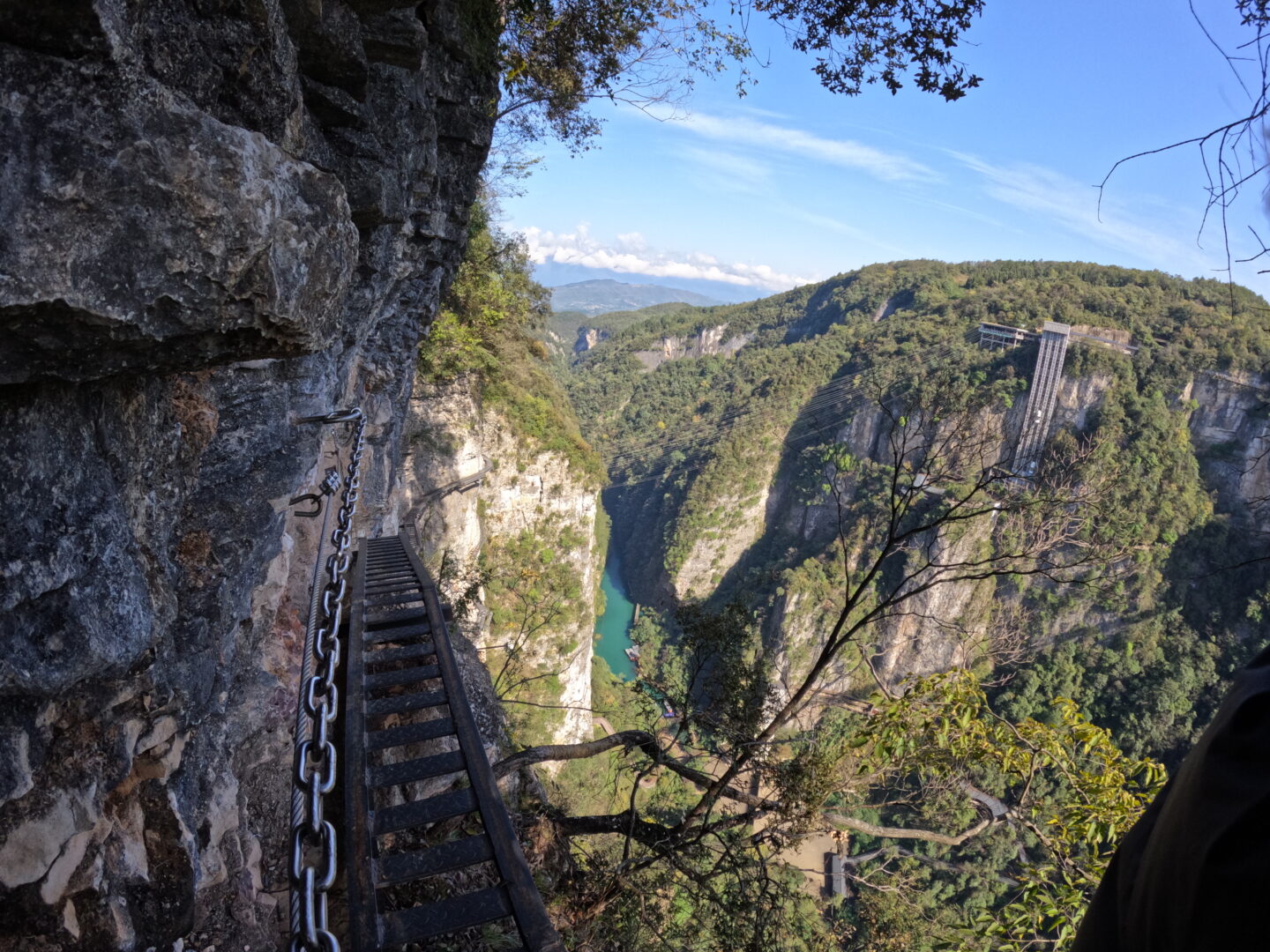
- The Bailong elevator — a glass lift bolted to a 326-metre cliff, the tallest outdoor lift in the world. Queues can be an hour; the walk is an alternative.
Two or three days does it properly. The ticket is multi-day and includes the shuttle buses.
Tianmen Mountain
A separate mountain and a separate ticket, 30 km away by the city. The longest passenger cable car in the world climbs to it, past the 99-bend road, and at the top there’s a glass skywalk cantilevered around the cliff face, plus the vast natural arch of Heaven’s Gate and 999 steps up to it.
Zhangjiajie Grand Canyon
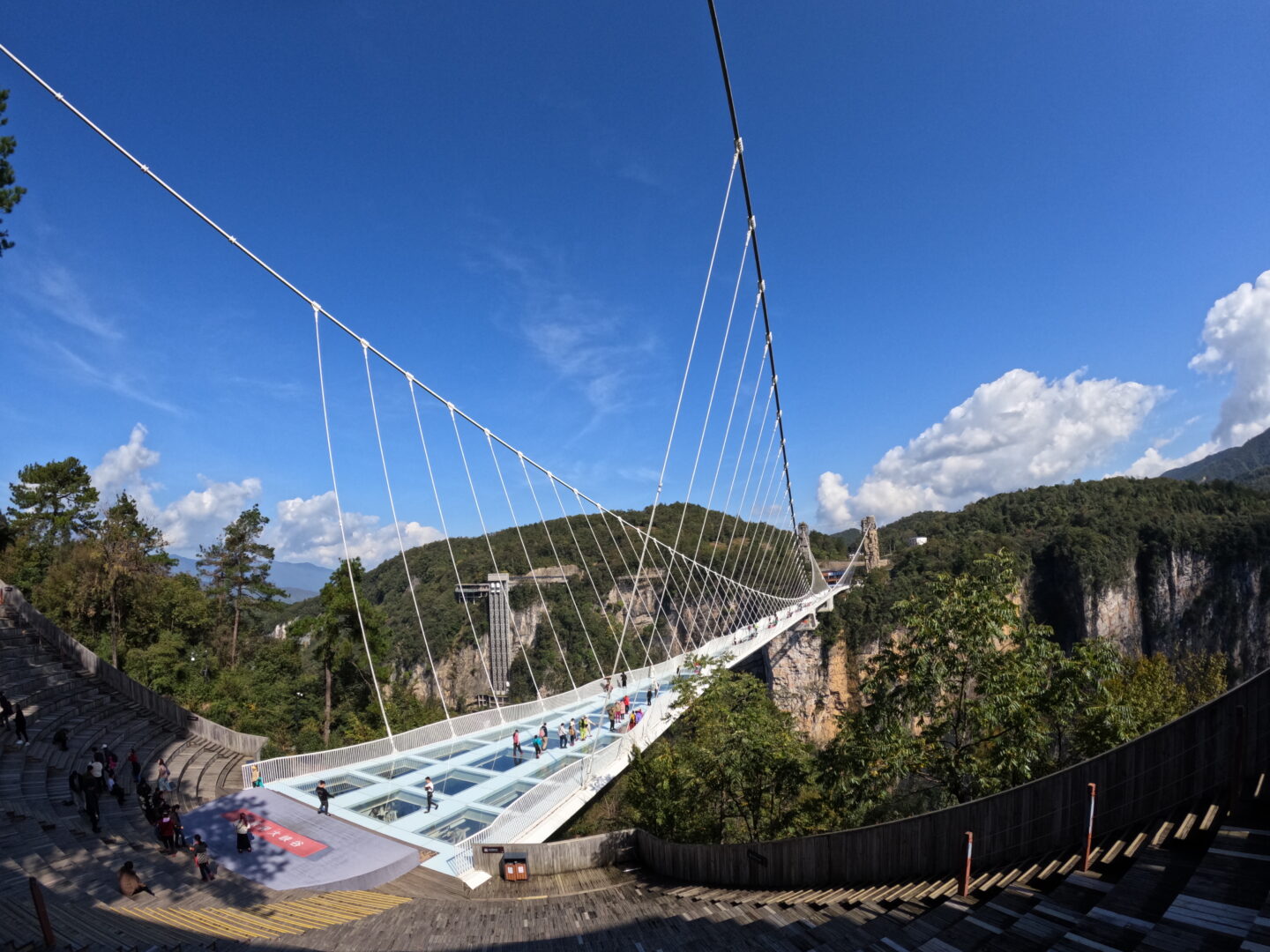
Another separate site, with the glass-bottomed bridge — 430 metres long, 300 metres above the canyon floor. Timed entry, and genuinely unnerving.
The honest part
This landscape is spectacular and it is also thoroughly built. Lifts, cable cars, escalators inside the mountain, paved paths, shuttle networks, and in high season a great many people on all of them.
If that’s not what you’re after:
- Go in the low season. March, or November to early December. Cold, misty, atmospheric and dramatically less crowded.
- Start at 7am. The gap between opening and the first coaches is where the good hours are.
- Walk the valleys rather than queueing for the lifts. Golden Whip Stream in the early morning is the best experience in the park and the least sought-after.
- Avoid national holidays completely.
Tujia country
This is Tujia territory — one of China’s larger ethnic minorities, concentrated in the Hunan–Hubei–Guizhou mountains, known for stilt houses and the hand-waving dance. See our ethnic groups guide.
Fenghuang old town is a couple of hours south: a Ming and Qing river town of stilted houses on the Tuo river, beautiful and very commercial. Go and stay a night, and accept what it is.
Practical notes
Getting there: Zhangjiajie has an airport and a high-speed rail station, with direct trains from Changsha, Guangzhou and Wuhan.
Where to sleep: Wulingyuan village at the park gate, rather than Zhangjiajie city — it saves an hour each way and lets you make the 7am start.
When: April to June and September to November. Summer is hot, wet and busiest; winter is cold with occasional snow on the pillars, which is a rare and excellent sight.
Nearby: the Aizhai bridge and the western Hunan countryside.
- #hunan
- #zhangjiajie
- #unesco
- #hiking
- #tianmen