
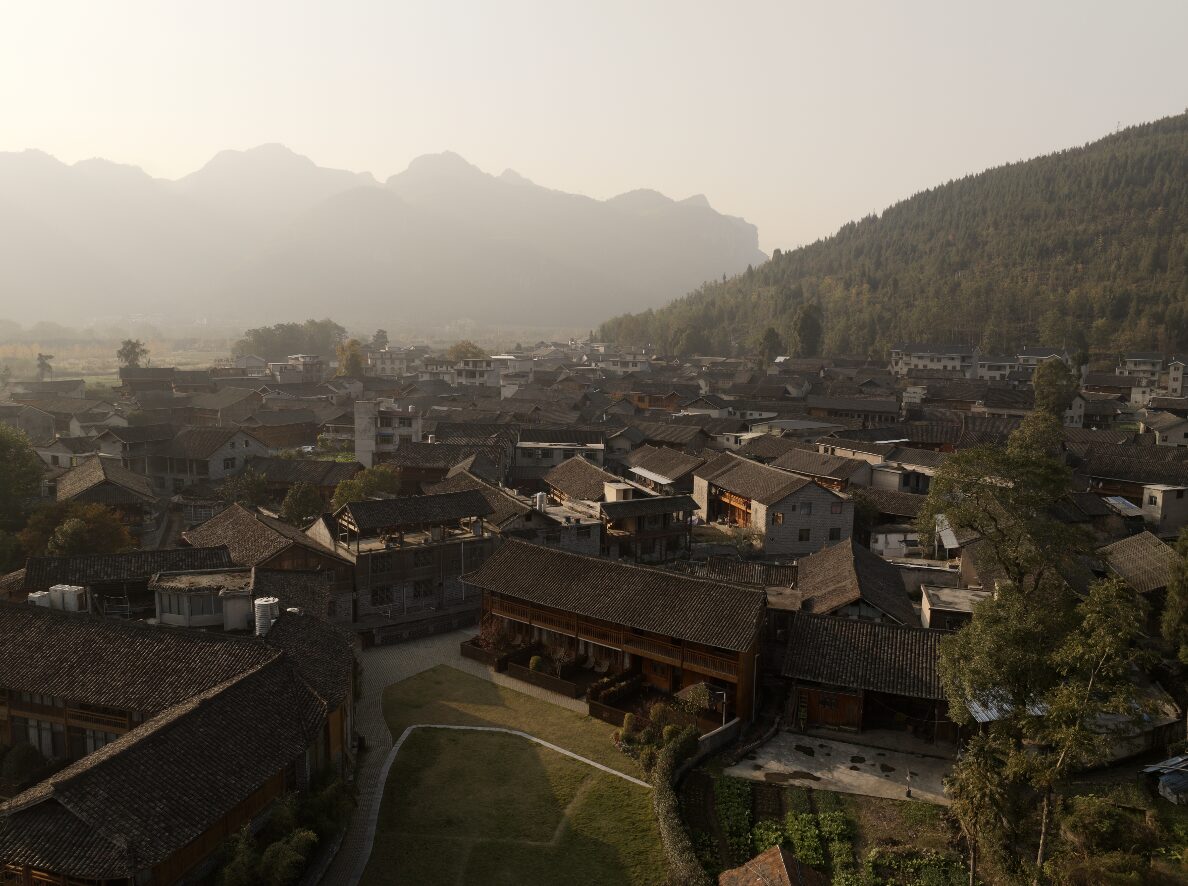
Western Hunan is one of the best places in China to see rural life that isn't being performed for anybody. Rice terraces, a market every few days, and Miao and Tujia villages up every valley.
Xiangxi — western Hunan — is mountain country: steep hills, terraced valleys, rivers in gorges, and villages tucked wherever there’s enough flat land for a house and a paddy. It’s the homeland of substantial Miao and Tujia populations, and the Dong are just over the border to the south.
It is also, for our money, one of the best places in China to see rural life that has not been arranged for visitors. There’s no ticket booth here. There’s a county town, a road, and a valley.
Market day
If you do one thing, do this. Villages here run rotating markets — a different settlement each day on a fixed cycle, so the whole district gets one within walking distance every few days.
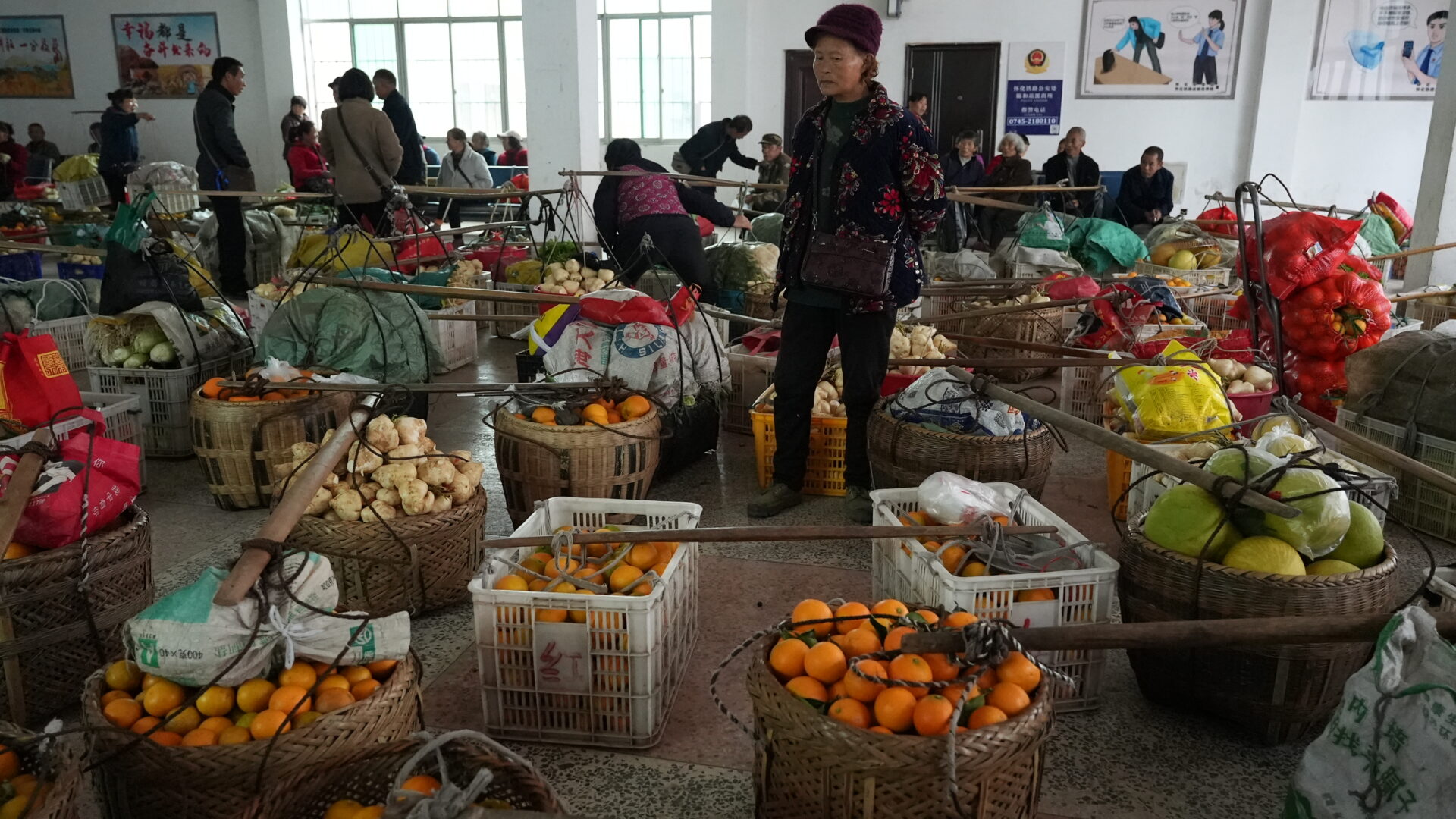
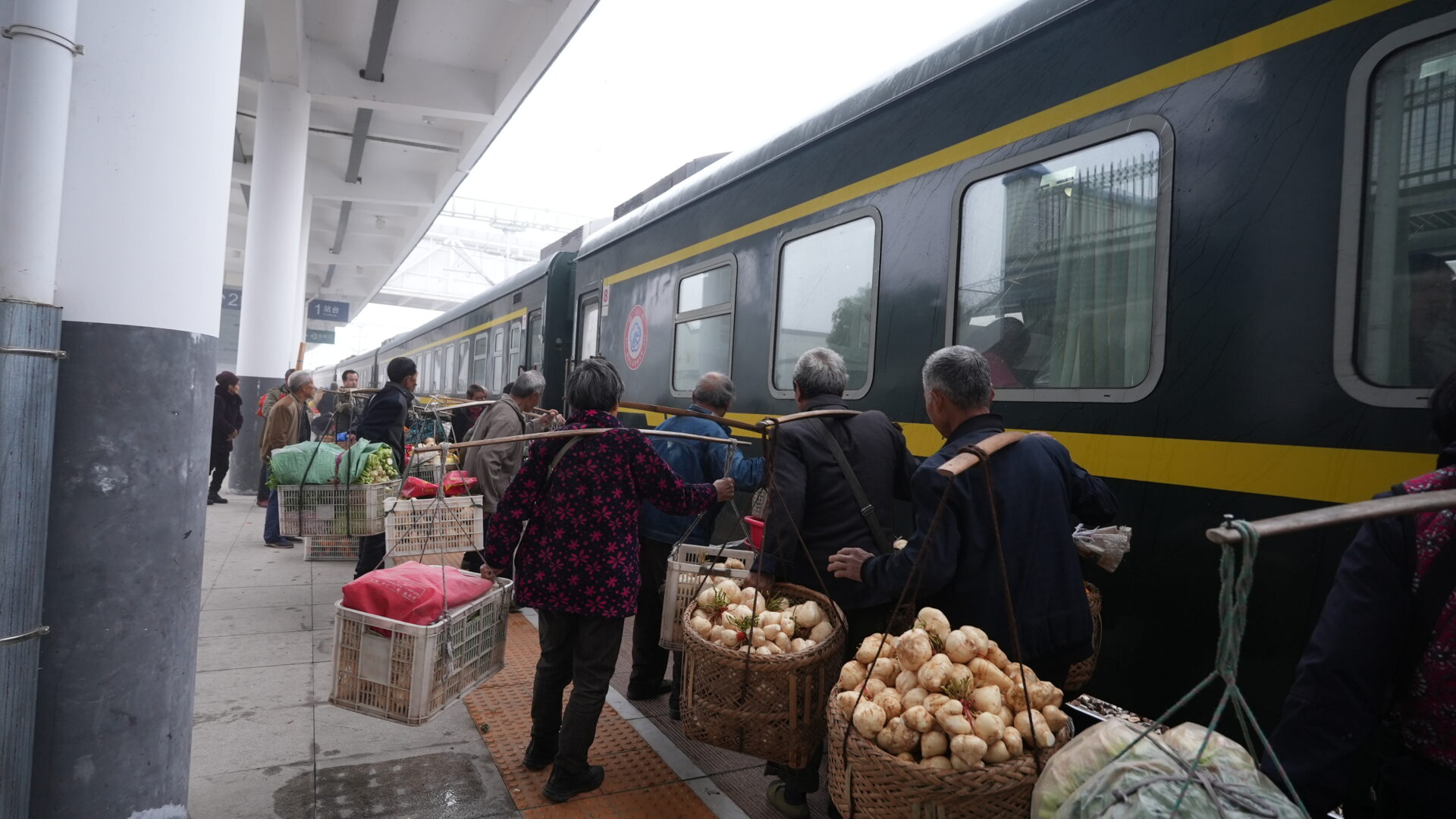
They start early and they’re finished by lunchtime. What’s on sale: vegetables carried in by shoulder pole, live chickens and ducks, tofu made overnight, river fish, chilli in every form, bamboo shoots and wild greens in season, hand-forged tools, cloth, and a man who repairs whatever you bring him.
Bringing produce in — shoulder poles are still the transport for the last kilometre
The social function is at least as important as the commercial one. Market day is when people from a dozen hamlets see each other, and the noodle stall at the entrance is where the news gets exchanged.
Ask at your guesthouse which village is on which day. Everyone knows.
The landscape
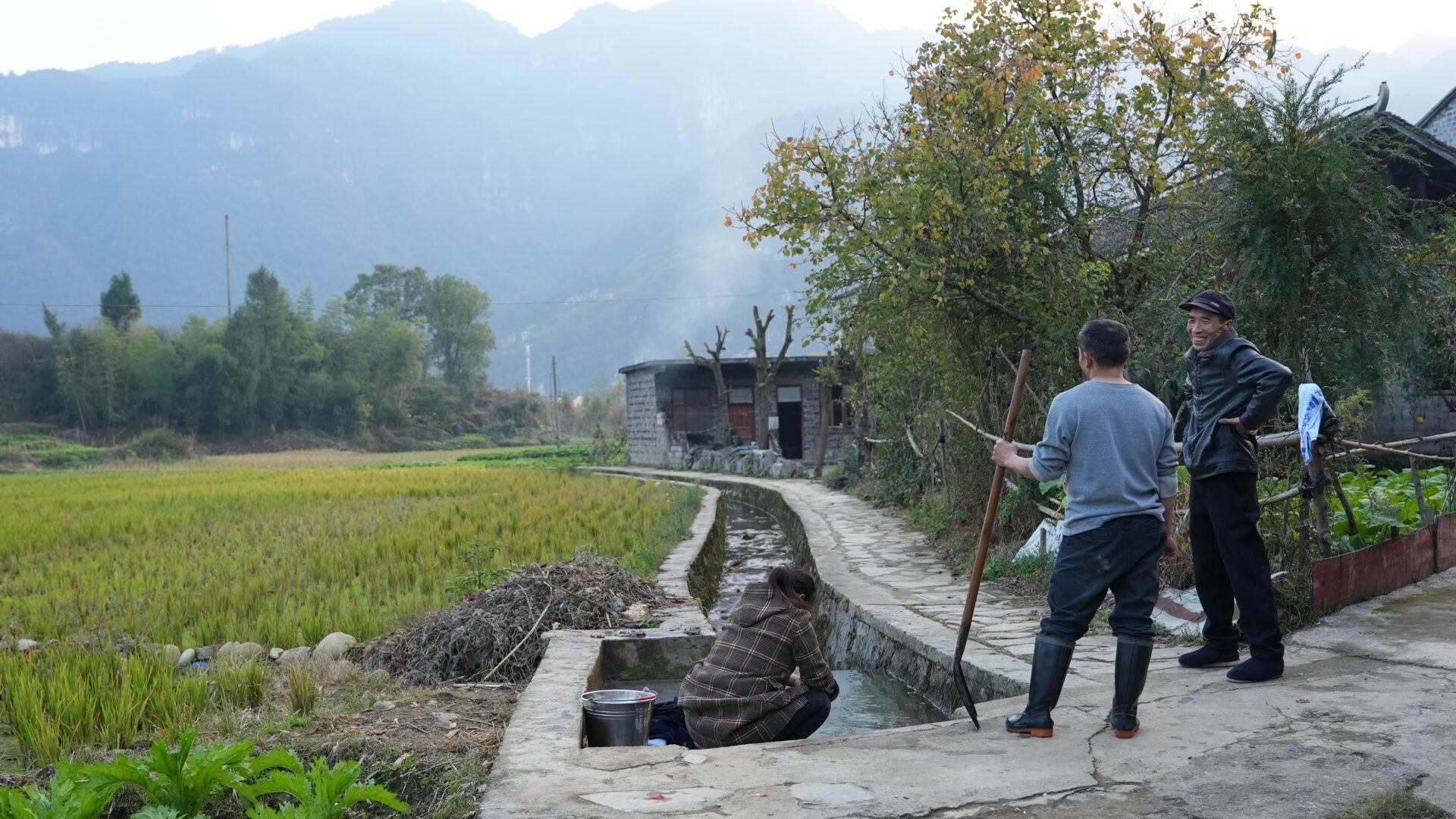
Terraces — worked by hand on gradients that machinery can’t reach, flooded and green and gold in sequence through the year.
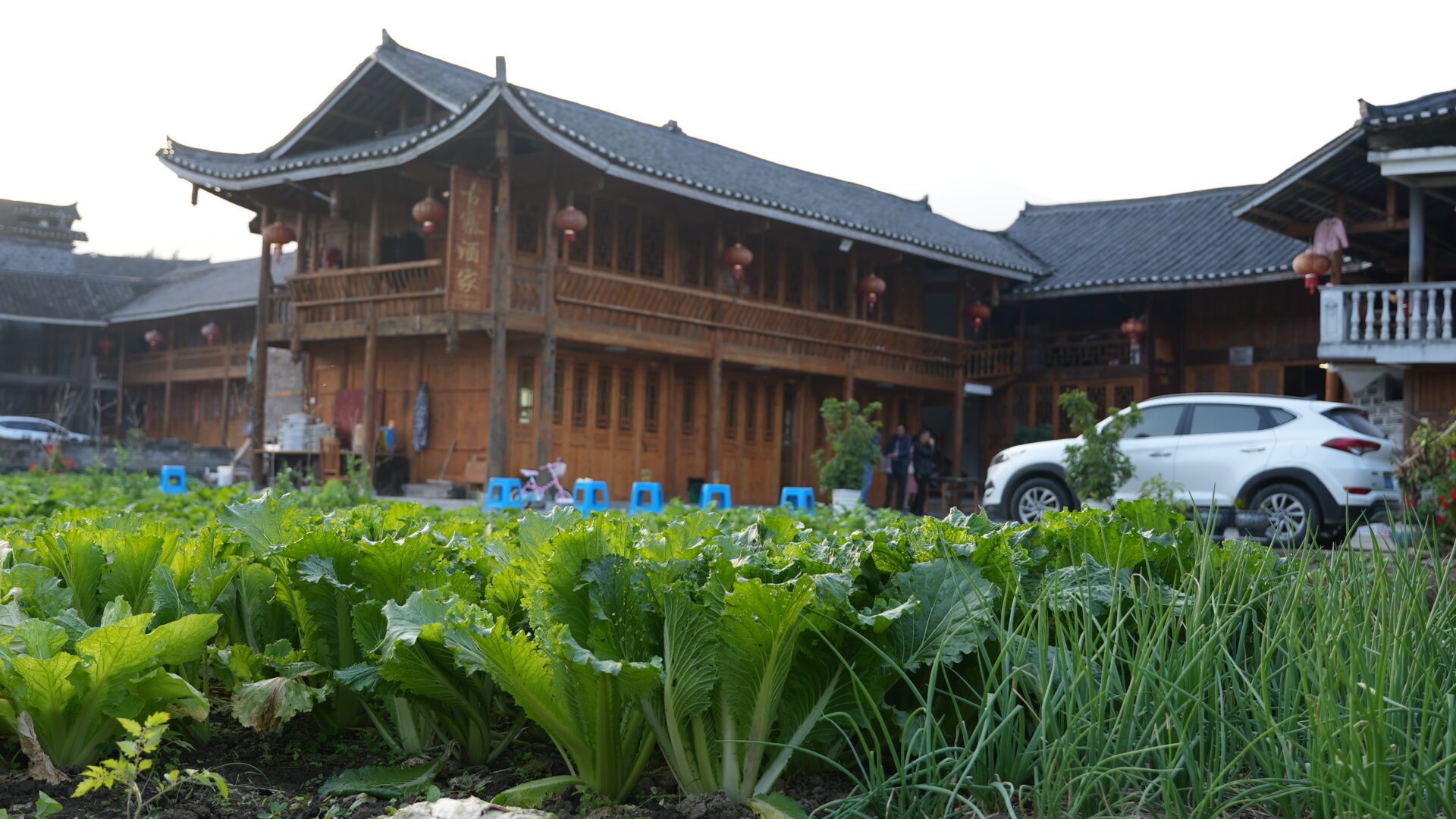
Villages of wood and stone, Tujia stilt houses on the slopes, ancestral halls, drum towers where there are Dong communities, and a covered bridge on the older paths.
Chilli, drying on every available surface from late summer. Hunanese food is the hottest in China — hotter than Sichuan, without the numbing pepper — and here you see the raw material laid out in red sheets on roofs and courtyards. See our food guide.
The honest picture
Two things are true at once and both should be said.
This is beautiful, and it works: households that farm, a functioning market economy, festivals, dress and language still in use.
And it is emptying. The working-age population is largely in Guangdong, Zhejiang and Changsha, and many villages are grandparents and children for eleven months of the year. New roads, new houses and new school buildings sit alongside fields that are harder to staff each season. The New Year fortnight is when everyone comes back, and it’s the exception rather than the rule.
Romanticising the first part while ignoring the second doesn’t do anybody a service.
Visiting well
- Ask before photographing. Especially older people at work, and children. A camera in someone’s face at a market is the single most common failure.
- Buy things. Eat at the stall, buy the vegetables, pay for the tea.
- Learn ten words. See survival Chinese — and note that the local dialect will defeat your Mandarin, which is normal.
- Accept hospitality, including the rice wine.
Practical notes
Getting there: Jishou or Huaihua are the rail hubs, both on high-speed lines from Changsha. From there, buses to county towns and a hired car or motorbike for the valleys.
Where to sleep: county-town hotels and an increasing number of village guesthouses.
When: April to June for flooded terraces, September to November for harvest and clear weather. Winter is damp and cold with no heating — see when to visit.
Nearby: Zhangjiajie, the Aizhai bridge, and Guizhou’s Miao and Dong villages over the provincial line. Our rural China guide covers the practicalities in general.
- #hunan
- #xiangxi
- #rural china
- #miao
- #markets