
Rural New Year isn't a scaled-down city version. It's the one time of year the village is full — children back from the coast, grandparents cooking for twelve, and firecrackers from every doorway at midnight.
To understand rural New Year you have to understand who isn’t there for the rest of the year.
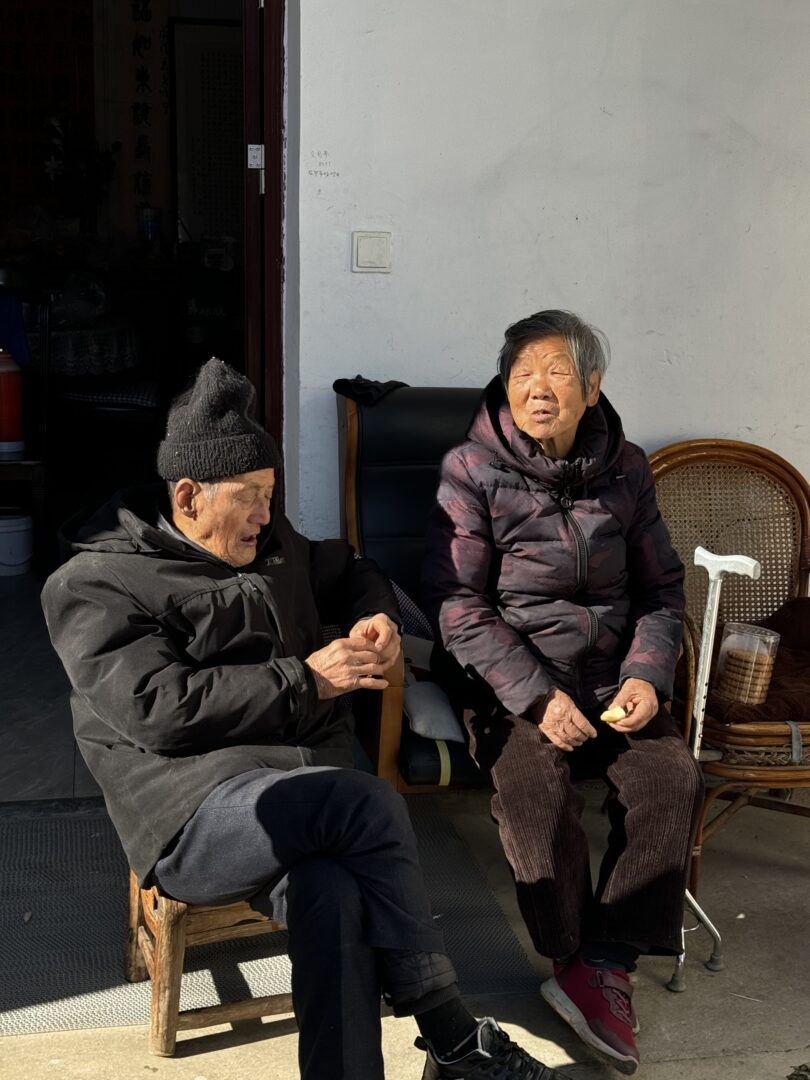
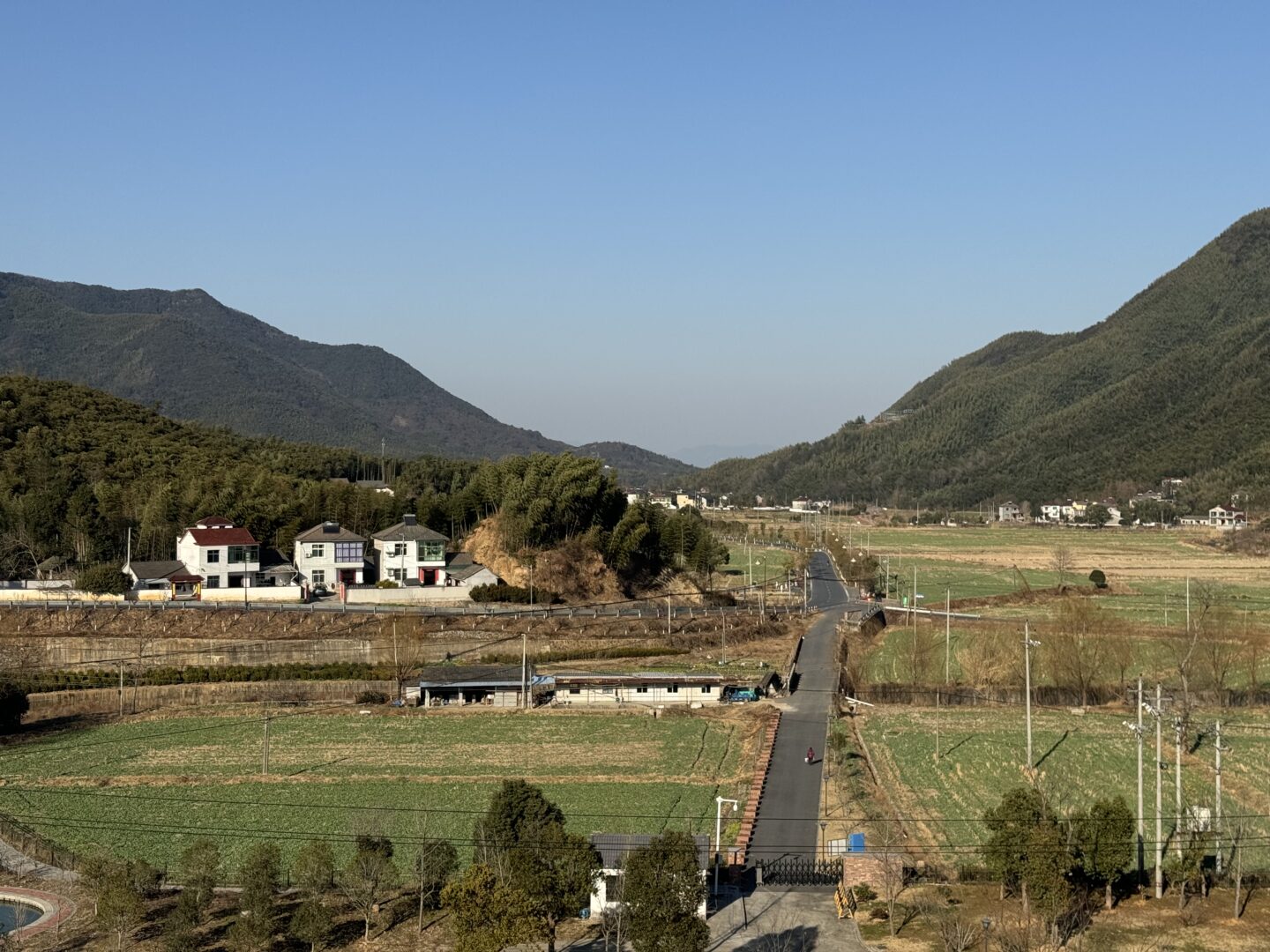
A village like Lucun, outside Guangde in eastern Anhui, spends most of the year older and quieter than its houses suggest. The working-age population is in Hangzhou, Shanghai, Suzhou, Ningbo — construction, factories, delivery, service work — and the children are often here with grandparents, or there with parents and back in the holidays.
Then, for about two weeks, everybody comes home. That’s the festival.
The village fills up
You can see it happening in the last days before the new year. Cars with out-of-province plates arriving. Lanes that were empty at 4pm suddenly full of children. Houses with the lights on that have been dark since October. Someone’s uncle who nobody has seen for three years standing in a doorway being embraced by people in turn.
Red lanterns go up along the lanes, and couplets on every door. Firecracker debris starts accumulating a week early. The village shop sells out of everything twice.
Inside the houses
Preparation starts days ahead and is collective. Dumplings get made by however many hands are in the kitchen, on a table dusted with flour, with an argument running about the correct amount of filling. Stews go on and stay on. The home altar is set with offerings for the family’s dead, who are treated as guests for the holiday.
The reunion dinner is the centre of it — see being a guest at a Chinese New Year for what’s on the table and why. Red envelopes go to whoever is young enough to receive them. Elders sit with tea and are refilled constantly and tell the same stories, which is the point of the stories.
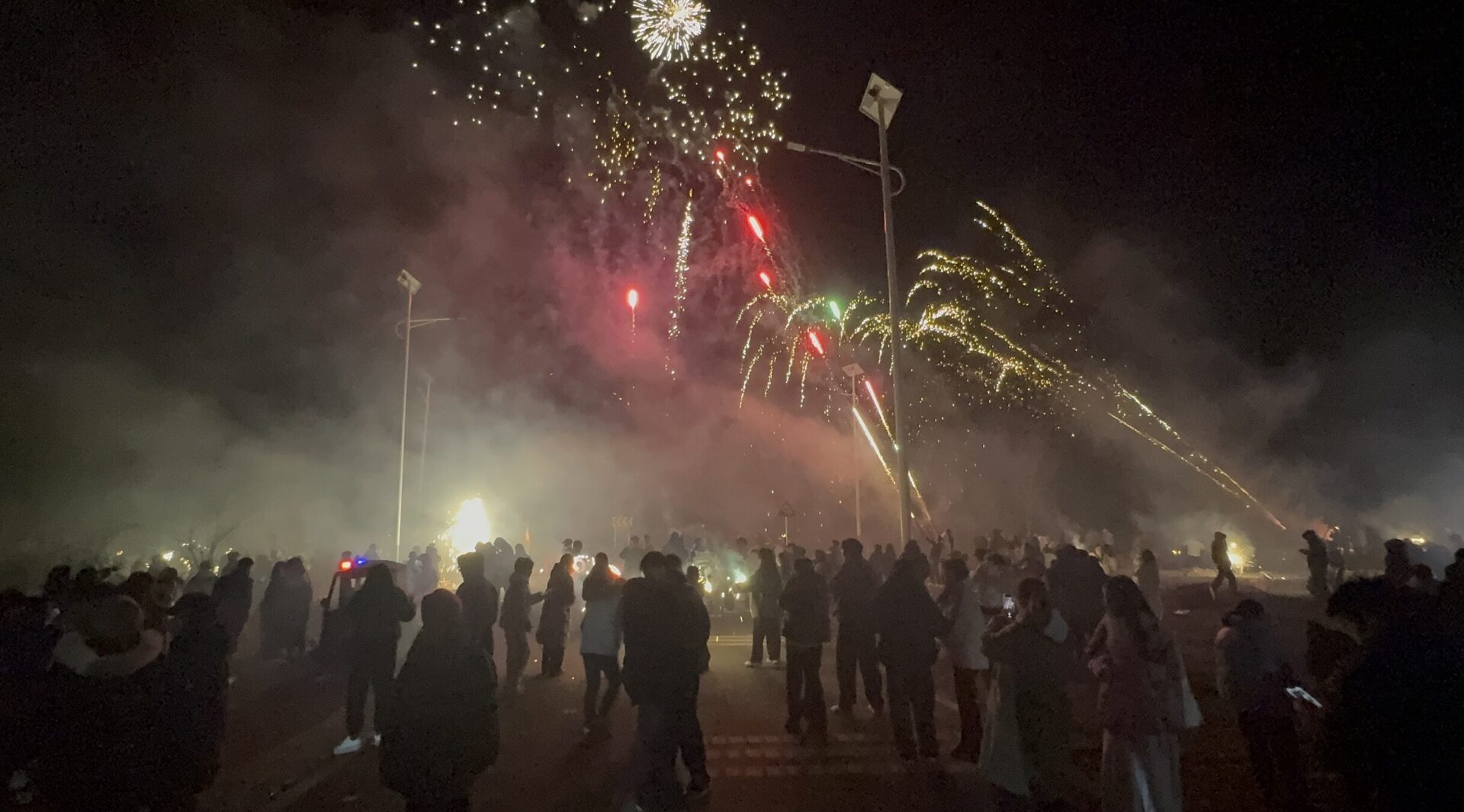
Midnight, from the courtyard
Midnight and after
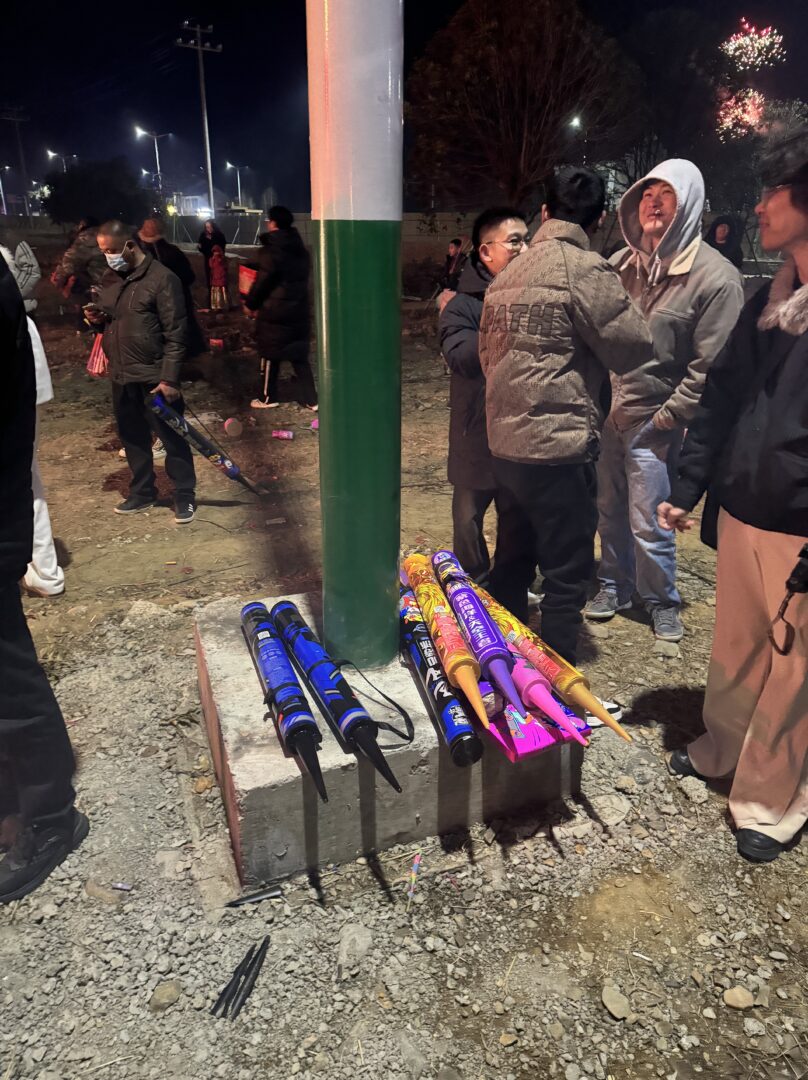
At midnight the entire village fires at once. Not a display — hundreds of households individually, from their own doorsteps, for twenty minutes. Children are handed incense sticks to light fuses with. The sky goes white repeatedly and the ground ends up red.
The days that follow are visiting days: relatives in order of seniority, tea and sunflower seeds and candied fruit at every stop, and card games that run into the evening.
Around the fifteenth day, the Lantern Festival closes it. In the villages this means lanterns carried through the lanes, sometimes a lion or dragon team going house to house, and glutinous rice balls — tangyuan — cooked in sweet soup.
Then it empties
By the eighth or ninth day the departures start. Cars load up, the station fills, and within a week the village is back to grandparents and children and shut doors.
That contraction is the honest context for anything sentimental about rural Chinese New Year. It’s a genuinely joyful fortnight, and it’s joyful partly because it’s the exception — the annual repair of a family that spends the rest of the year several hundred kilometres apart. Our rural China guide has more on what that looks like the rest of the time.
If you want to be there
- You need an invitation. Village New Year is a household affair; turning up as a spectator is thin. But the invitation is easier to come by than you’d think — see making Chinese friends.
- Book travel weeks ahead. This is the largest annual migration on the planet.
- Bring gifts. For the household and for the children. Non-negotiable.
- Expect the cold. Rural houses in the Yangtze region have no central heating and it’s 0–5°C with high humidity. Bring far more layers than the temperature suggests — see our seasons guide.
- For the public spectacle, Putian in Fujian runs the loudest version in the country and needs no invitation at all.



- #anhui
- #new year
- #rural china
- #village
- #migration