
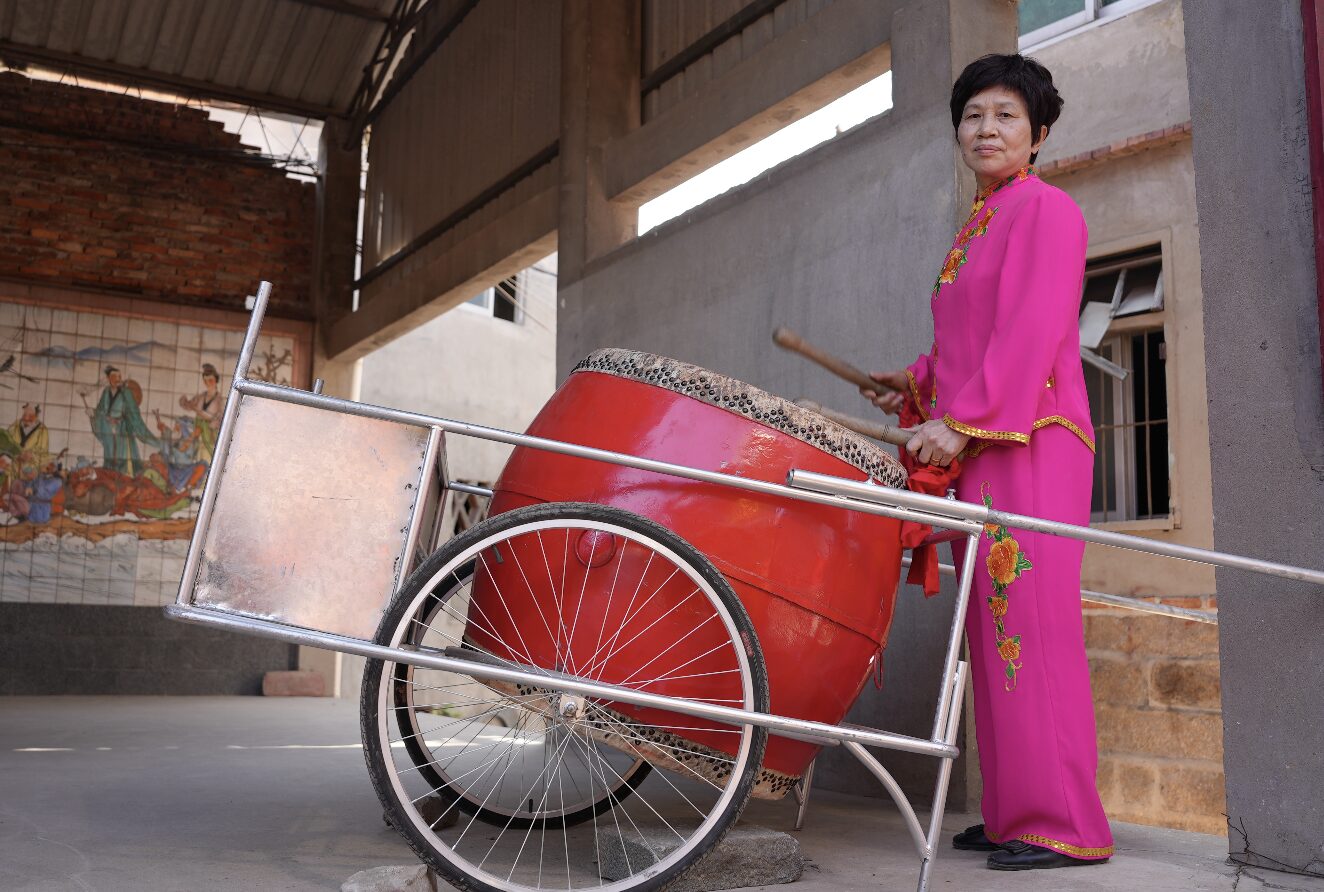
Most of China celebrates New Year for a week. Putian keeps going for the entire first lunar month, with palanquins run over fire, all-night processions and a different village every night.
If you want to see Chinese New Year at maximum intensity, go to Putian.
Most of the country does a week: family dinner, fireworks, a few days off. Putian, on the Fujian coast between Fuzhou and Quanzhou, extends it across the whole first lunar month — every village taking a different night, so the celebration rolls continuously from New Year’s Eve to well past the Lantern Festival.
What actually happens
The framework is the village god procession, scaled up and running for weeks.
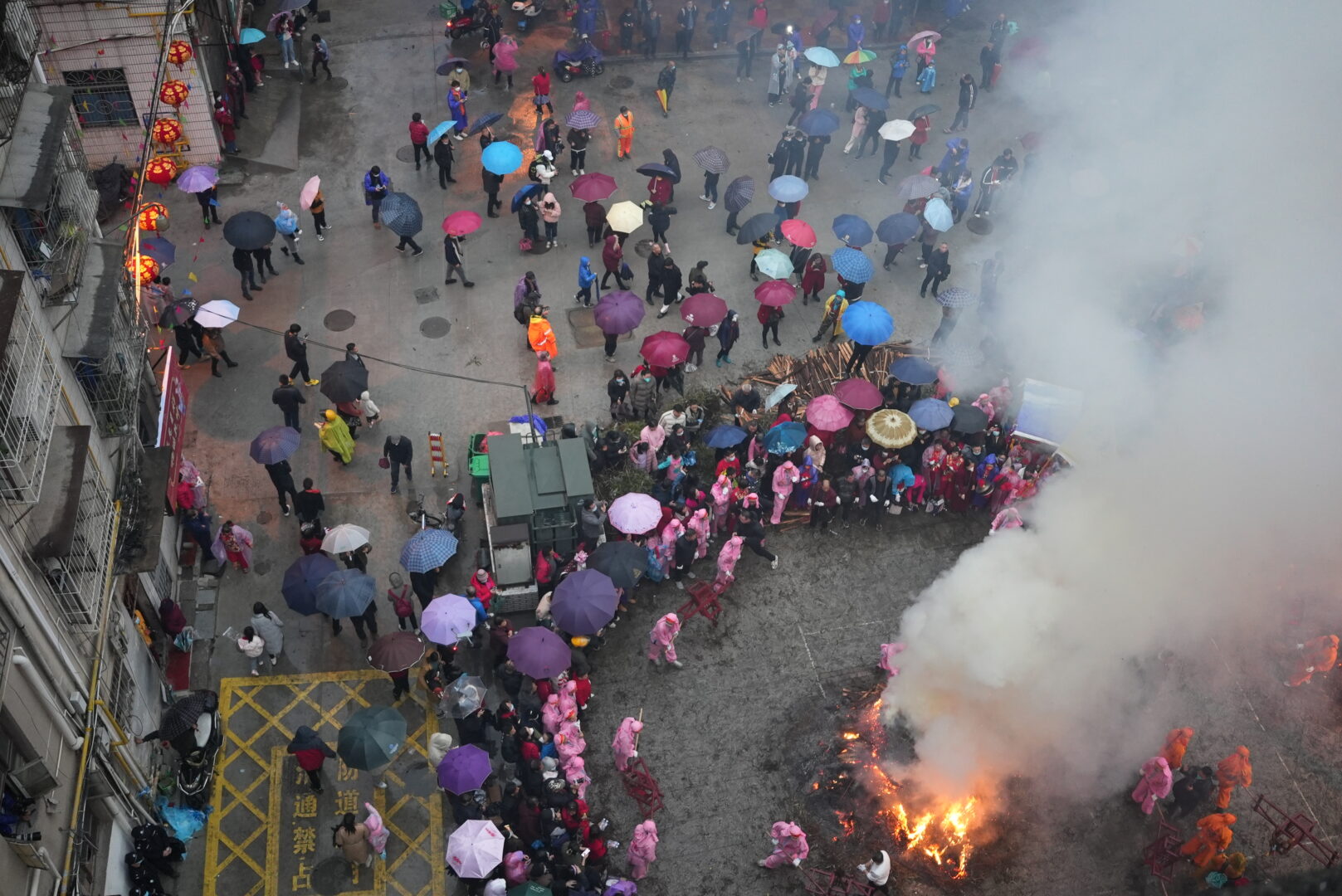
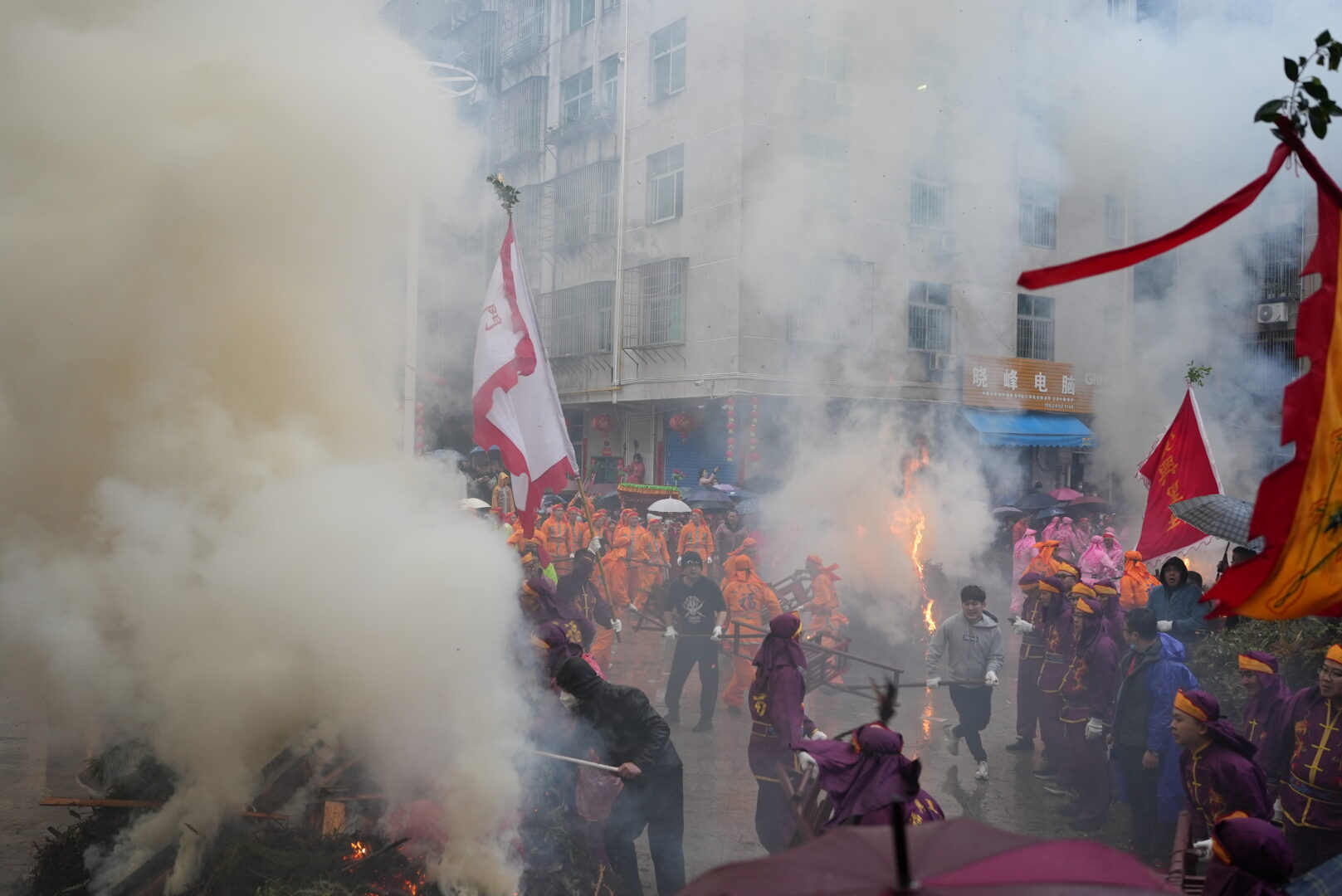
Each village or lineage holds its yuanxiao — its own night — and every neighbouring village comes to it. That means one place is hosting and several others are visiting, with their palanquins, their drums and their people, and the whole thing runs from dusk until dawn.
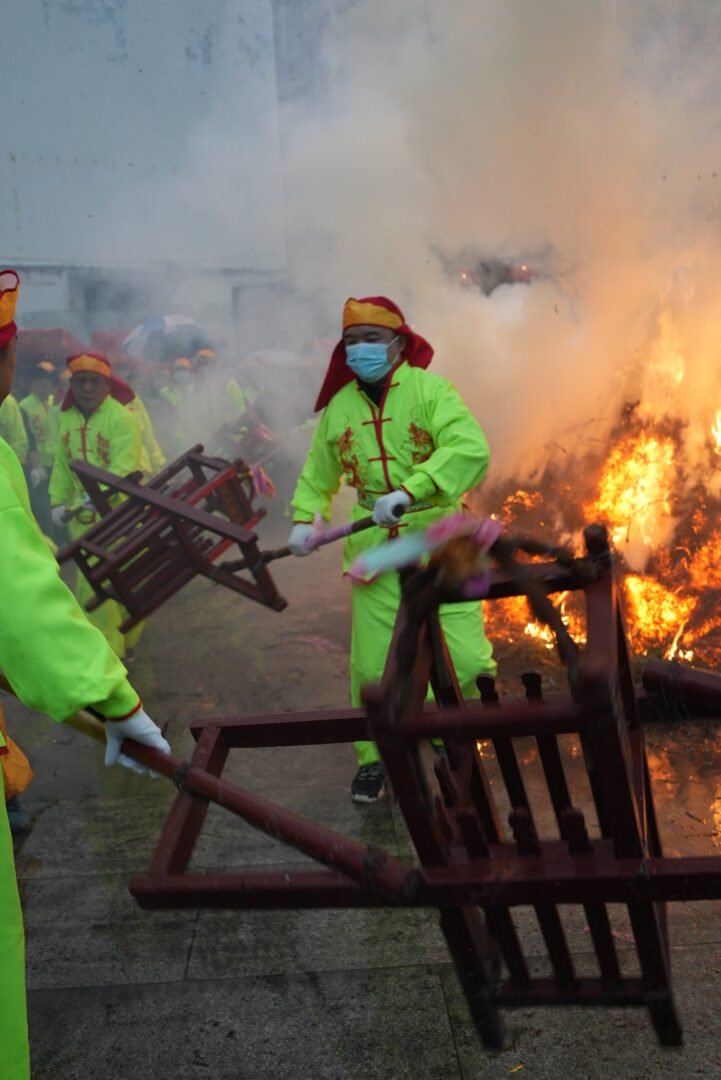
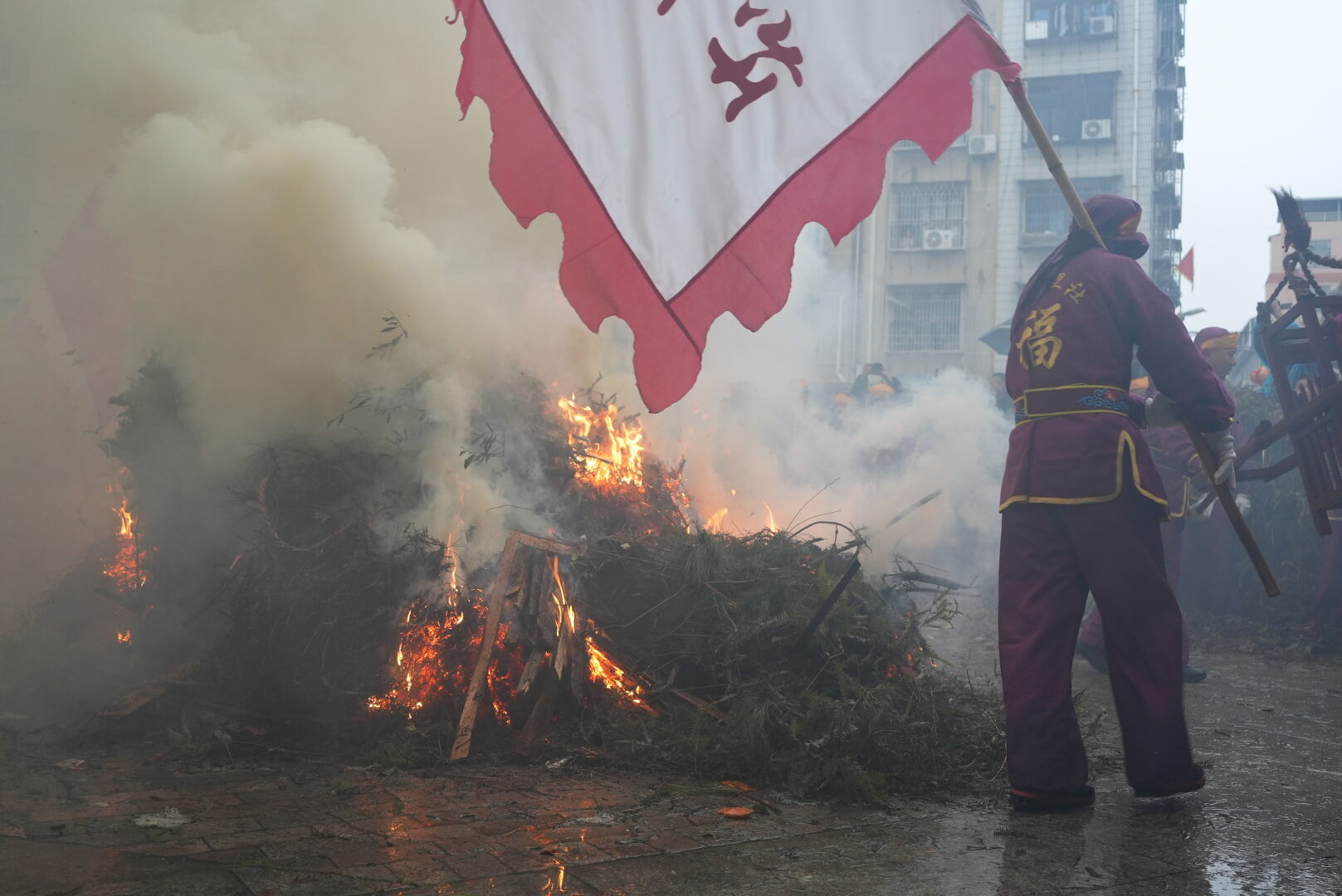
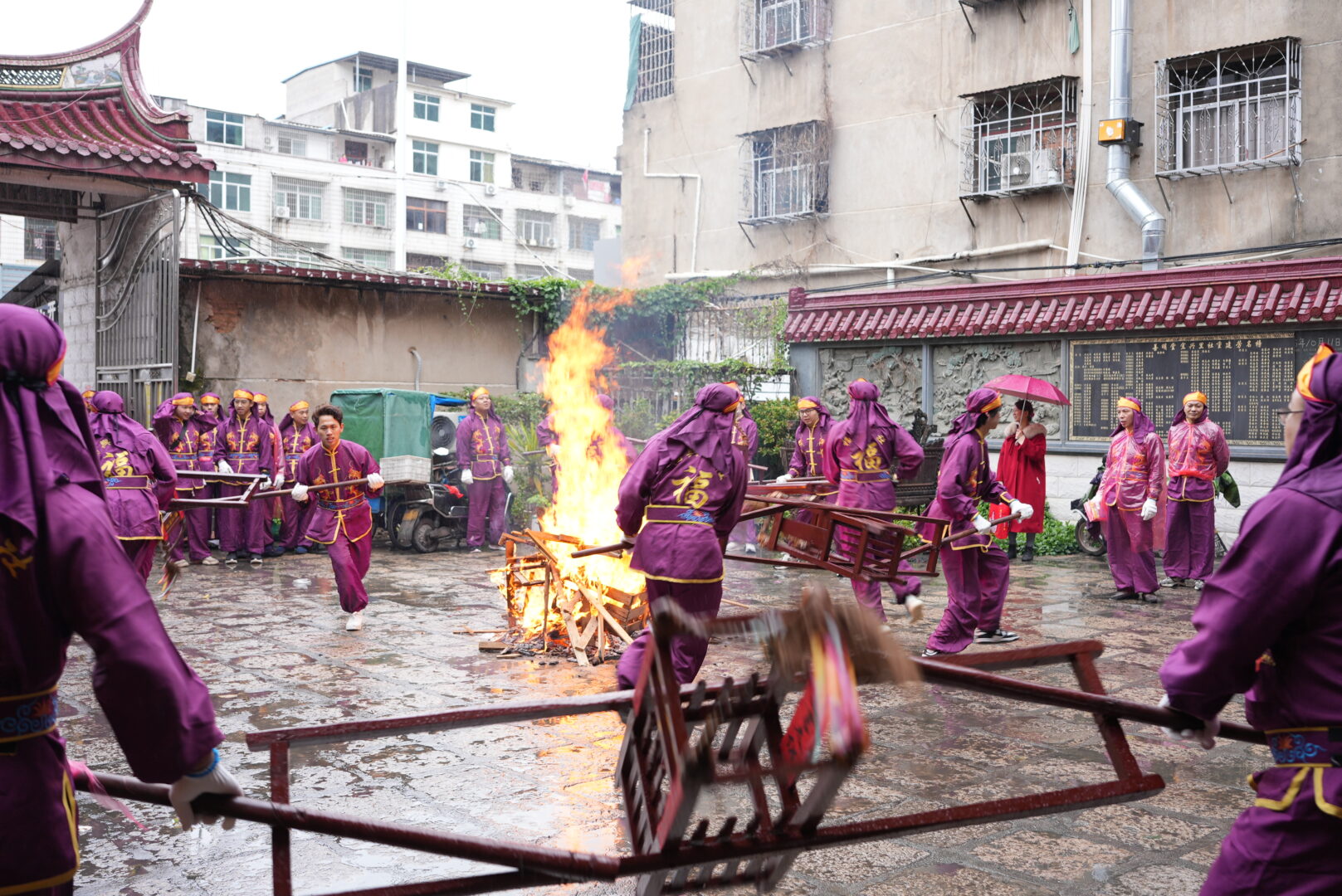
The Putian speciality is what the palanquin teams do. Statues are carried at a run, swung in unison, and in some villages run over beds of burning embers or through fire — barefoot, repeatedly, to drums, with the crowd pressed in around them. Elsewhere teams dance the palanquins in formation, dozens of men moving as one unit. It is loud, hot, dangerous-looking and not remotely staged.
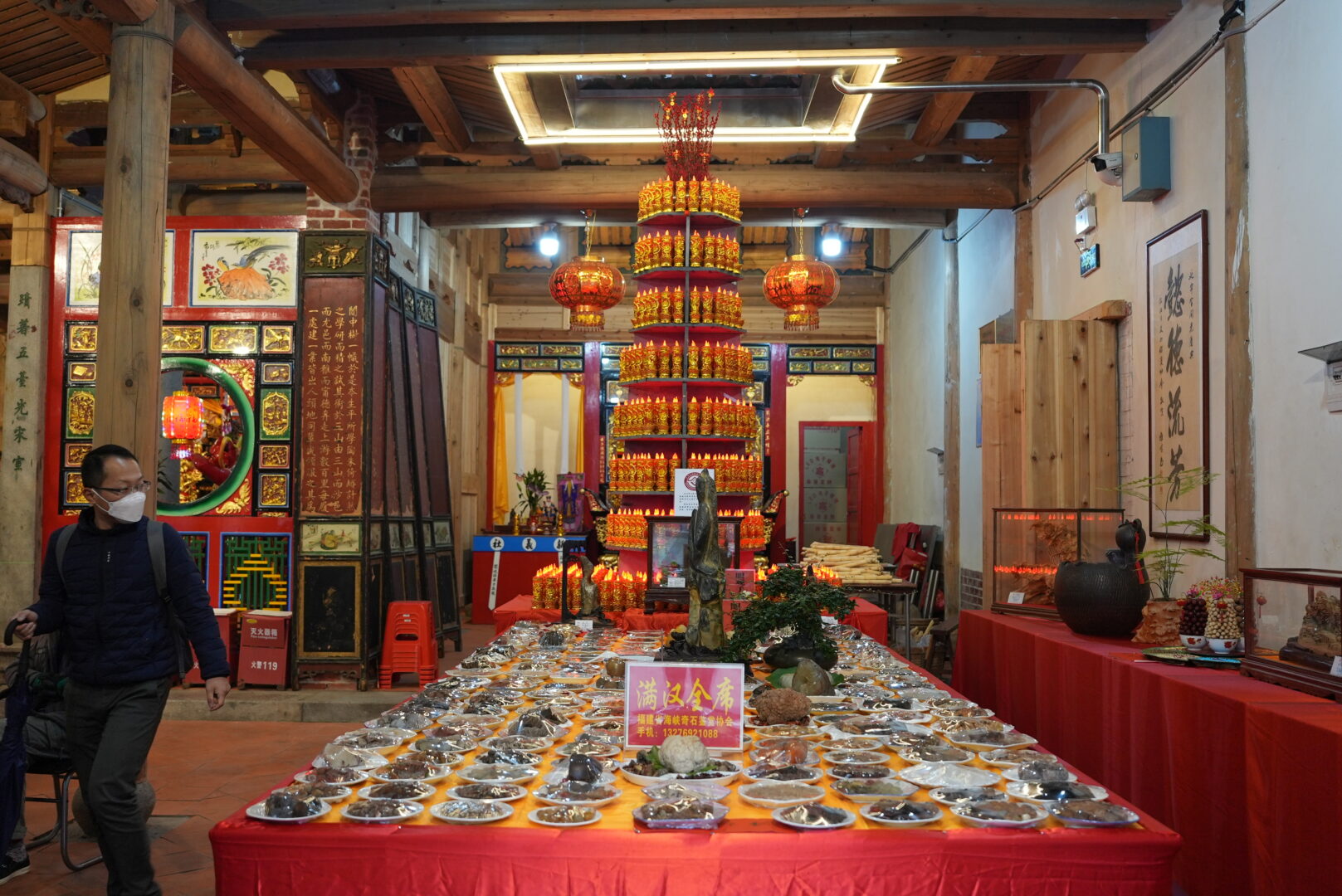
Add: firecrackers in quantities that leave the streets ankle-deep in red paper, hill temples lit up and firing rockets, opera and puppet performances in the temple yards, and food tables that don’t get cleared.
Offerings for the new year
Meizhou Island and Mazu
Putian’s other claim is bigger than the festival.
Mazu — the sea goddess worshipped by fishermen, sailors and coastal communities from Taiwan to Malaysia — was, by tradition, a real woman: Lin Moniang, born on Meizhou Island off Putian in the 10th century, who died young saving sailors and was subsequently deified.
Meizhou is therefore the ancestral temple of the entire worldwide Mazu cult, and thousands of daughter temples across maritime Asia trace their lineage to it. Pilgrim groups arrive year-round, most heavily around Mazu’s birthday in the third lunar month, and in enormous numbers from Taiwan.
The island is a short ferry from the mainland and worth a day in its own right — temple complex on the hill, beaches, and a slow fishing-village pace once you leave the main site.
Practical notes
When: New Year falls in late January or February. The processions run through the first lunar month, and the biggest concentration is around the Lantern Festival on the 15th. Mazu’s birthday is in the third lunar month, usually April.
Getting there: Putian has a high-speed rail station on the Fuzhou–Xiamen line. Meizhou Island is reached by ferry from Wenjia dock.
Book far ahead. New Year is the single busiest travel period in China — see our seasons guide for what that means — and Putian is full of returning emigrants during the festival.
Practicalities on the night: it goes on until dawn, it is extremely loud, and there are open flames and thrown firecrackers in crowds. Stay at the edges, keep your camera strapped on, and take whatever food and drink you’re offered.
Nearby: Quanzhou south, and its own gold-burning ritual days.
- #fujian
- #putian
- #new year
- #mazu
- #lantern festival