
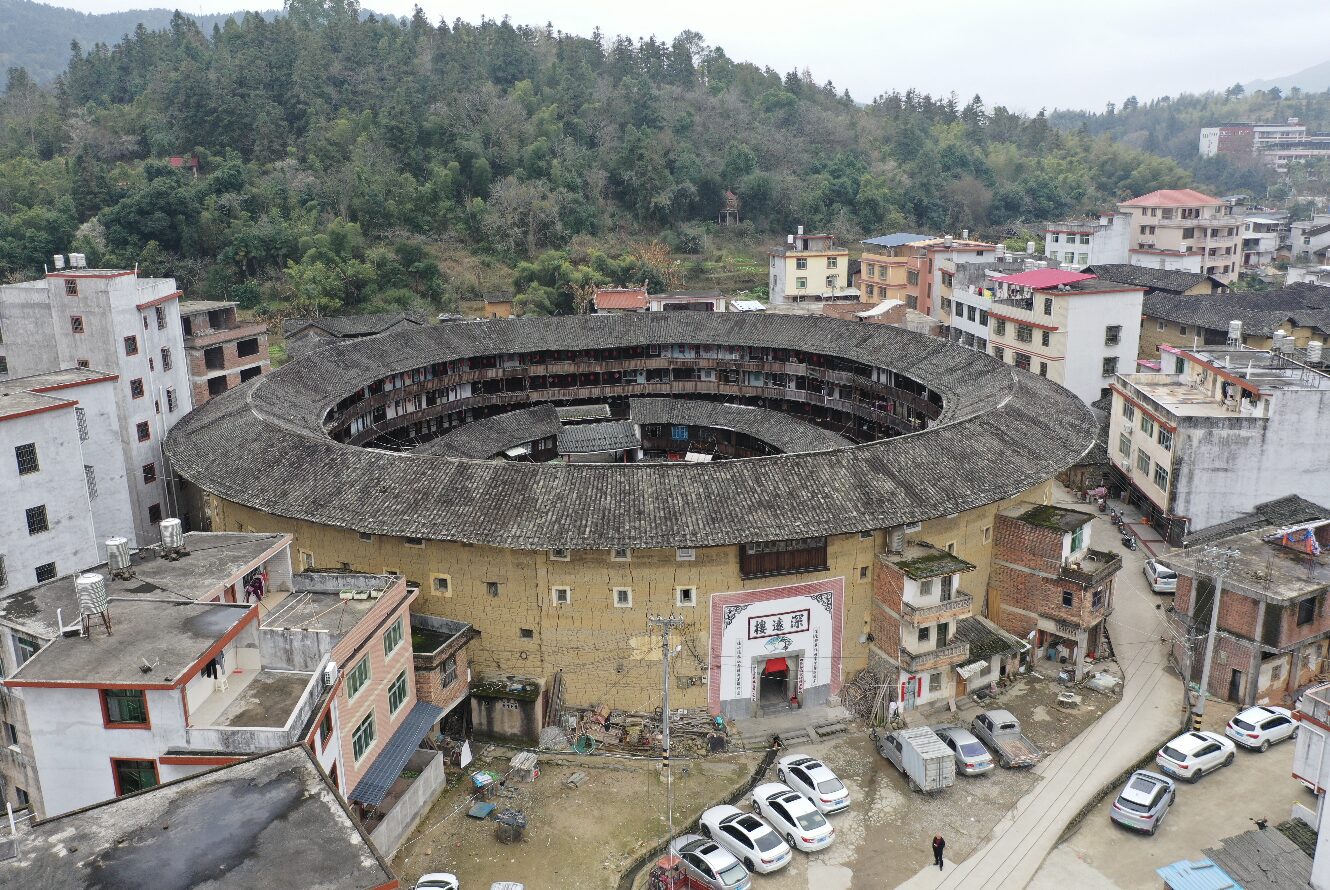
A tulou is one building containing an entire lineage — walls two metres thick at the base, a single gate, and eighty-odd rooms around a courtyard. Dozens are still lived in.
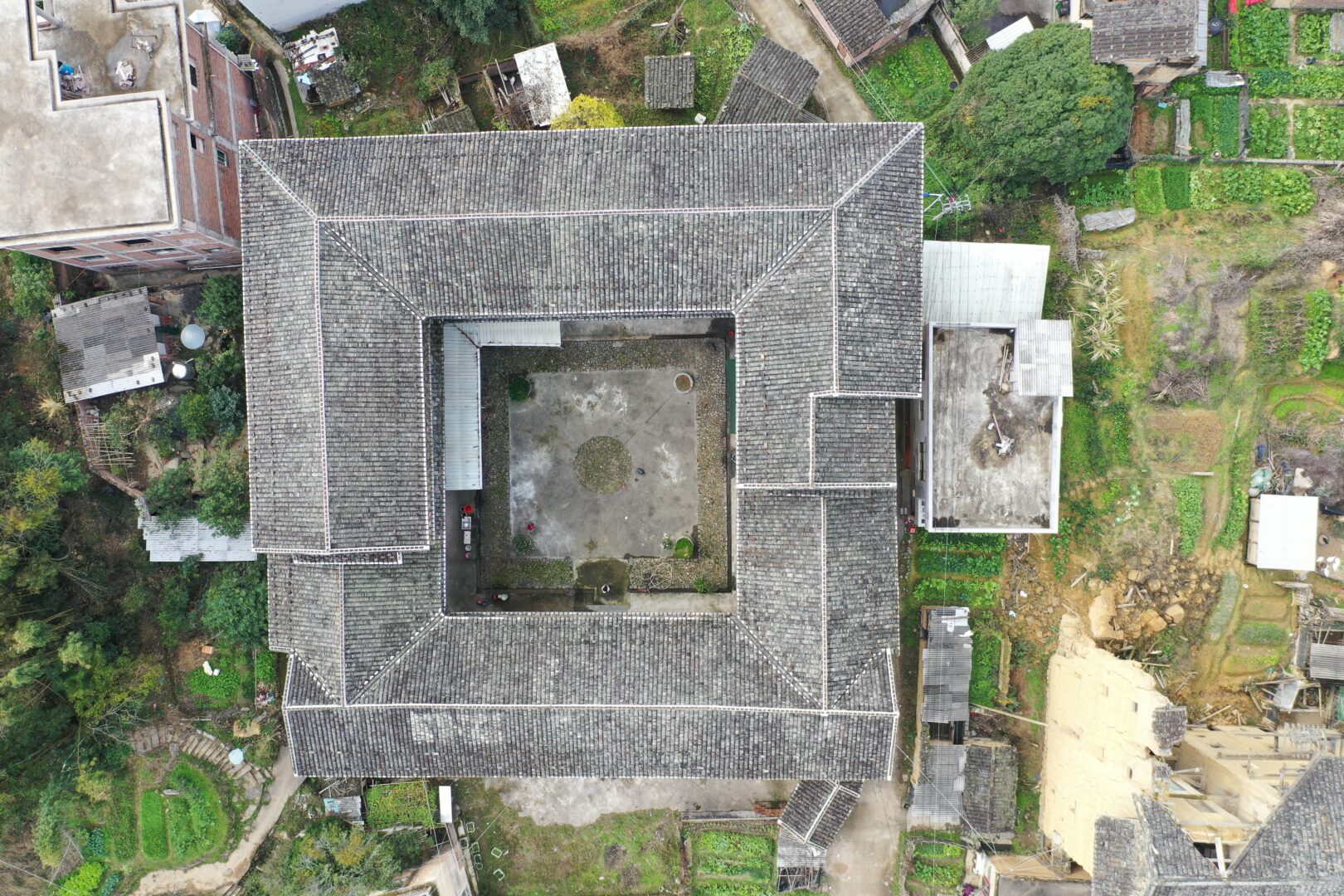
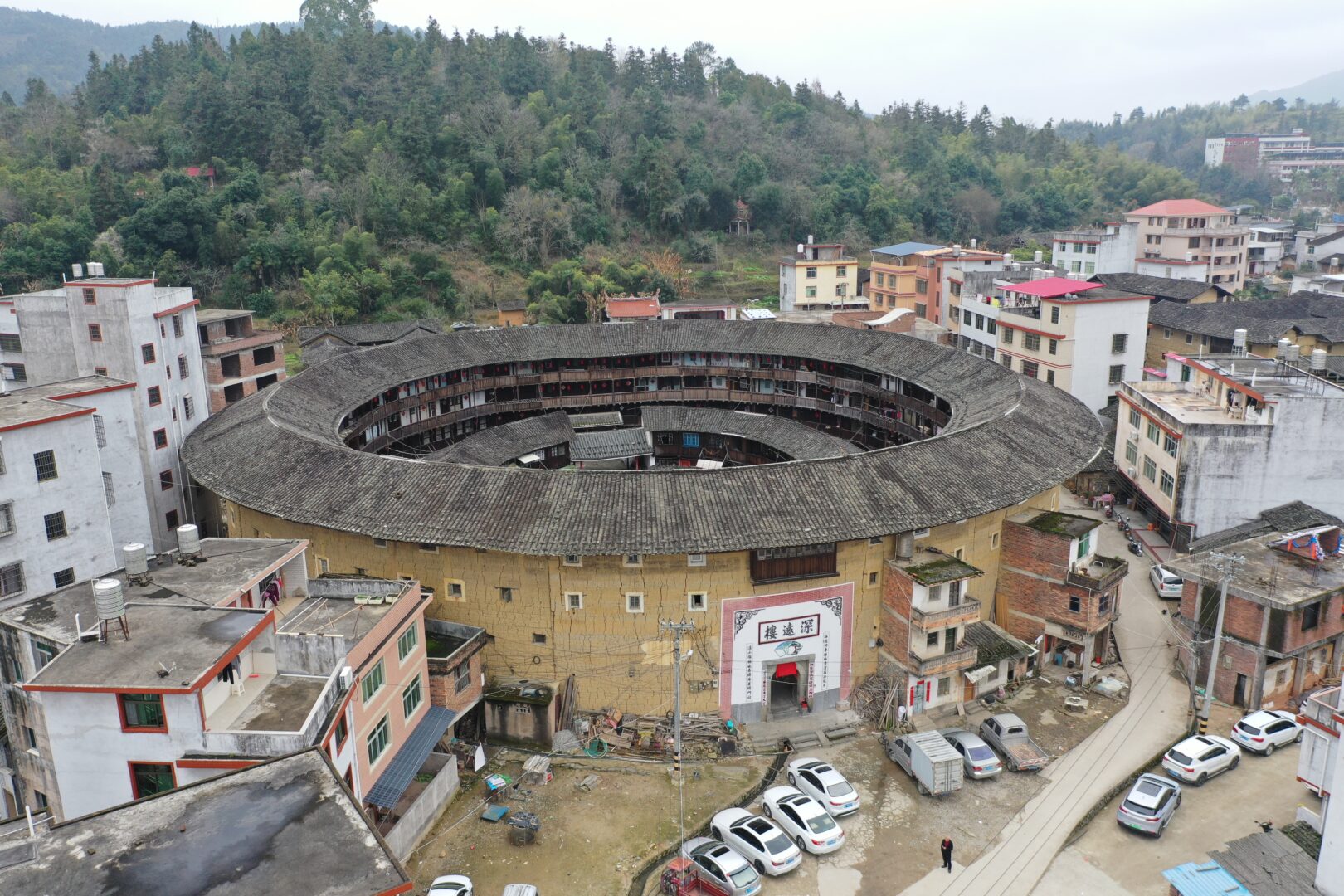
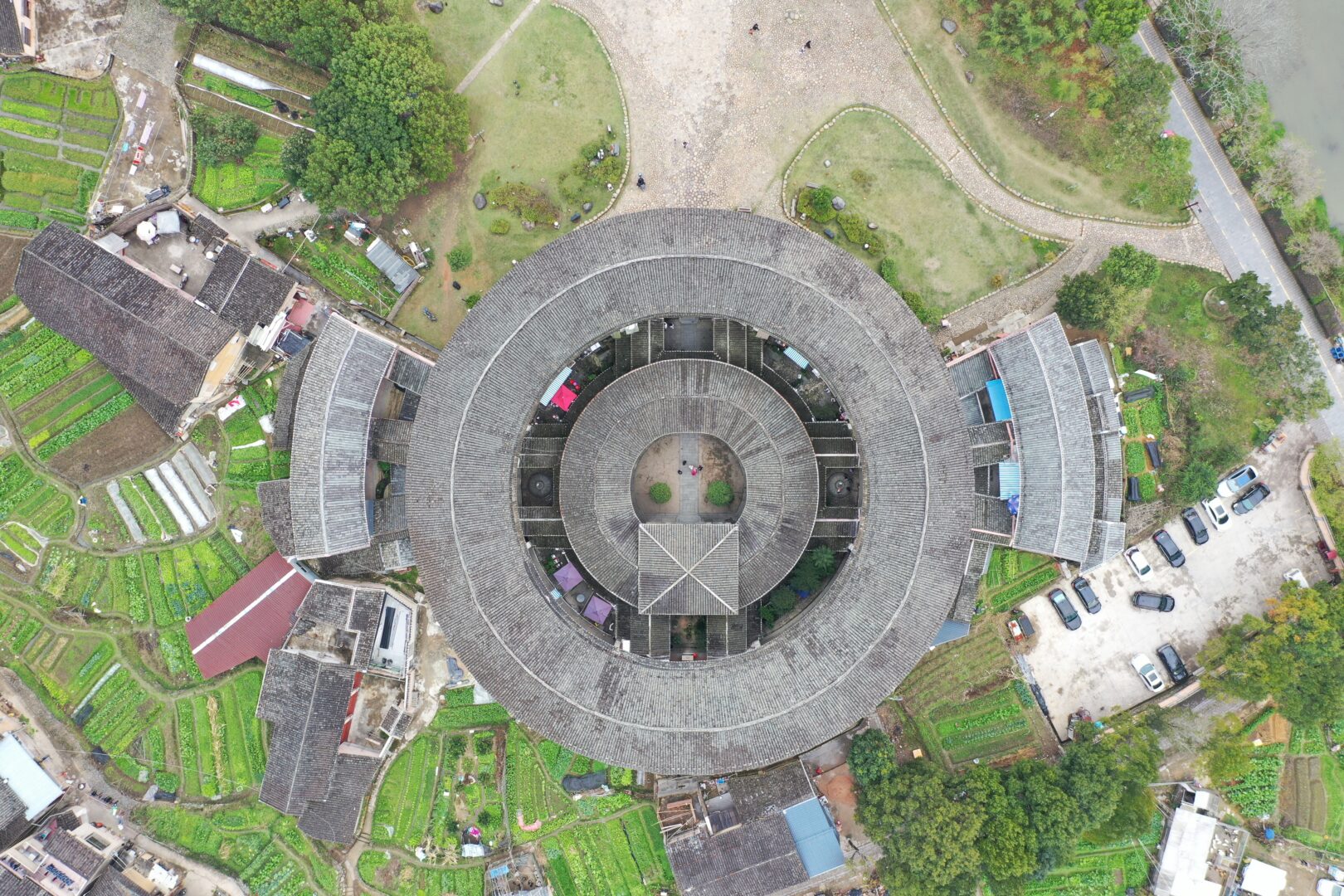
A tulou is a single building that houses an entire clan. Circular or square, three to five storeys, rammed earth walls up to two metres thick at the base, one gate, and rooms — sometimes more than eighty of them — arranged around a central courtyard.
They were built across the hills of southwest Fujian from roughly the 13th century onwards, by Hakka and southern Min communities, and the design is a direct answer to two problems: bandits and lineage. The blank outer wall and single entrance handle the first. The uniform distribution of rooms handles the second — every family in the clan gets the same allocation on every floor, and the ancestral hall sits in the middle.
Forty-six of them were inscribed by UNESCO in 2008.
How they work
The zoning is consistent and elegant. Ground floor is kitchens and reception. First floor is storage — grain, above the damp, below the rain. Upper floors are bedrooms, one room per family per level, so a household occupies a vertical slice rather than a horizontal apartment.
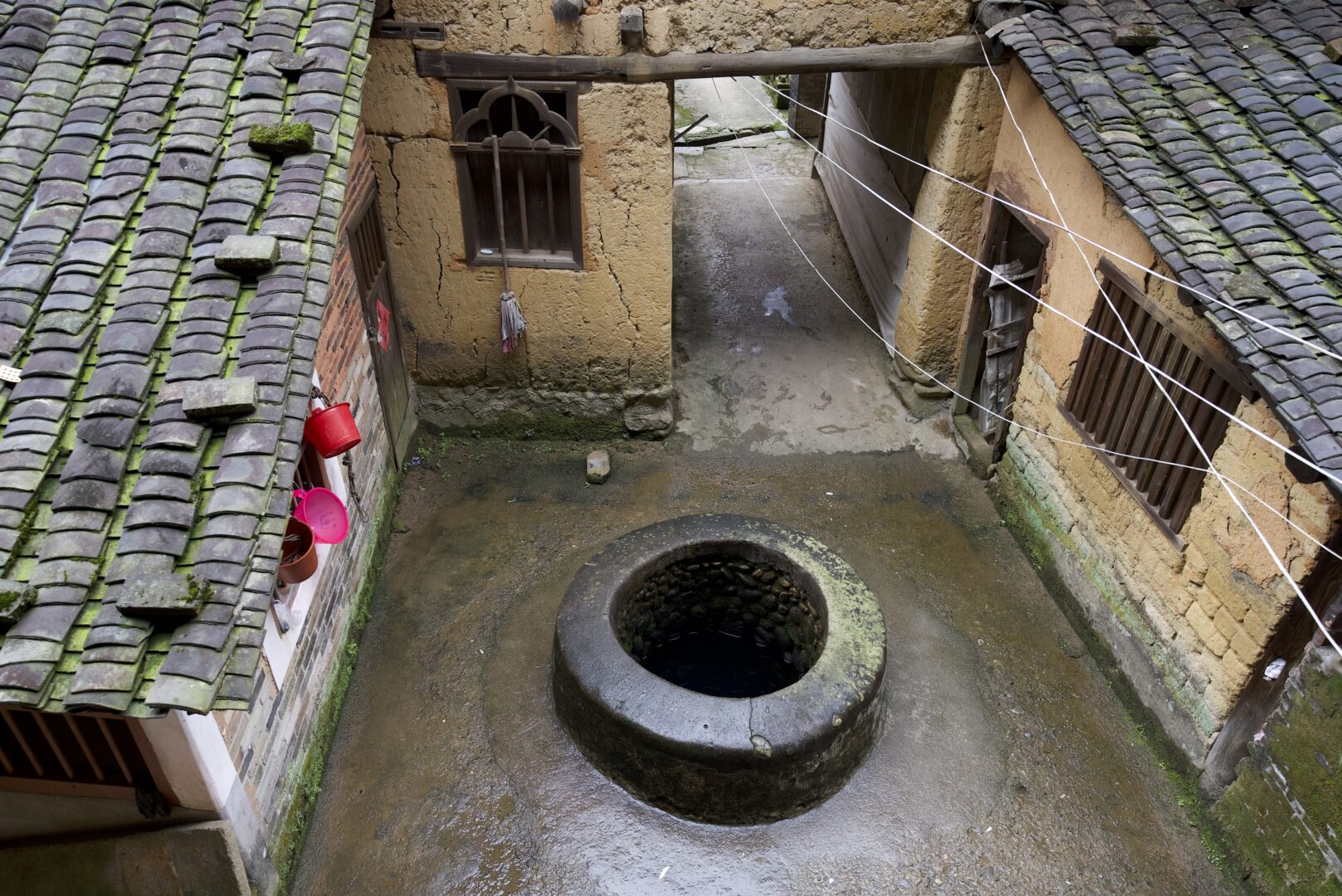
The courtyard is the shared space: a well, the ancestral hall, drying racks, chickens, and whatever is being made or repaired that day. Everything private is behind a door; everything communal is in the middle.
The engineering is better than “mud hut” suggests. The walls are rammed earth mixed with lime, sand, bamboo strip and sometimes brown sugar and egg white, laid in courses and battered — thicker at the base — which is why buildings four hundred years old are still standing in a wet, typhoon-prone, seismically active region.
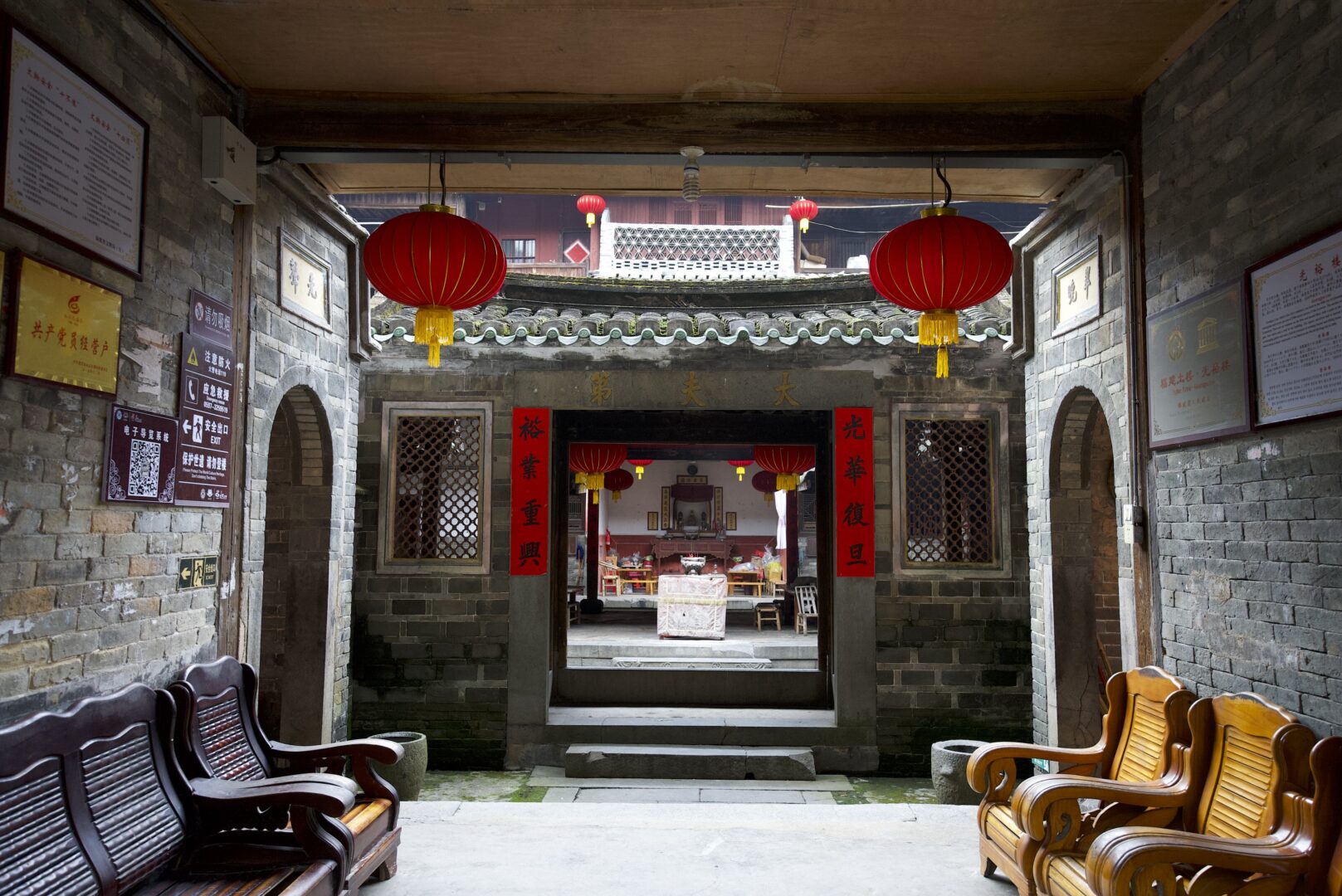
Inside a tulou — every family gets the same slice, on every floor
Which ones to visit
Tianluokeng (田螺坑) in Nanjing county is the famous cluster — four round buildings and one square around a hillside, known locally as “four dishes and a soup.” The viewpoint above it is the photograph you’ve seen.
Chengqi lou in Yongding is the largest: four concentric rings, several hundred rooms.
Yuchang lou is the leaning one, five storeys with visibly out-of-plumb internal timber, standing since the 14th century.
The distinction that matters more than the ranking: some tulou are lived in and some are museums. The lived-in ones — where laundry is out, a grandmother is shelling beans in the courtyard, and there’s a shop selling tea in one of the ground-floor rooms — are far better. Ask which they are.
Stay the night in one. Several take guests. The courtyard at dawn, with the building waking up around you, is the entire point and takes ten minutes of the day.
The countryside
Don’t just do the clusters. The valleys between them are terraced rice, bamboo, and tea — this is Tieguanyin country, and the tea hills above the villages are worth a walk.
Trails connect neighbouring tulou villages, generally an hour or two apart, and walking between them is much better than being driven.
Practical notes
Getting there: high-speed rail to Longyan or Zhangzhou, then road. Xiamen is the usual base and around three hours away; day tours run from there but overnight is worth it.
When: October to April. Spring is green and misty; summer is hot and includes typhoon season.
Tickets: the main clusters are ticketed individually. Buying one cluster and walking to the neighbouring unticketed villages is a reasonable strategy.
Nearby: Quanzhou on the coast, and the ceramics town of Dehua in the hills between.
- #fujian
- #tulou
- #hakka
- #unesco
- #architecture