
There is no best time to visit China, only a best place for the time you're coming. Four seasons, the regions that peak in each, the weeks to avoid outright, and a month-by-month table.
“When should I visit China?” has no answer, because China spans from subarctic forest to coral reef. The useful question is where to go in the month you can travel. Here’s how the year breaks down.
Spring (March–May) — the thaw
Spring moves north up the country, arriving in Guangdong in early March and northern Xinjiang in May. It is not stable weather: cold snaps, warm spells, and dust storms in the north. The west hasn’t woken up yet. But the Yangtze delta in blossom is one of the great sights of Chinese travel.
⚠️ Avoid the May Day holiday (first days of May). The entire country is on the move.
Jiangnan — the Yangtze delta
Water towns, classical gardens, canals, tea hills. Shanghai, Hangzhou, Suzhou and the surrounding stretches of Jiangsu, Zhejiang, Anhui and Jiangxi.
- Shanghai — the country’s most international city, and spring is its best weather
- Hangzhou — West Lake, the Longjing tea terraces, walkable hills; add a day trip to the bamboo forests of Anji
- Suzhou and around — canal towns and Ming gardens, with Yangzhou, Wuxi and Zhenjiang quieter and nearly as good
- Water towns — Nanxun is free to enter, quiet and unrestored; Wuzhen is beautiful and ticketed; Tongli sits between the two
Southern Anhui and northern Jiangxi
Huizhou country: white walls, black tiles, rapeseed fields turning entire valleys yellow. Some of the best spring landscape in China.
- Tunxi (Huangshan City) — the gateway to the villages
- The villages — Xidi, Hongcun, Nanping, Bishan, Taichuan; see our southern Anhui road trip
- Huangshan — the most famous mountain in China, and priced and peopled accordingly
- Fuxi, She County — where Huangshan Maofeng tea comes from
- Qiyun Mountain, Xiuning — a Taoist sacred site with a small town on top
- Wuyuan, Jiangxi — old villages and the most photographed rapeseed fields in the country
- Jingdezhen — the porcelain capital; Sanbao village is full of foreign ceramicists, and a wet spring afternoon in a kiln-side tea house is hard to beat
Tibet’s eastern valleys
Nyingchi in April, when wild peach blossom flowers below Himalayan snow. May is arguably the best month on the plateau — thawed, green, flowering, and before the summer crowds. Note the permit requirements.
Western Yunnan
May is the sweet spot: 15–25°C, blue skies at the end of the dry season, rhododendron on Cangshan and wildflowers along Erhai.
- Dali — cycle the lake, walk the old town, climb the lower slopes; eat Bai-style grilled fish and fresh goat’s cheese
- Shaxi — a small square, a few temples, courtyard cafés; atmosphere rather than sights
- Weishan — go for the food. The snack streets are the point.
- Lijiang — three old towns: Lijiang itself (busiest), Shuhe, and Baisha (quietest and most local)
After April: Guizhou
Southeast Guizhou, in Miao and Dong village country, comes alive once the terraces flood. Moderate temperatures, few crowds, and the best conditions of the year for photographing both landscape and daily life. Highly recommended — see Guizhou’s paradise landscape.
Summer (June–August) — go west
The rule for summer is simple: head west and up. Mountains, grassland and open space, not cities.
- Yunnan — cool but wet; 20–25°C in Dali and Lijiang, with the rains peaking July–August
- Tibet — the best weather window of the year for the plateau
- Xinjiang — grassland in the Ili valley and the north, long daylight, dry heat in the south that’s more bearable than the number suggests. Pamir and Sayram Lake are at their best.
- Inner Mongolia — July and August only. Grass, sky, silence, stars, a yurt, and the Naadam festival if the dates align. Bring repellent; the mosquitoes are serious.
- Qinghai and Gansu — Silk Road country. Rapeseed fields at Menyuan in July, Dunhuang’s dunes, Qinghai Lake, and long empty drives.
- Southern Gansu — Gannan Tibetan prefecture, ideal for self-driving: grassland, monasteries, horses. July–August is the wet season, so watch road conditions.
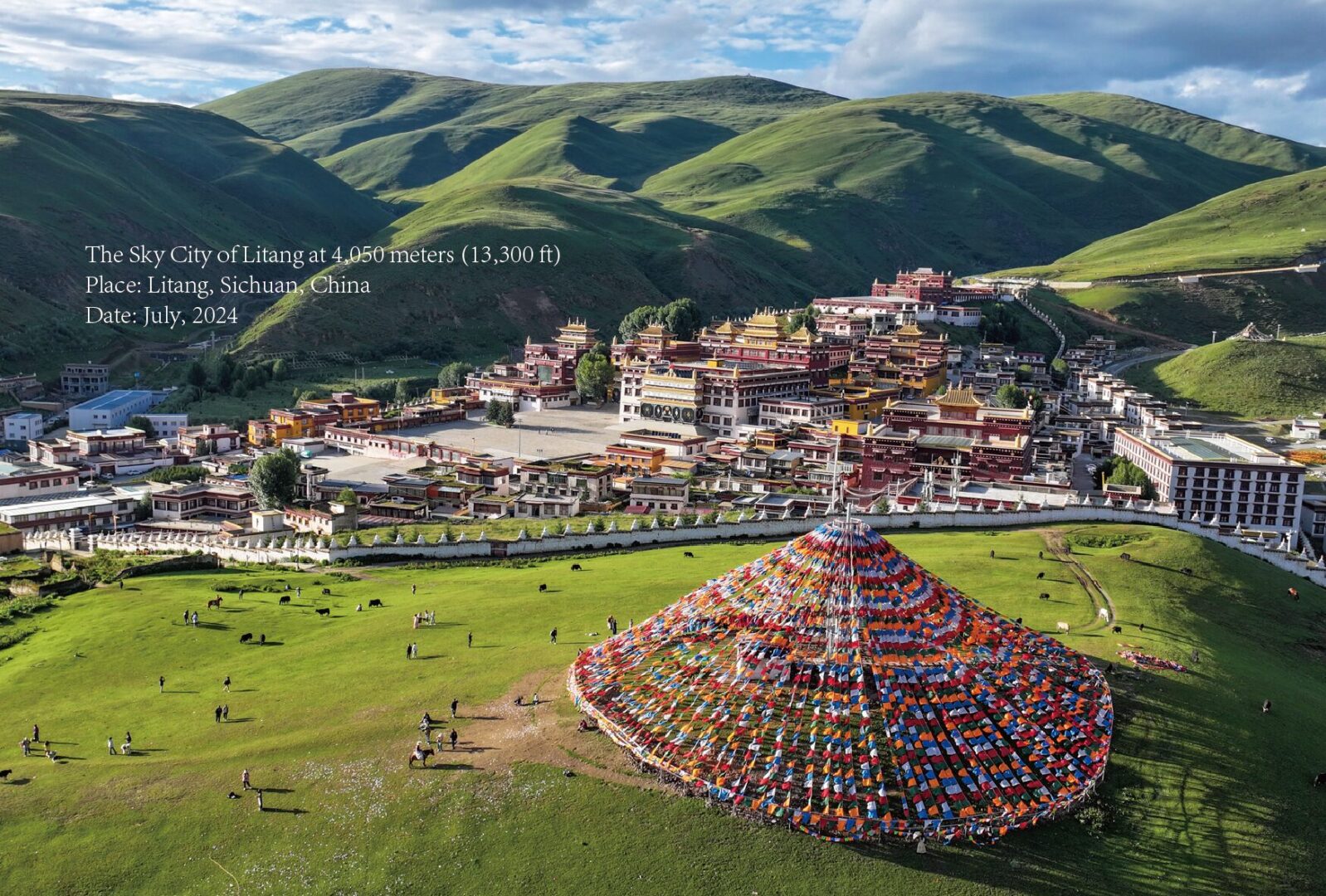
- Western Sichuan — May–June for wildflowers; July–August brings afternoon storms and slick mountain roads. Litang, Jiuzhaigou, the Hailuogou glacier, grassland monasteries. Best done as a self-drive from Chengdu.
- The northeast — Heilongjiang, Jilin and Liaoning are pleasant in summer. Good time for the North Korean border or China’s northernmost town.
⚠️ Avoid city summers. Beijing, Shanghai, Xi’an, Chongqing, Hangzhou, Wuhan and Guangzhou in July and August are genuinely punishing.
Autumn (September–November) — the good one
If you can choose your dates, choose late September to early November. Clear air, stable weather, comfortable temperatures, and nearly everywhere at its best.
⚠️ Avoid October 1–7, Golden Week. After the 7th is the single best stretch in the Chinese calendar.
- Beijing and the Great Wall — red leaves along the ridgelines
- Western Sichuan — the full autumn palette across Ganzi and Aba; Chengdu is cool, and hotpot makes sense again
- Jiangnan — as in spring, plus osmanthus in flower in Hangzhou and harvest across the Anhui and Jiangxi villages
- Guilin and Guangxi — around 20°C, low humidity, and rivers holding the reflection of the peaks
- Guizhou — Fanjingshan in mist, and golden terraces around the Miao and Dong villages
- Hunan — Zhangjiajie with clear sightlines instead of cloud; Fenghuang old town in autumn colour
- Yunnan — 15–25°C across Dali, Lijiang and Shangri-La; the Yuanyang terraces at harvest
- Xinjiang — Kashgar, Tashkurgan and the Pamir at their driest and clearest in the south; Kanas and Ili in the north with red valleys and gold desert edges
Winter (December–February) — fire and ice
- Snow and ice — Harbin’s Ice and Snow World, skiing in the Altay of northern Xinjiang, and the ice-express trains
- Cities — Beijing off-season, occasionally under snow, is a genuinely good idea. Guangdong and Shenzhen stay mild all winter, though shops shut for Spring Festival.
- Escaping the cold — Sanya on Hainan is the domestic Hawaii; Xishuangbanna, Mile and Kunming in Yunnan stay warm and dry
- Festival season — the four or five days after Spring Festival are the best time to see New Year properly, especially in Fujian and Guangdong: flower markets, temple parades, whole villages in the street
⚠️ Avoid the Spring Festival peak itself. Tickets vanish, prices spike, and the entire country is travelling at once.
Times and places to skip
1. Jiangnan plum rains — mid-June to early July. Three or four weeks of continuous rain across Shanghai, Hangzhou, Suzhou, Nanjing, Anhui and Jiangxi. Nothing dries, humidity sits near saturation, and the temperature climbs. Think of it as a permanent outdoor sauna: waterproof shoes matter more than an umbrella. Go northwest instead — Qinghai and Gansu are dry.
2. The furnace cities — July and August. Worst offenders are Chongqing, Wuhan and Nanchang; Xi’an, Shanghai and Beijing are hot and crowded. Walking around them is like standing in front of a hair dryer. Go west and up.
3. Damp southern winter — late December to early February. Cities along the Yangtze — Shanghai, Hangzhou, Chengdu, Chongqing, Changsha — sit between 0 and 5°C with high humidity and no central heating. It’s colder than the number reads. Go north for snow and radiators, or south to Sanya and Xishuangbanna.
4. Typhoon season — August and September. Guangdong, Fujian, Zhejiang and Hainan. Expect cancelled flights and trains, and build slack into island plans (Xiamen, Pingtan).
5. The three national holidays.
- May 1st, three to five days
- October 1–7, Golden Week
- Spring Festival, January or February, seven to ten days
Crowds at a scale that’s hard to convey, congested transport, tripled hotel prices, hours of queueing. Either avoid them or plan around them deliberately.
Month by month
| Month | Where to go | Why |
|---|---|---|
| Jan | Fujian, Guangdong | Spring Festival at its most traditional, flower markets, temple parades |
| Feb | Fujian, Hainan, Guangdong | Warm escapes, New Year festivities, tropical beaches |
| Mar | Jiangnan, southern Anhui, northern Jiangxi | Blossom, water towns, gardens, mild air |
| Apr | Jiangnan, Huangshan villages, Wuyuan, Nyingchi, western Yunnan, Guizhou, Guangxi | Peach blossom under the Himalayas, rhododendron in Yunnan, tea terraces, flooded rice terraces |
| May | Western Yunnan, Nyingchi, Guizhou, Guangxi, Zhangjiajie | End of the dry season — clear skies, wildflowers, misty peaks |
| Jun | Yunnan, Tibet, Xinjiang, Qinghai, Gansu, western Sichuan, the northeast, Inner Mongolia | The plateau opens, grassland greens, long days, road-trip season |
| Jul | Tibet, Xinjiang, Qinghai, Gansu, western Sichuan, northeast, Inner Mongolia | Peak high-altitude summer, Naadam, rapeseed fields, forest and lake country |
| Aug | Tibet, Xinjiang, western Sichuan, the northeast | Mountains and lakes; the west stays mild while the cities bake |
| Sep | Beijing, Jiangnan, Guilin, Guizhou, Hunan, Yunnan, Xinjiang | The month everything looks its best |
| Oct | As September, after the 7th | Autumn colour, dry air, harvest terraces |
| Nov | Yunnan, southern Xinjiang, western Sichuan | Cool and clear, late foliage, terraces after harvest |
| Dec | Harbin, Altay, Sanya, Xishuangbanna | Ice festivals and skiing, or a tropical winter |
- #china essentials
- #planning
- #seasons
- #weather