
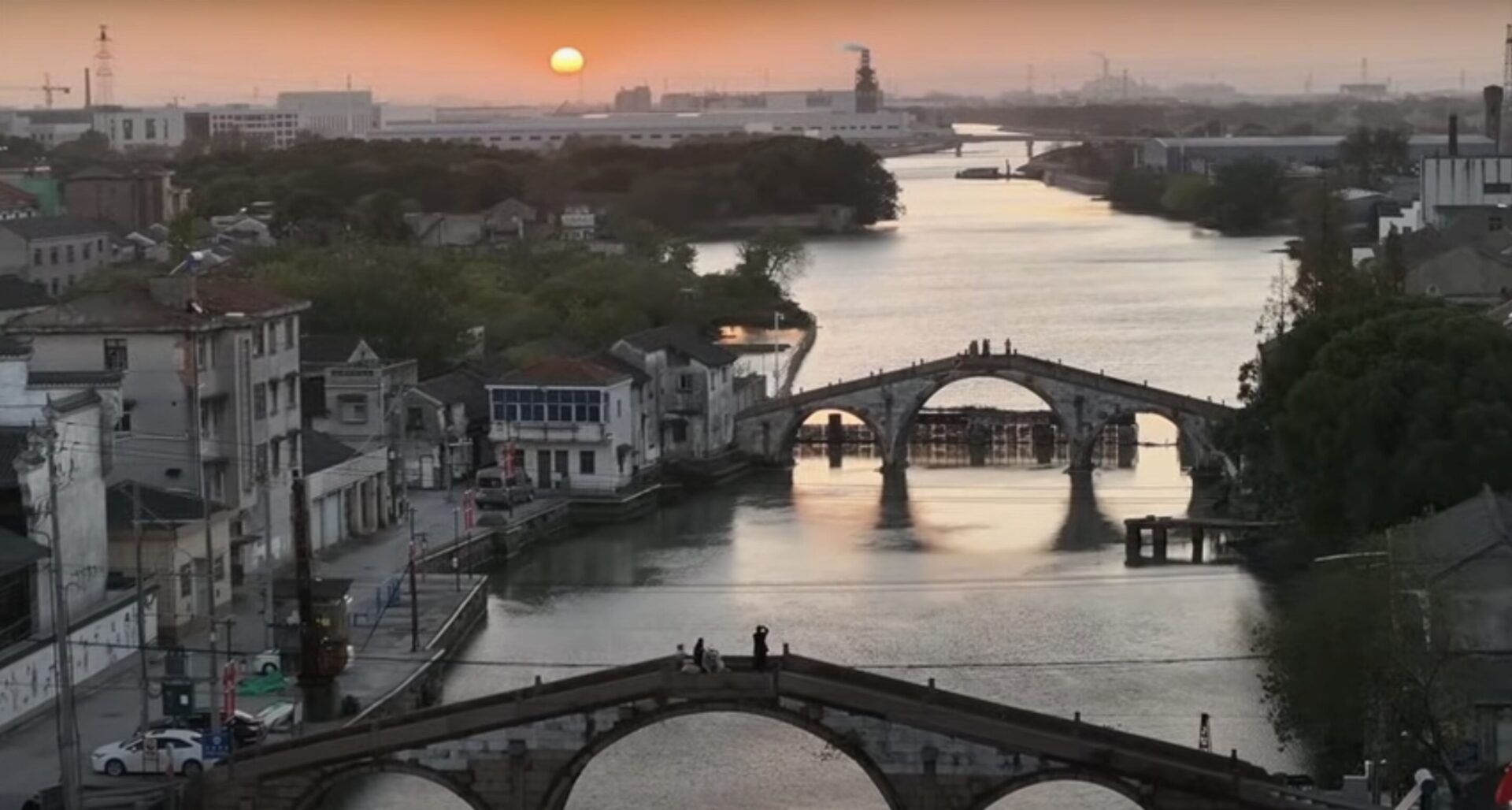
The Jiangnan water towns are genuinely beautiful and genuinely managed. Knowing which one is a ticketed production, which is a working town, and which is both saves the trip.
The water towns of the Jiangnan — the Yangtze delta, roughly Suzhou to Hangzhou — are a genuine architectural type rather than a theme: settlements built along canals, where the waterway was the street, goods moved by boat, and the houses put their front doors on the water.
They’re beautiful. They’re also, mostly, actively managed, and the difference between them is worth knowing before you pick one.
The three grades
Fully produced. Wuzhen is the flagship: gated, ticketed, immaculately restored, with the residents largely relocated and the businesses operated centrally. It is genuinely gorgeous — the night lighting on the canals is remarkable — and it is a curated environment rather than a town. Its east and west scenic zones are separately ticketed; the west is the better one, and you should stay inside overnight to have it after the day-trippers leave.
Somewhere in between. Xitang and Tongli are ticketed but still have residents, ordinary shops and people hanging washing out. Busy in the day, quiet by nine.
Still a town. Nanxun is the pick if you want the architecture without the production: free to enter at the time of writing, quiet, and with a run of remarkable merchant mansions — several built by the silk families who made fortunes here, one with a European wing, one with a private library. Fewer people, no gate, and it’s our favourite of the set.
Also worth knowing: Zhouzhuang (the most famous and the most crowded), and Shaoxing, which isn’t a water town so much as a canal city and is fully alive.
What to actually do
Walk both banks and cross every bridge. The bridges are the architecture — humpbacked stone arches, some Ming and Yuan, and each one is a different view down the canal.
Take a boat, early. Hand-poled, twenty minutes, and much better at 7am than at 2pm.
Stay the night. This is the single decision that changes a water town from a queue into a place. Between about 6pm and 9am they’re nearly empty and the reflections are still.
The bridges are the point
The crafts and the food
The delta’s traditional industries are still visible where they haven’t been turned into gift shops: silk — this was the silk region — plus indigo cloth, bamboo, wood carving and rice wine. Shaoxing’s yellow wine is the region’s serious drink.
Eating is Jiangnan cooking: slightly sweet, braised, river-based.
- Braised pork belly (东坡肉) — see Shunde for the southern approach; this is the eastern one
- River shrimp stir-fried with Longjing tea
- Hairy crab in autumn, which the whole region takes extremely seriously
- Rice cakes, sticky rice in lotus leaf, and osmanthus sweets
See our food guide.
Practical notes
Getting there: all of these sit within an hour or two of Shanghai, Hangzhou or Suzhou by rail and bus. Wuzhen and Nanxun are both between Hangzhou and Suzhou.
When: March to May and September to November. The delta in spring — blossom, canals, mild air — is one of the good weeks in the Chinese year. Avoid mid-June to early July, the plum rains: three weeks of continuous rain and total humidity. See when to visit China.
Avoid national holidays absolutely. These towns are small, and the crowd numbers don’t fit in them.
Nearby: Hangzhou’s West Lake and tea hills, Suzhou’s gardens, and southern Anhui a couple of hours west for the same era of architecture in a mountain setting.
- #zhejiang
- #wuzhen
- #water towns
- #jiangnan
- #canals