
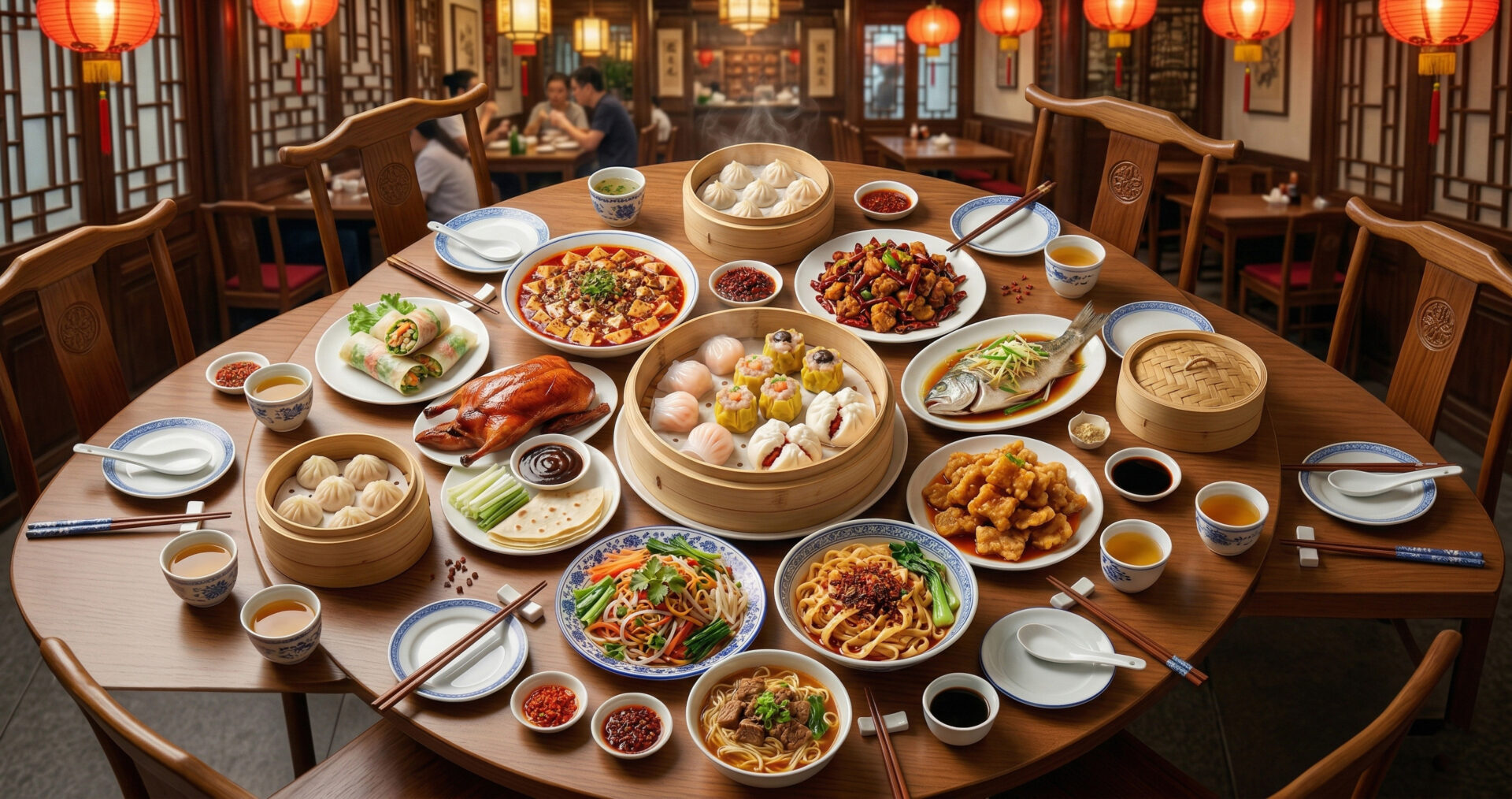
Saying "Chinese food" is like saying "European food." Thirty-two provinces, thirty-two kitchens, with the dishes worth crossing a province for and the allergens worth knowing about.
First, the question everybody asks
Yes — somewhere in this country, someone eats something you’d find alarming. A handful of regions have dishes involving animals or organs that don’t appear on Western menus, and offal is genuinely popular in several cuisines.
It’s also a rounding error. Out of thousands of dishes across thirty-odd regional traditions, those few are what travel abroad as a story, and they’re no more common here than in Vietnam, Laos or Thailand — countries nobody thinks to ask about.
What deserves the attention instead is the scale of the thing. China is the most internally varied food country on earth. Saying “Chinese food” is like saying “European food”: Turkish, Italian, French and German cooking share a continent and very little else, and the same is true here. Every province has a distinct kitchen, with its own staple grain, its own heat tolerance and its own idea of what a good meal is.
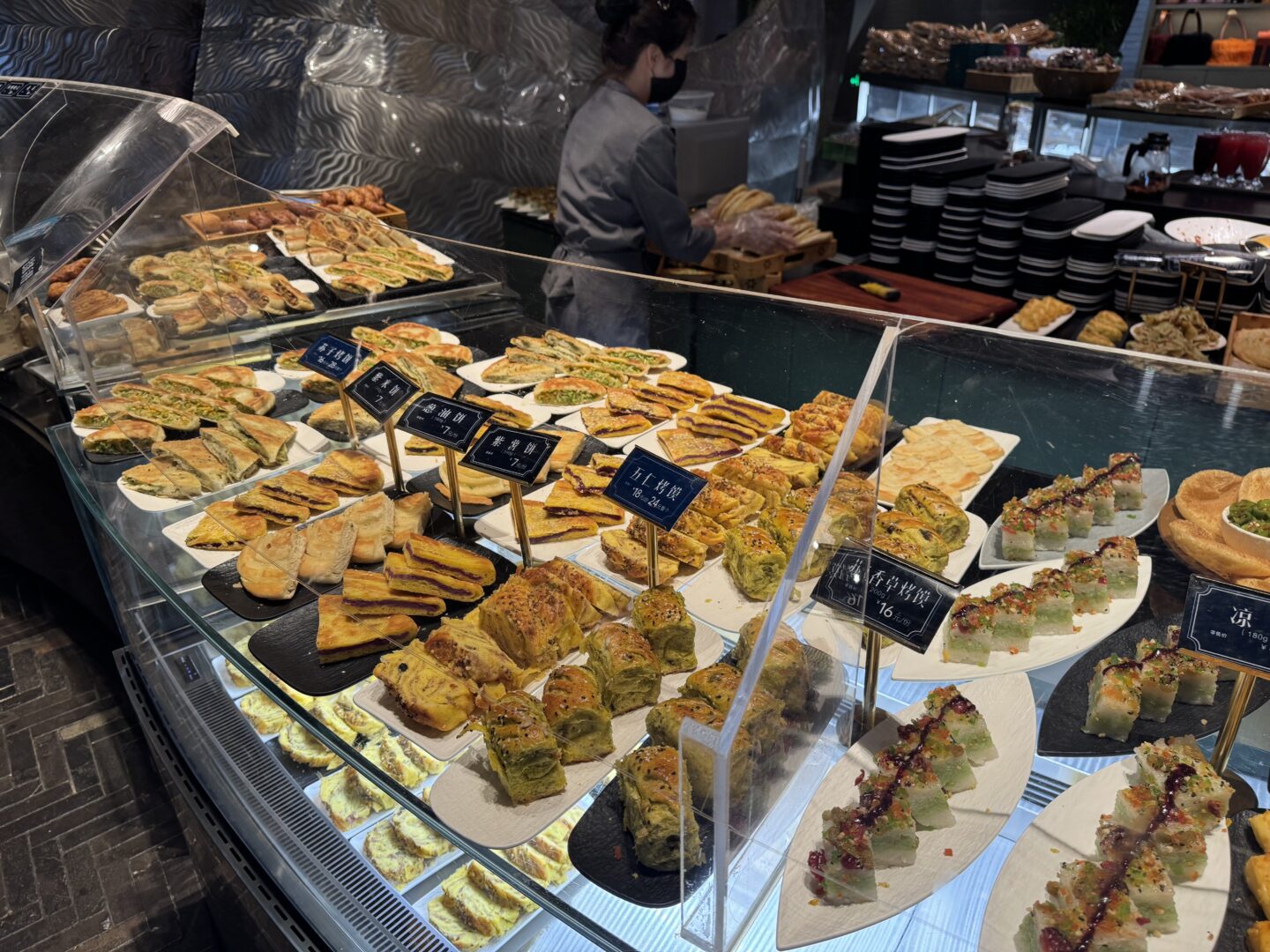
What travels abroad is a thin slice — mostly Cantonese, a bit of Sichuan, and what people here call 家常菜 (jiācháng cài), home cooking: tomato and egg, soy-braised aubergine, tofu soup, chicken with whatever vegetable is in season. Excellent food, and about two percent of the picture.
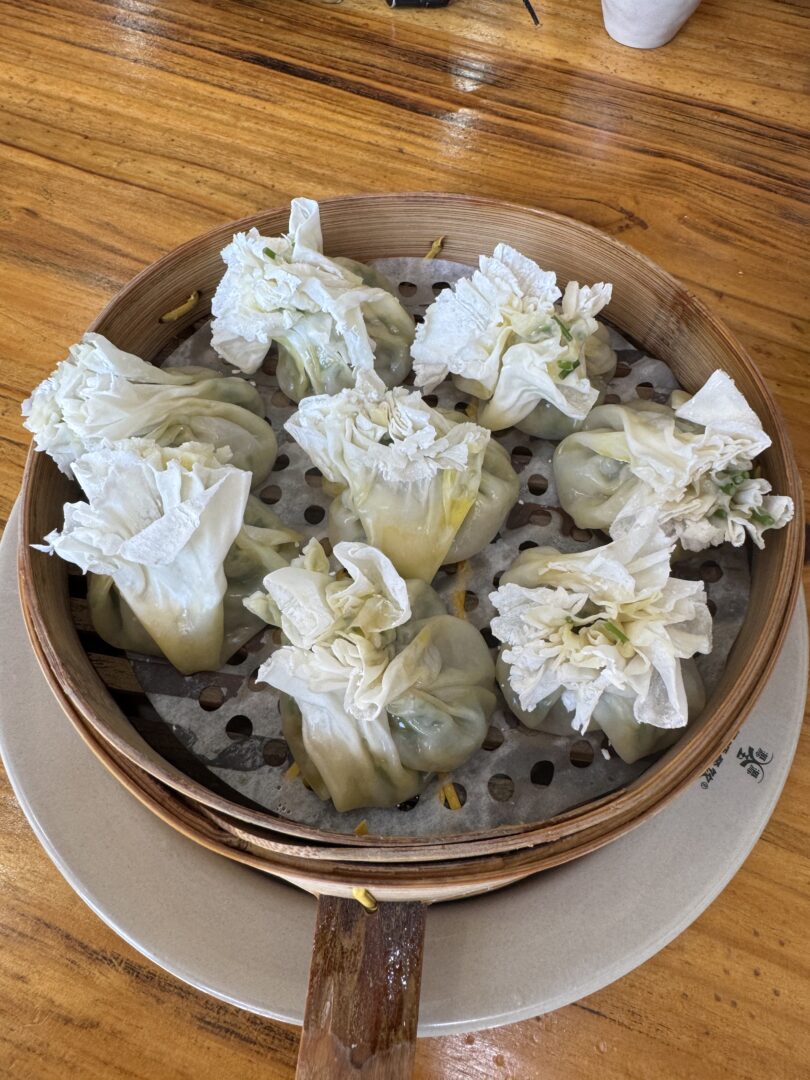
Anhui xiaolongbao — filled steamed dumplings, a world away from the Shanghai version
Eating as the social operating system
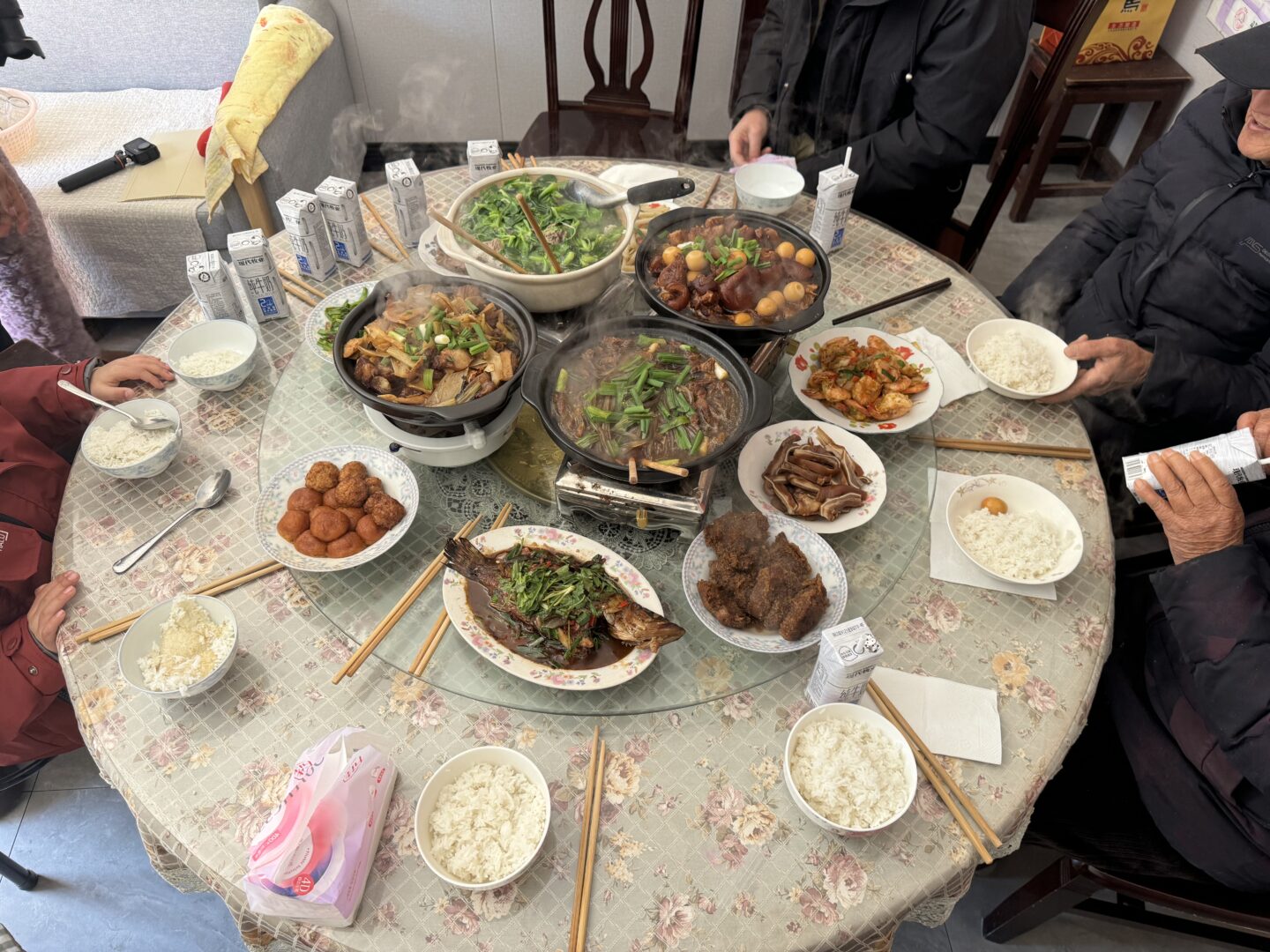
Before the list, the thing that matters more than any single dish: meals here are shared. Dishes arrive in the middle of the table and everybody eats from all of them. Ordering an individual main is possible and slightly sad — you’ll have eaten one thing instead of eight.
This has consequences. A meal is how relationships get built, which is why business is done over lunch rather than in meeting rooms, and why the seating order, who pours, and who insists on paying carry real weight. Refusing an invitation is a bigger signal here than at home.
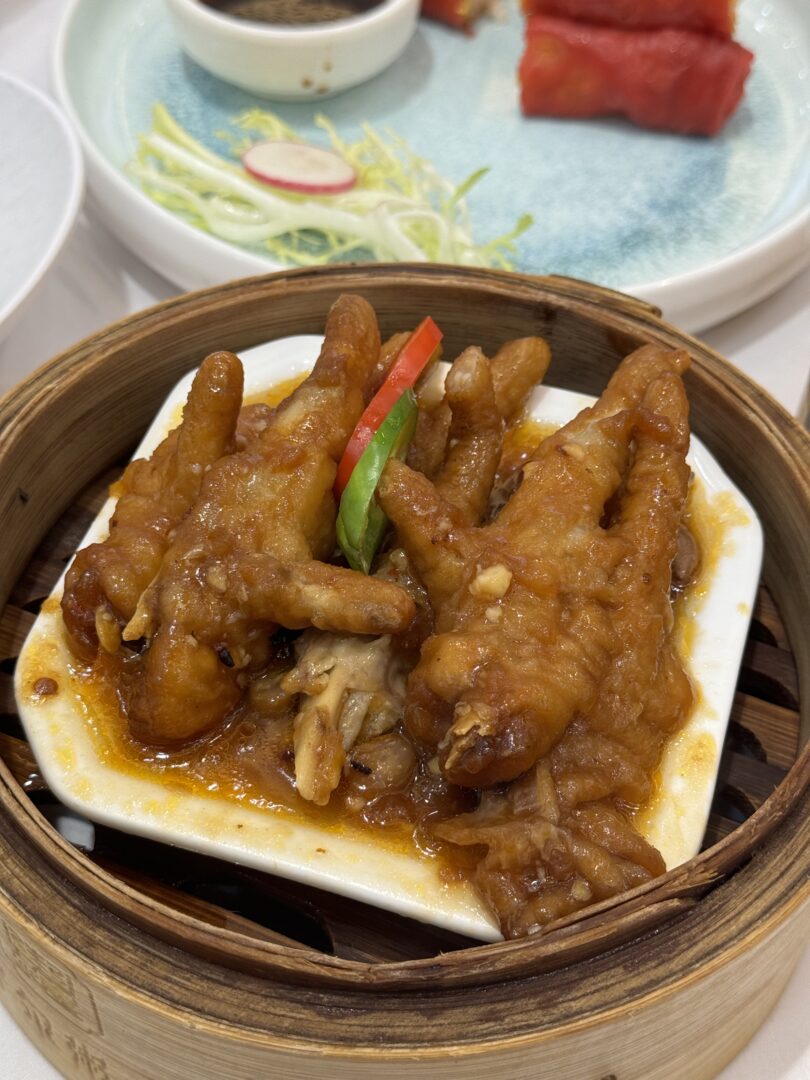
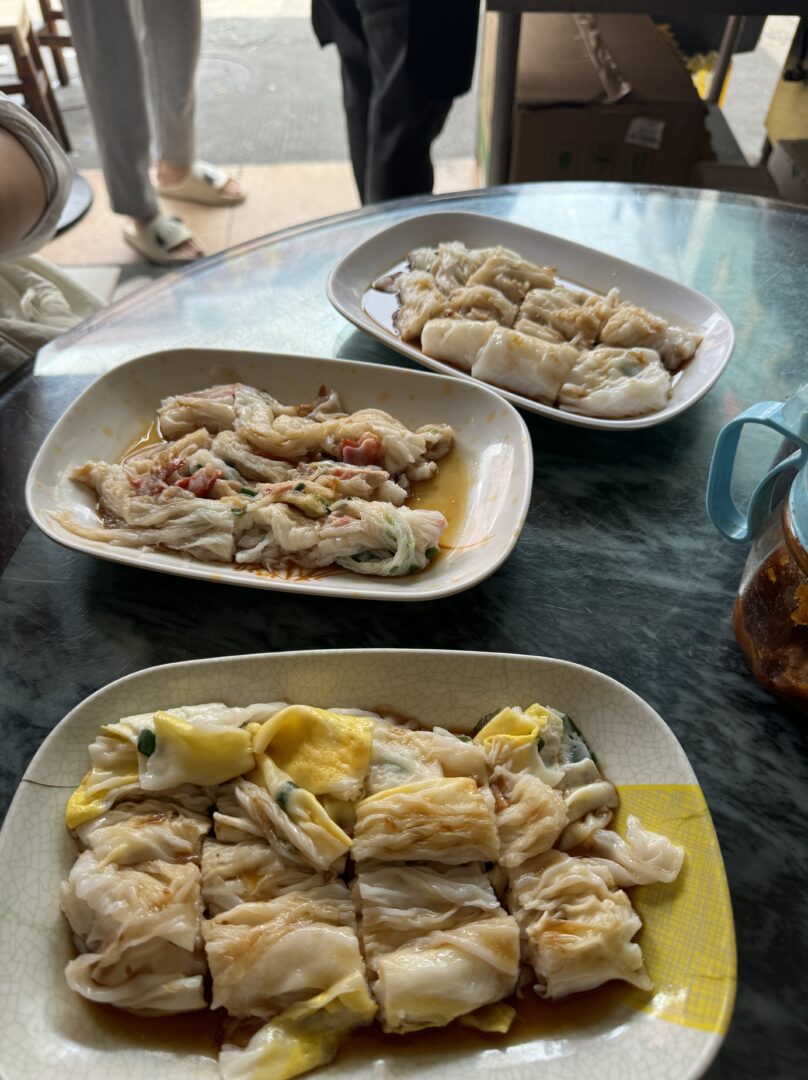
It runs at every register: 早茶 (zǎo chá) in Guangdong, where breakfast is tea and thirty small plates over two hours; night-market grazing, where you eat standing up and keep moving; and wedding or festival banquets, where the host’s generosity is measured in dishes nobody can finish.
Learn the sharing etiquette and the food gets better, because you’ll be ordering the way the menu was designed.
The provinces
Anhui (安徽)
Slow cooking, wild mountain herbs, earthy and unhurried. Family-style by default.
- 火腿炖甲鱼 (huǒtuǐ dùn jiǎyú) — soft-shell turtle stewed with cured ham
- 红烧竹笋 (hóngshāo zhúsǔn) — bamboo shoots braised in soy until they go silky
- 熏鸭 (xūn yā) — smoked duck, sliced for the table Watch for: shellfish, soy, peanuts. See our southern Anhui road trip.
Beijing (北京)
Imperial roots: roasted meat, wheat noodles, and banquets built to impress.
- 北京烤鸭 (Běijīng kǎoyā) — Peking duck, with pancakes, scallion and hoisin
- 炸酱面 (zhàjiàng miàn) — noodles under fermented soybean paste and minced pork
- 羊肉火锅 (yángròu huǒguō) — lamb hotpot, cooked at the table in clear broth Watch for: gluten, soy.
Chongqing (重庆)
Chilli and Sichuan pepper — 麻辣 (málà), numbing-hot. Hotpot here is a social institution, not a meal.
- 重庆火锅 (Chóngqìng huǒguō) — the fiercest broth in China
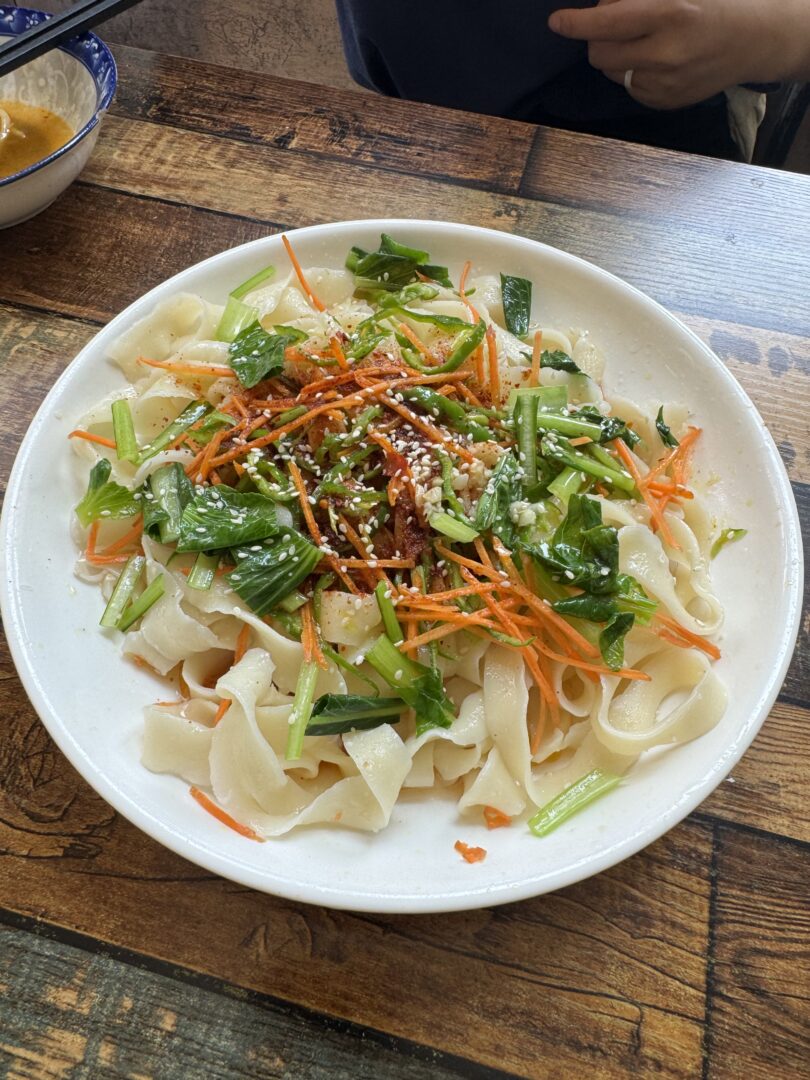
- 小面 (xiǎo miàn) — breakfast noodles in chilli oil; the city’s real signature
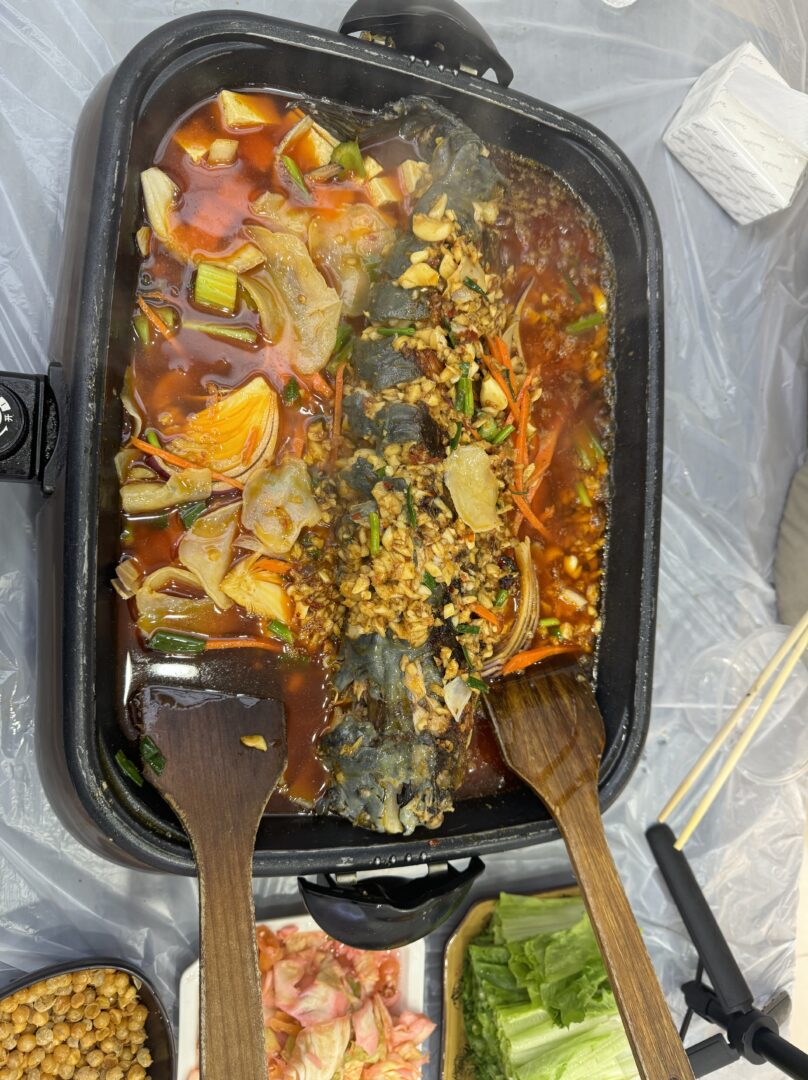
- 烤鱼 (kǎoyú) — whole fish grilled under chilli, garlic and herbs Watch for: peanuts, sesame, serious chilli. See Chongqing.
Chongqing xiaomian — breakfast, and the most-eaten dish in the city
Fujian (福建)
Delicate, soup-driven, seafood-forward. Meals are many small dishes rather than a few big ones.
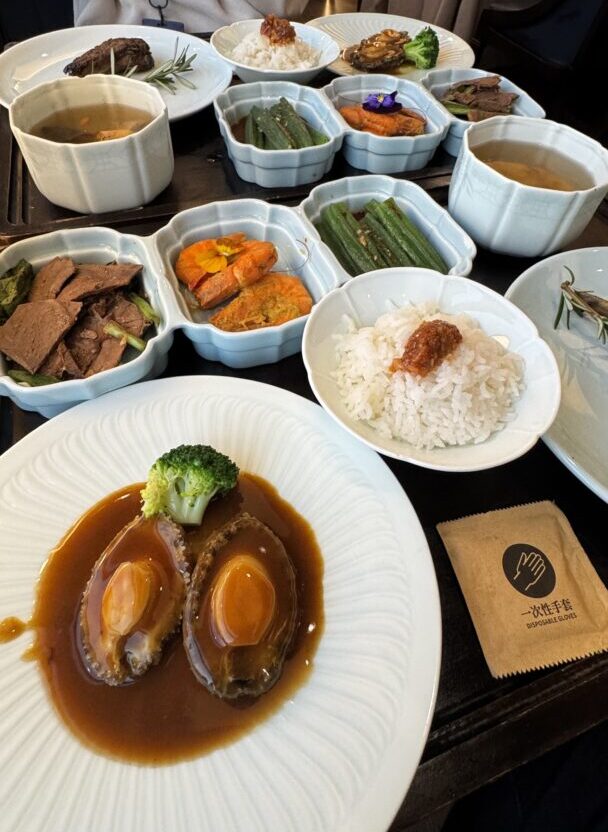
- 佛跳墙 (fó tiào qiáng) — “Buddha jumps over the wall,” a luxurious broth of abalone, fish maw and chicken
- 鱼丸 (yú wán) — bouncy fish balls, usually in soup
- 蚝烙 (háo lào) — oyster omelette with a crisp starch edge Watch for: shellfish, seafood stock. See Quanzhou.
Gansu (甘肃)
Hand-pulled noodles, lamb, and bread. Eaten standing up in a noodle shop as often as at a table.
- 兰州拉面 (Lánzhōu lāmiàn) — clear beef broth, hand-pulled noodles, coriander, chilli oil
- 牛肉面 (niúròu miàn) — the same dish’s heartier cousin
- 烤羊肉 (kǎo yángròu) — lamb skewers with cumin and chilli Watch for: wheat. See Dunhuang.
Guangdong (广东)
Fresh ingredients, restrained seasoning, and the belief that a good fish needs almost nothing done to it. Home of 早茶.
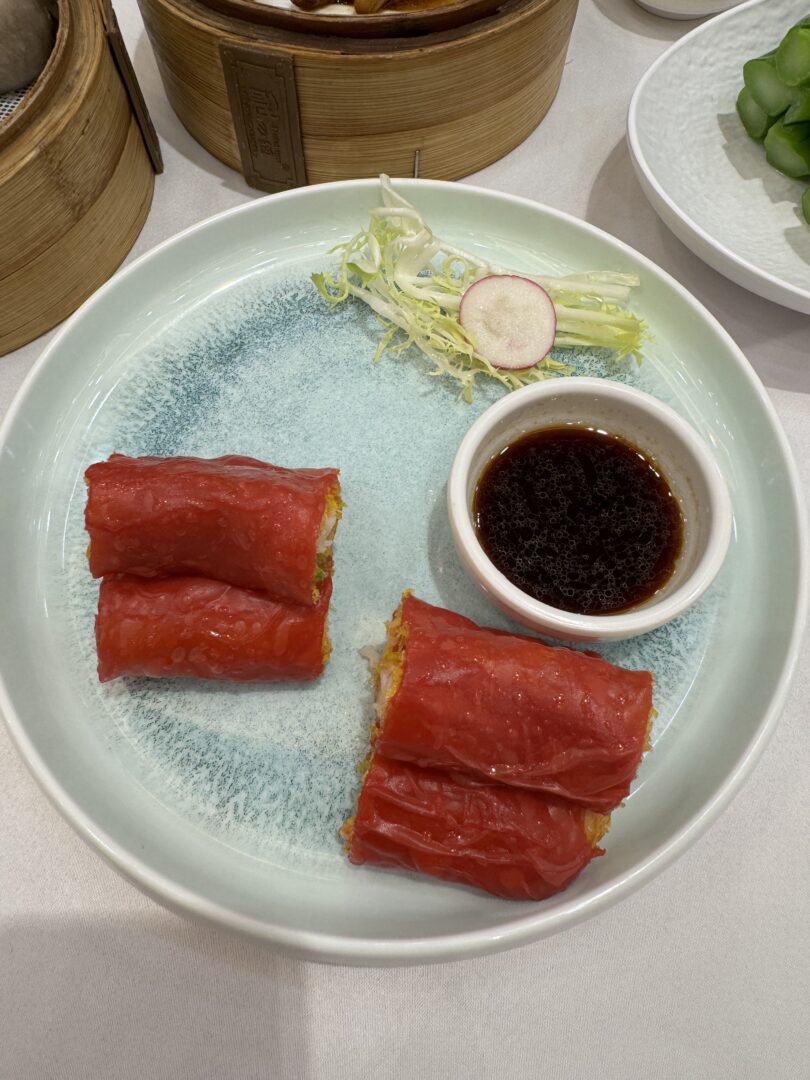
- 点心 (diǎnxīn) — dim sum: dozens of small steamed and fried things
- 烧鹅 (shāo é) — roast goose, crisp-skinned
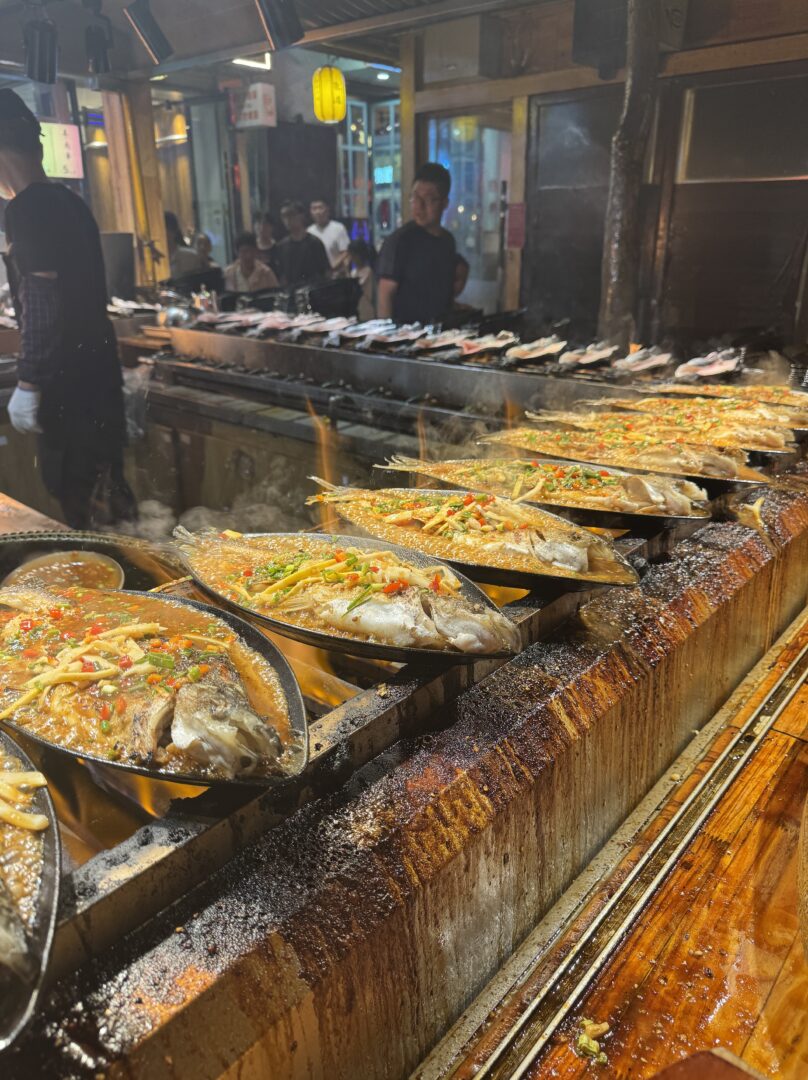
- 清蒸鱼 (qīngzhēng yú) — whole fish steamed with ginger and scallion Watch for: shellfish, gluten and peanuts hiding in dim sum. See Guangzhou and Shunde.
Shunde brunch — Guangdong’s 早茶, where breakfast takes two hours
Guangxi (广西)
Rice-based, sour and spicy. Round tables, shared plates.
- 桂林米粉 (Guìlín mǐfěn) — rice noodles with pickles and braised meat
- 螺蛳粉 (luósī fěn) — snail rice noodles: pungent, sour, addictive
- 清蒸河鱼 (qīngzhēng hé yú) — river fish, steamed simply Watch for: peanuts, occasional shellfish. See Guilin and Yangshuo.
Guizhou (贵州)
Bold, sour and fermented — the pickle jar is the foundation of the cuisine.
- 酸汤鱼 (suān tāng yú) — fish in fermented tomato broth, the region’s masterpiece
- 辣子鸡 (làzǐ jī) — chicken stir-fried through a pile of dried chillies
- 米粉 (mǐfěn) — rice noodles, spicy or clear, eaten at any hour Watch for: peanuts, soy, chilli. See Guizhou.
Hainan (海南)
Tropical: coconut, seafood, herbs, and poaching rather than frying.
- 文昌鸡 (Wénchāng jī) — poached chicken with dipping sauces
- 海南鸡饭 (Hǎinán jīfàn) — chicken rice, cooked in the poaching broth
- 椰子鸡 (yēzi jī) — chicken simmered in fresh coconut water Watch for: seafood, coconut. See Hainan.
Hebei (河北)
Wheat, savoury, northern and filling.
- 驴肉火烧 (lǘròu huǒshāo) — flatbread stuffed with braised donkey
- 包子 (bāozi) — steamed buns, pork or vegetable
- 饼 (bǐng) — pan-fried stuffed pancakes Watch for: wheat throughout, plus soy and sesame.
Heilongjiang (黑龙江)
Cold-climate cooking: pork, dumplings, and a lot of fermented cabbage.
- 锅包肉 (guō bāo ròu) — sweet-and-sour pork with a shattering crust
- 酸菜 (suāncài) — pickled cabbage, in everything
- 饺子 (jiǎozi) — dumplings, boiled or pan-fried Watch for: pork, wheat, soy. See China’s north pole.
Henan (河南)
Wheat noodles and long-simmered stews. Unshowy, deeply satisfying.
- 蒸面 (zhēng miàn) — thick steamed noodles under braised pork
- 红烧面 (hóngshāo miàn) — noodles cooked down in rich broth
- 胡辣汤 (hú là tāng) — peppery breakfast soup, thick with meat and vegetables Watch for: wheat, soy, sesame. See the cave dwellings of Sanmenxia.
Hubei (湖北)
River fish and broth, with rice as the anchor.
- 武昌鱼 (Wǔchāng yú) — steamed freshwater bream
- 热干面 (rè gān miàn) — hot dry noodles in sesame paste; Wuhan’s breakfast
- 糯米蒸肉 (nuòmǐ zhēng ròu) — pork steamed under sticky rice flour Watch for: fish, wheat, sesame.
Hunan (湖南)
Hotter than Sichuan and less numbing — straight chilli heat, plus smoking and curing.
- 剁椒鱼头 (duòjiāo yú tóu) — fish head buried in chopped pickled chilli
- 毛氏红烧肉 (Máo shì hóngshāo ròu) — red-braised pork belly, sweet and dark
- 辣子鸡 (làzǐ jī) — fried chicken with more chilli than chicken Watch for: chilli, peanuts, soy. See Zhangjiajie.
Inner Mongolia (内蒙古)
Herding food: meat and dairy, in quantity.
- 烤全羊 (kǎo quán yáng) — whole roast lamb, for celebrations
- 奶茶 (nǎichá) — salted milk tea, drunk all day
- 手拉面 (shǒu lā miàn) — thick chewy noodles in lamb or beef broth
- 馒头夹肉 (mántou jiā ròu) — steamed buns split and filled with meat
- 马奶酒 (mǎ nǎi jiǔ) — airag, fermented mare’s milk Dairy is central in a way it isn’t anywhere else in China: milk, yoghurt, dried curd, cheese. Lamb appears in nearly every meal. Watch for: dairy, lamb, wheat. See the grasslands.
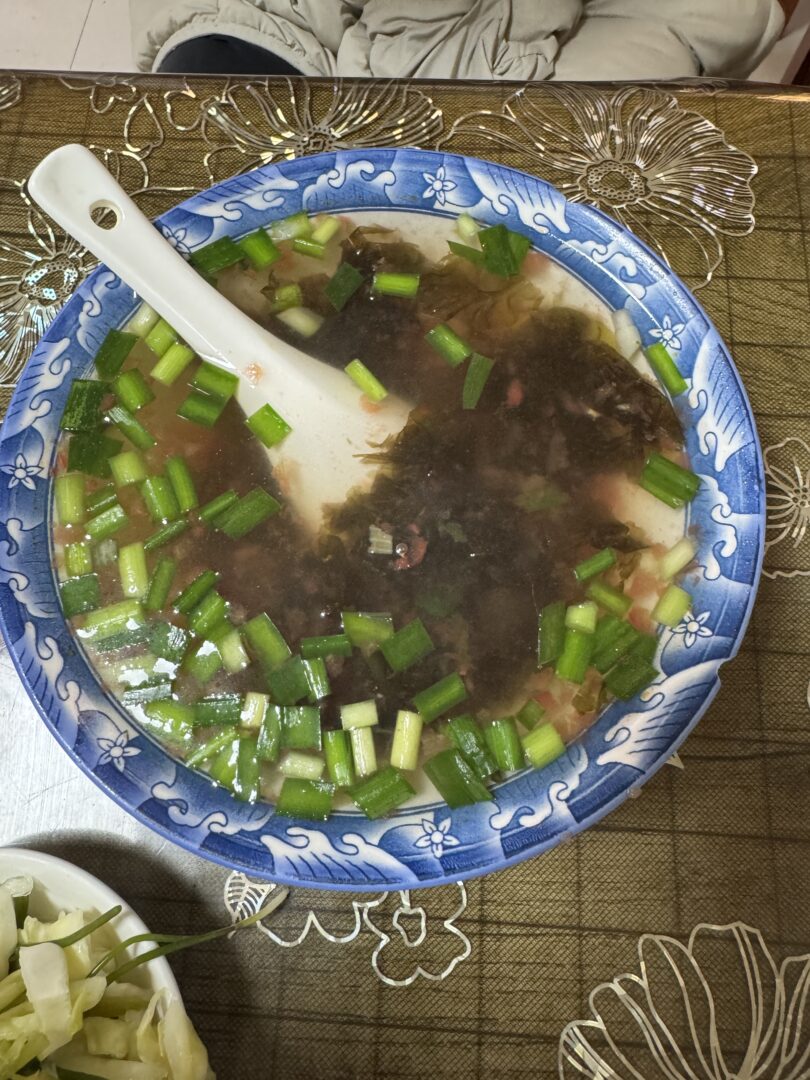
Inner Mongolian yoghurt noodle soup — dairy where the rest of China would use stock
Jiangsu (江苏)
Su cuisine: precise, subtly sweet, and the most presentation-conscious kitchen in the country.
- 松鼠桂鱼 (sōngshǔ guìyú) — “squirrel fish,” scored, fried and sauced sweet-sour
- 狮子头 (shīzitóu) — lion’s head meatballs, braised until they collapse
- 清蒸大闸蟹 (qīngzhēng dàzháxiè) — hairy crab, steamed, in autumn only Watch for: shellfish, pork, soy.
Jiangxi (江西)
Spicy and pickle-heavy, in the shadow of Hunan but distinctly its own.
- 南昌包子 (Nánchāng bāozi) — steamed buns, pork or vegetable
- 辣鱼头 (là yú tóu) — fish head braised in chilli
- 酸菜扣肉 (suāncài kòuròu) — pork steamed over preserved greens Watch for: pork, soy, chilli. See Jingdezhen.
Jilin (吉林)
Cold-weather food with a strong Korean influence in the east.
- 锅包肉 (guō bāo ròu) — sweet-and-sour pork
- 玉米饼 (yùmǐ bǐng) — corn pancakes, sometimes stuffed
- 饺子 (jiǎozi) — dumplings, always Watch for: pork, wheat, soy. See North Korea’s holy lake.
Liaoning (辽宁)
Northern and coastal at once — meat, seafood and pickles.
- 蒜爆肉 (suàn bào ròu) — pork stir-fried hard with garlic and soy
- 海鲜煎饼 (hǎixiān jiānbǐng) — seafood pancake with egg and scallion
- 包子 (bāozi) — steamed buns Watch for: seafood, pork, wheat, soy. See the North Korean border.
Ningxia (宁夏)
Hui Muslim cooking: lamb and beef, no pork, and bread with everything.
- 宁夏烤羊肉 (Níngxià kǎo yángròu) — spiced lamb skewers
- 拉面 (lāmiàn) — hand-pulled noodles in meat broth
- 红烧牛肉 (hóngshāo niúròu) — beef braised slowly in soy and spice Watch for: wheat, sometimes soy. Pork-free by custom. See Zhongwei.
Ningxia lamb — Hui Muslim cooking, and some of the best lamb in China
Qinghai (青海)
Tibetan plateau food: yak, barley, dairy, and the calories to match the altitude.
- 酥油茶 (sūyóu chá) — yak butter tea, salted, drunk constantly
- 青稞饼 (qīngkē bǐng) — highland barley flatbread
- 炖牦牛肉 (dùn máoniúròu) — yak stewed for hours Watch for: dairy, red meat. See Tongren.
Shaanxi (陕西)
Wheat country at its best, and the best street food in China.
- 油泼扯面 (yóupō chěmiàn) — biang biang noodles, hand-torn, under scalding chilli oil
- 肉夹馍 (ròu jiā mó) — flatbread packed with slow-braised pork; the original burger
- 羊肉泡馍 (yángròu pàomó) — lamb stew you tear your own bread into Watch for: wheat, lamb, soy. See Xi’an.
Shandong (山东)
Lu cuisine, the oldest of the great traditions — savoury, salty, seafood-heavy, and the ancestor of northern restaurant cooking.
- 九转大肠 (jiǔ zhuǎn dàcháng) — braised intestine, a genuine delicacy done properly
- 糖醋鲤鱼 (tángcù lǐyú) — sweet-and-sour carp
- 德州扒鸡 (Dézhōu bā jī) — spiced braised chicken, sold on train platforms for a century Watch for: seafood, pork, soy.
Shanghai (上海)
Sweeter and softer than its neighbours, with a lot of braising.
- 小笼包 (xiǎolóng bāo) — soup dumplings; eat carefully
- 红烧肉 (hóngshāo ròu) — pork belly braised in soy and sugar until glossy
- 醉鸡 (zuì jī) — chicken cured in rice wine, served cold Watch for: pork, gluten, soy.
Shanxi (山西)
Vinegar and wheat. The province takes both extremely seriously.
- 刀削面 (dāoxiāomiàn) — knife-shaved noodles, sliced straight into the pot
- 醋溜肉片 (cùliū ròupiàn) — pork in a sharp vinegar sauce
- 包子 (bāozi) — steamed buns Watch for: wheat, pork, soy.
Sichuan (四川)
The most influential regional cuisine in modern China: 麻辣 heat, fermented bean paste, and layered complexity behind the chilli.
- 麻婆豆腐 (mápó dòufu) — silken tofu in numbing chilli sauce with minced pork
- 宫保鸡丁 (gōngbǎo jīdīng) — chicken with peanuts, dried chilli and Sichuan pepper
- 火锅 (huǒguō) — hotpot, cooked communally Watch for: peanuts, soy, chilli. See Sichuan.
Taiwan (台湾)
Fujianese, Hakka and indigenous strands, expressed mostly through night markets.
- 牛肉麵 (niúròu miàn) — beef noodle soup, the island’s national dish
- 小籠包 (xiǎolóng bāo) — soup dumplings, arguably perfected here
- 蚵仔煎 (ô-á-tsian) — oyster omelette, chewier than the Fujian version
- 臭豆腐 (chòu dòufu) — stinky tofu, deep-fried, with pickles
- 珍珠奶茶 (zhēnzhū nǎichá) — bubble tea, invented here Night markets are the centre of gravity: small plates, eaten while walking, in enormous variety. Watch for: shellfish, gluten, soy, dairy, egg.
Tianjin (天津)
Seafood, wheat and a sweet-savoury streak, with a strong breakfast culture.
- 狗不理包子 (gǒubùlǐ bāozi) — the city’s famous stuffed buns
- 煎饼 (jiānbǐng) — savoury crêpe, made to order on a griddle
- 麻花 (máhuā) — fried dough twist, sweet and shatteringly crisp Watch for: wheat, pork, sesame.
Tibet (西藏)
Altitude cooking: barley, yak, dairy, and very little that needs a wok.
- 糌粑 (zānbā) — roasted barley flour, mixed with tea by hand
- 酥油茶 (sūyóu chá) — yak butter tea; an acquired taste that becomes essential
- 炖牦牛肉 (dùn máoniúròu) — stewed yak Watch for: dairy, red meat. See Lhasa.
Xinjiang (新疆)
Central Asian rather than Chinese: lamb, cumin, bread from a clay oven, and noodles pulled to order.
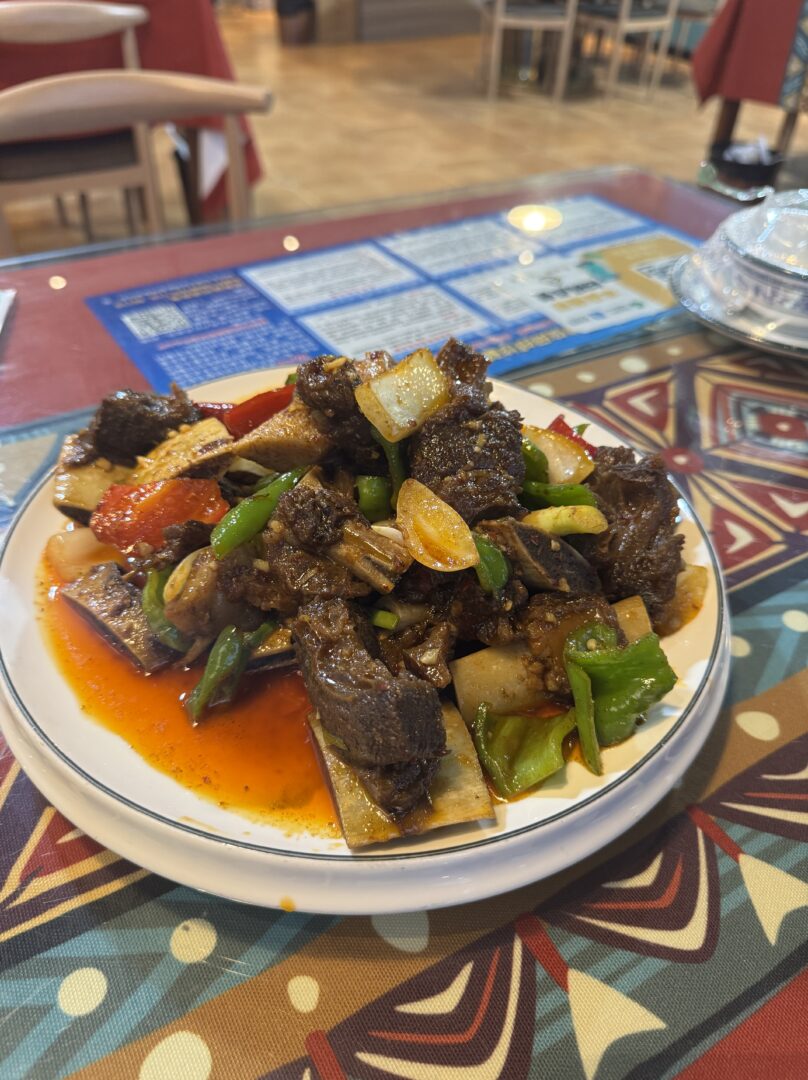
- 大盘鸡 (dàpán jī) — “big plate chicken,” with potato and hand-torn noodles
- 烤羊肉串 (kǎo yángròu chuàn) — lamb skewers over charcoal
- 拉面 (lāmiàn) — laghman, hand-pulled and stir-fried Watch for: wheat, lamb. See Kashgar and rural Kashgar street food.
Polo — Xinjiang pilaf, rice cooked in lamb fat with carrot and cumin
Yunnan (云南)
The most ingredient-driven kitchen in China: wild mushrooms, flowers, herbs, and cross-border influence from Myanmar, Laos and Vietnam.
- 过桥米线 (guòqiáo mǐxiàn) — crossing-the-bridge noodles, assembled at the table in scalding broth
- 汽锅鸡 (qìguō jī) — chicken steamed in a clay pot with no added water
- 饵块 (ěr kuài) — pressed rice cake, grilled or stir-fried Watch for: rice, occasional nuts and soy. And in summer: know your mushrooms. See Yunnan.
Zhejiang (浙江)
Fresh, light and slightly sweet, with strong tea and river influences.
- 西湖醋鱼 (Xīhú cù yú) — West Lake fish in vinegar sauce
- 东坡肉 (Dōngpō ròu) — braised pork belly named after a Song dynasty poet
- 龙井虾仁 (Lóngjǐng xiārén) — river shrimp stir-fried with Longjing tea leaves Watch for: pork, seafood, soy. See Qingtian.
Practical notes
Vegetarians eat well here. Every region has aubergine, greens, tofu in a dozen forms, mushrooms and bean curd skin. These aren’t concessions — they’re core dishes.
Vegans need to ask about stock. Vegetables are frequently cooked in chicken or pork broth without being described that way. 我吃素 (wǒ chī sù) communicates the intent; 不要肉汤 (bú yào ròu tāng) — no meat stock — closes the loophole.
Halal is easy. Lanzhou noodle shops, Xinjiang restaurants and Hui canteens are in every city, marked with green signage and Arabic script.
⚠️ Coeliac travellers, take care. Soy sauce contains wheat and is nearly universal, and 烤麸 (kǎofū) — a spongy wheat gluten — turns up in dishes presented as vegetarian. Carry your restriction written in Chinese.
The survival Chinese list has the phrases for all of the above.
- #china essentials
- #food
- #regional cuisine
- #dining