
Dunhuang was where the Silk Road split around the desert, and where a millennium of travellers left the greatest surviving body of Buddhist art anywhere. It's also a town with 200-metre dunes at the end of the bus route.
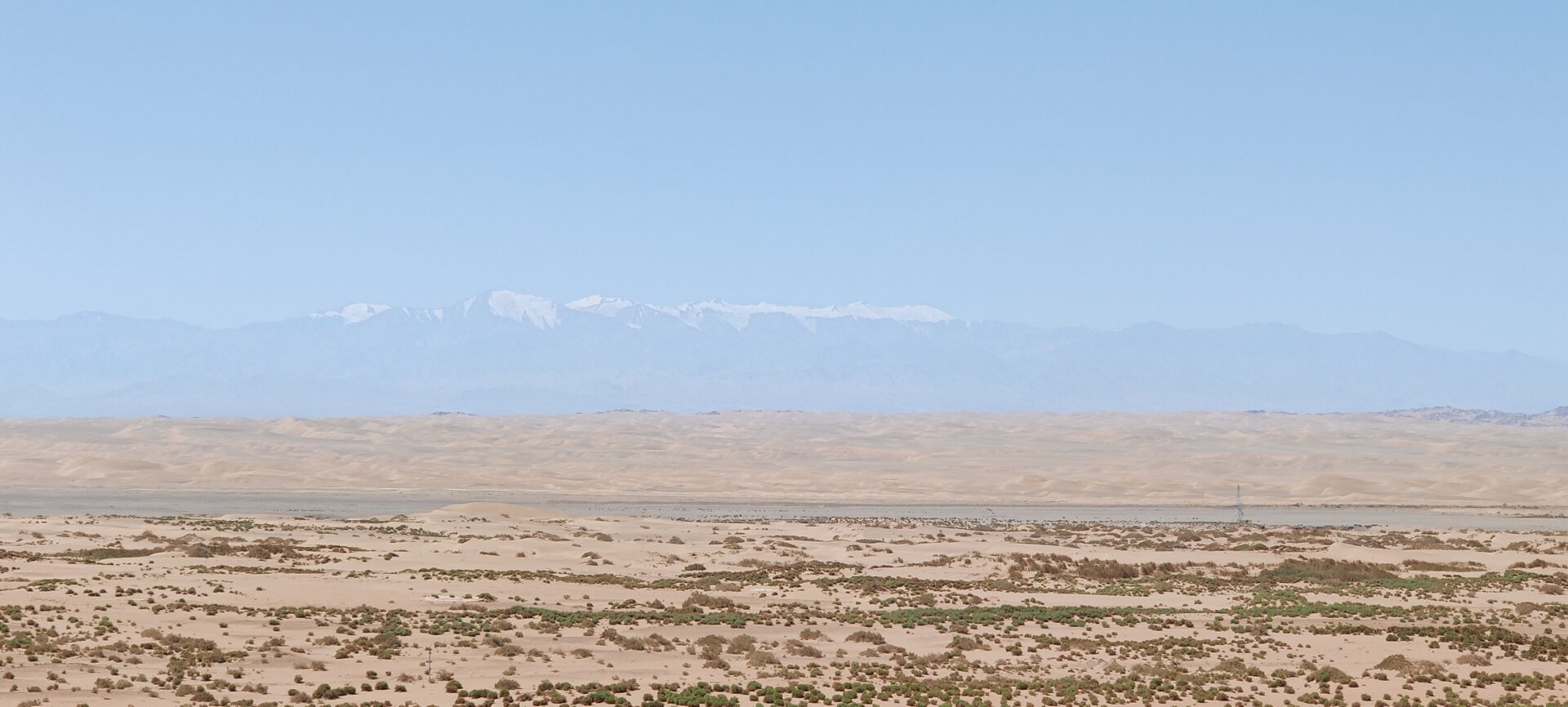
Dunhuang sits where the Hexi Corridor ends and the Taklamakan begins — the last watered place before the desert, and the point at which the Silk Road split into a northern and a southern route around it. Everything and everyone going either direction stopped here.
The consequence is in a cliff face outside town.
The Mogao caves
Cut into a conglomerate cliff over roughly a thousand years, from the 4th to the 14th century: 492 surviving decorated caves, holding some 45,000 square metres of wall painting and more than 2,000 painted sculptures. It is the largest and best-preserved body of Buddhist art in the world, and there is nothing else remotely like it.
What makes it extraordinary isn’t only the scale but the chronology. You can walk between caves painted six hundred years apart and watch a style change — Indian and Central Asian influence in the early work, full Tang confidence in the middle period, Tibetan and Uyghur patronage later. The pigment is mineral and, in the dry air, much of it is still vivid.
There is also the library cave, sealed around the 11th century and opened in 1900 — tens of thousands of manuscripts in Chinese, Tibetan, Sanskrit, Sogdian, Uyghur, Khotanese and Hebrew, including the world’s earliest dated printed book. Most of it left the country in the following two decades, to London, Paris, St Petersburg and Tokyo, in circumstances that remain a live grievance here. The museum does not soften that account.
Booking, which you must do
- Tickets are quota-limited and sell out, especially June to August. Book online well in advance.
- The standard visit is a guided route of eight caves, chosen from a rotation to spread wear. You do not choose which.
- No photography inside. This is enforced and reasonable — light damages pigment.
- Guides are in several languages; ask for English when booking.
- Two digital cinema presentations before the caves are genuinely good and set up what you’re about to see.
There are further cave complexes nearby — Yulin and the Western Thousand Buddha caves — with fewer visitors and, in some cases, better-preserved individual works.
The dunes
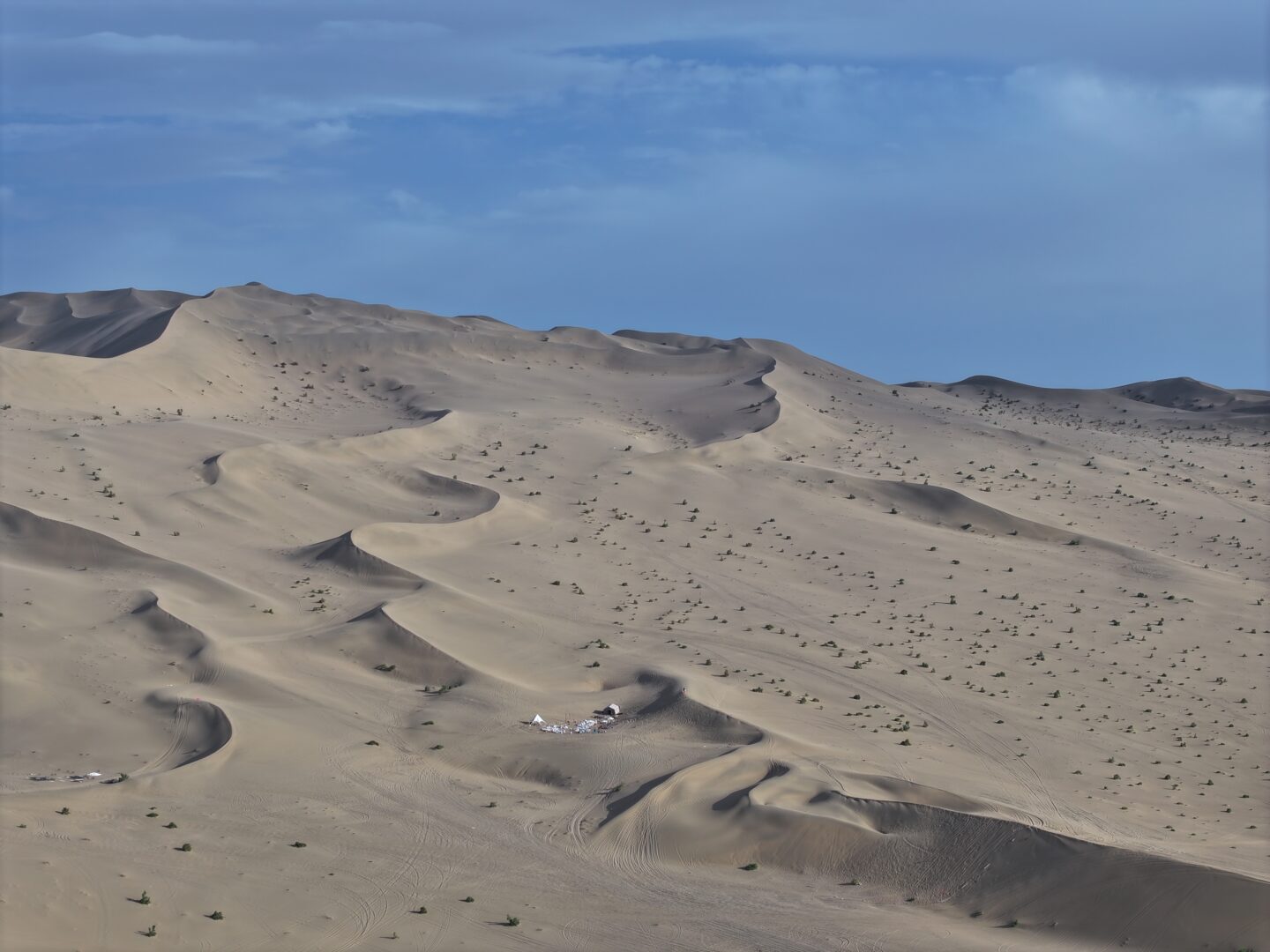
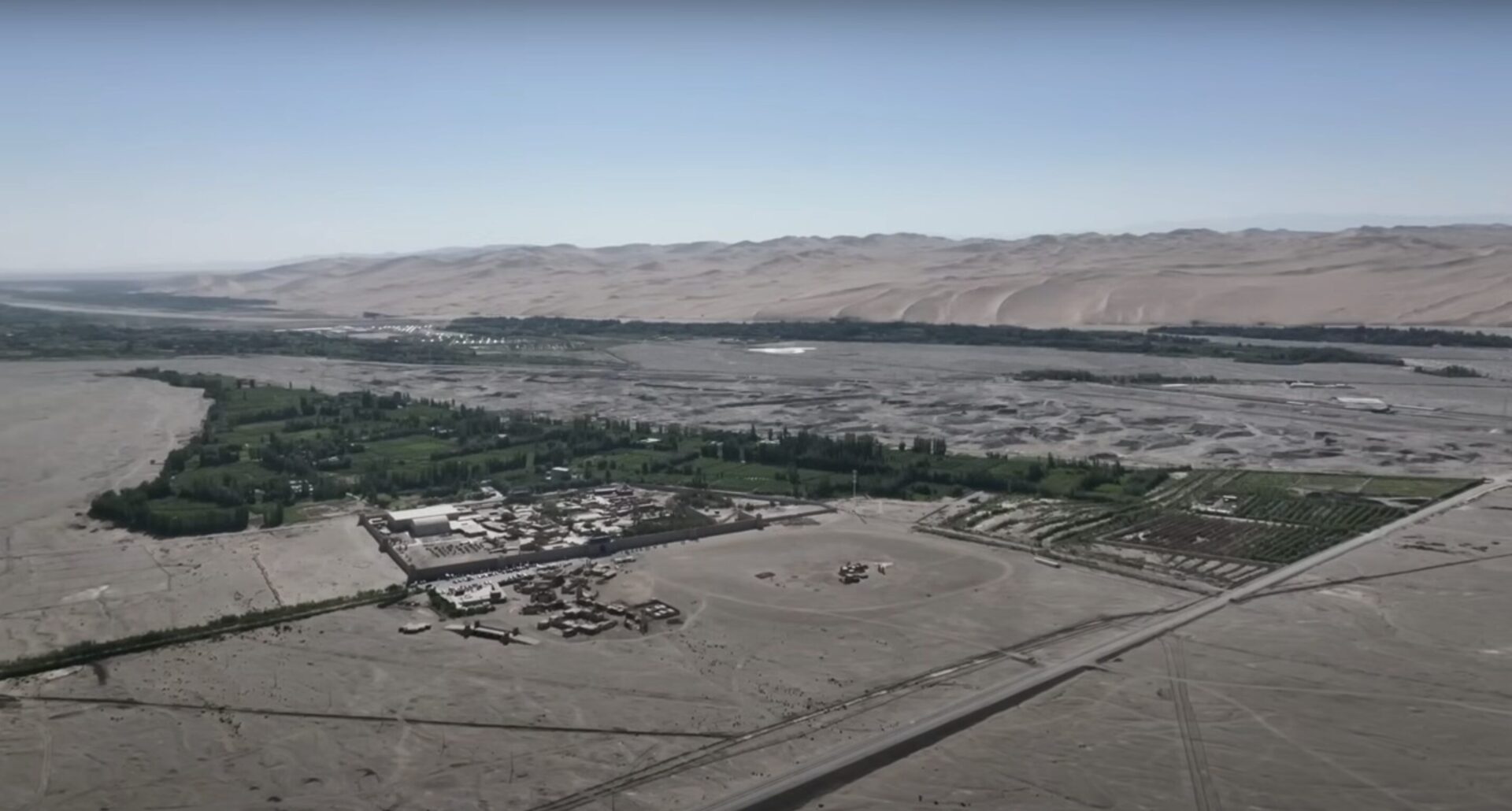
The Mingsha Shan — Singing Sand Mountains — start at the edge of town, with crests over 200 metres. At their foot, in a hollow between dunes, is Crescent Lake: a spring-fed pool in the shape of a new moon that has survived here, improbably, for two thousand years. Its water level has dropped and been artificially stabilised; that it exists at all is the point.
Climb a dune for sunset. It takes far longer than it looks — sand takes half your step back — and the view over the oasis with the desert behind it is the one everybody comes for. Camel trains, sand-sledding and dune buggies are all on offer at the base.
At night, with no cloud and very little light, the stars over the dunes are exceptional.
Further out
- Yumen Pass and Yang Pass — the Han-dynasty frontier gates, where the empire ended. Eroded rammed-earth ruins in open gravel desert, and enormously atmospheric.
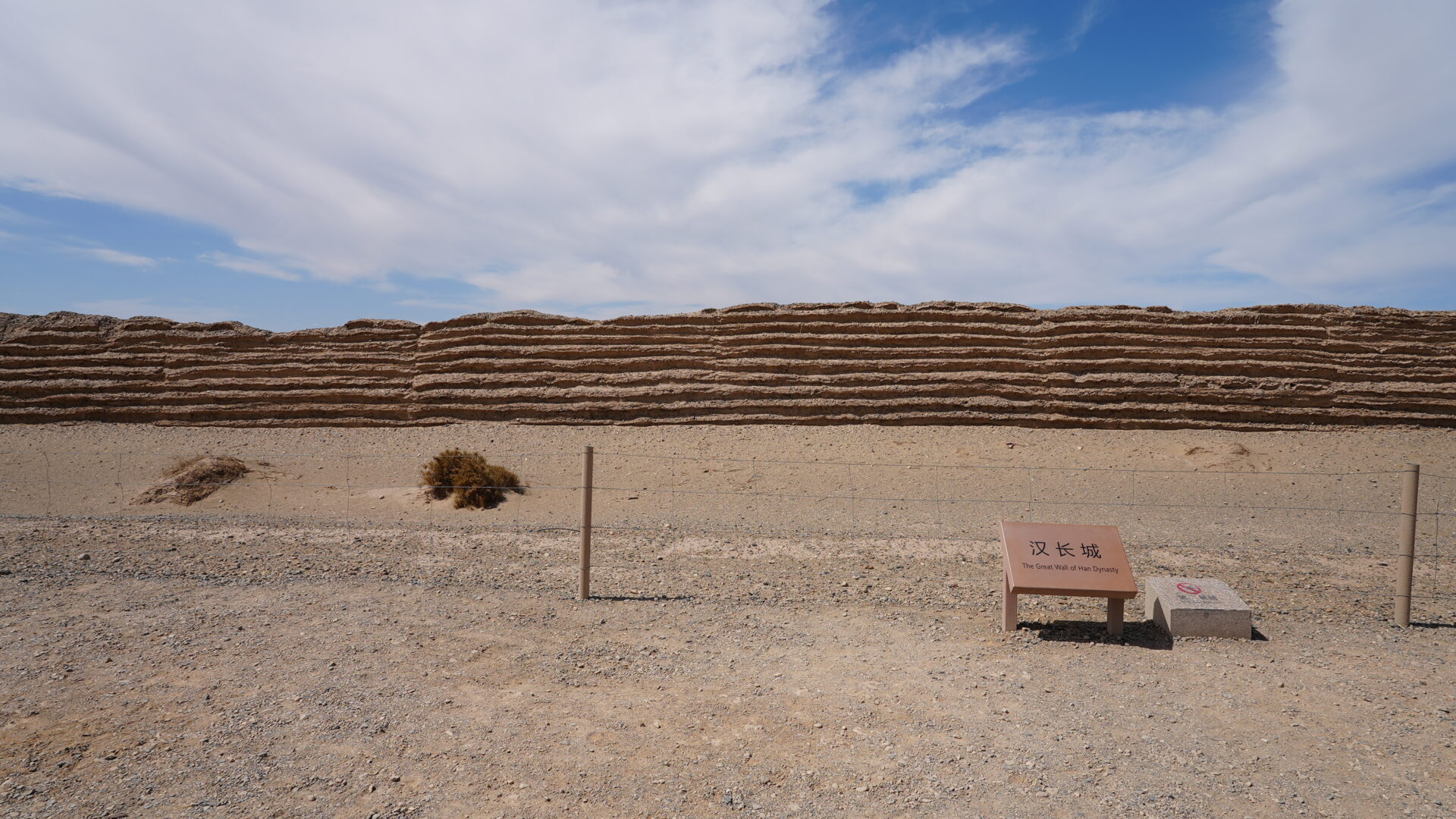
- Han Great Wall — sections of tamped earth and reed still standing after two thousand years.
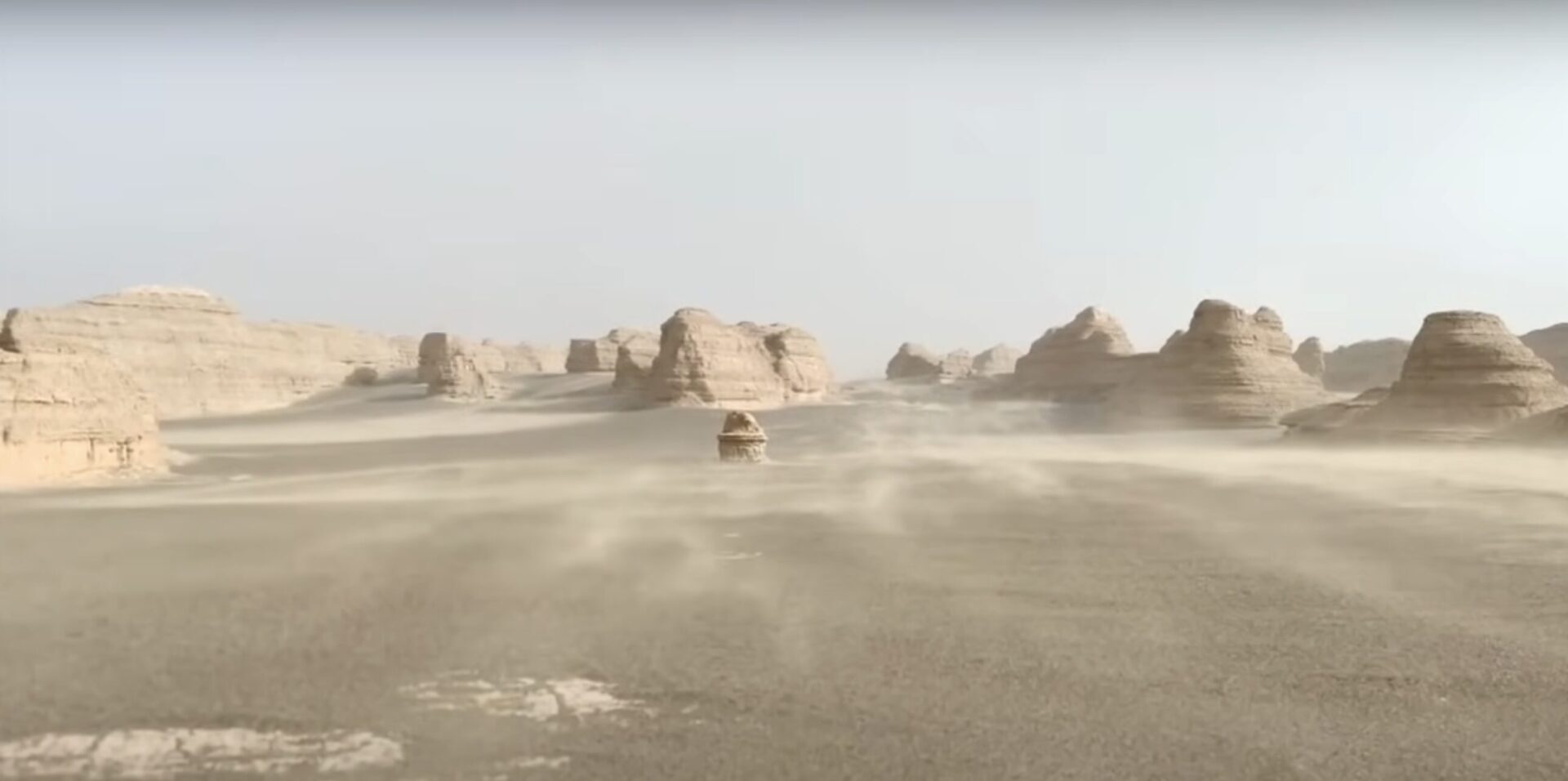
- Yardang badlands, further west — wind-carved rock forms across a hundred square kilometres.
Practical notes
Getting there: Dunhuang has an airport and is on the Lanzhou–Ürümqi high-speed line. It is also the natural start or end point for the crossing into Xinjiang.
When: May to October. Peak summer is hot but manageable in the dry air; sandstorms are a spring risk. Winter is very cold and the caves are quiet, which is a real trade-off in your favour.
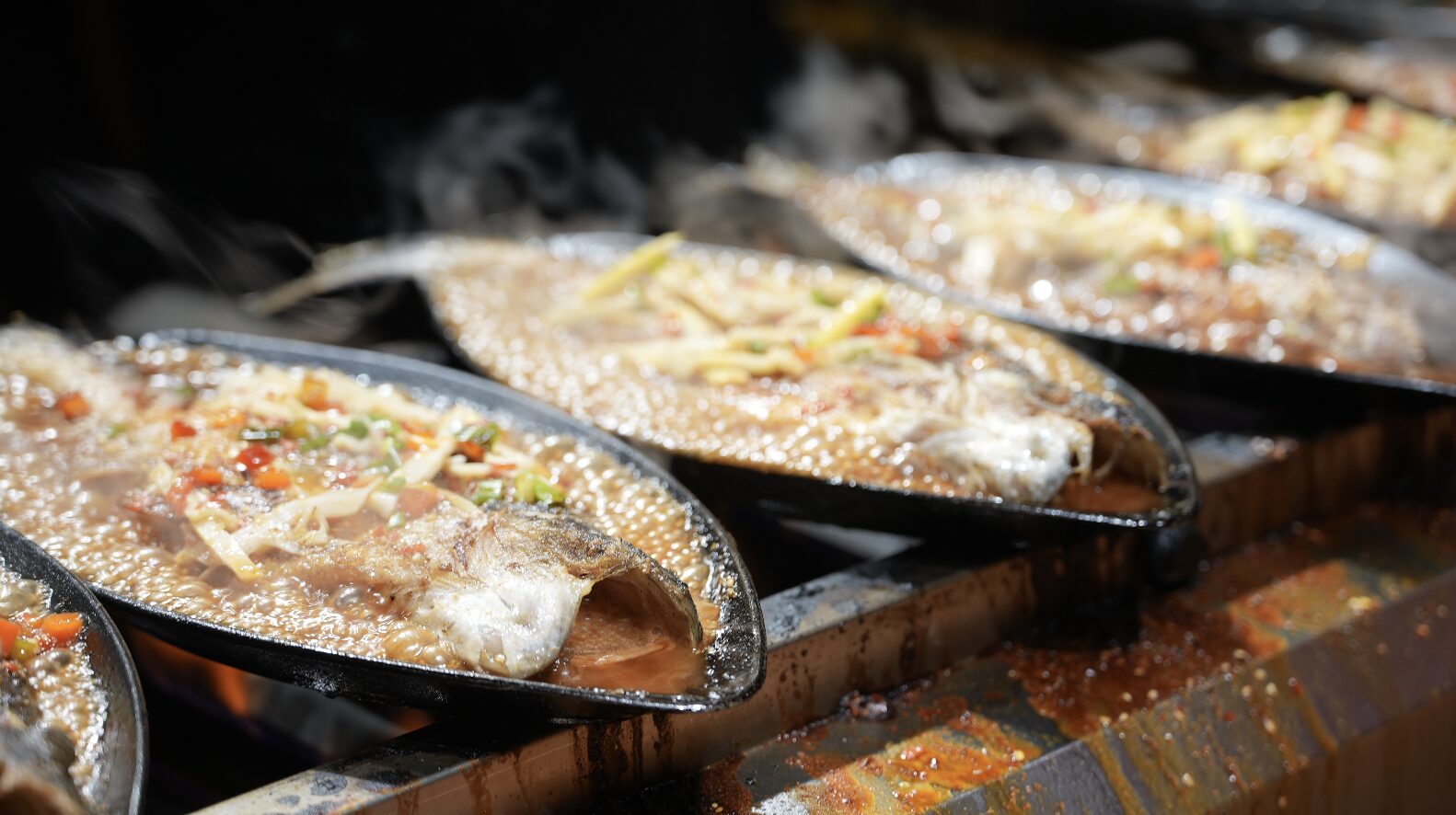
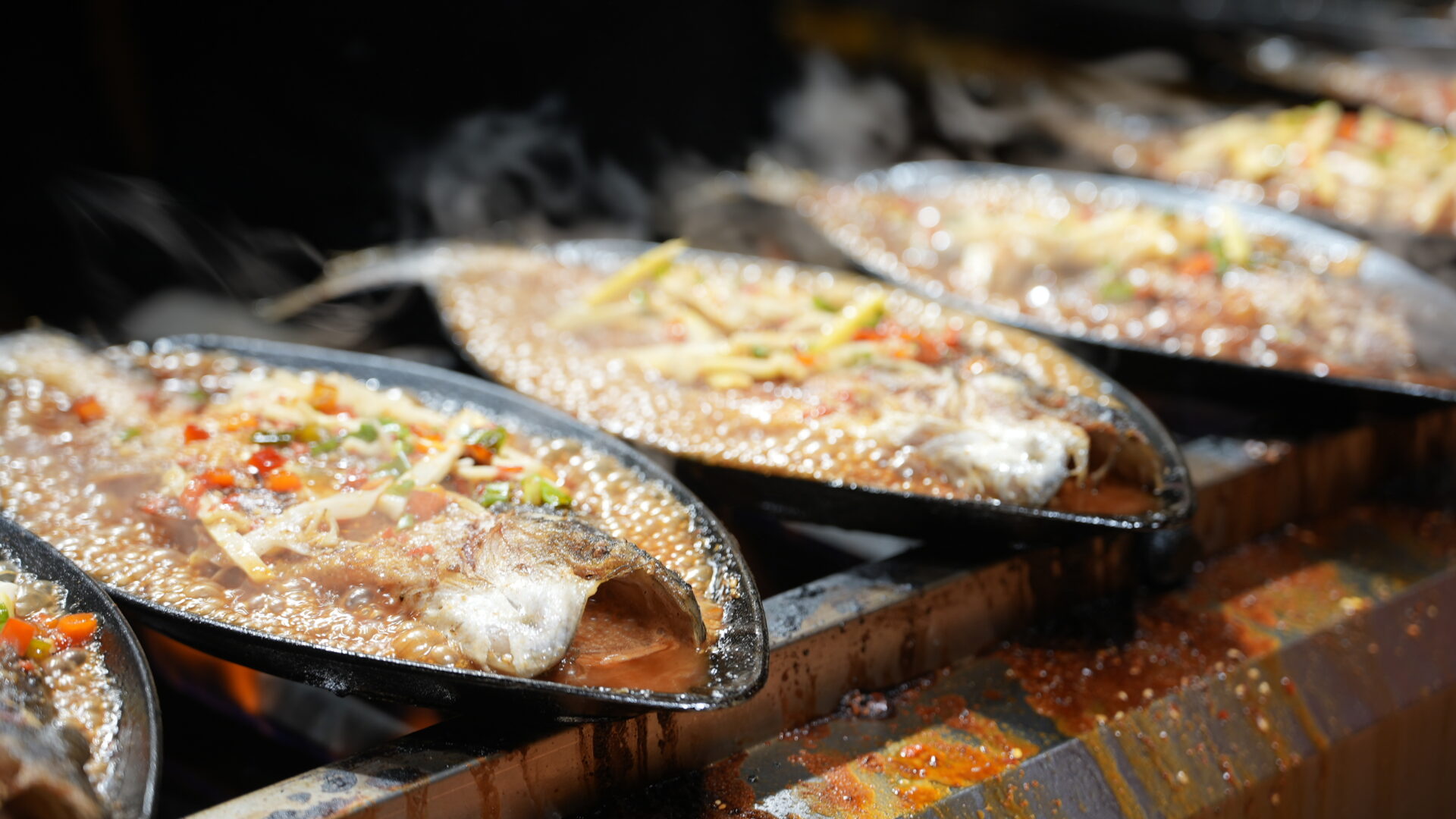
Eat: Gansu food — hand-pulled beef noodles, lamb, cumin, and the local lvrou huangmian (donkey meat with yellow noodles). See our food guide.
Nearby: Guazhou an hour east for the melons, and the whole Hexi Corridor — Jiayuguan’s fortress, Zhangye’s painted hills — back toward Lanzhou.
- #gansu
- #dunhuang
- #mogao caves
- #silk road
- #desert