
The Dongxiang speak a Mongolic language, practise Islam and farm eroded loess hills west of Lanzhou. They are one of the least-visited recognised minorities in China, and among the most hospitable.
The Dongxiang are one of the more unusual combinations among China’s 56 recognised ethnic groups: they speak a Mongolic language, they are Muslim, and they live in the loess hills of central Gansu, west of Lanzhou.
The prevailing account traces them to Mongol garrison troops and Central Asian soldiers and craftsmen settled here during the Yuan dynasty, who converted to Islam and stayed. The language — Santa — is related to Mongolian and has no widely-used written form; Arabic-script and Chinese literacy have historically served instead.
The landscape
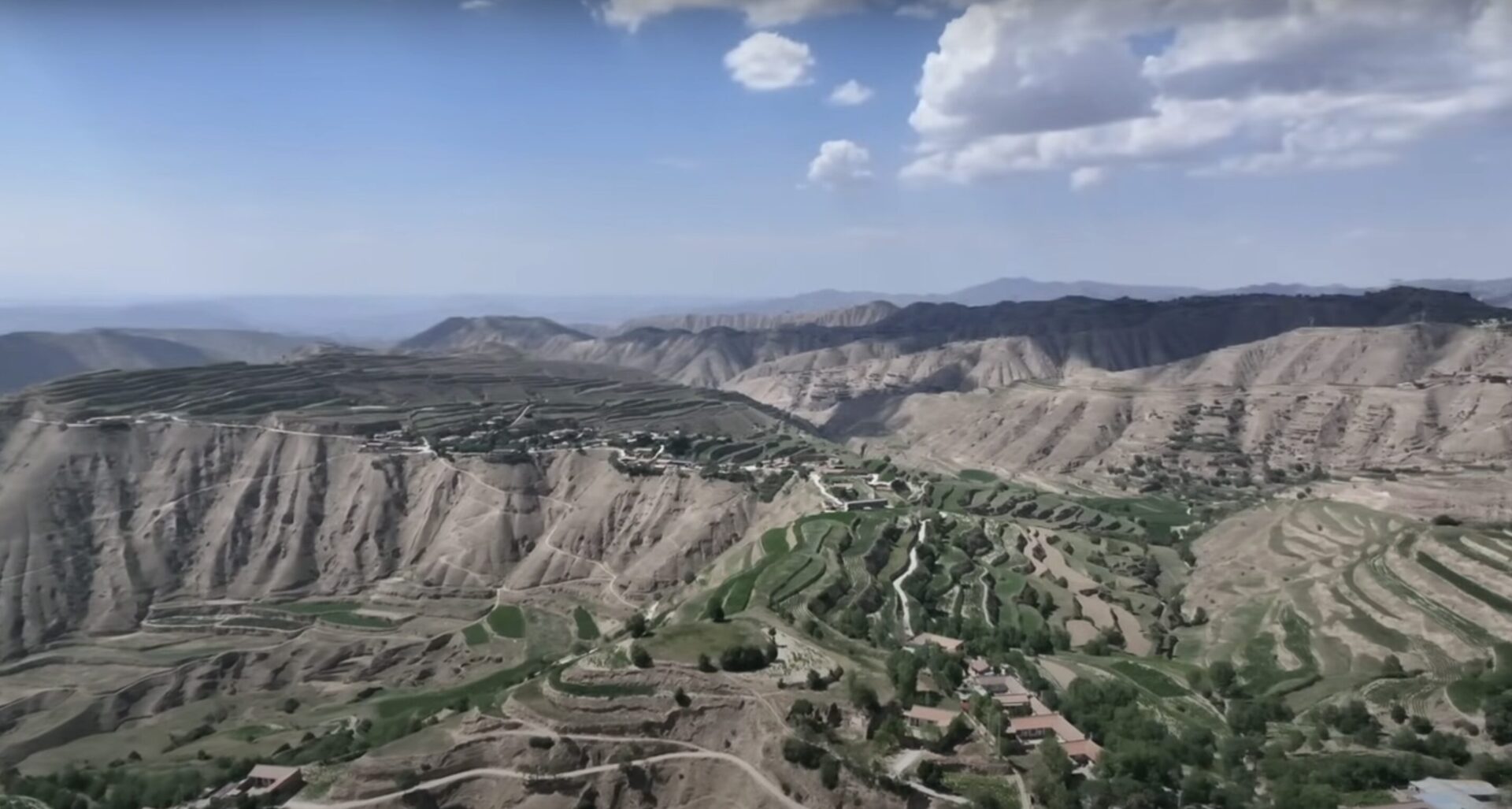
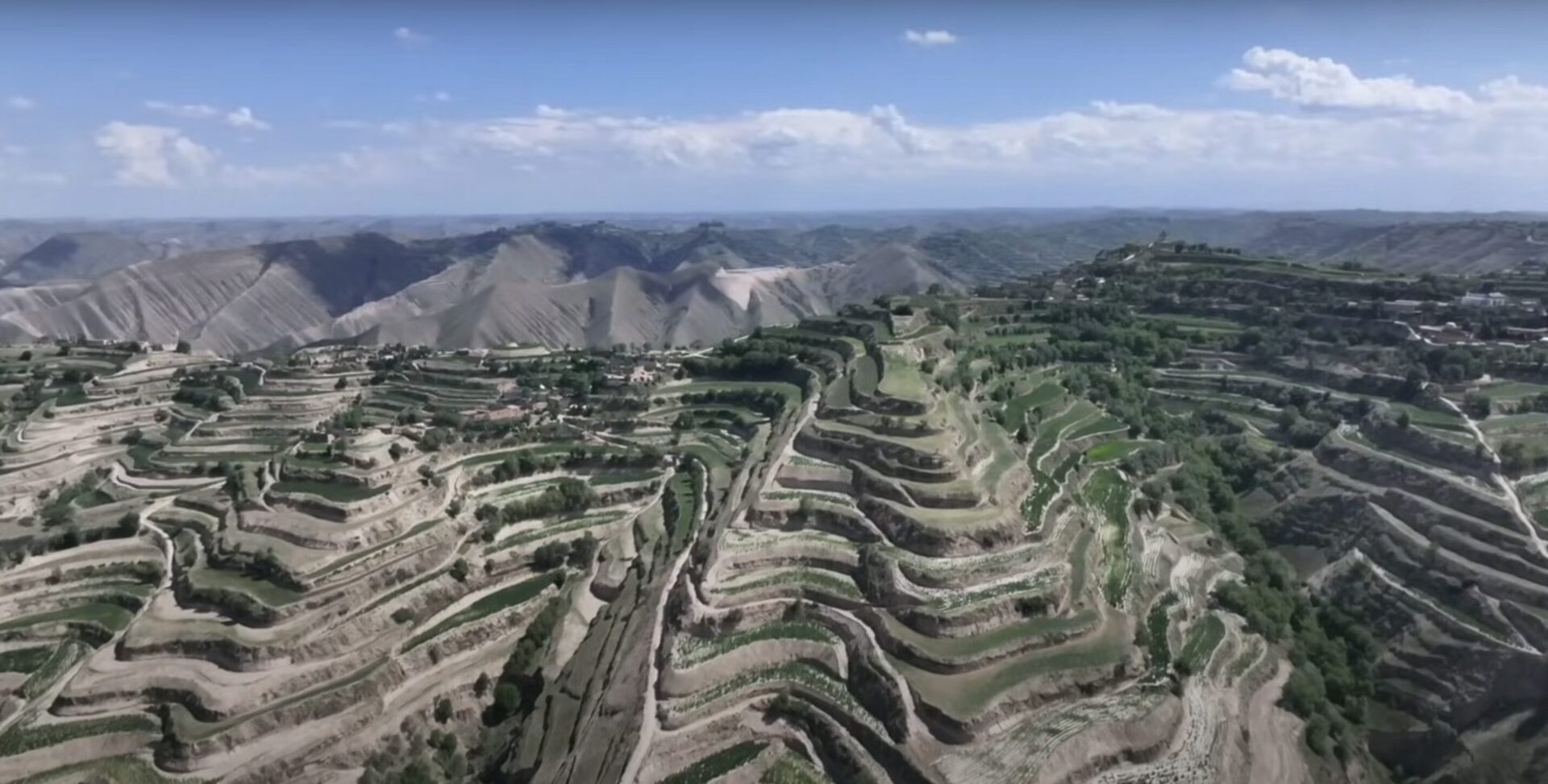
This is loess country: wind-deposited silt, hundreds of metres thick, cut into a maze of gullies and ridges by two thousand years of erosion. It’s some of the most difficult farmland in China — steep, dry, and prone to losing topsoil in every heavy rain.
What people grow on it: potatoes, wheat, maize, and increasingly greenhouse vegetables. Sheep on whatever won’t take a crop. Terracing everywhere, some of it centuries old, all of it maintained by hand.
Dongxiang county has historically been among the poorer counties in China, and has been a focus of substantial state anti-poverty investment over the past decade. The roads are new; the terraces are not.
Life in the villages
Islam structures the week and the year. Mosques are the centre of every settlement — a mixture of Chinese-style buildings and newer domed construction — and Friday prayer, Ramadan and the two Eids organise the calendar.
Local practice is Sunni, with the Sufi orders that shaped Muslim northwest China historically influential here. Practice is visibly devout and, as everywhere in the region, mosque architecture has been through change in recent years.
Food follows the faith and the climate:
- Hand-pulled noodles in lamb or beef broth
- Lamb, boiled, braised, skewered
- Flatbreads from a covered oven
- Eight-treasure tea — a glass of green tea with rock sugar, longan, jujube, raisin, walnut, and whatever else the household adds
- Melon and stone fruit in season, sold at the roadside
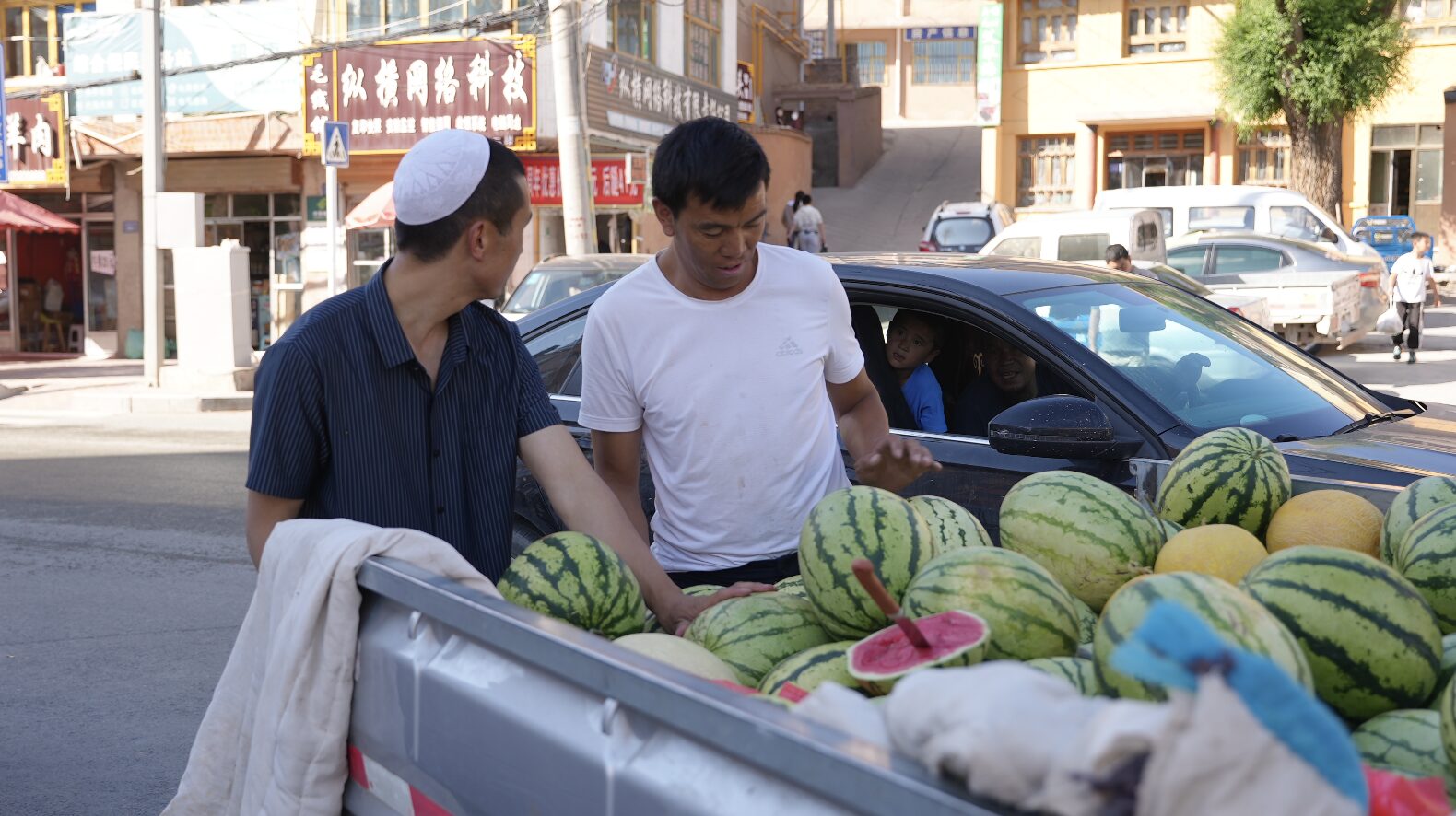
Roadside melon, which in Gansu is a serious business
Visiting
This is not a place with a tourism industry, and that’s the reason to go. There is no ticket office, no old town and no set route — just a county, a market town, and villages up the gullies.
What to actually do: go to a market morning, eat, and accept the invitation you’ll get. Hospitality here is close to obligatory, and travellers report the same experience consistently — being fed considerably more than they expected by people with much less than they have.
Some courtesies that matter more here than elsewhere:
- Dress modestly. Covered shoulders and long trousers, for everybody.
- Don’t bring alcohol or pork products into a household.
- Ask before photographing people, and particularly women. Take a no.
- Mosques: ask at the door. Non-Muslims are often welcome outside prayer times, sometimes not. Either answer is fine.
- Ramadan: if you’re visiting during it, don’t eat or drink visibly in public during daylight.
Practical notes
Getting there: Linxia is the prefectural city — a couple of hours by road from Lanzhou, and a substantial Hui centre in its own right with a serious mosque and a good market. Dongxiang county is further into the hills from there.
When: spring through autumn. Winter is cold and dusty; summer rains can make the gully roads difficult.
Combine with: Linxia itself, Langmusi and the Gannan grasslands south, and Xunhua over the Qinghai border — where a Muslim county and a Tibetan Buddhist one sit side by side.
- #gansu
- #dongxiang
- #islam
- #minority
- #loess