
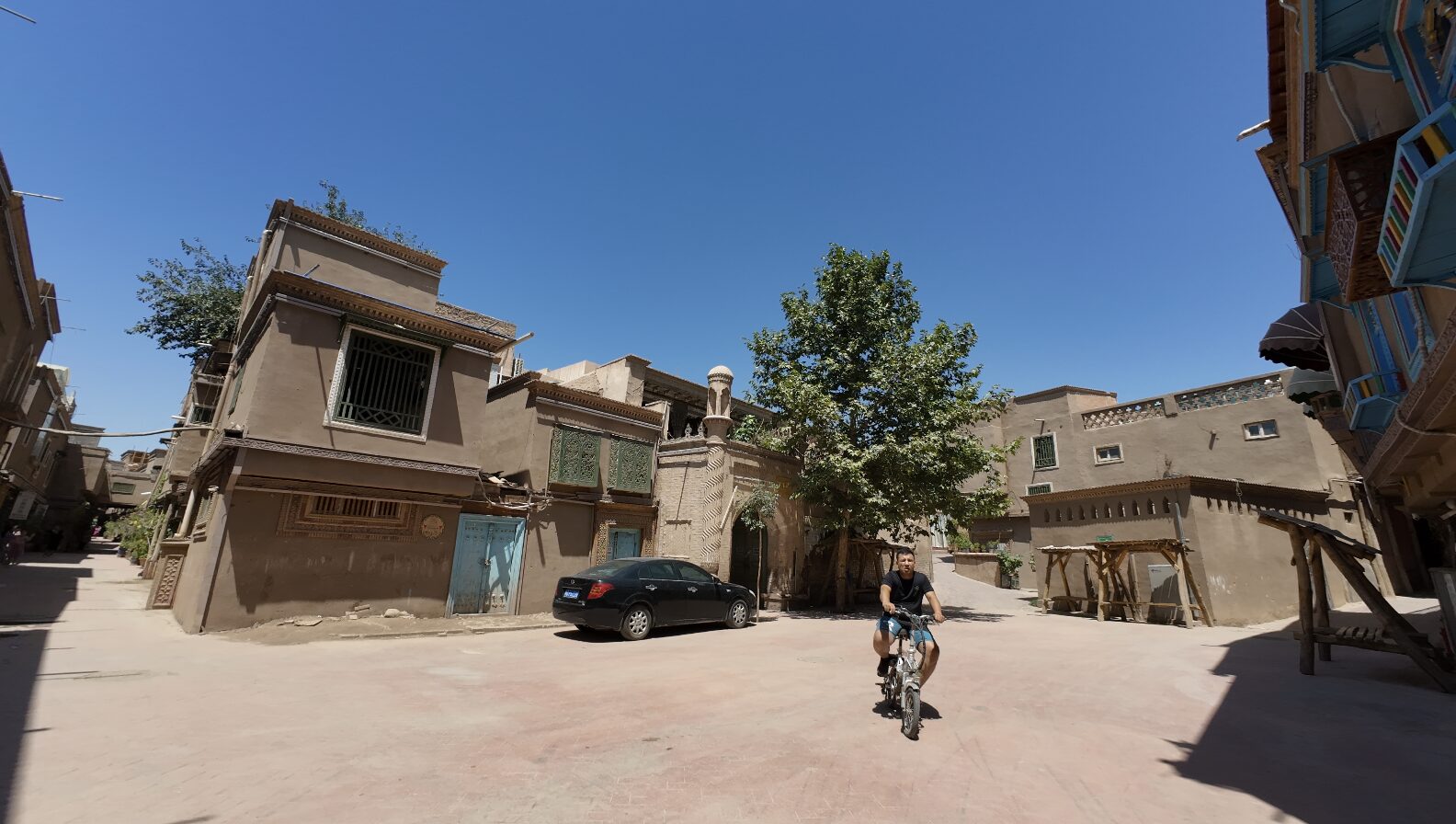
Kashgar has been a trading city for two thousand years, and it still behaves like one. Bread from a clay oven, a livestock market that runs on handshakes, and the Pamirs on the horizon.
Look at a map before you go, because the geography explains the city. Kashgar sits at the western edge of the Tarim Basin, with Kyrgyzstan, Tajikistan and Pakistan all within a few hundred kilometres and Beijing more than 4,000 away. Islamabad, Kabul and Tashkent are all closer than the Chinese capital.
It has been a trading city for roughly two thousand years — the point where the northern and southern branches of the Silk Road rejoined after splitting around the Taklamakan — and it still behaves like one.
The old town
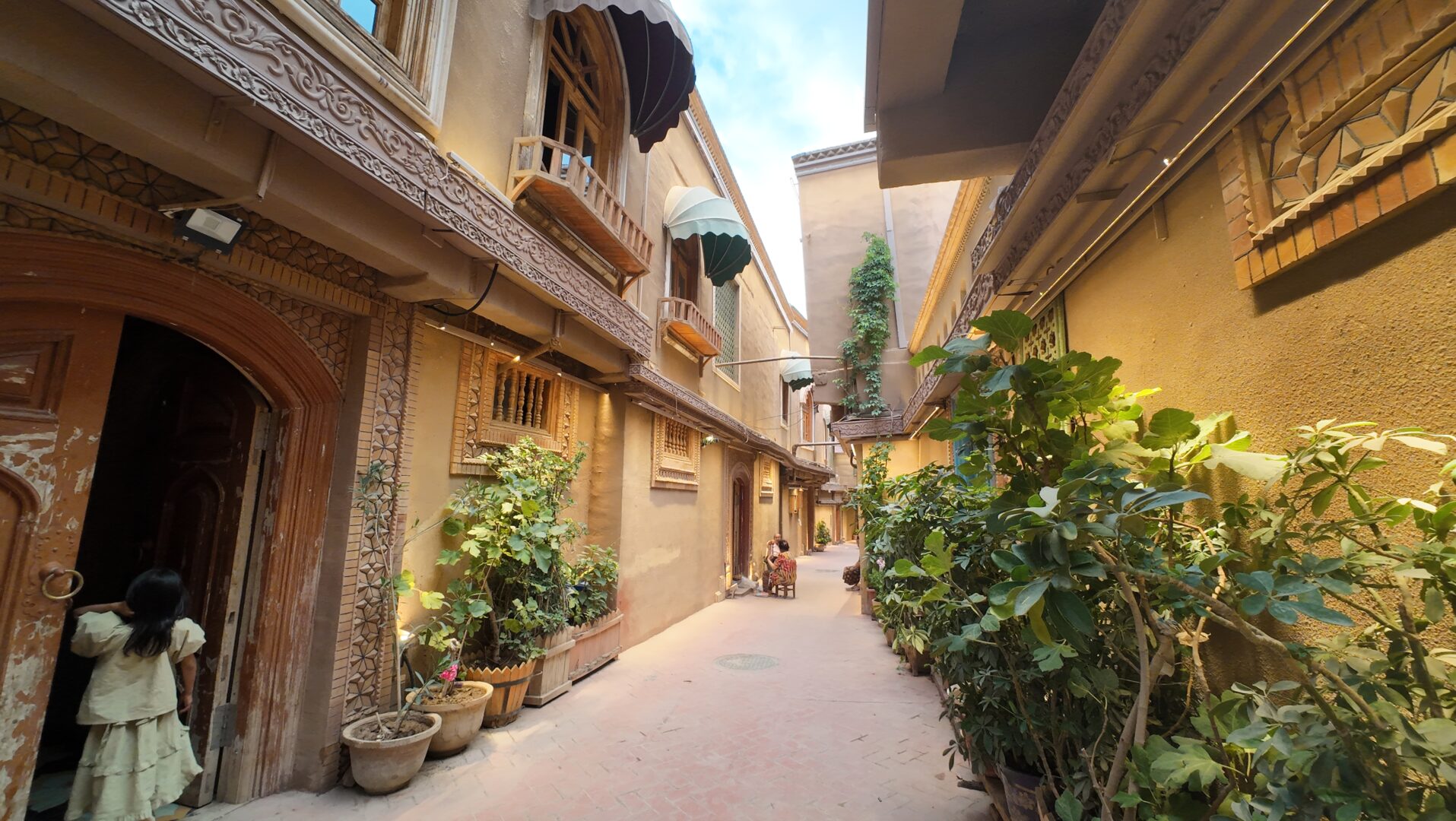
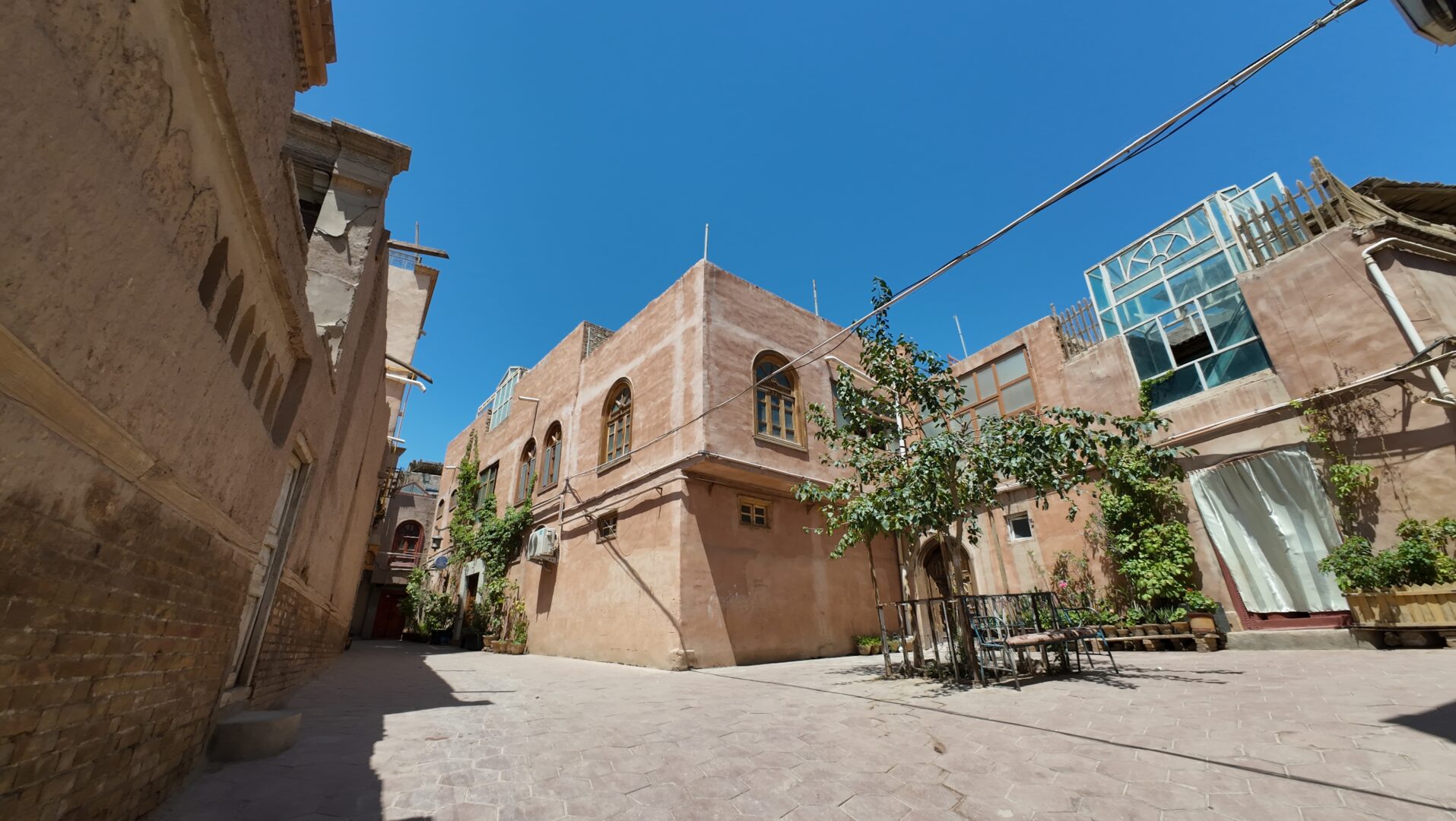
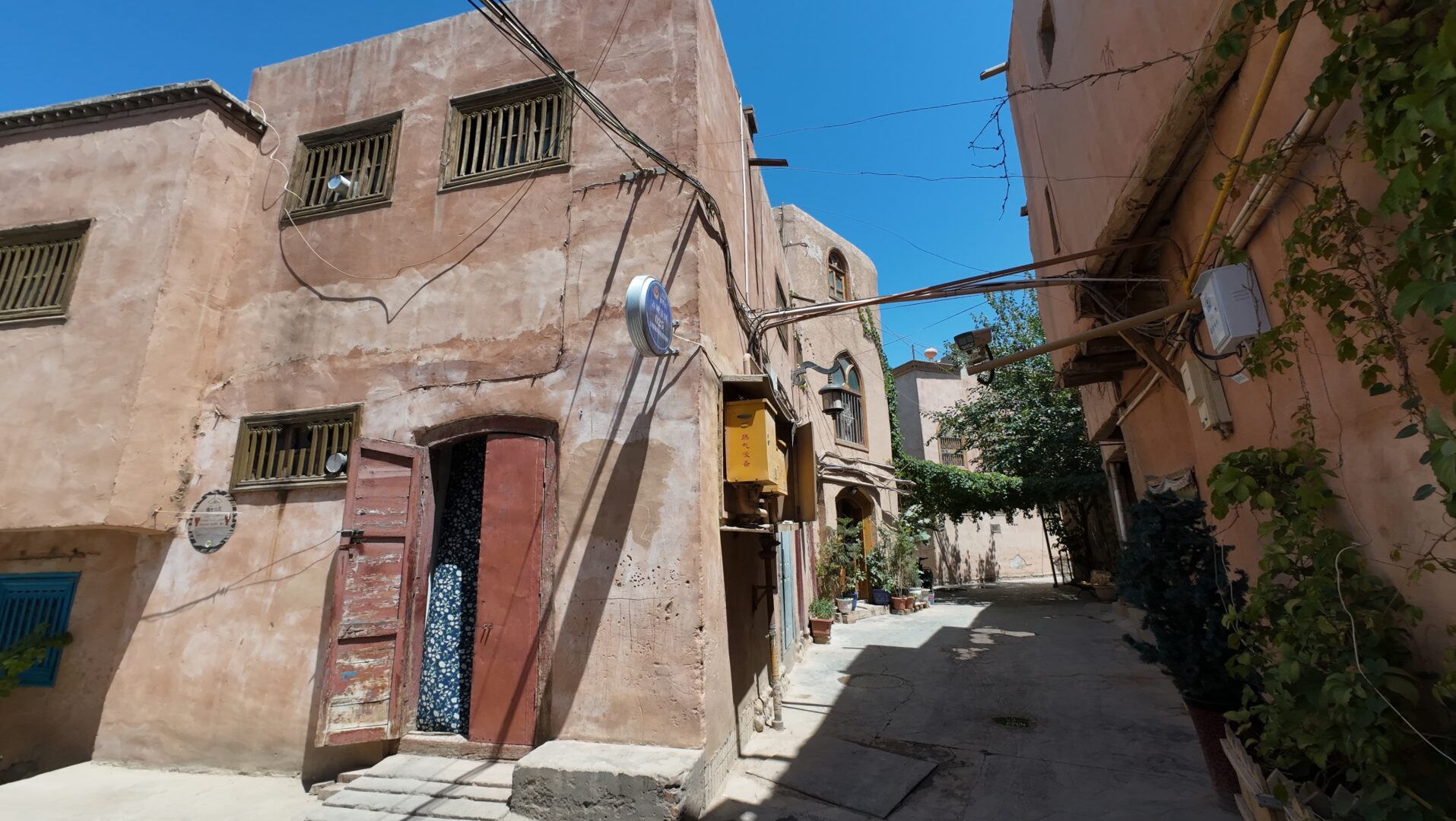
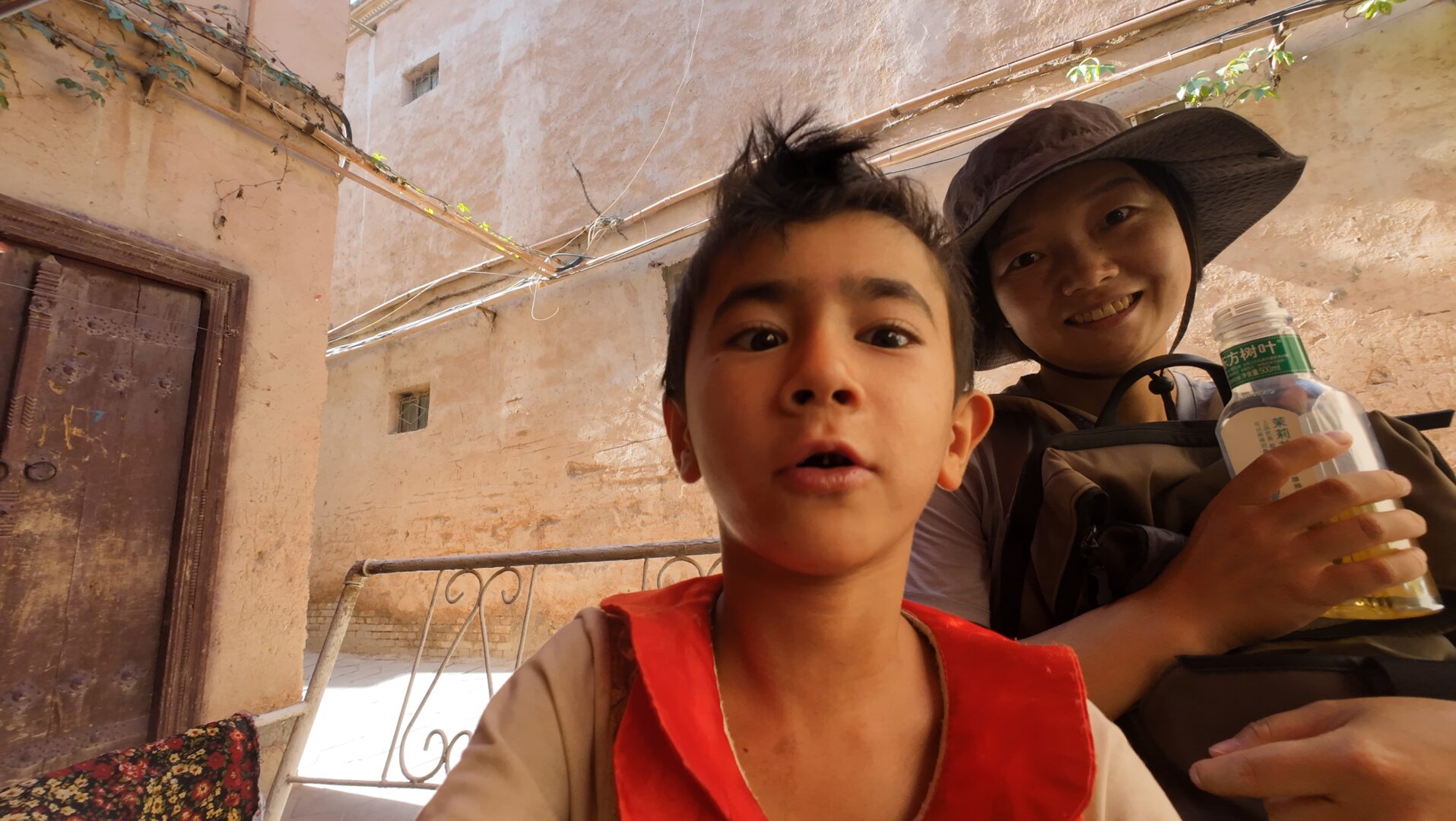
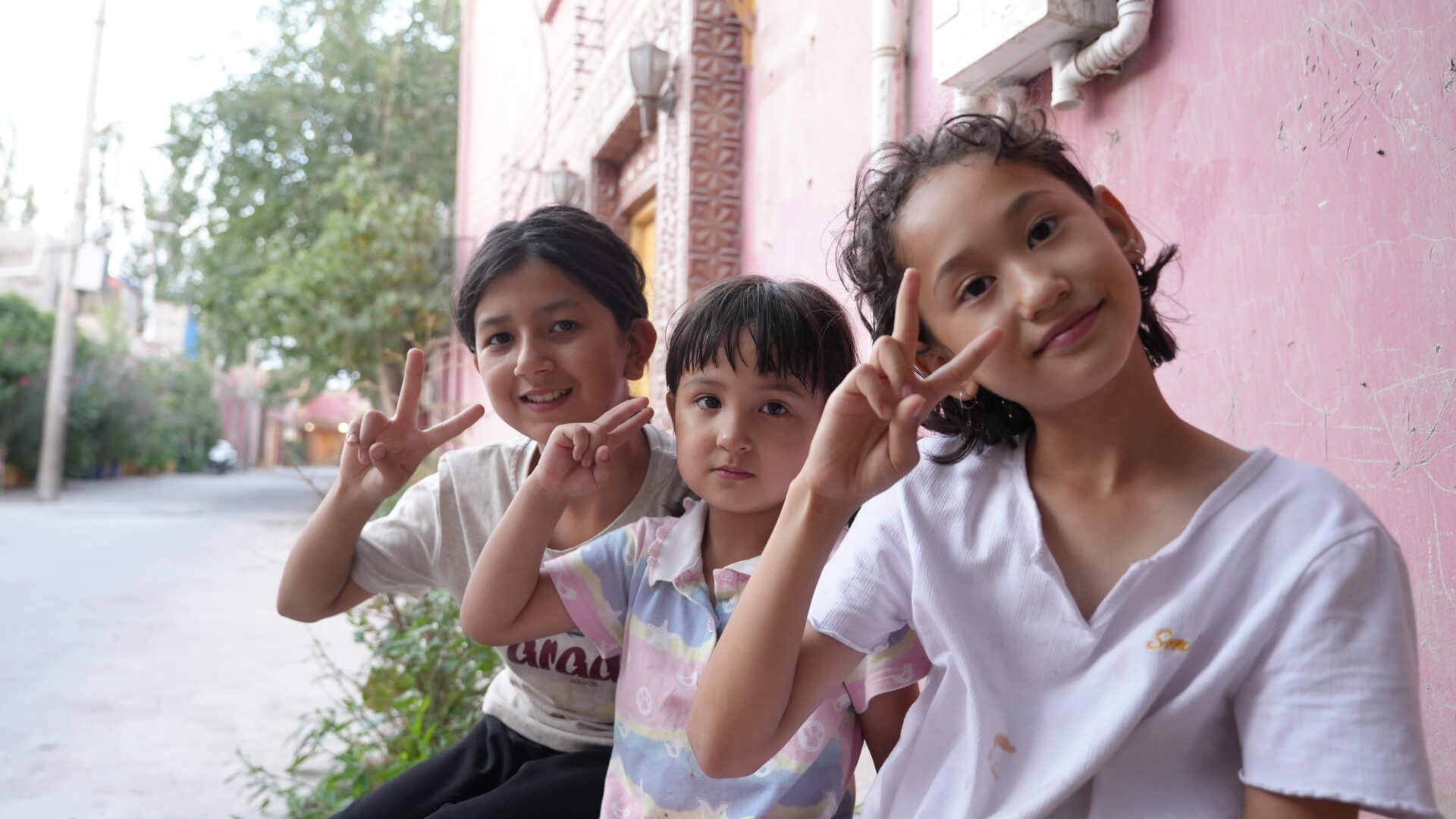
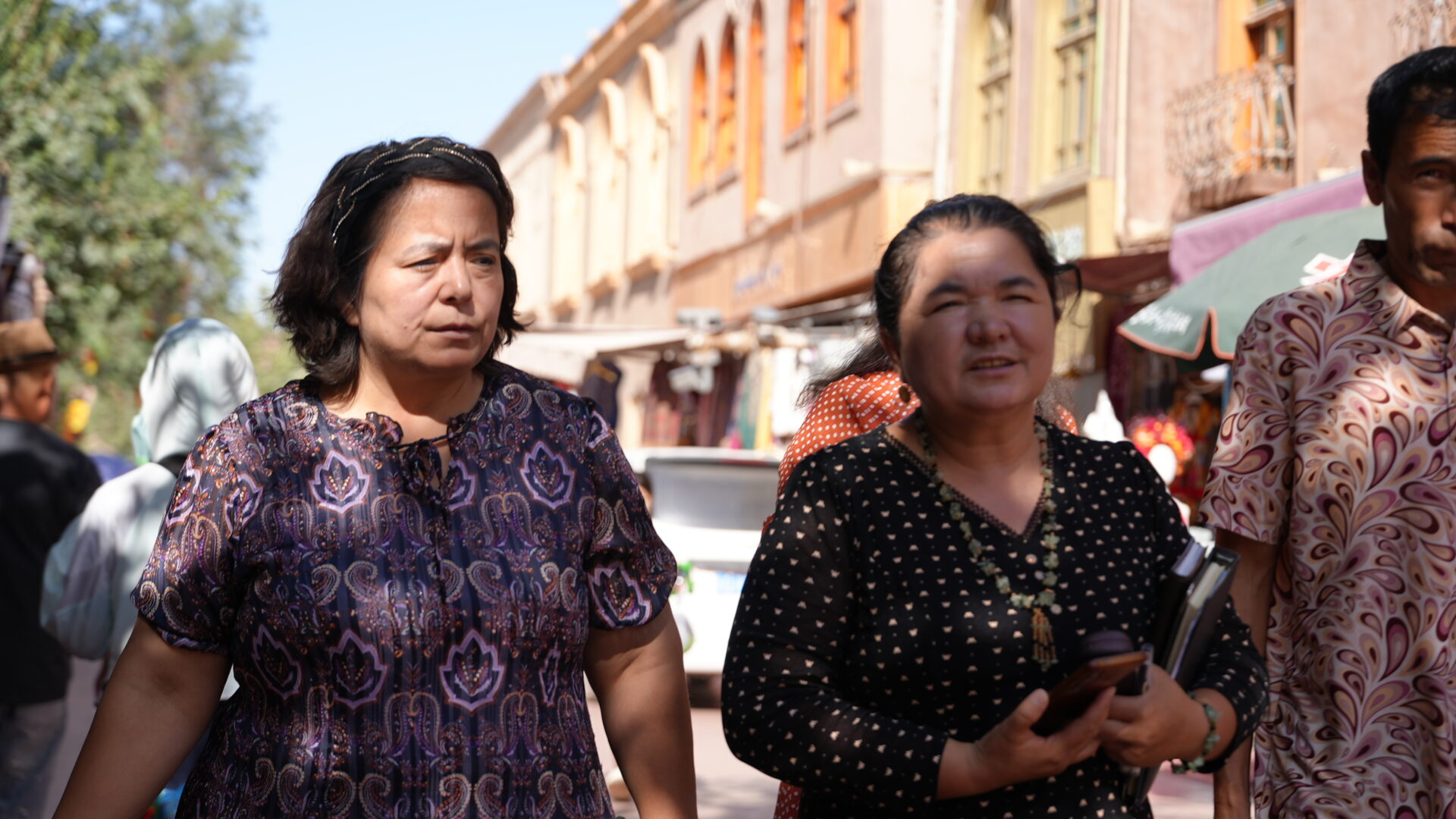
The historic quarter is a warren of narrow lanes between mud-brick and timber houses, much of it rebuilt over the past two decades and now partly ticketed. It’s a real neighbourhood rather than a museum: children on scooters, workshops open to the street, elderly men on a bench in the shade doing nothing in particular for hours.
The craft streets are the pleasure of it — coppersmiths hammering in a row, so the whole alley rings; instrument makers building rawap and dutar by hand; hat shops selling doppa embroidered by region. And on every third corner, a nan oven: a clay well of a thing, the baker slapping dough onto the inside wall and hooking it out blistered a few minutes later. Buy it hot. It is not the same thing cold.
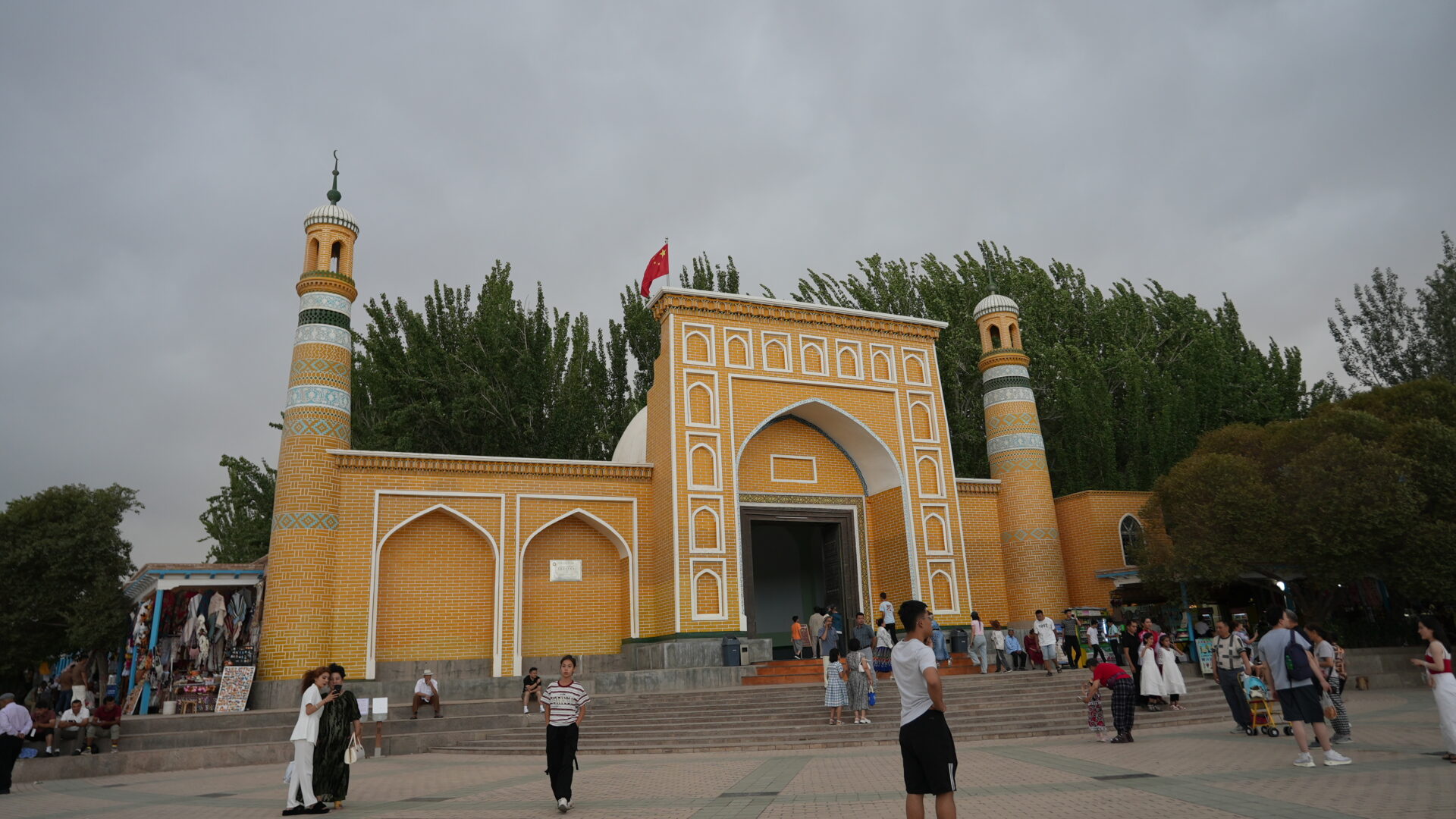
Id Kah Mosque anchors the centre — the largest mosque in China, and the practical heart of the old city rather than a monument to it.
The Sunday market
Kashgar’s markets are the reason to time your visit for a weekend.
The livestock market on the city’s edge is the one to see: fat-tailed sheep, cattle, donkeys and horses arriving from across the region by truck and cart from dawn. Buyers work the animals over with their hands, argument follows, and deals close with a handshake and a wad of notes. Nobody is performing for visitors — this is where the region’s meat actually gets sold.
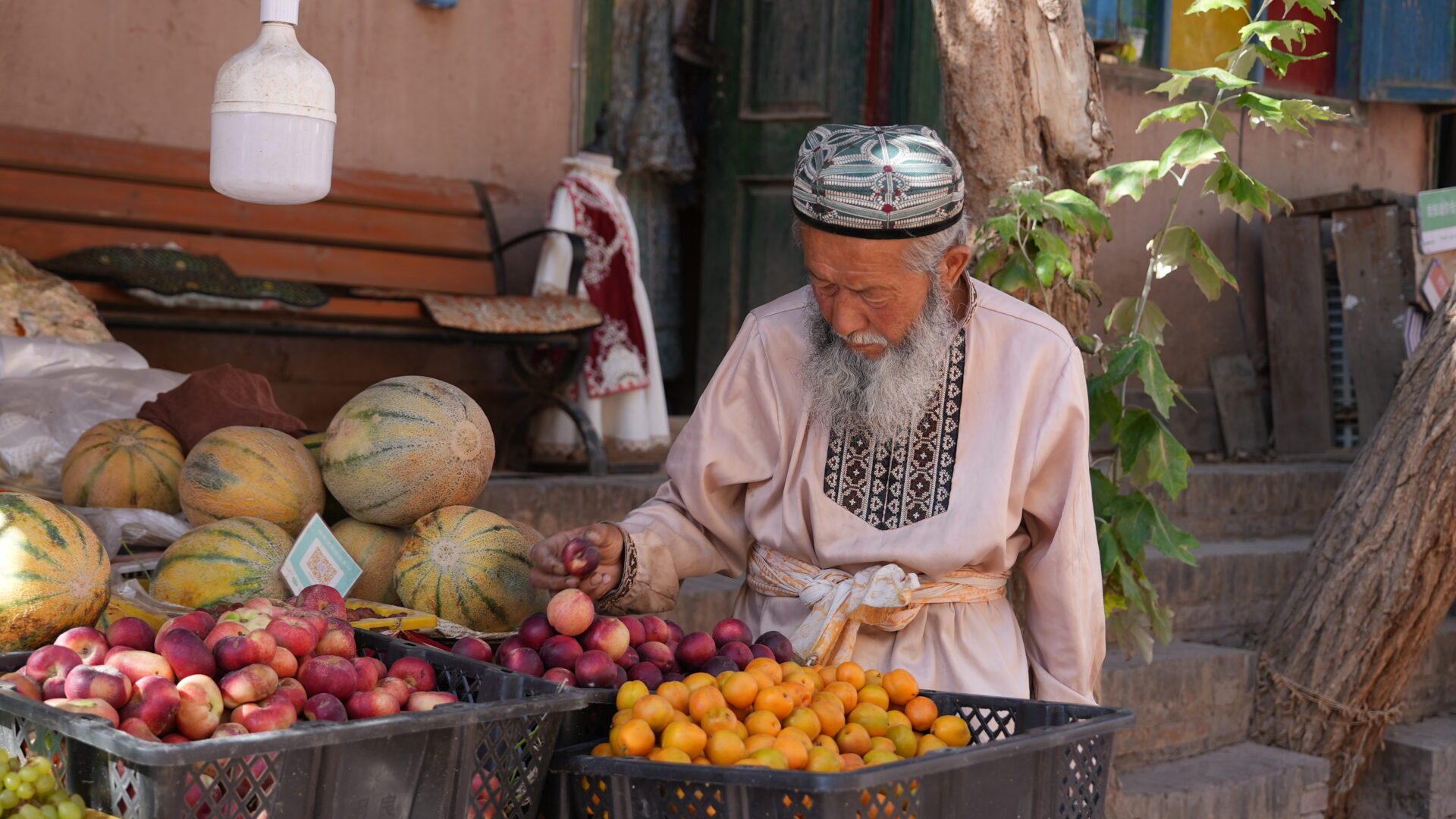
The grand bazaar in town is a different order of thing: dried apricots and mulberries by the sackful, walnuts, cumin, saffron, carpets, knives, boots, sheepskins, engine parts. The smell of it — charcoal, cumin, sheep fat, dust — is the strongest sense-memory most people take home.
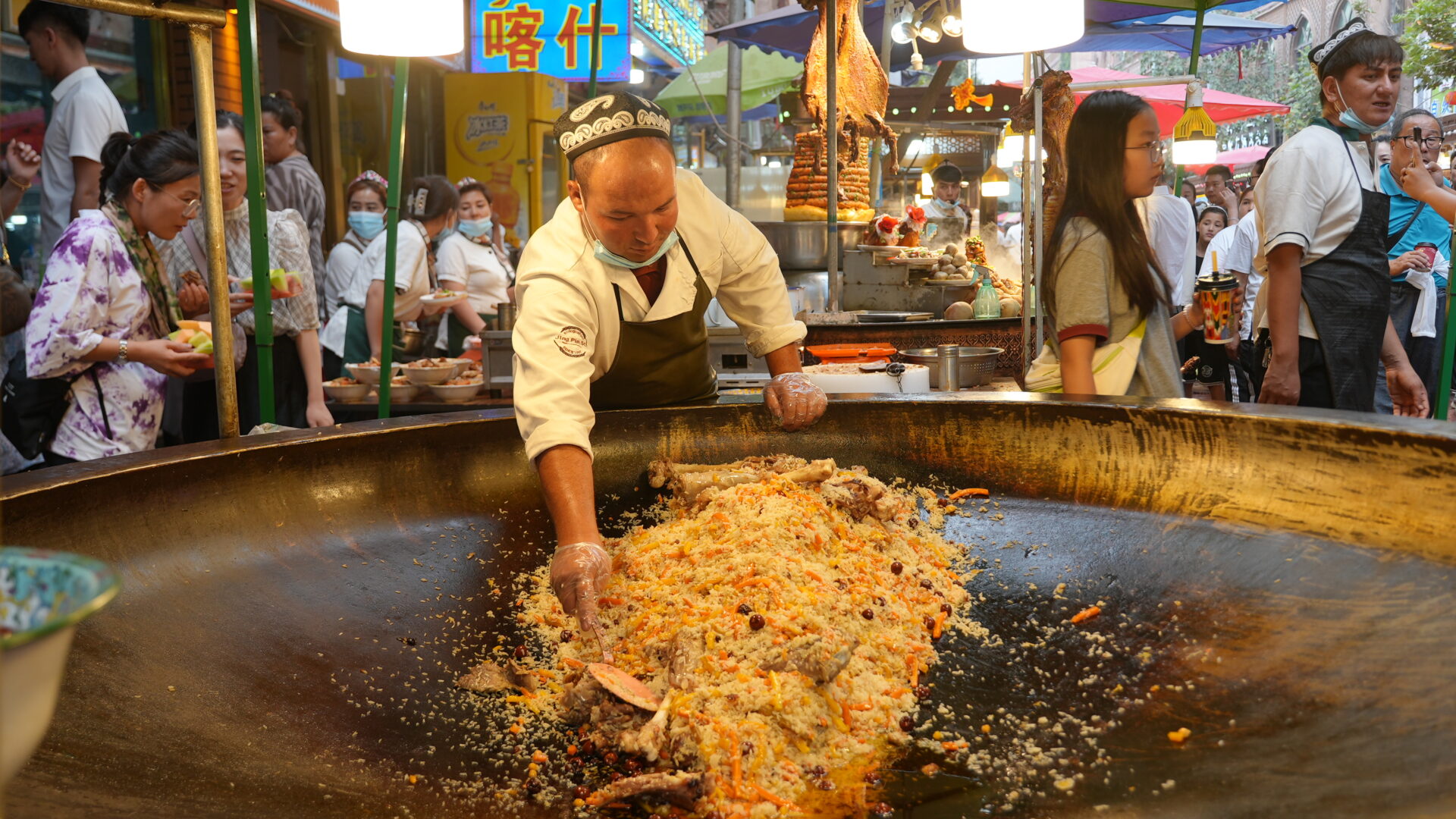
Eat while you’re there. Lamb skewers, laghman, and polo — rice cooked in lamb fat with carrot and cumin — are all better here than anywhere further east. More on all of it in our regional food guide.
Getting out of town
Kashgar is also a base. The Taklamakan begins to the east — the world’s longest desert highway crosses it — and to the south the road climbs into the Pamirs toward Tashkurgan and eventually the Pakistan border along the Karakoram Highway. Within two hours of leaving the city you can be at 3,000 m looking at a 7,500 m peak.
North and east lie the oasis towns — Yarkant, the villages around rural Kashgar — where the same culture continues without the ticket booths.
Note that some border sections need permits arranged in advance; see restricted areas.
- #xinjiang
- #kashgar
- #silk road
- #uyghur
- #bazaar