
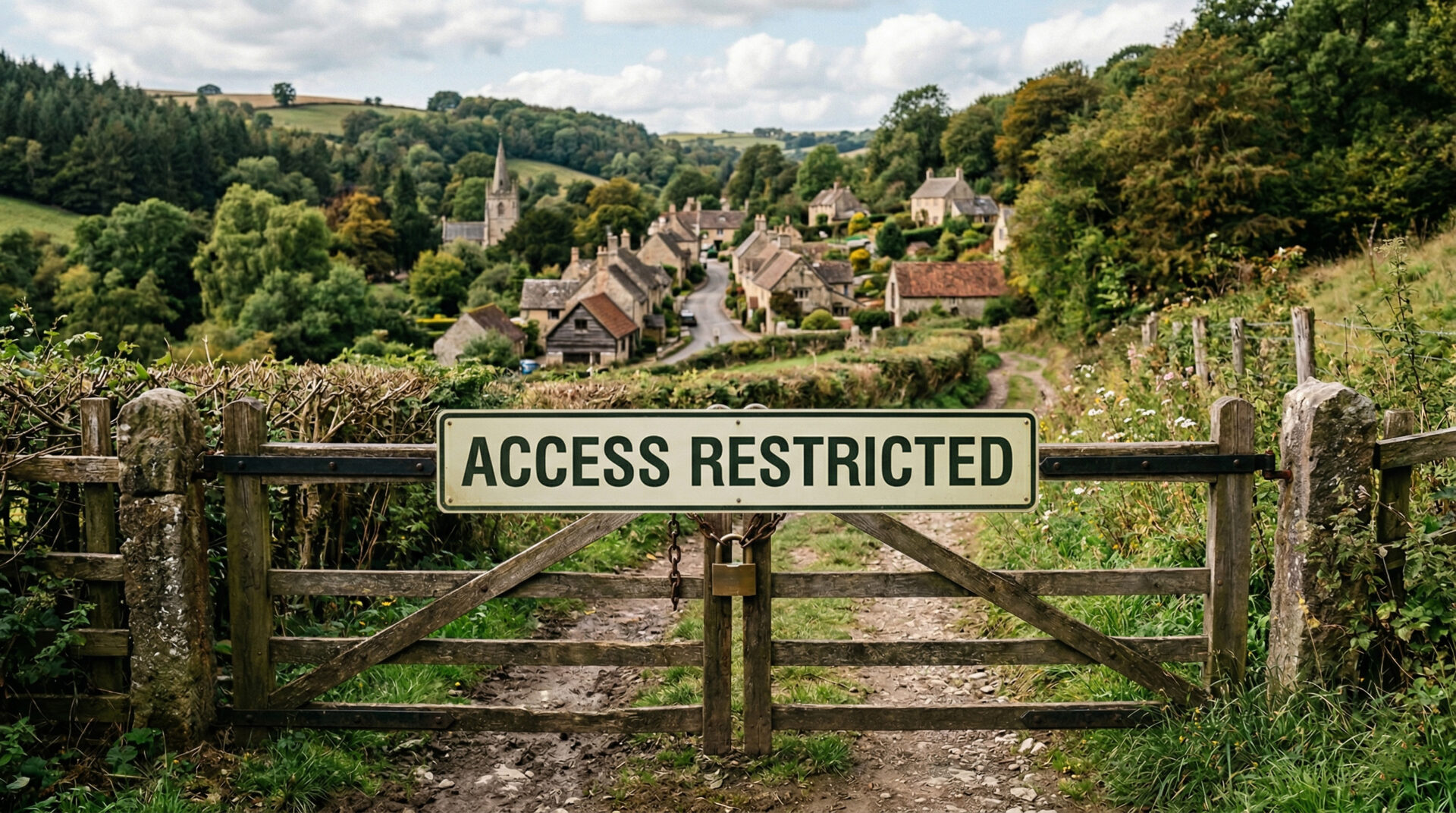
Almost all of China is open. The exceptions cluster into a handful of predictable categories — Tibet, certain border strips, undisclosed security zones — and knowing them takes ten minutes and saves a wasted travel day.
The overwhelming majority of China needs nothing more than the visa in your passport. The restrictions that do exist fall into predictable groups, and the only one likely to shape a normal itinerary is Tibet. Here’s the full map.
1. Tibet Autonomous Region
The famous one. Tibet is among the most sought-after destinations in the country — monasteries, Himalayan horizons, a culture unlike anything east of it — and you cannot simply buy a ticket and go.
Entry requires a Tibet Travel Permit, obtainable only through a licensed Chinese travel agency. Independent travel isn’t allowed: you plan the itinerary with the agency, and a guide accompanies you throughout. A Chinese visa alone is not sufficient.
The permit is checked before you board the train or flight to Lhasa, and again at checkpoints inside the region. Certain areas need additional permits layered on top — Mount Kailash, the Nepal and Bhutan frontier zones, and parts of Ngari and Nyingchi. Your agency arranges those.
The practical consequence is cost: a Tibet trip runs meaningfully more expensive than the same number of days anywhere else in China. Most people who go consider it a fair trade.
2. Xinjiang
Xinjiang is open, with caveats. Ürümqi, Kashgar, Turpan and Karamay are freely visitable, as are the great majority of the sights people travel here for. Some rural and border areas are another matter.
Areas that commonly need permission:
- Sections of the Karakoram Highway close to the Pakistan, Afghanistan and Tajikistan frontiers
- Parts of the southern desert, particularly around Hotan and toward the Tibet and Qinghai boundaries
- Designated security zones in the Altay region and around Ili
Where a permit is needed, a travel agency can usually obtain it, and some closed areas are reachable on organised group tours. Meanwhile the headline attractions — Kashgar’s Sunday livestock market, the Jiangbulake grasslands, the dunes outside Turpan — need nothing at all.
3. Border zones generally
China borders fourteen countries, and a great deal of that frontier is designated buffer land requiring a border permit (边境通行证). Chinese citizens get these locally; for foreigners it depends on the local Public Security Bureau.
Commonly restricted stretches:
- The North Korean border, especially along the Tumen River and the countryside around Dandong. You can visit Dandong itself and look across the river; some rural sections behind it are closed.
- The Myanmar border in southwestern Yunnan, particularly Dehong and Nujiang prefectures.
- The Indian, Bhutanese and Nepali borders, in Tibet and southern Xinjiang.
- The Wakhan Corridor at Xinjiang’s far western tip, where the country touches Afghanistan.
If your route runs near a border, ask the local PSB or tourism bureau before committing. Wandering into a restricted zone by accident is rarely dramatic — you’ll be escorted out, politely.
4. Security and research zones
Some entirely ordinary-looking places are classified. Mountains, deserts, islands and scenic areas adjacent to military installations are closed to foreigners, and they are generally not marked on any map you can consult.
Known examples sit in parts of Inner Mongolia, in sections of Qinghai and Gansu, and on some islands off the southern coast.
The failure mode is hikers and photographers straying in unknowingly and being turned around. Staying on established trails and inside marked scenic areas avoids essentially all of it; heading into remote desert or high mountain terrain without asking first is how people find the boundary the hard way.
5. Tibetan areas outside the TAR
A point many travellers miss: Tibetan culture extends far beyond the Tibet Autonomous Region — through western Sichuan, Qinghai, Gansu and northwest Yunnan. These regions are open, need no Tibet permit, and contain some of the most rewarding travel in the country: Litang, Langmusi, Tongren, Deqin.
Individual counties do occasionally close. Sertar (Larung Gar) and Yarchen Gar in western Sichuan have been periodically restricted during construction, and some monasteries limit photography or access without notice. These closures are usually temporary; ask locally before making a long drive.
6. Hong Kong and Macau
Both are part of China and both run their own immigration systems, which means crossing between them and the mainland is a border formality with real consequences.
Most nationalities enter Hong Kong and Macau visa-free. The trap is coming back: if you hold a single-entry Chinese visa, leaving for Hong Kong uses it up, and you won’t be re-admitted to the mainland. Check that your visa allows multiple entries before you plan a loop. Details in the visa guide.
7. Temporary closures
Separately from permanent restrictions, areas close at short notice — after earthquakes or floods (parts of Sichuan, repeatedly), or across remote high-altitude regions in winter, where access is limited for safety rather than politics.
These appear without announcement and are lifted just as quietly. Hotels and local tourism bureaus have the current picture; nothing online will be as accurate.
Getting a permit
For most trips: you won’t need one. If Tibet or another controlled area is on the itinerary:
- Book through a registered travel agency inside China
- Send passport and visa copies two to three weeks ahead of travel
- Collect the permit from the agency — usually delivered to your hotel or handed over at the departure point
- Keep it on you for the entire trip; it will be checked more than once
The proportions
From Yunnan’s rice terraces to the Great Wall, Inner Mongolian grassland to Guangxi karst, the country is wide open. Restricted areas are a small fraction of the whole, and most are remote enough that reaching them was never a casual plan.
Plan around them rather than testing them. Attempting to slip into a closed zone risks your trip and the standing of the local people who’d have to explain you. There is more accessible China than one lifetime of travel can cover.
- #china essentials
- #permits
- #tibet
- #borders
- #planning