
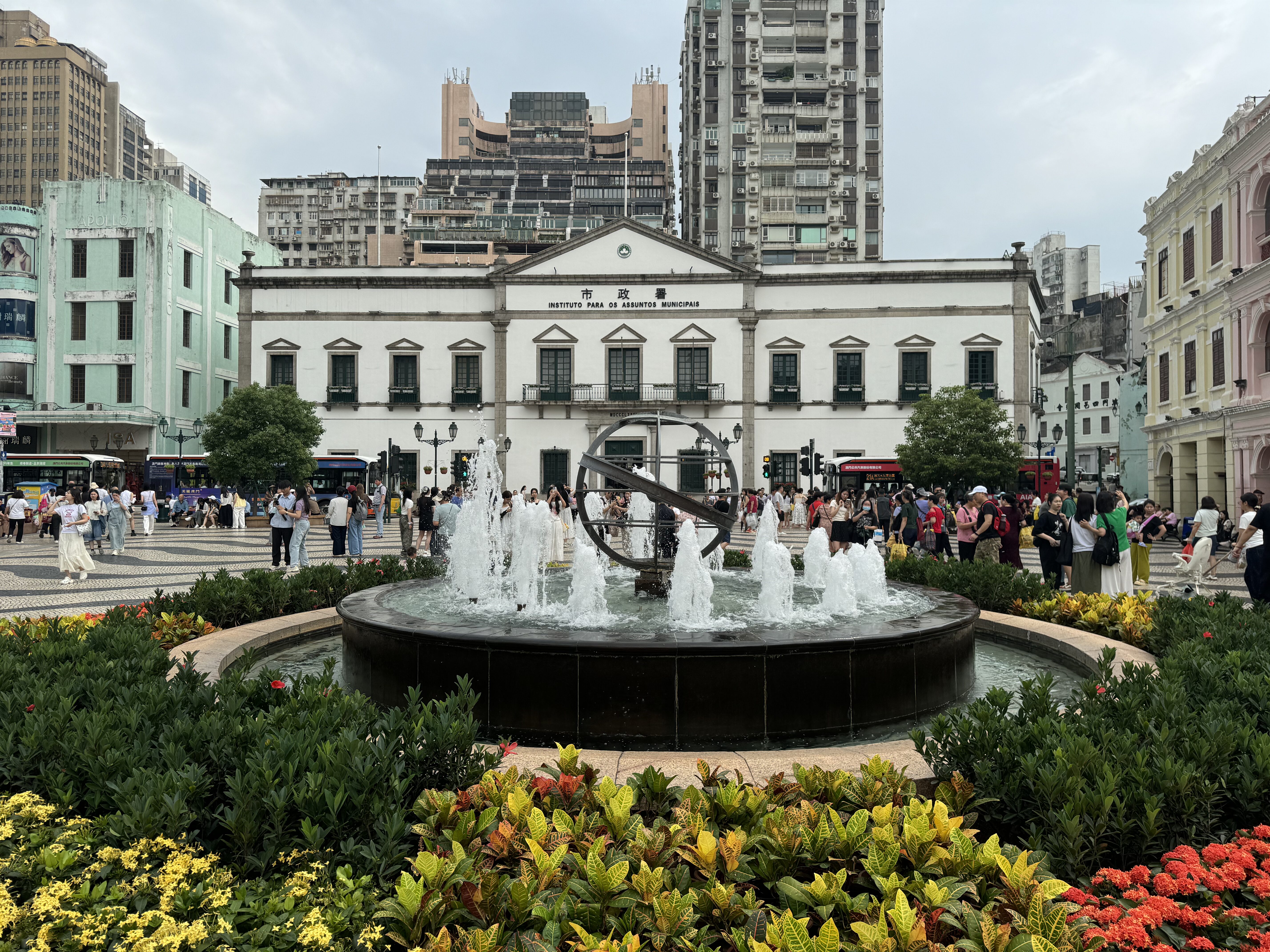
The Portuguese arrived in 1557 and left in 1999, and what remains is a genuinely Macanese culture — pastel churches, cobbled squares, pork chop buns — with a casino strip glued to the side of it.
The Portuguese established a permanent settlement here in 1557 and handed the territory back in 1999 — over four centuries, which is why Macau isn’t a place with colonial buildings so much as a place with its own culture produced by that length of contact.
The result is genuinely Macanese: a distinct cuisine, a creole language that survives in fragments, Catholic churches beside Daoist temples, Portuguese street names in azulejo tile, and everybody speaking Cantonese.
Then, glued onto that, the largest gambling economy in the world — several times Las Vegas by revenue.
The old town
The Historic Centre of Macau is a UNESCO World Heritage site, and it’s walkable in a day.
Ruins of St Paul’s — the façade of a 17th-century Jesuit church, the rest lost to fire, standing at the top of a grand staircase. The emblem of the territory.
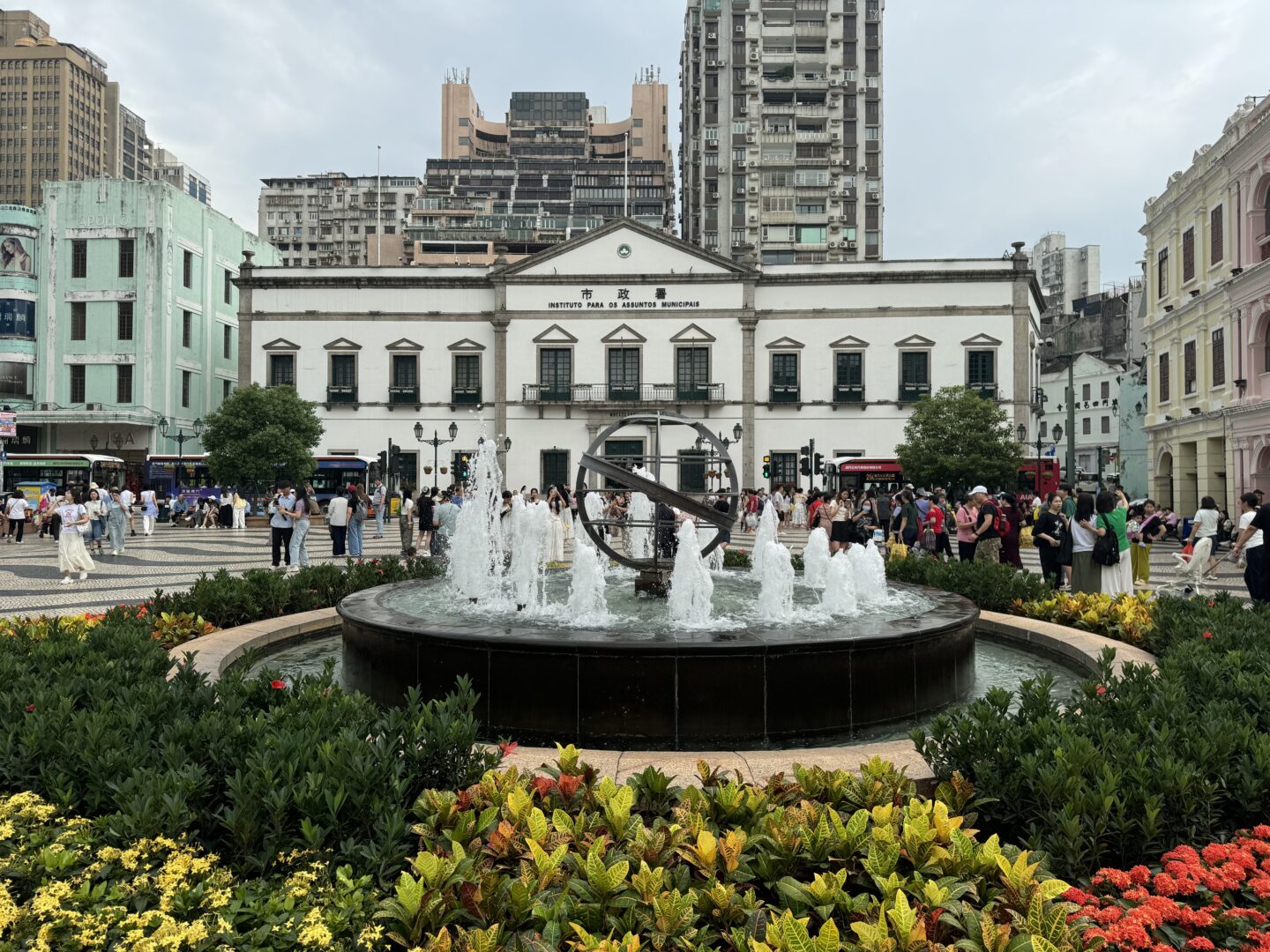
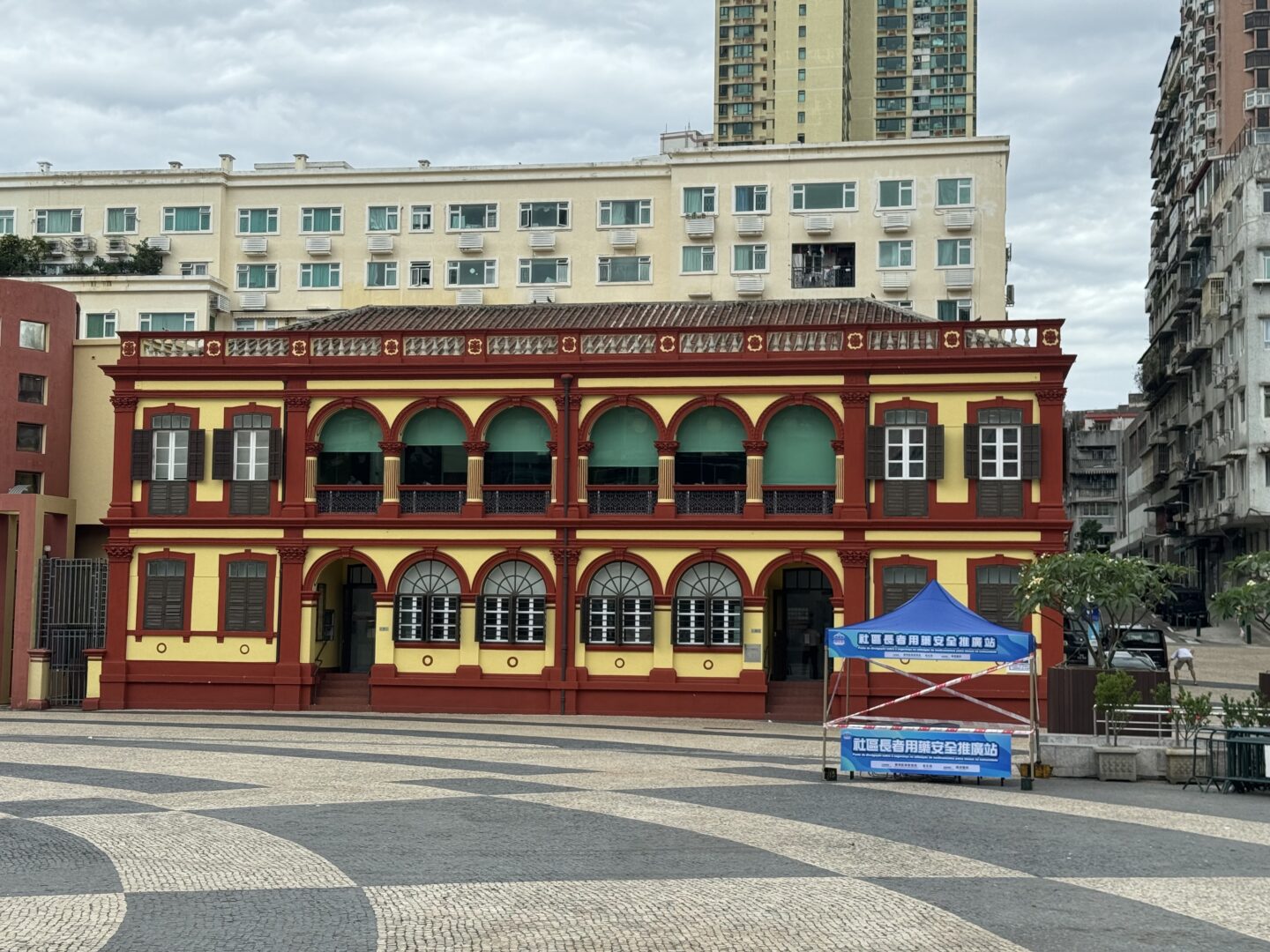
Senado Square — Portuguese wave-pattern paving, pastel-coloured public buildings, and the sort of European square you don’t expect to find in China.
A-Ma Temple — the oldest temple in Macau, dedicated to the sea goddess Mazu, and the origin of the name: A-Ma-Gao, the bay of A-Ma. See Putian for where the Mazu cult began.
St Lawrence’s, St Joseph’s, the Dom Pedro V theatre — the quieter half of the heritage listing, and the better half.
Guia fortress and lighthouse for the view.
Portuguese architecture in the old centre
Taipa and Coloane
Cross to the southern islands, which is where the old-world feeling actually survives.
Taipa village — pastel houses, narrow lanes, and the best concentration of Macanese restaurants.
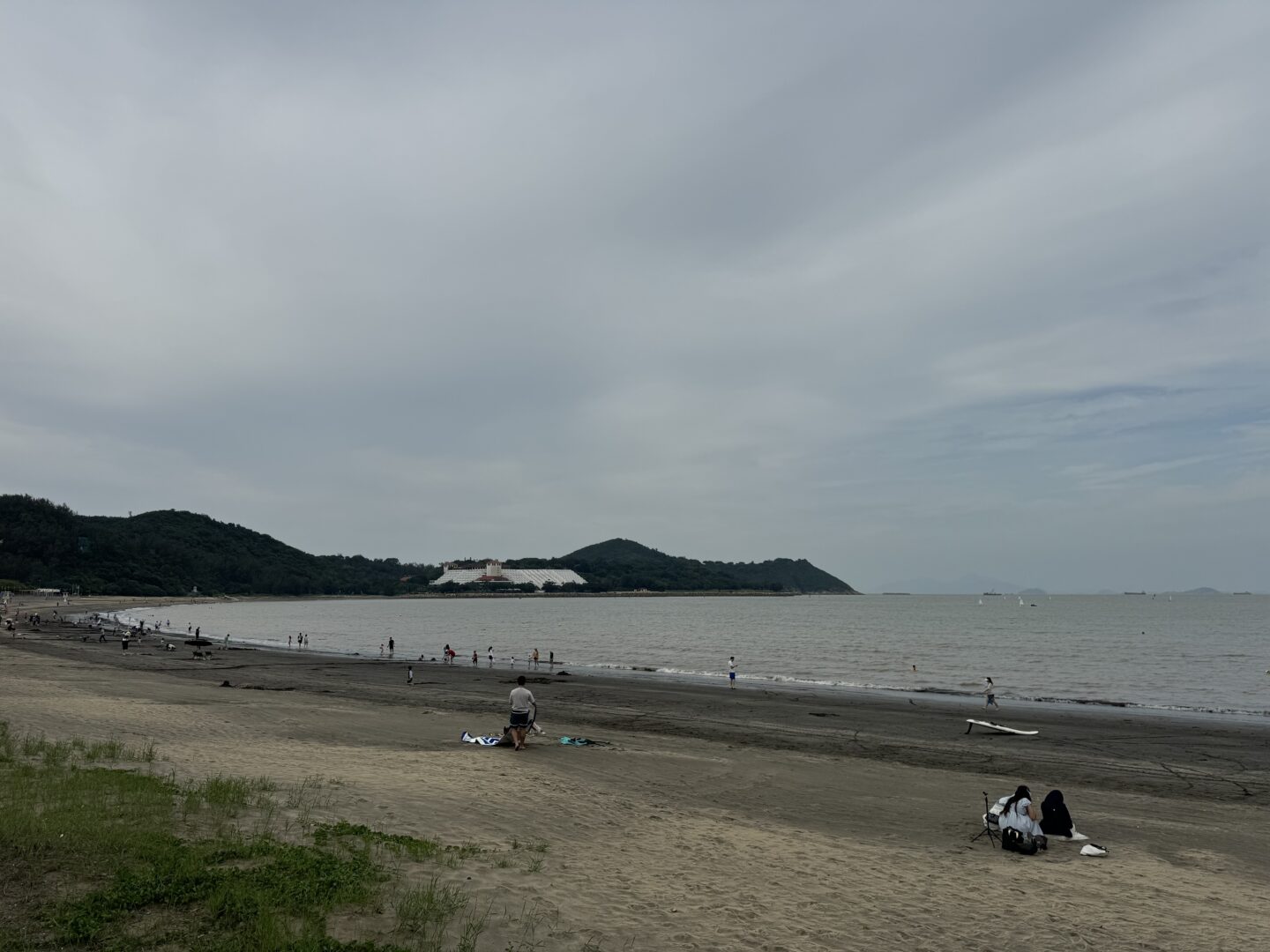
Coloane — the least developed part of the territory: a small village, a chapel, a beach, and the original Lord Stow’s bakery, where the Portuguese-style egg tart in its Macau form was created. Go there and eat two.
The food
This is the reason to come, more than the casinos or the churches.
Macanese cuisine is one of the world’s oldest fusion cooking traditions — Portuguese technique with ingredients and methods picked up across the Portuguese maritime network in Africa, India, Malacca and China.
- African chicken — grilled chicken in a coconut, chilli and peanut sauce, and Macanese rather than African
- Minchi — minced beef or pork with potato, soy and a fried egg. The comfort dish.
- Bacalhau — salt cod, in croquettes, baked, or with potato
- Portuguese egg tarts (pastéis de nata) — the caramelised-top version, and better here than most places in Portugal
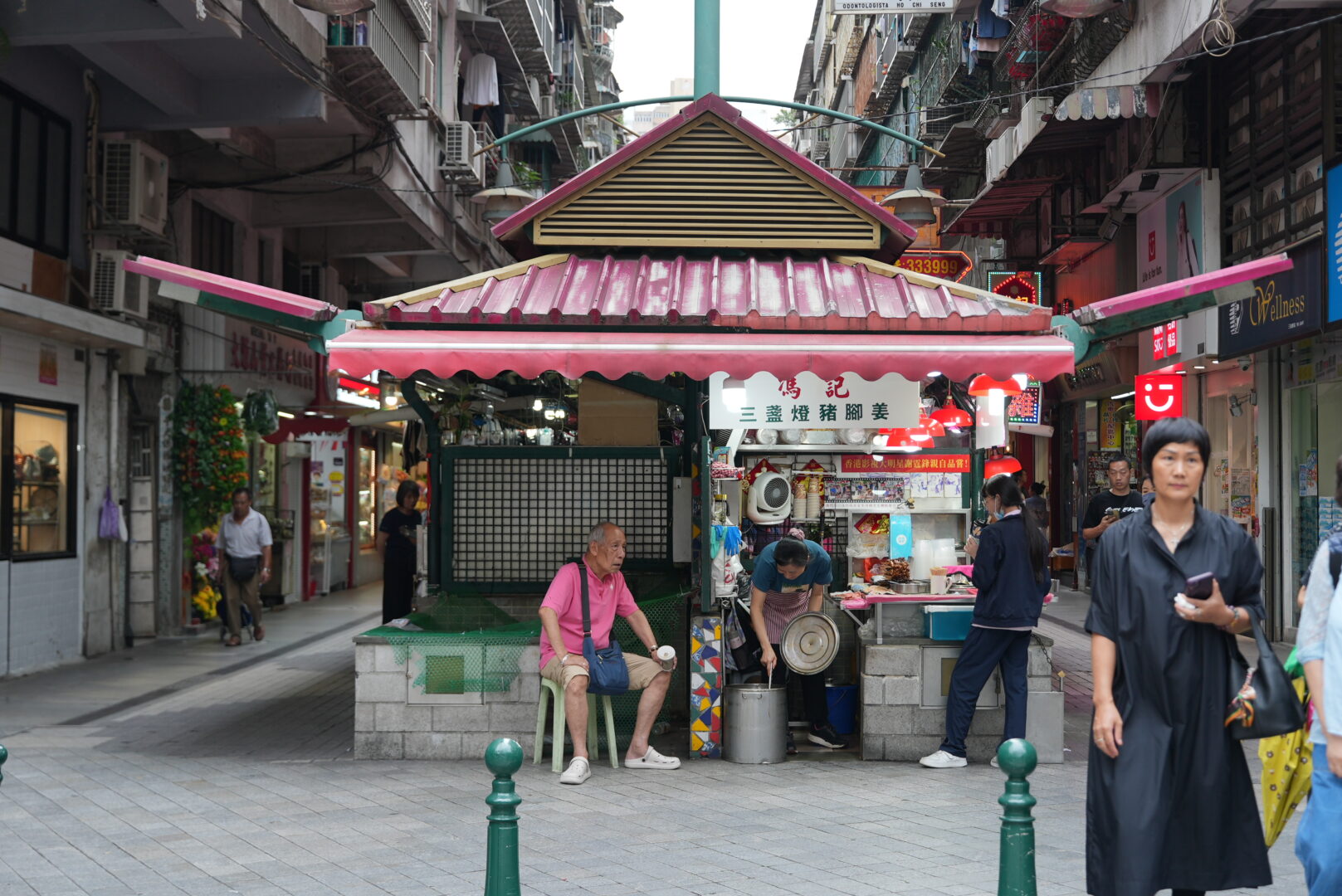
- Pork chop bun — exactly what it says, from a hatch, and perfect
- Serradura, a sawdust-crumb pudding, for dessert
Portuguese wine is everywhere and reasonably priced. Cantonese food is also excellent and cheaper.
The casinos
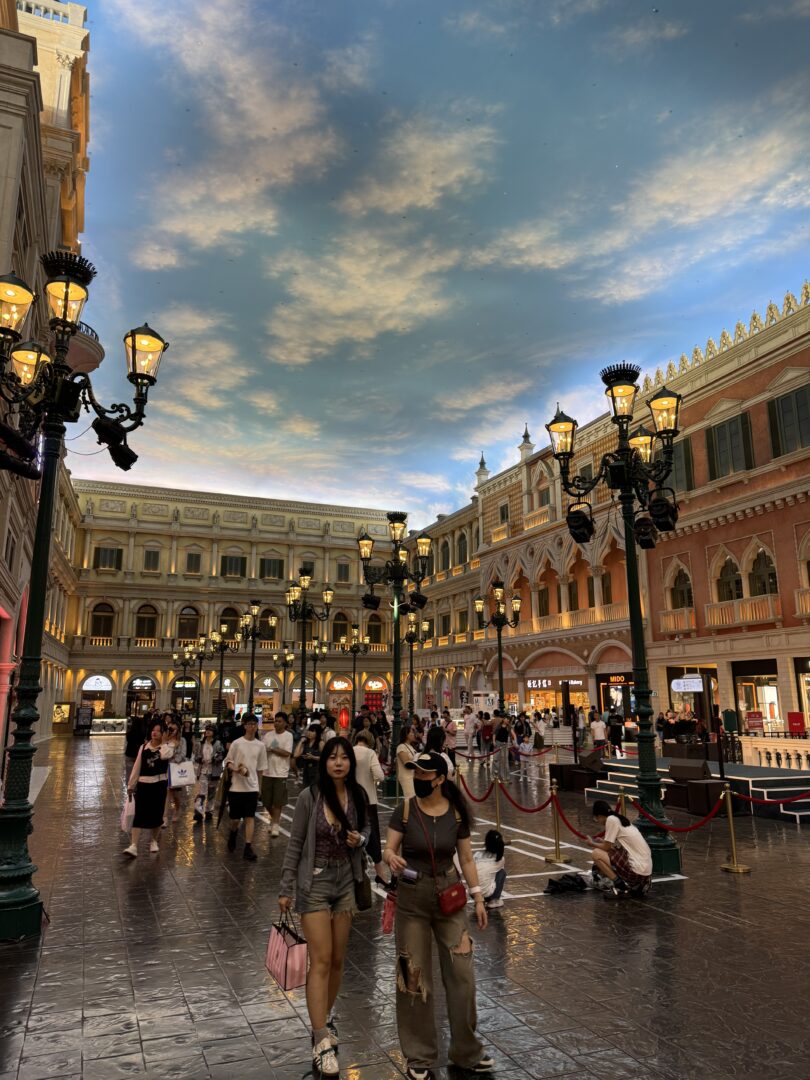
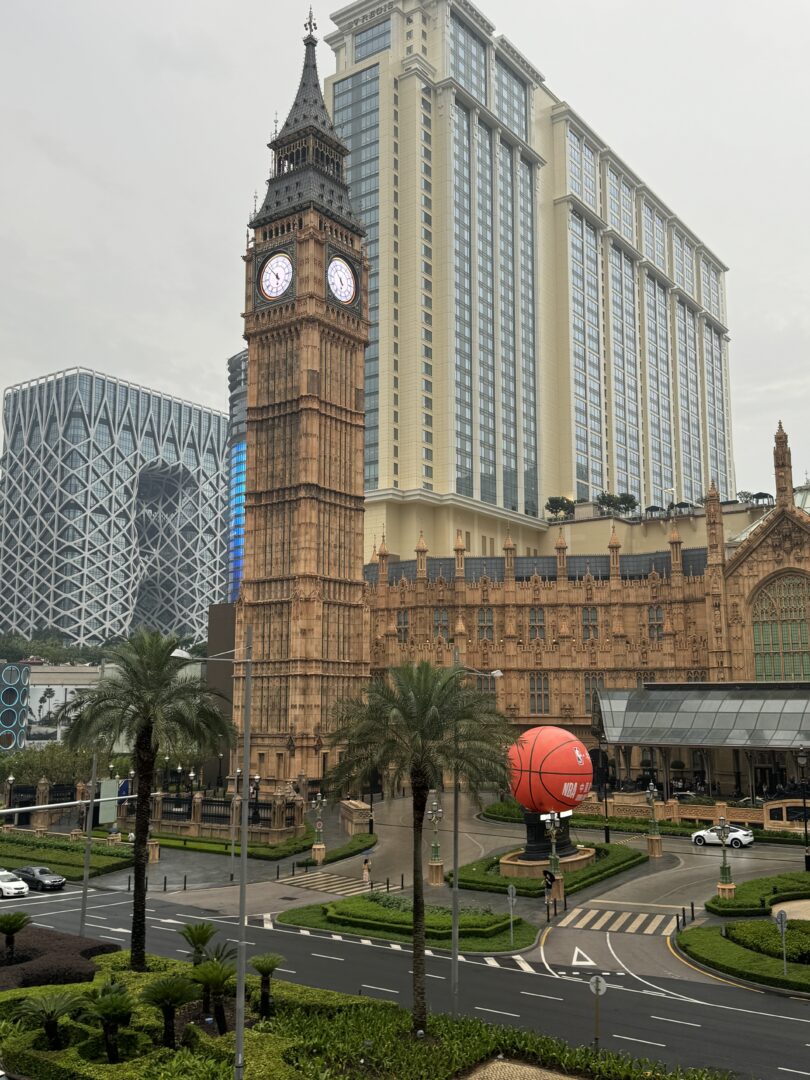
Enormous, air-conditioned, and busy at all hours. The Venetian, the Grand Lisboa, the Cotai strip generally — worth walking through for the spectacle even with no interest in gambling, and the resorts subsidise excellent food courts and free shows.
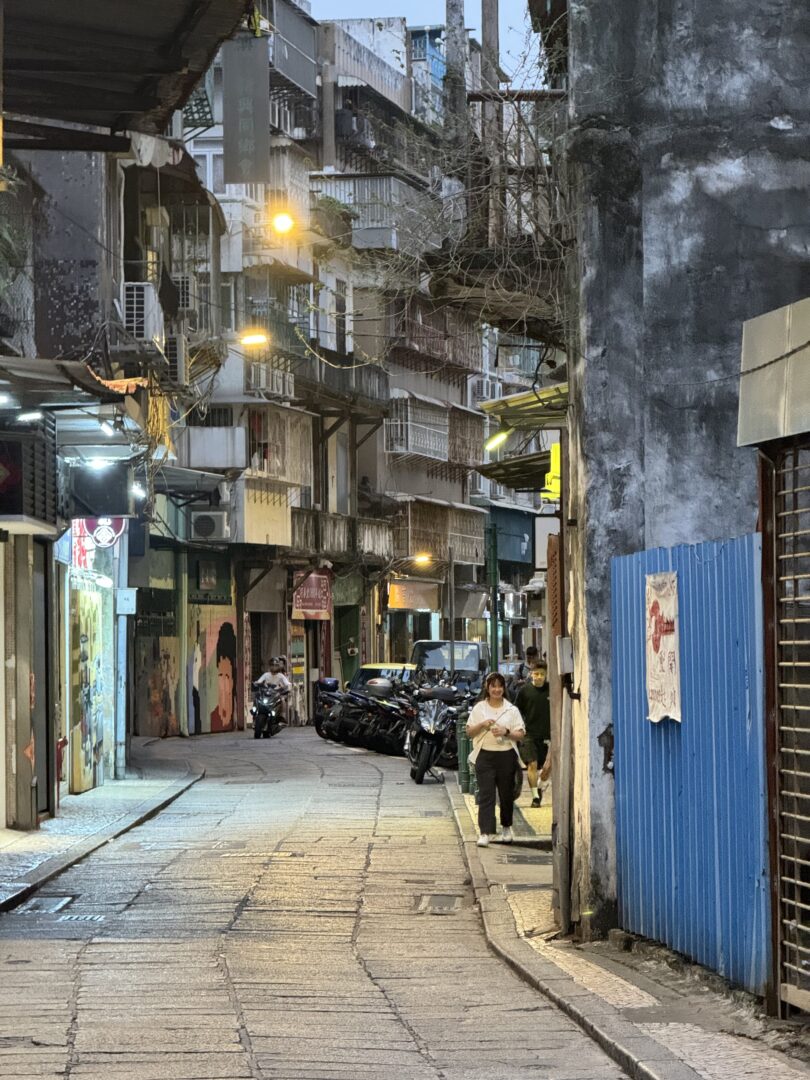
They are also the economy, which is worth understanding: the territory’s public finances, employment and development are all downstream of gaming revenue, and the contrast between the Cotai strip and the old residential districts is stark.
Practical notes
Getting there: ferry from Hong Kong (about an hour), the Hong Kong–Zhuhai–Macau bridge, or direct flights. The land border with Zhuhai is a short walk from the old town.
⚠️ The visa trap: Macau has its own immigration system, so entering it counts as leaving mainland China. Single-entry Chinese visa holders will not be readmitted to the mainland. See the visa guide.
Money: patacas, though Hong Kong dollars are accepted everywhere at par or close to it.
When: October to December. Summer is hot, humid and typhoon-exposed.
Nearby: Hong Kong, Shenzhen, Guangzhou and Shunde — all in the same delta, and all worth a day.
- #macau
- #portugal
- #casinos
- #unesco
- #food