
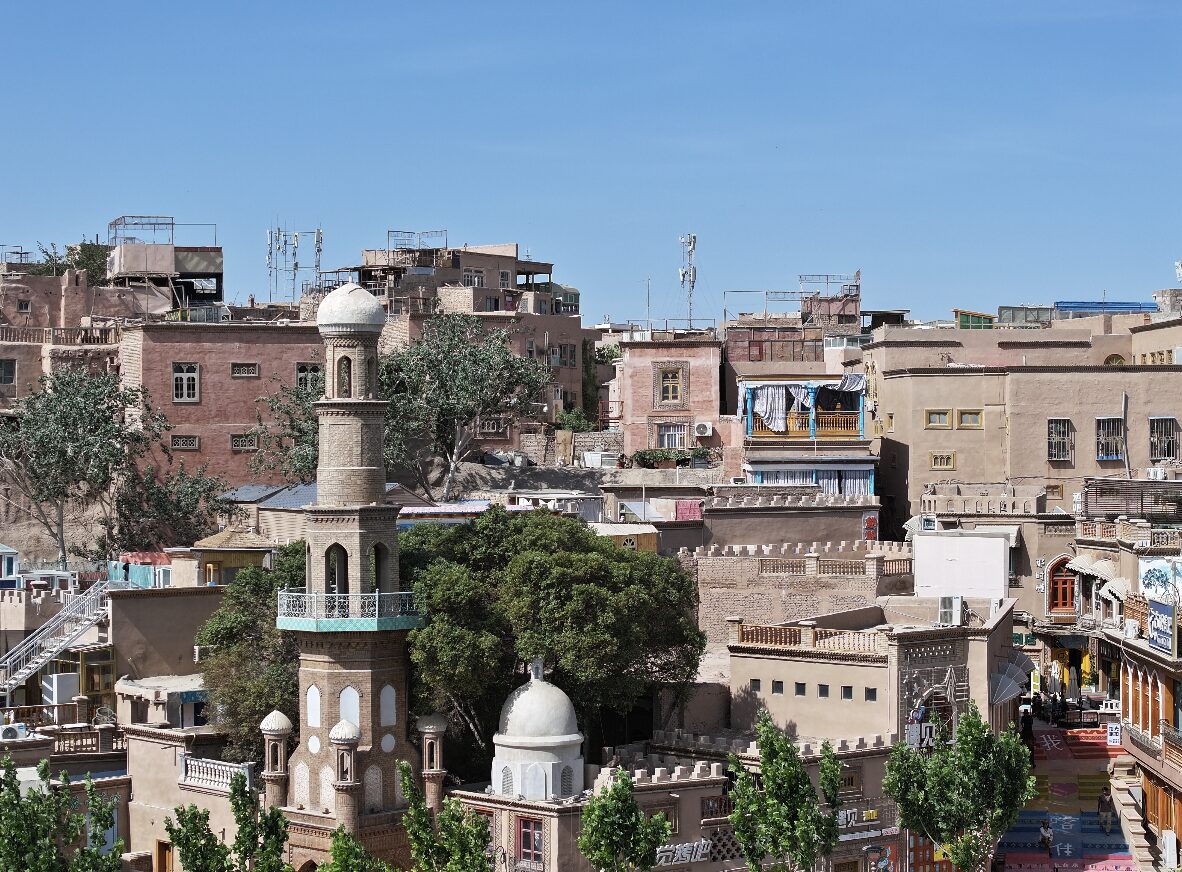
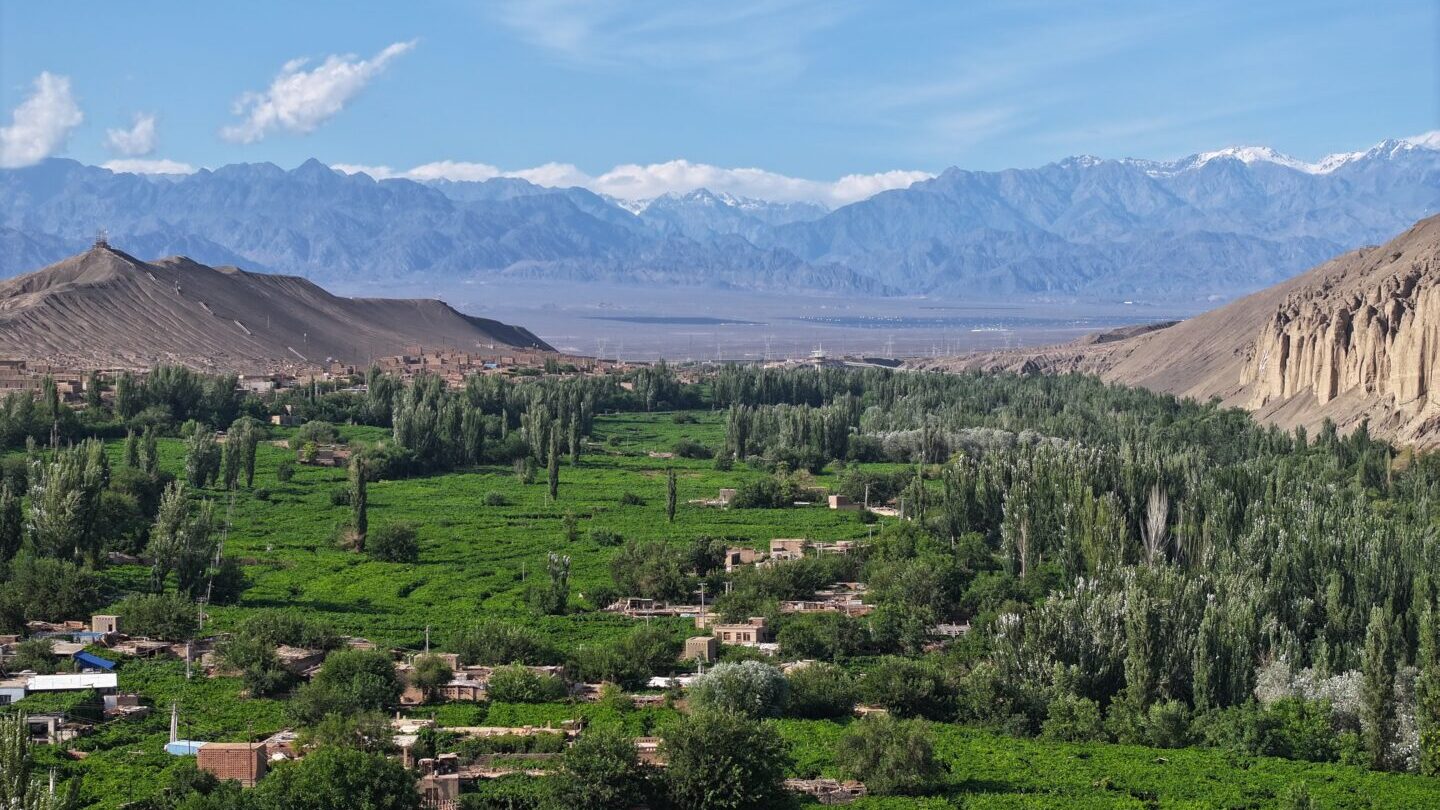
Turpan sits 150 metres below sea level in a basin that regularly passes 45°C. It should be uninhabitable. Instead it's a vineyard, kept alive by an underground irrigation network two thousand years old.
The Turpan basin is the lowest ground in China — Aydingkol Lake, at its bottom, sits around 154 metres below sea level — and among the hottest places in Asia. Summer air temperatures pass 45°C and the ground gets far hotter than that. Rainfall is almost nil.
So the thing that stops you here isn’t the desert. It’s the grapes.
Water that runs underground
Turpan is green because of the karez — a network of hand-dug tunnels that tap snowmelt at the foot of the Tian Shan and carry it dozens of kilometres to the oasis underground, where it can’t evaporate. Vertical access shafts every few tens of metres mark the line across the gravel; from the air the system reads as a dotted line drawn across empty desert.
It is roughly two thousand years old, was cut by hand with baskets and picks, and there were once thousands of kilometres of it. Some channels still carry water. Standing in a maintained section — cool, dark, water audibly moving — is the best engineering experience in western China, and it makes everything above ground make sense.
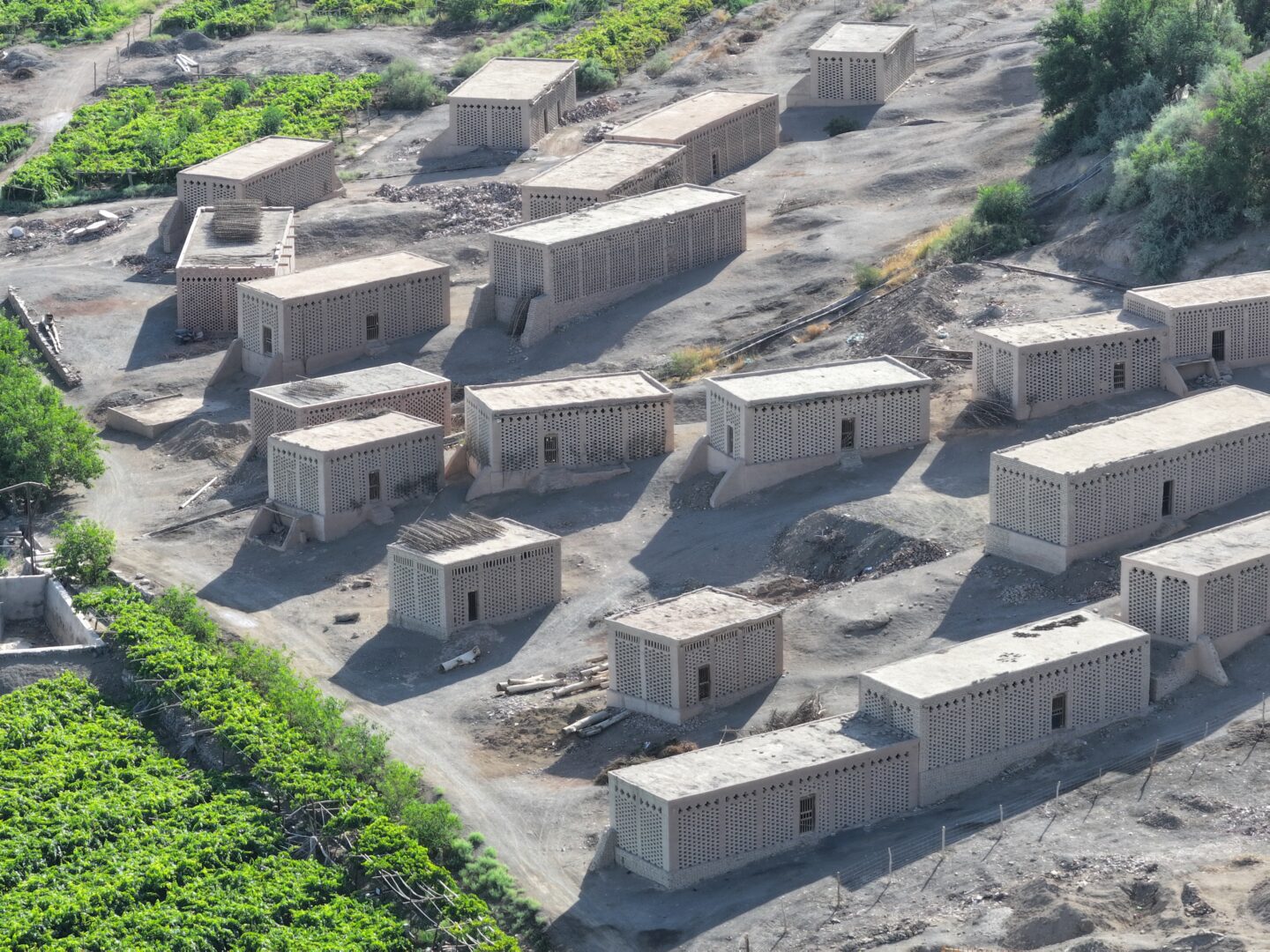
What it produces: grapes, in volume. Turpan’s seedless white grapes and the raisins dried from them are the standard by which Chinese raisins are judged. Whole streets are roofed in vine trellis, and in season the drying houses — brick buildings with lattice walls for airflow — appear on every ridge.
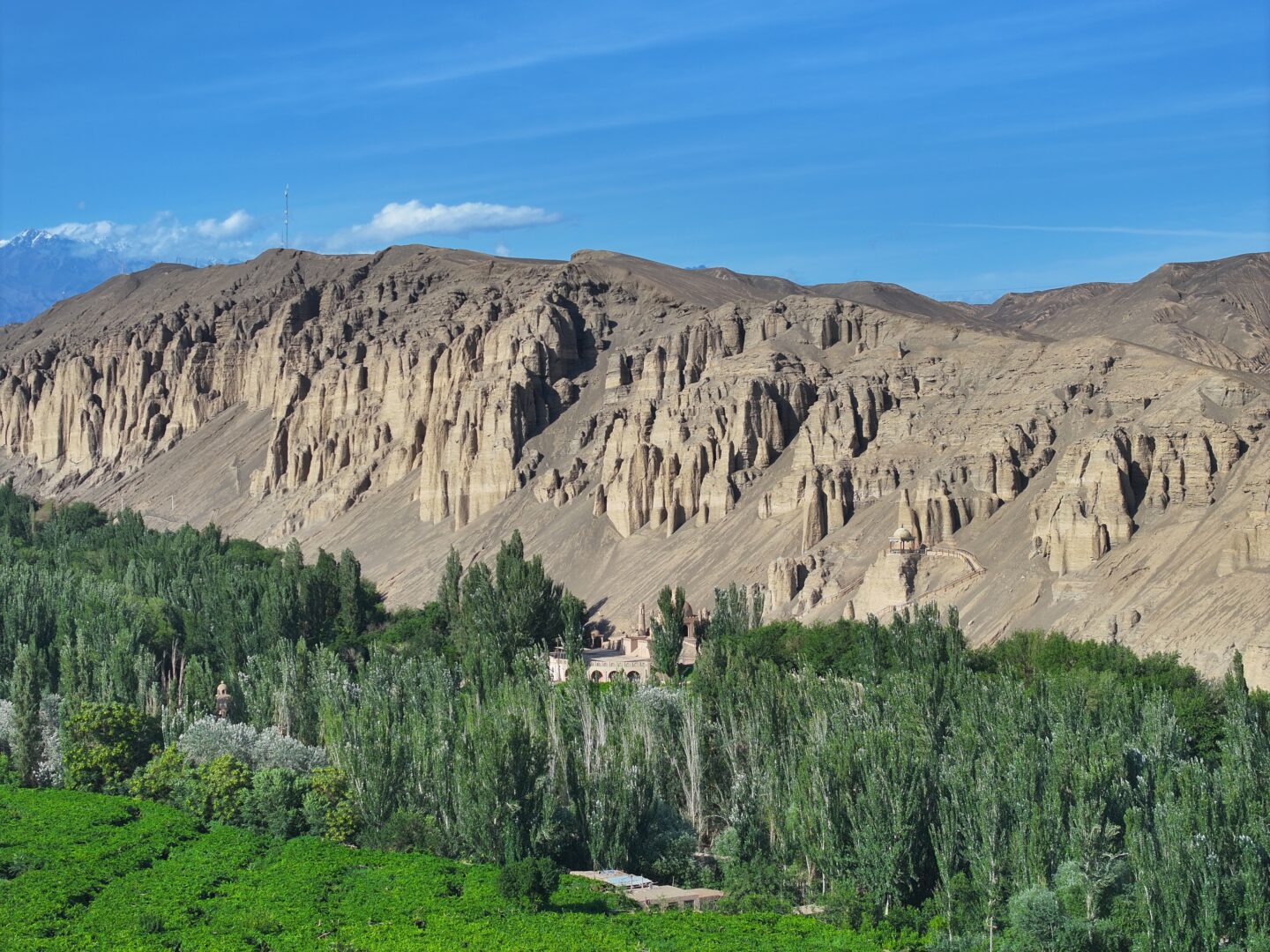
Vineyard, then gravel, then mountain — the Turpan basin in three bands
The ruins
Two Silk Road cities sit within a short drive, and both are worth the heat.
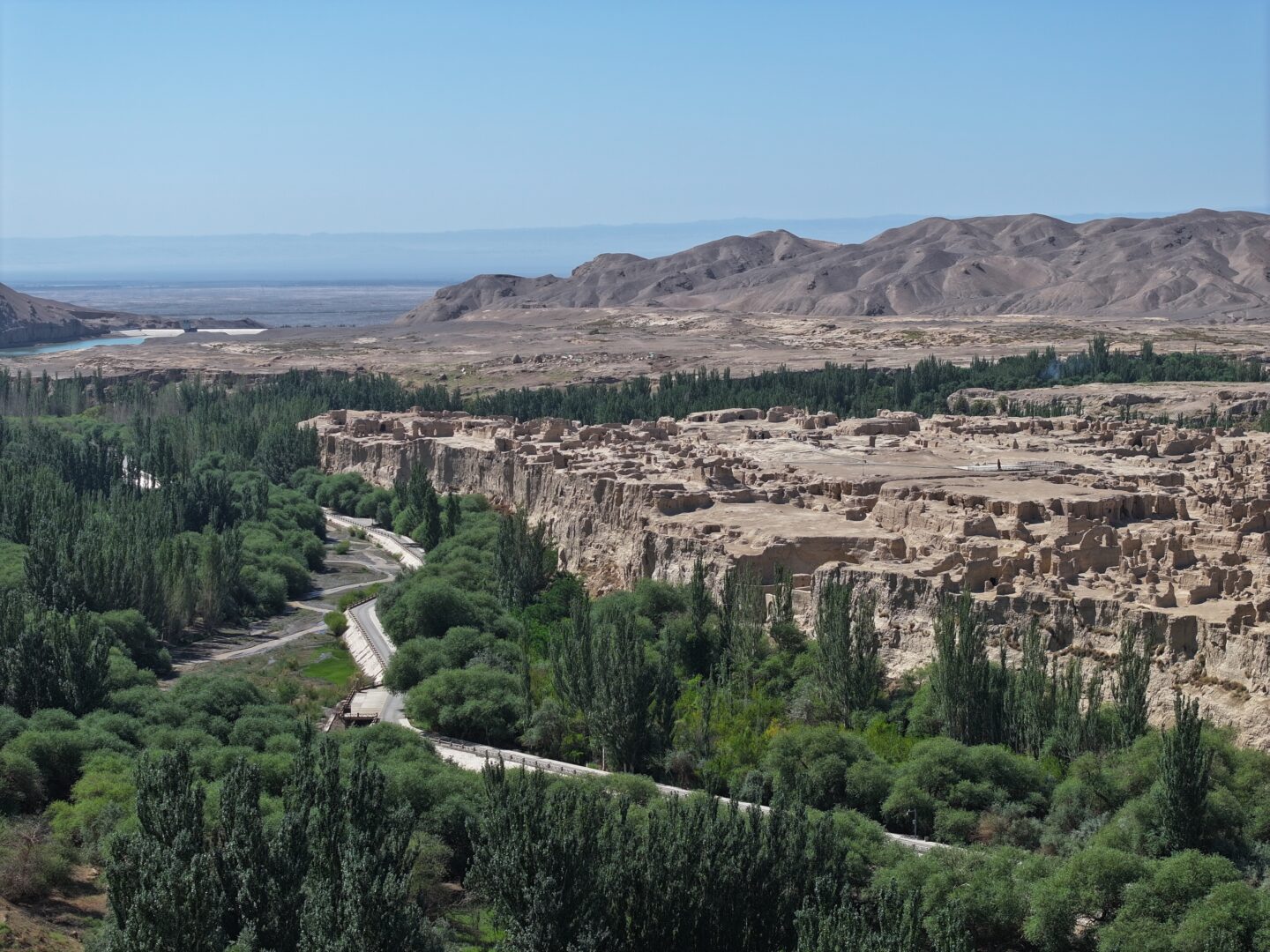
Jiaohe is the better of the two: a city carved down into a river-island plateau rather than built up from it, so the streets are trenches and the buildings are what’s left standing between them. It was abandoned in the fourteenth century and the dry air has kept it remarkably intact — you can walk the main avenue, the monastery, the residential quarters.
Gaochang, on the other side of town, is larger and more ruined, once a capital of the Uyghur Khaganate and a major Buddhist centre before Islam arrived.
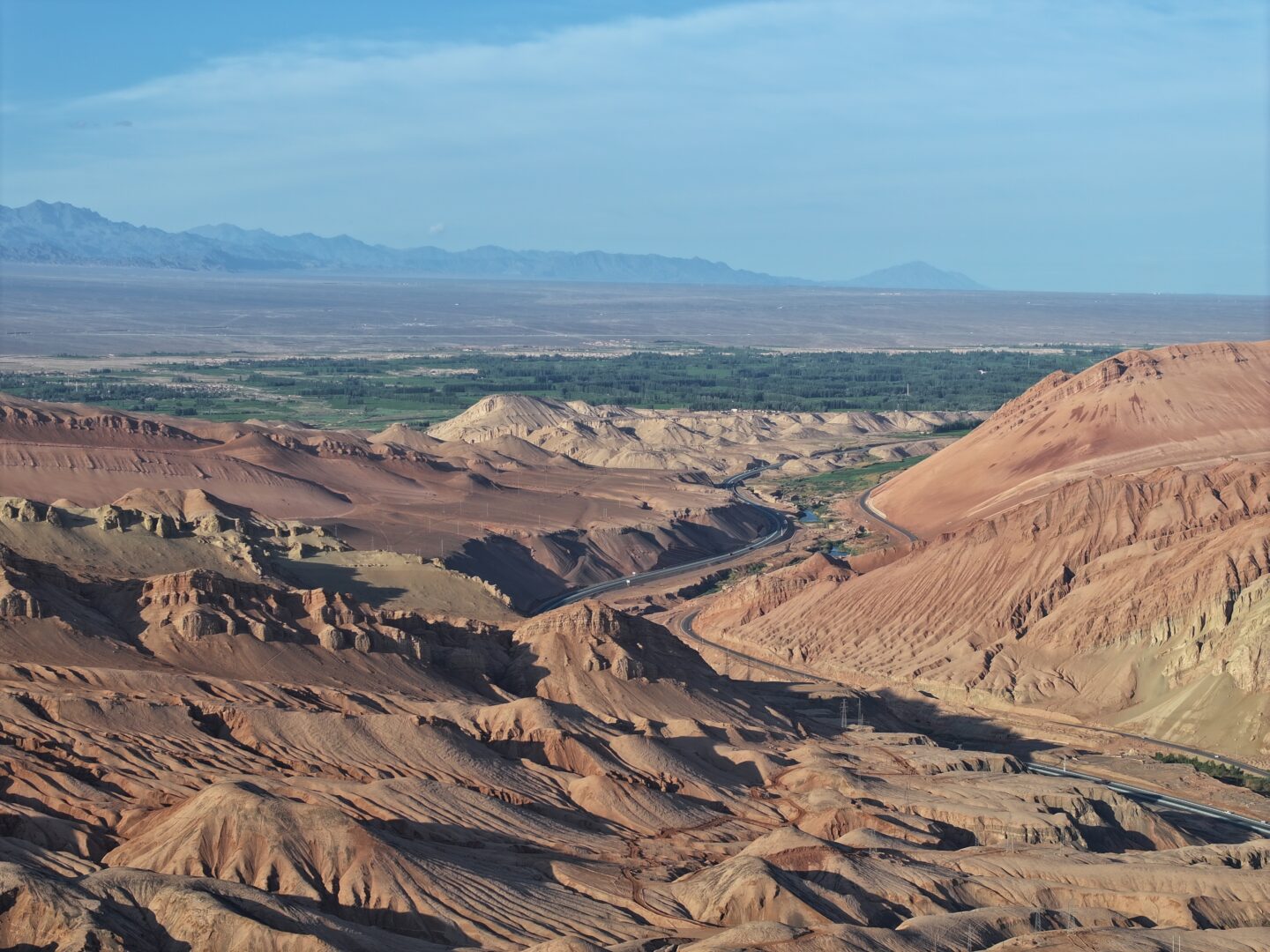
Between them, the Flaming Mountains — bare sandstone ridges that turn genuinely red in low sun, striated by erosion into what looks like flowing fire. They’re also the hottest surface temperatures recorded in China.
The Bezeklik caves nearby hold Buddhist murals, most heavily damaged and some removed to European museums in the early twentieth century.
The town
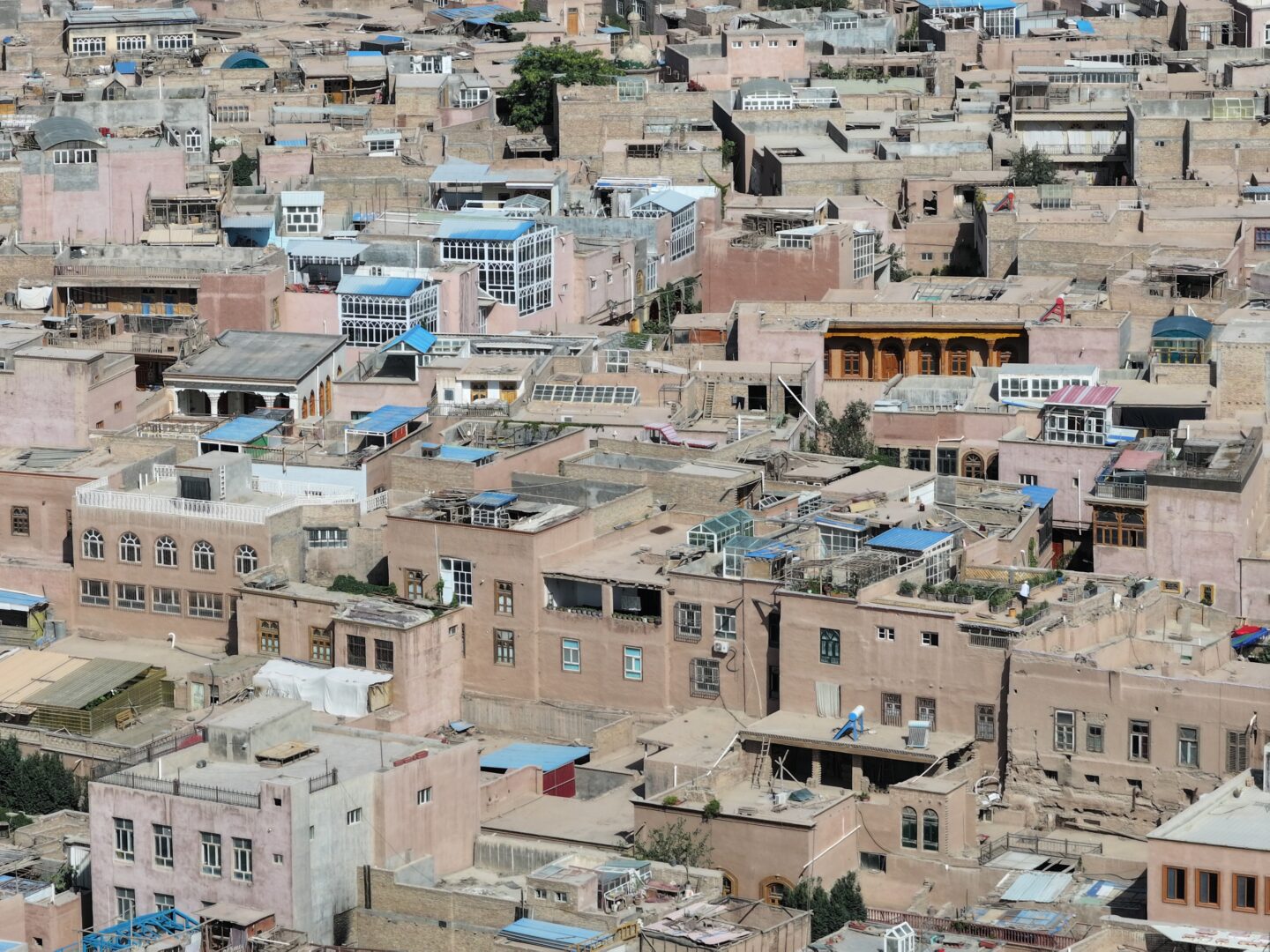
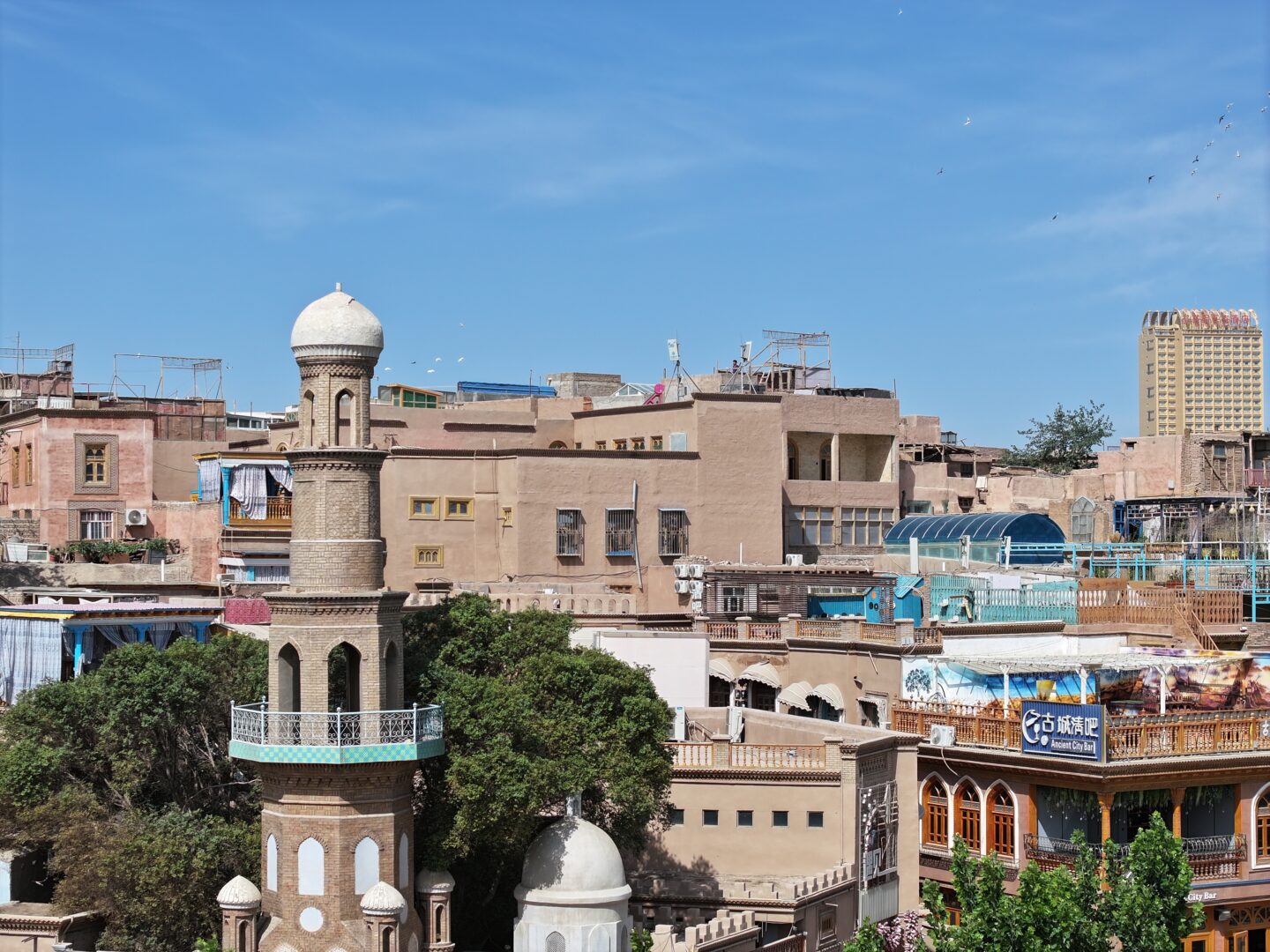
Turpan is Uyghur, unhurried and disproportionately pleasant given the climate. The bazaar sells dried fruit, nuts and spices in quantity; the mud-brick lanes of the old quarters are cooler than the streets outside; and the Emin Minaret, a tapering brick tower from 1777 patterned entirely in laid brickwork, is the most beautiful single building in Xinjiang.
Everything happens early or late. Between noon and four the town closes down and so should you — sit under the vines, eat cold noodles, and wait for the light to soften. Evenings are when people come out, music starts and the dancing occasionally does too.
Practical notes
- When: late September and October — grape harvest, and temperatures you can walk in. Avoid July and August unless heat is the point.
- Getting there: high-speed rail from Ürümqi takes about an hour.
- Nearby: Shanshan for the dunes running up against the town, and Tuyugou for a Uyghur village in a gorge just outside.
- #xinjiang
- #turpan
- #silk road
- #desert
- #karez