
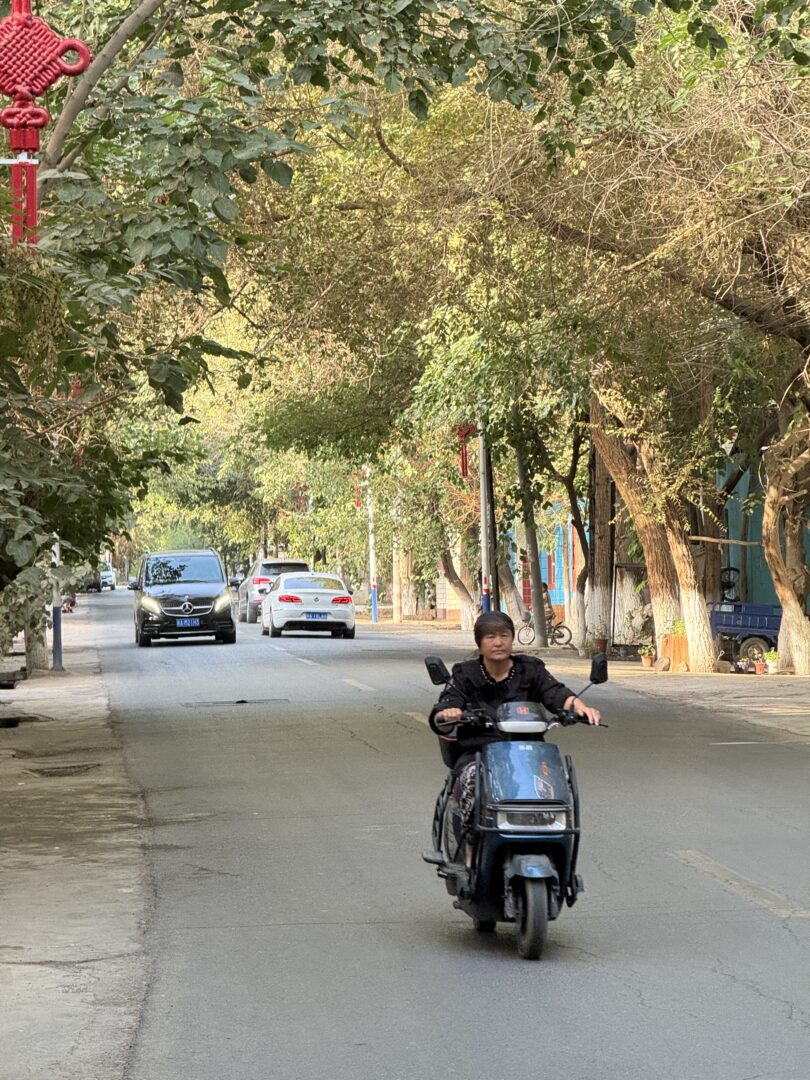
Shanshan sits in the Turpan basin near the lowest point in China, and the desert doesn't stop at the town limits — it comes into the streets. Locals treat the hot sand as medicine.
Shanshan is in the Turpan basin, a short way from Aydingkol Lake — at 154 metres below sea level, the lowest point in China — and the summer temperatures follow from the geography. Above 45°C is normal. The air over the road visibly moves.
What makes the town remarkable isn’t the number, though. It’s that the Kumtag Desert doesn’t stop at the edge of it. The dunes come right up to the last row of houses, so you can walk out of a residential street and be in open sand within a minute.
Sand baths
Because there’s this much hot sand within walking distance, people use it. The sand bath is a genuine local practice: dig into the surface, lie down, get covered up to the neck, and stay there.
The claimed benefits are for joints, circulation and muscle pain, and there’s a real tradition behind it — it’s how people here have treated aches for generations, especially older residents in summer. Whatever the physiology, an hour in 50°C sand is a very definite experience.
We drove out to a dune behind the village and found a group already there, who immediately insisted we join. That’s essentially how it works — nobody does this alone, and a visitor gets recruited fast.
Practical warnings, since this is easy to get wrong: go early morning or late afternoon, not midday. Cover your head. Drink far more water than feels necessary before and after. And get out well before you think you need to — heat exhaustion out here builds without announcing itself.
Water underneath
The other half of the story is the karez — the underground channels that tap snowmelt from the Tian Shan and carry it to the oasis without letting it evaporate. Dug by hand, some of them two thousand years old, still running.
The contrast is the thing that stays with you: 45°C air above, and cool water moving through tunnels below your feet. The Turpan guide goes into how the system works.
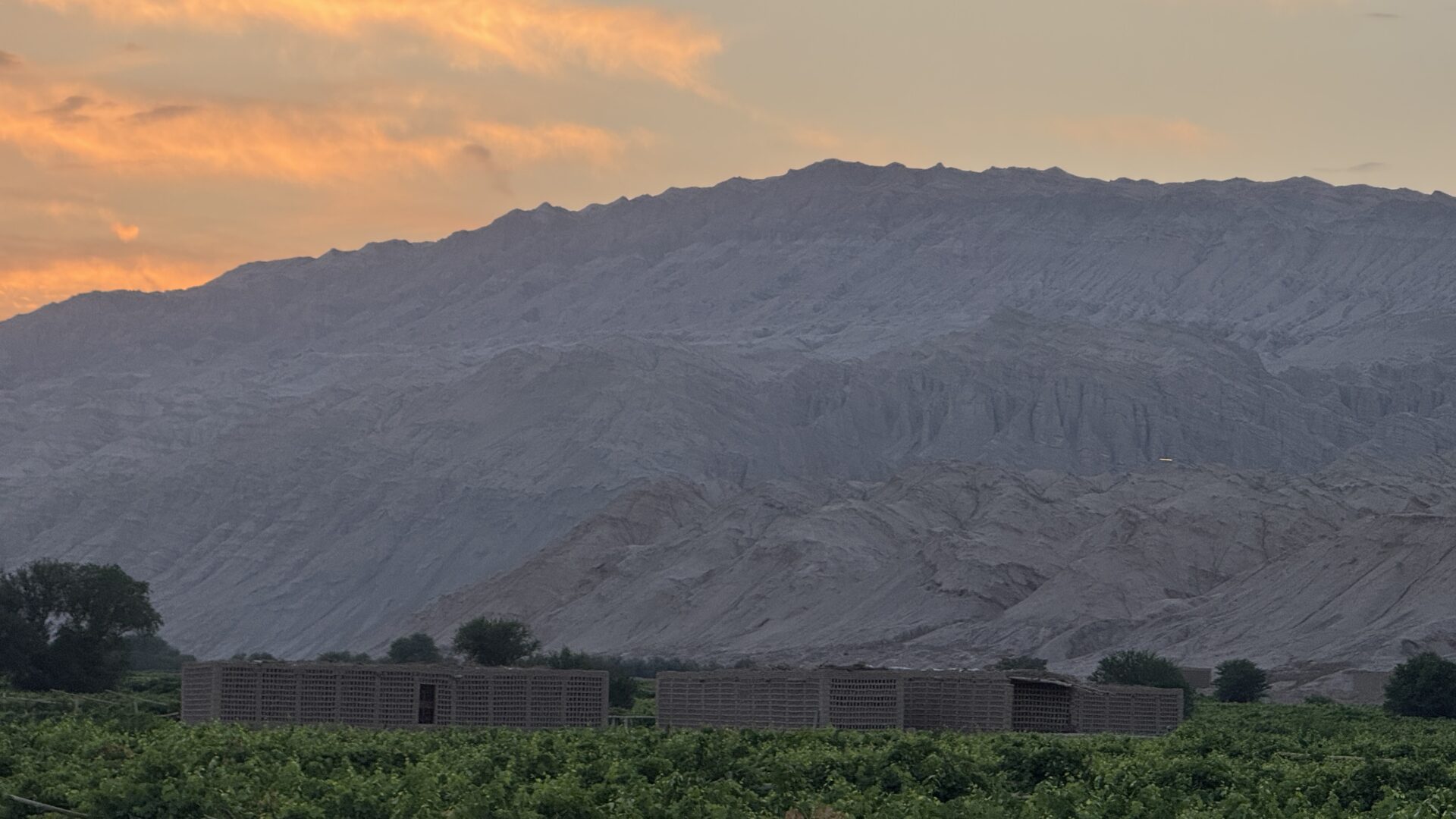
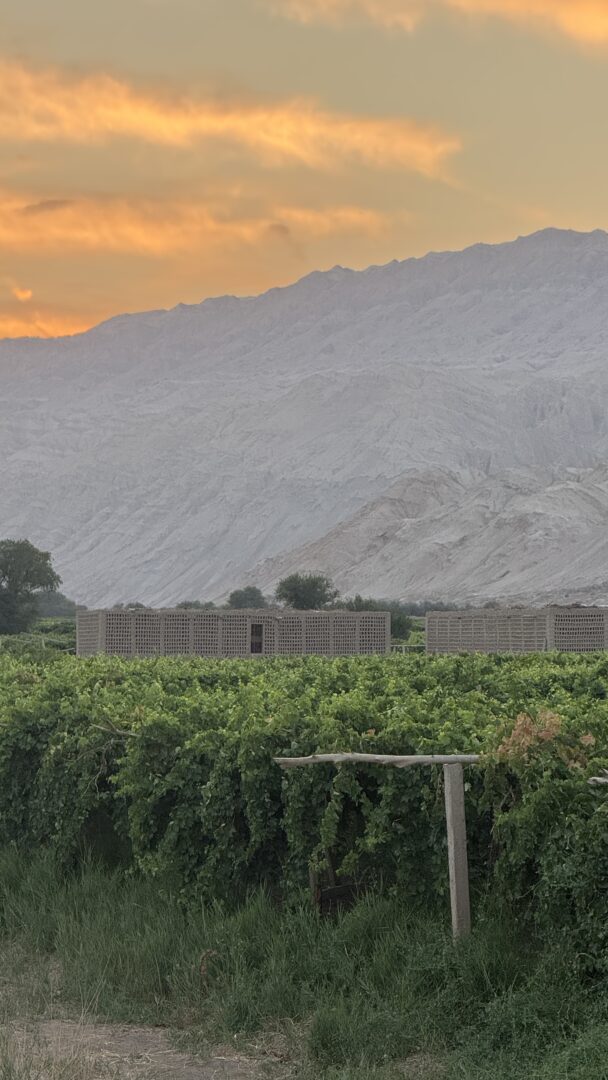
What it produces is fruit, especially grapes. Vineyards run along every road out of town, trellised overhead so the lanes are shaded, and the air genuinely does drop a few degrees when you ride through one.
When to go
September, for the grape harvest. The temperature has come down to something you can walk in, the drying houses are all working, and you can eat grapes off the vine an hour after they’re cut. It’s the best month here by a wide margin.
July and August are for people who want to say they’ve done it.
Practical notes
Where to sleep: a handful of decent modern hotels in town; nothing elaborate, all air-conditioned, which is the only specification that matters.
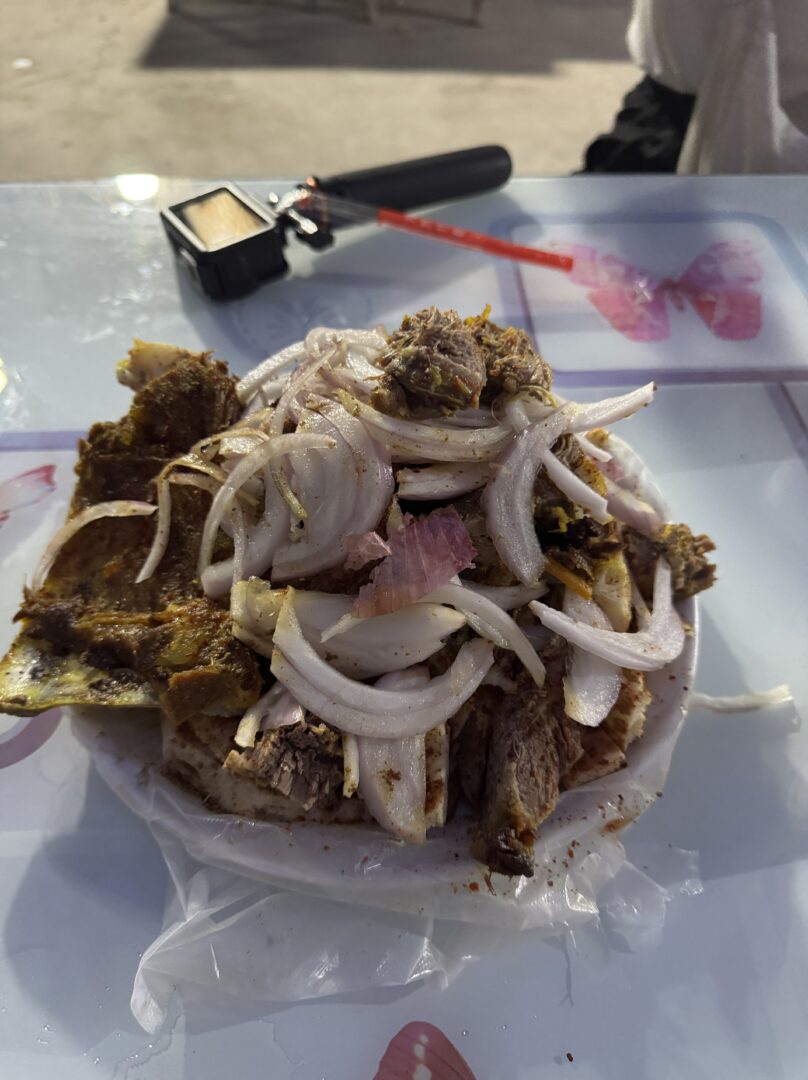
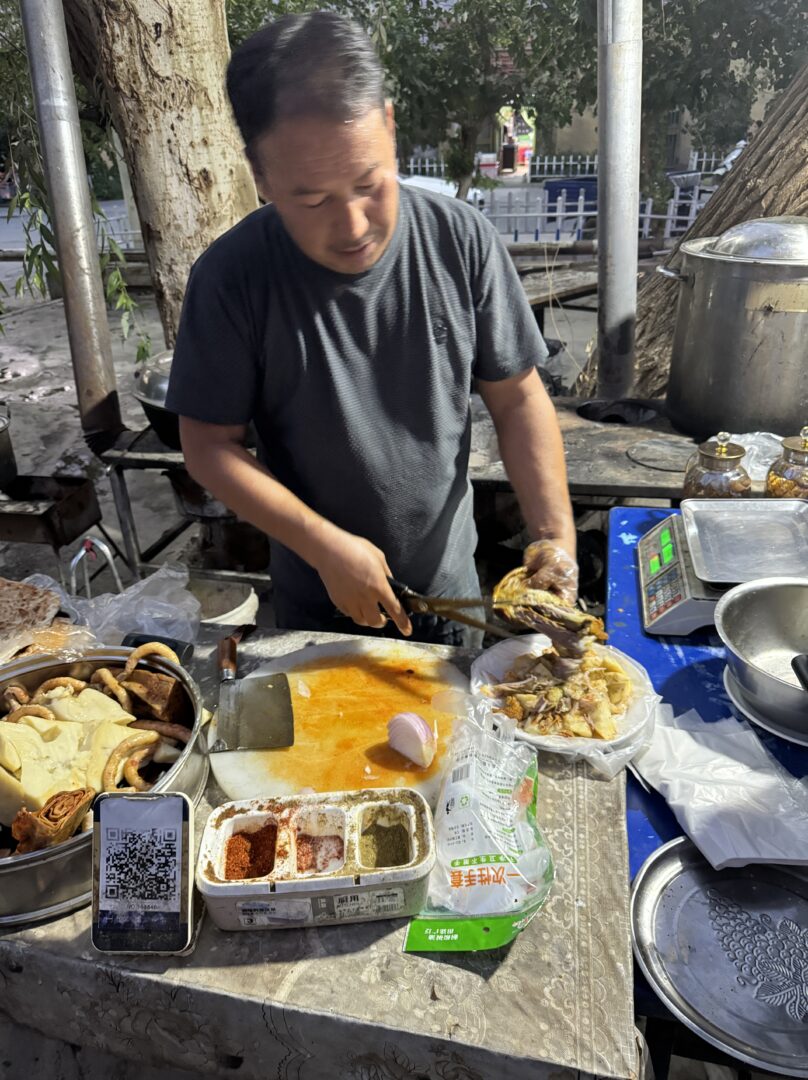
What to eat: the Xinjiang standard, and very good — naan and milk tea in the morning, plov and laghman later, lamb skewers from the street in the evening. Lamb is everywhere; the roadside stalls are as good as the restaurants. See our food guide.
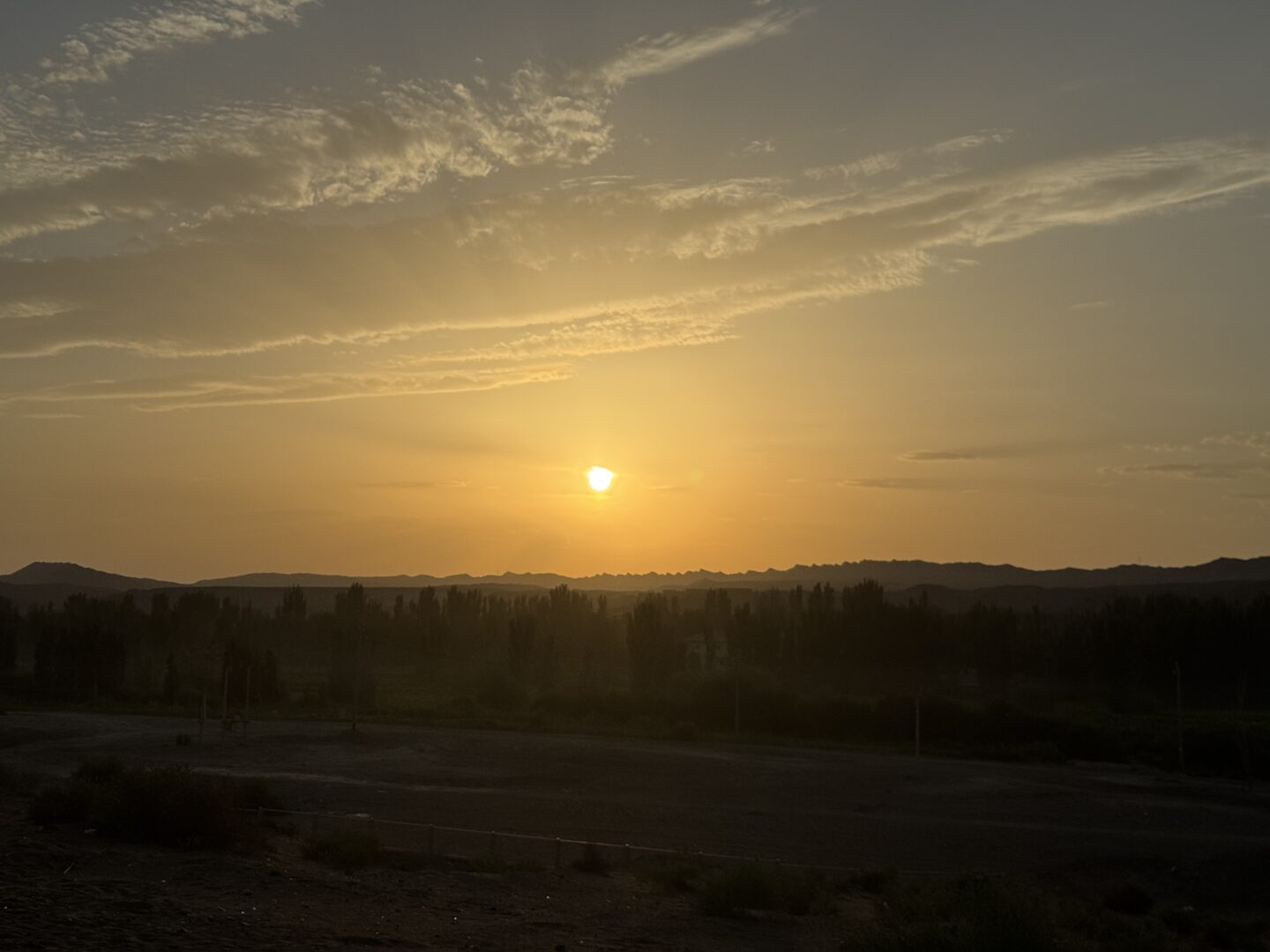
The Kumtag Desert: effectively part of the town. You can walk in, take a sand bath, or arrange a proper desert tour — easiest through your hotel, which will have a driver. Sunset from the dunes above the town is the shot.
Getting there: an easy hop from Turpan, which is an hour by high-speed rail from Ürümqi.
More from the region under Xinjiang — including the Taklamakan crossing if this leaves you wanting more sand.
- #xinjiang
- #shanshan
- #kumtag
- #desert
- #turpan