
Yining spent a decade under Tsarist occupation and forty years as a Soviet trade hub, and it never quite went back. Uyghur courtyards behind Russian shutters, in the greenest corner of Xinjiang.
Yining is the one Chinese city where you can stand in a Uyghur courtyard, look up at a Siberian tin roof through carved wooden shutters painted cobalt, and hear Kazakh being spoken in the lane outside.
That layering isn’t decorative. It’s a record of who has controlled this valley.
How it got this way
Before the Qing arrived, the Ili valley was Mongol and Kazakh steppe, grazed rather than governed. After the Qing conquest of Dzungaria in the 1750s, Uyghur farming communities were resettled here to work the land and hold the frontier.
Then in 1871 Russia occupied the Ili region outright and held it for a decade — an episode that ended by treaty and left buildings, street plans and family names behind. Through the Soviet period Yining became a principal China–USSR trade hub, and the border remained more porous than the map implied.
The layers stayed. Russian bread — dàlièba (大列巴), a dense round sourdough — is still bakery standard. Street names still echo another century. And the city is home to Han, Uyghur, Kazakh, Mongol, Uzbek, Kyrgyz, Russian and Tatar communities living in the same few square kilometres.
Where to walk
Kazanchi (喀赞其)
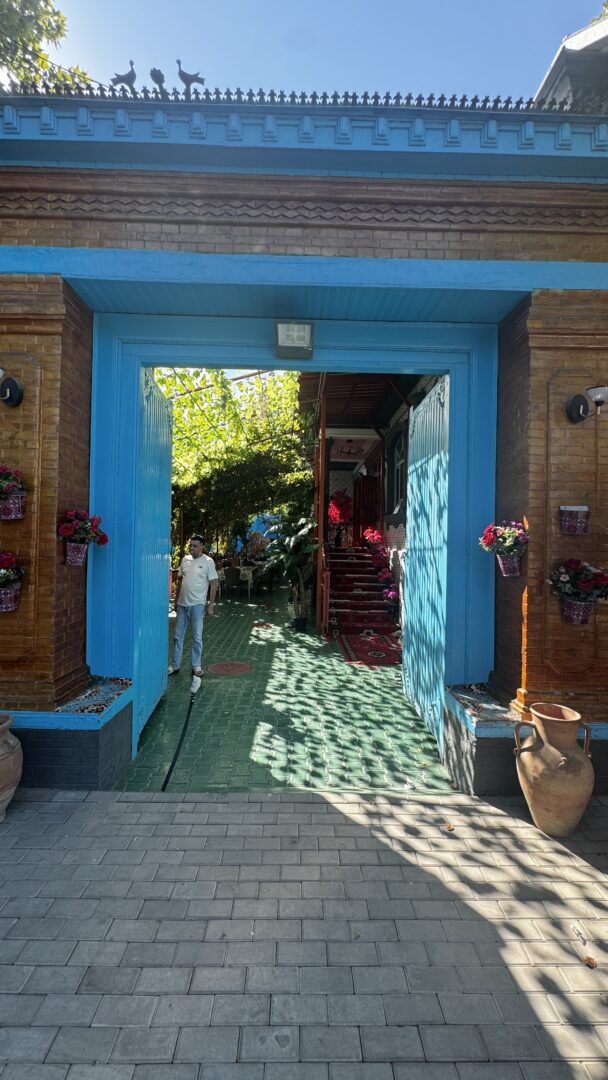
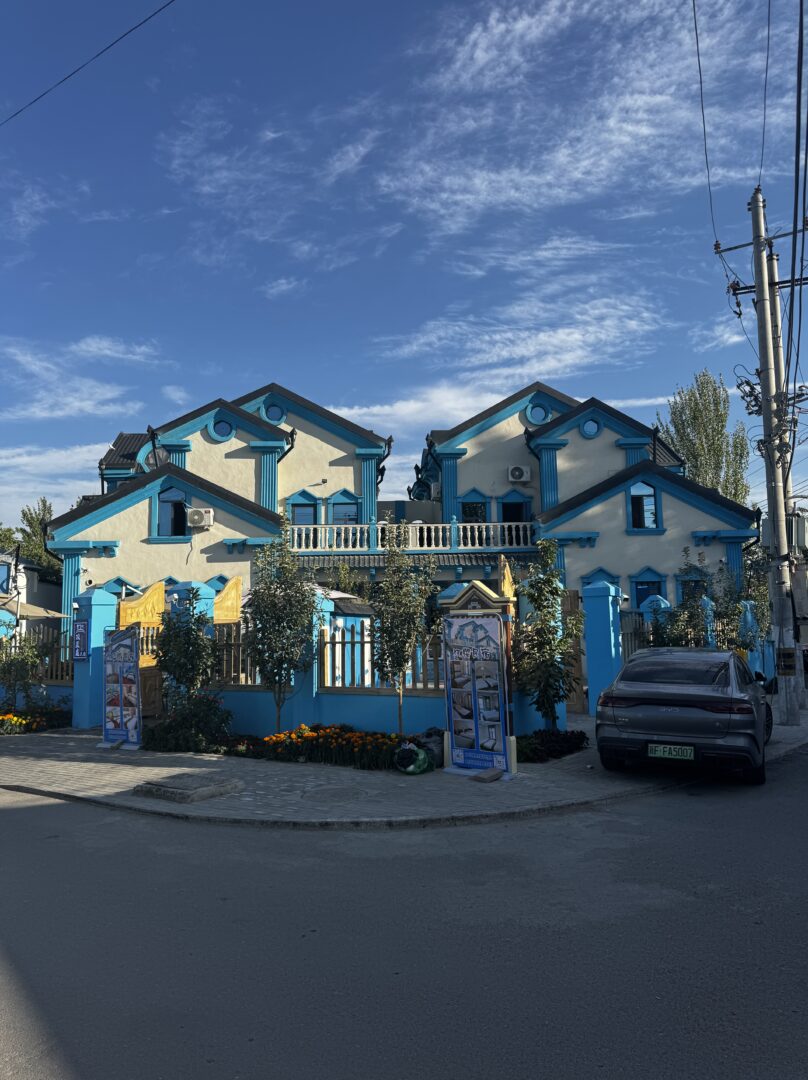
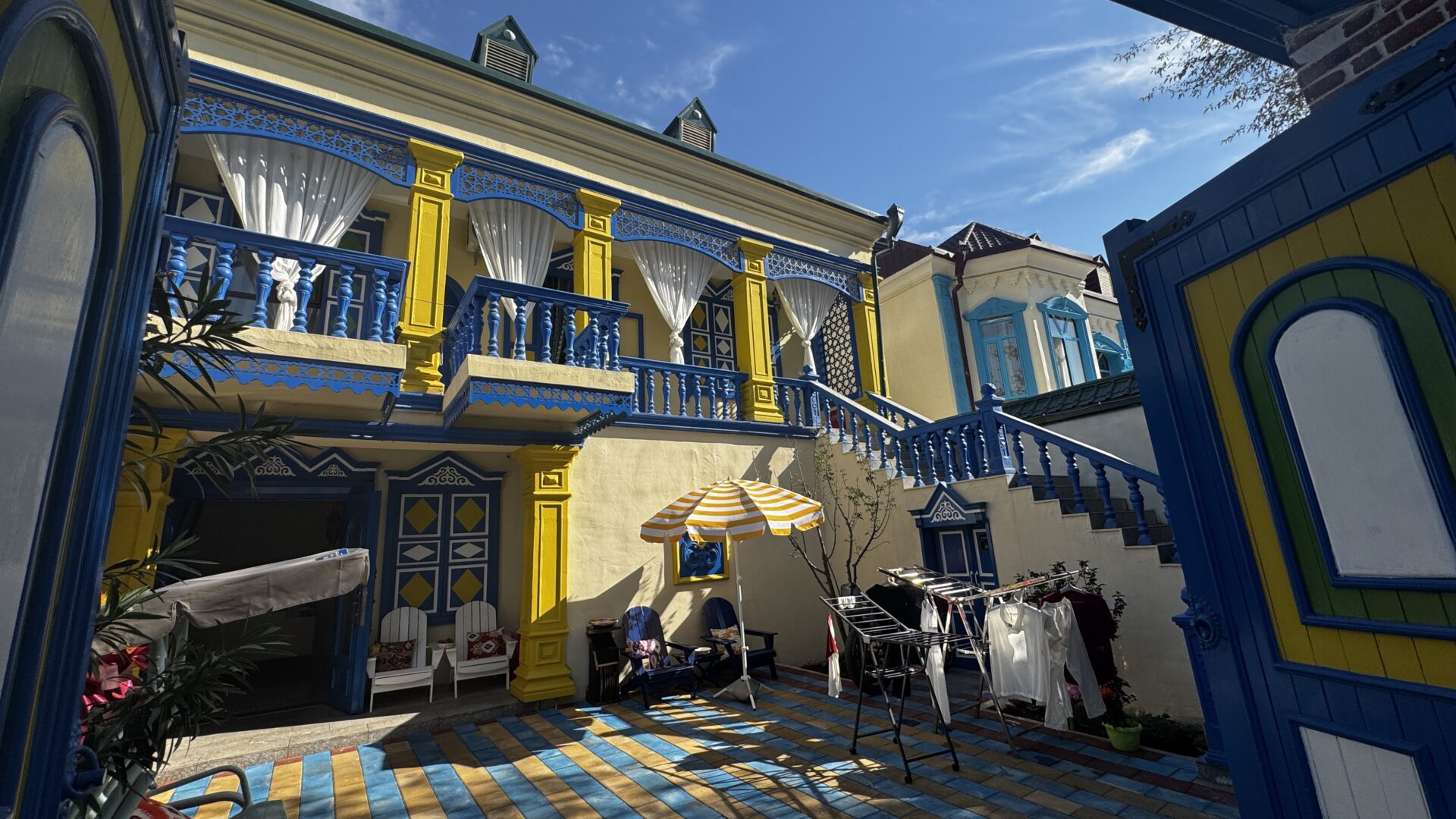
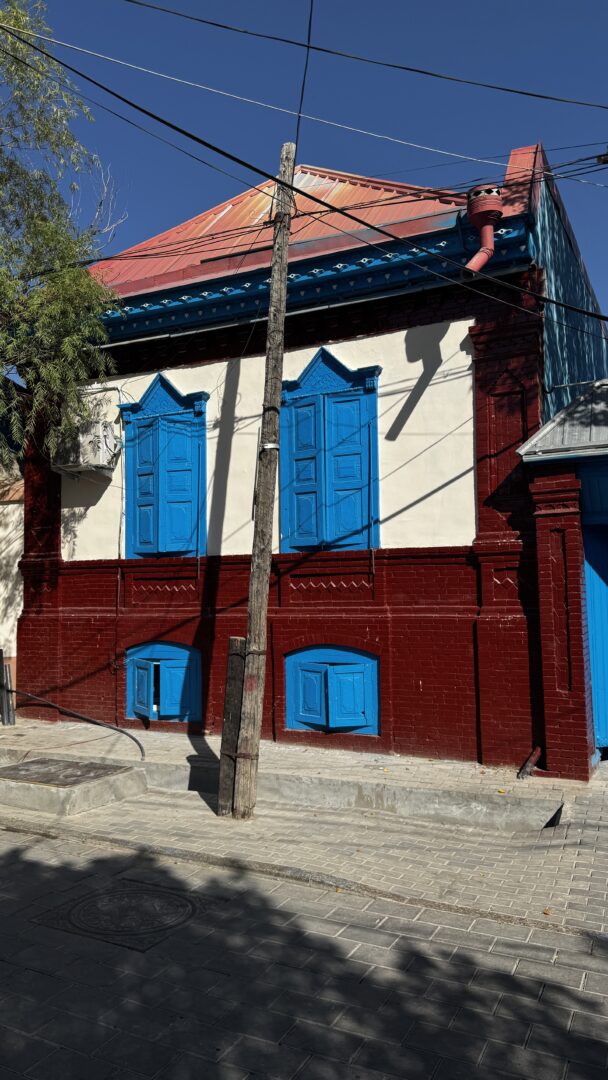
The best neighbourhood in Xinjiang, and the reason to come. A working Uyghur quarter of low houses around courtyards, where the architecture has gone hybrid: Uyghur plan and decoration, Russian windows, sloped tin roofs against the snow, and every door frame painted a different blue.
It’s lived-in rather than curated. Neighbours talk on doorsteps, children play in the alleys, and in summer weddings spill out of courtyards into the street with a band and a queue of cars. Horse-drawn carriages work the main lanes, and several families open their homes to visitors for tea.
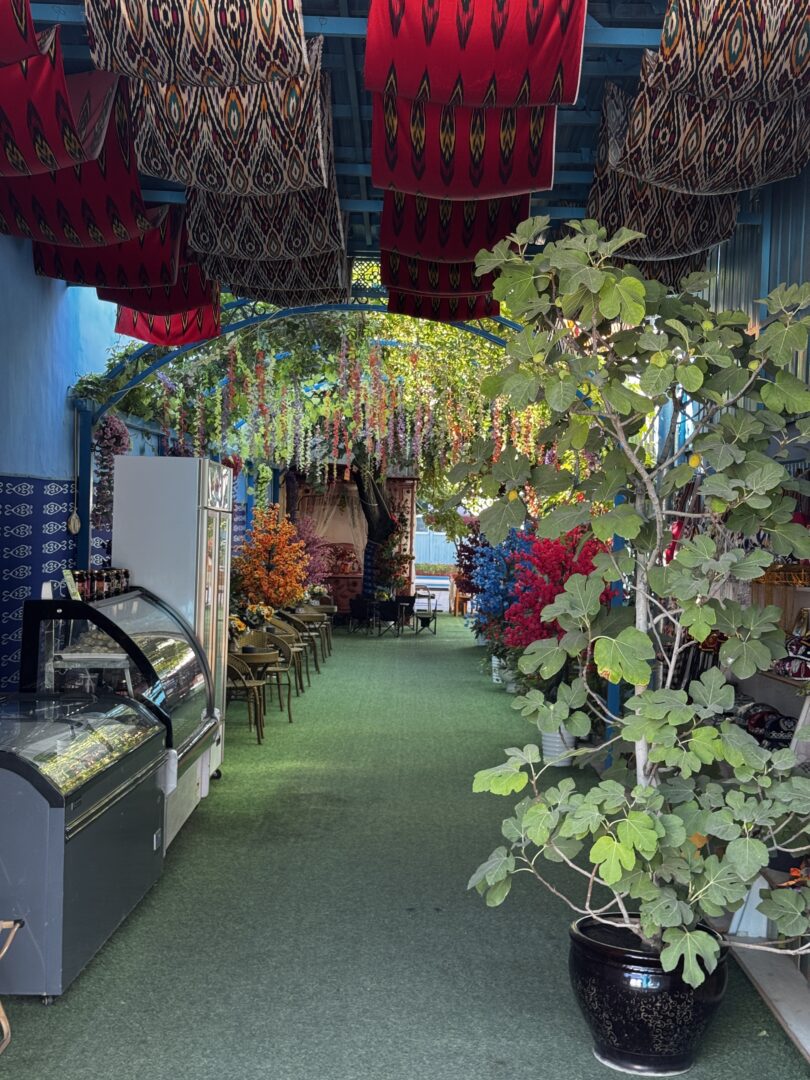
A Kazanchi courtyard — grapevine overhead, carpet on the platform
Liuxing Street (六星街)
“Six-Star Street,” built to a Soviet radial plan and looking it. Churches, Russian bakeries, cafés and a cluster of restaurants — the most European-feeling few blocks in China’s far west, and pleasant in the evening.
The Grand Bazaar
Across from Kazanchi. Everyday goods rather than souvenirs: fabric, clothing, traditional dress, boots, household stuff. Fruit sellers stack grapes, figs and melons at the entrance in season. Bargaining isn’t optional, it’s the format.
The Soviet traces
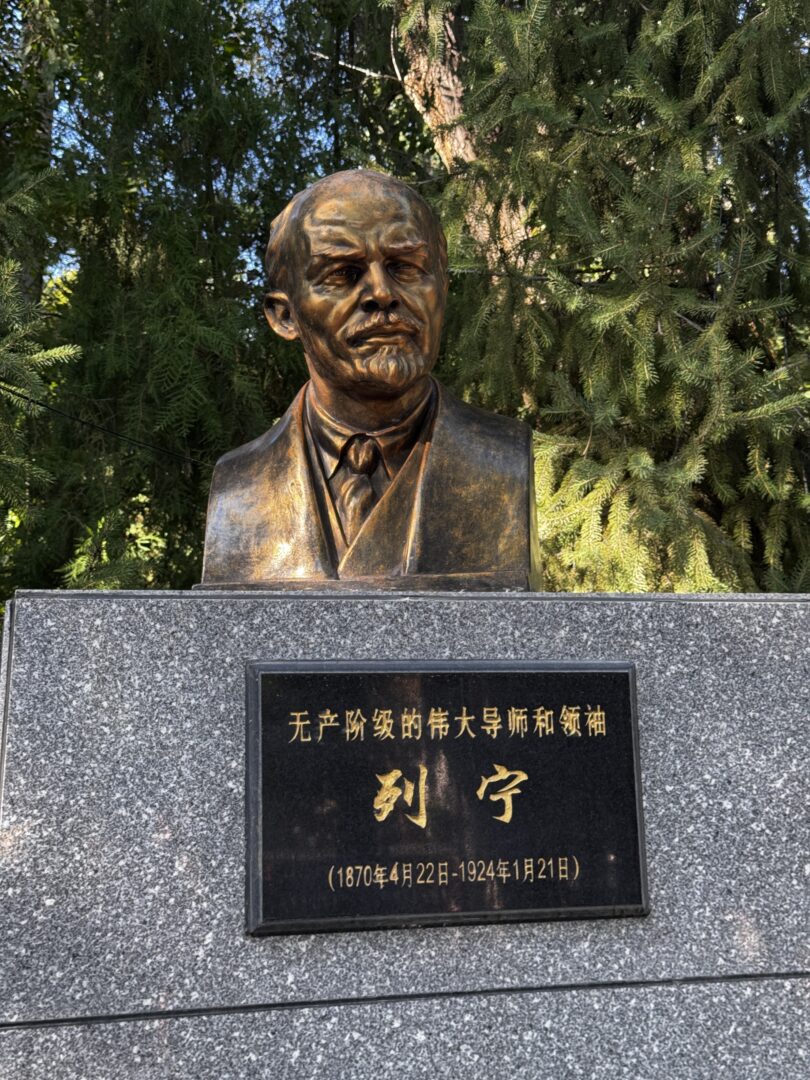
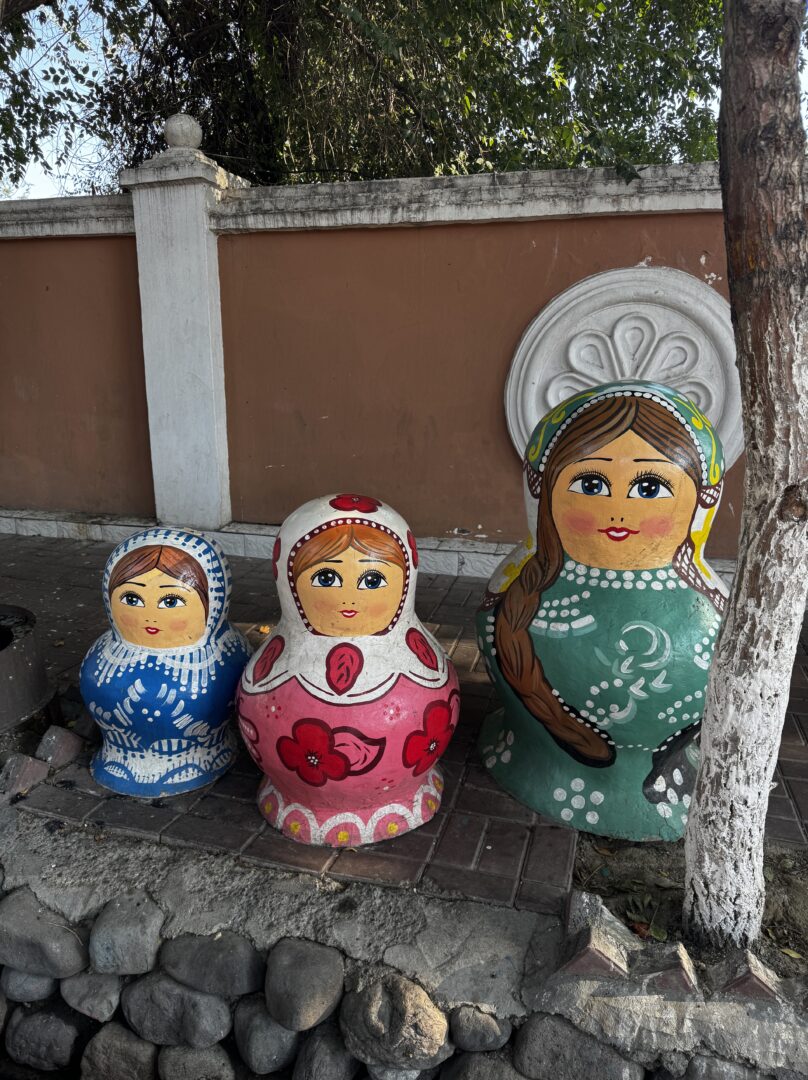
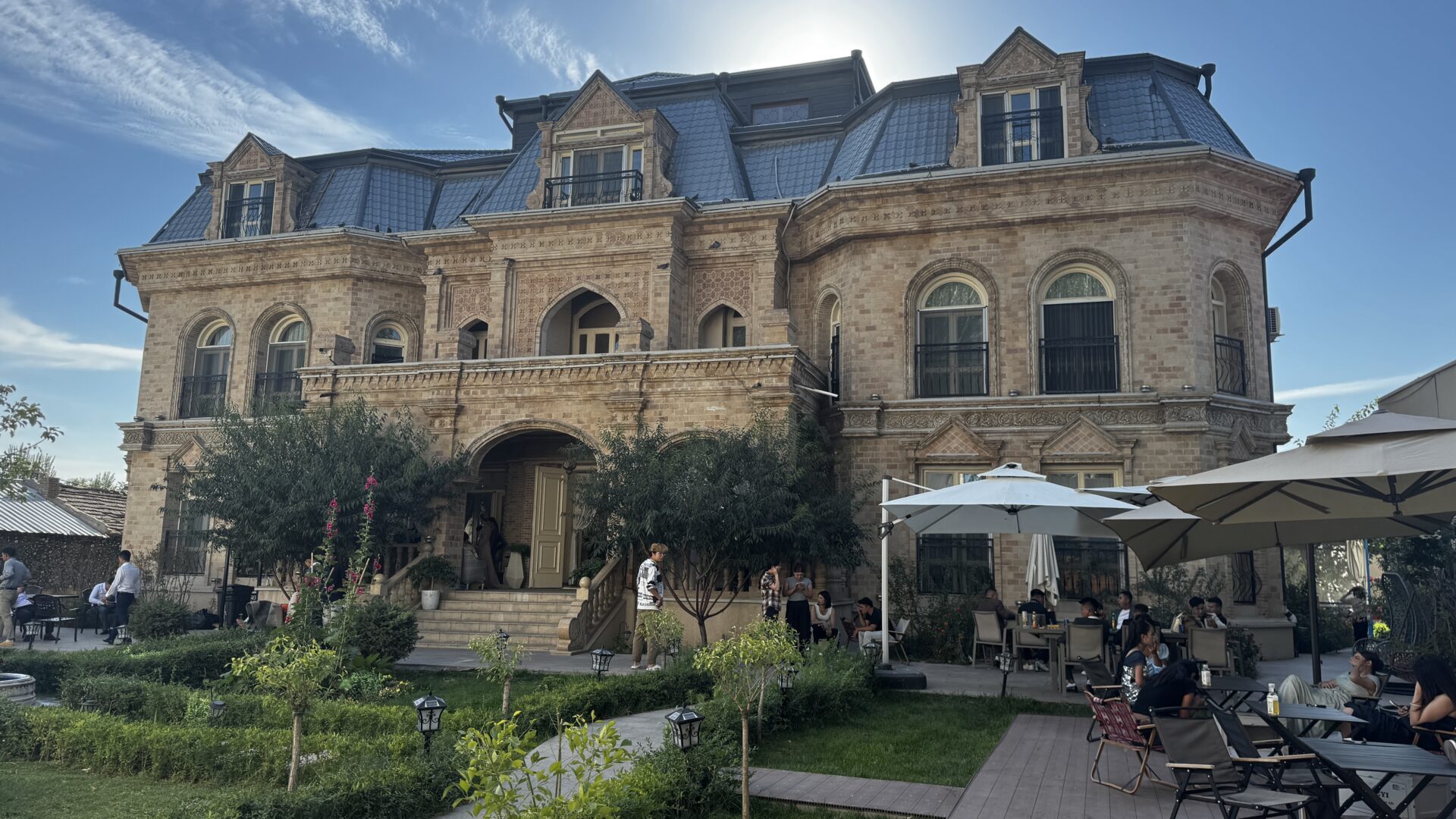
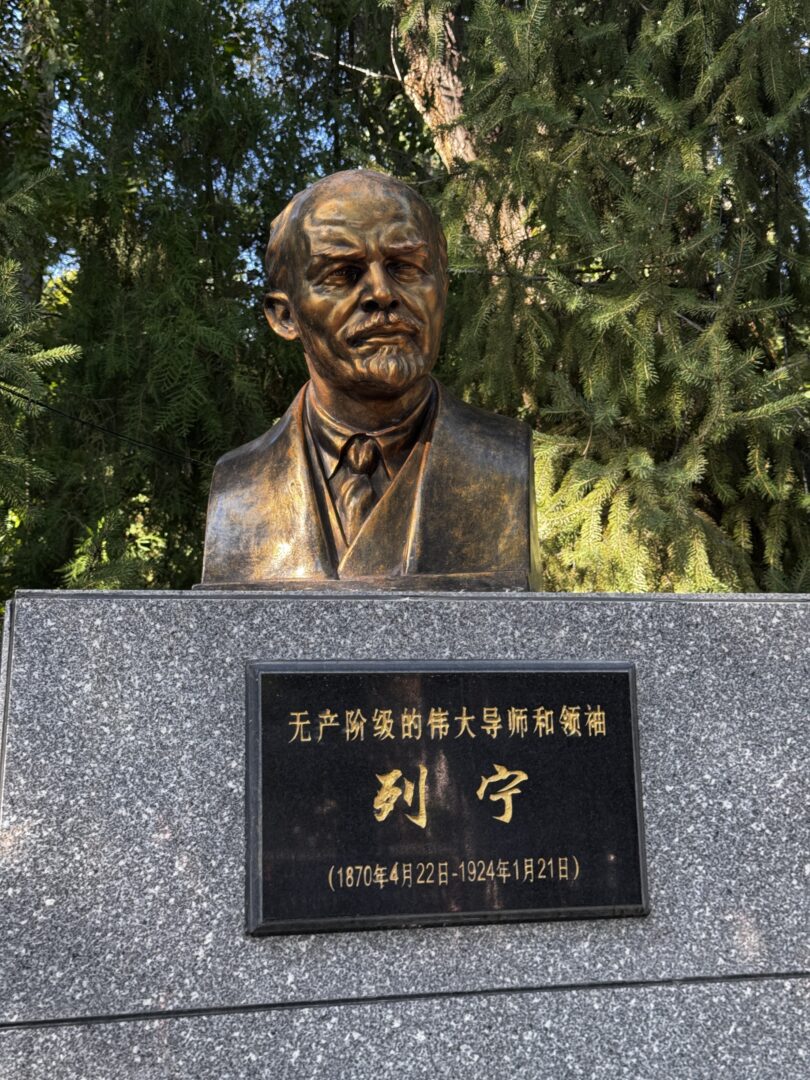
The Yining Hotel was the Russian consulate, and a Lenin statue stood at its gate. A few streets keep their old Soviet names. Matryoshka dolls in shop windows are a modern touch, but the buildings aren’t.
What to eat
Breakfast: milk tea (奶茶), naan (馕), baked meat buns (烤包子).
Lunch and dinner: polo — plov (抓饭), rice cooked in lamb fat with carrot; home-style laghman (家常拉面); and the ubiquitous tomato, egg and pepper dish (西辣蛋).
Street food: lamb skewers (烤肉串), cold jelly noodles (凉粉), more baked buns.
Local specialities: boza (波杂), a lightly fermented millet drink, and the Russian bread. Both are worth trying once, and the boza is a genuine local habit rather than a curiosity.
For where it sits in the wider picture, see our province-by-province food guide.
Two days
Day one. Stay in a Kazanchi homestay. Walk the neighbourhood in the afternoon — no route needed, the lanes are the attraction — eating baked buns and plov as you go. In the evening, a restaurant with live music and dancing; the food at those places is average and the atmosphere is not.
Day two. Liuxing Street in the morning for the Russian side of the city, the bazaar for an hour, and out to the Ili River for sunset, which is when the whole city seems to be there. On a summer weekend there’s a reasonable chance of being pulled into a wedding, in which case cancel your plans.
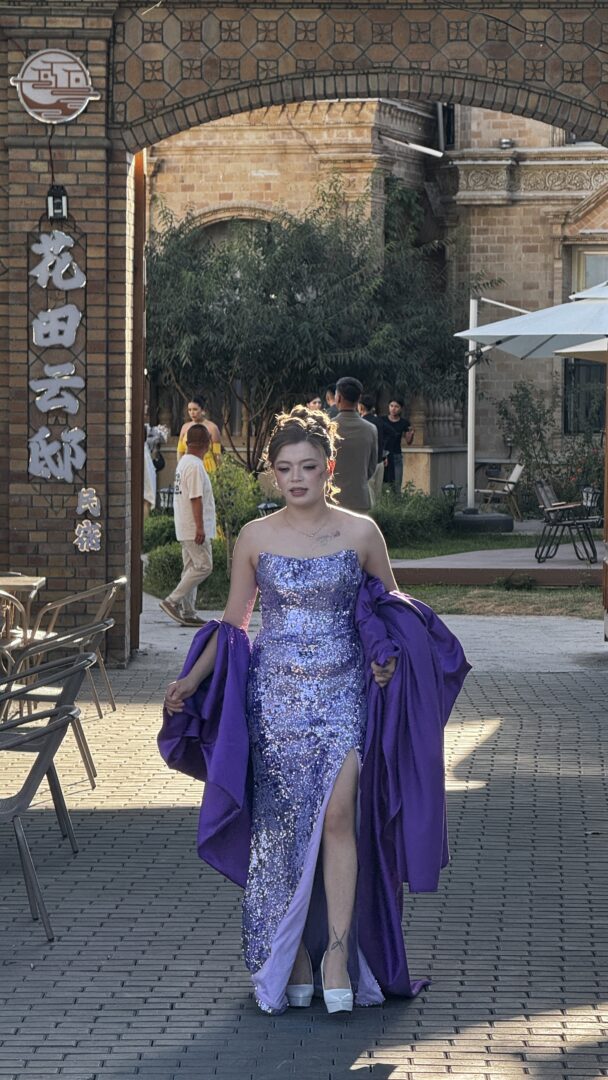
A Uyghur wedding — if you’re invited, go
Practical notes
- Where to sleep: guesthouses and homestays in Kazanchi (the atmospheric choice), boutique places on Liuxing Street, chain hotels in the centre, and the old consulate building if Soviet heritage appeals.
- When: June to September. The valley is the mildest part of Xinjiang in summer and the lavender north of town flowers around late June.
- Nearby: the Ili grasslands, Sayram Lake, and the Kazakhstan crossing at Khorgos.
Everything else we’ve written from the region is under Xinjiang.
- #xinjiang
- #yining
- #russian
- #uyghur
- #kazanchi