
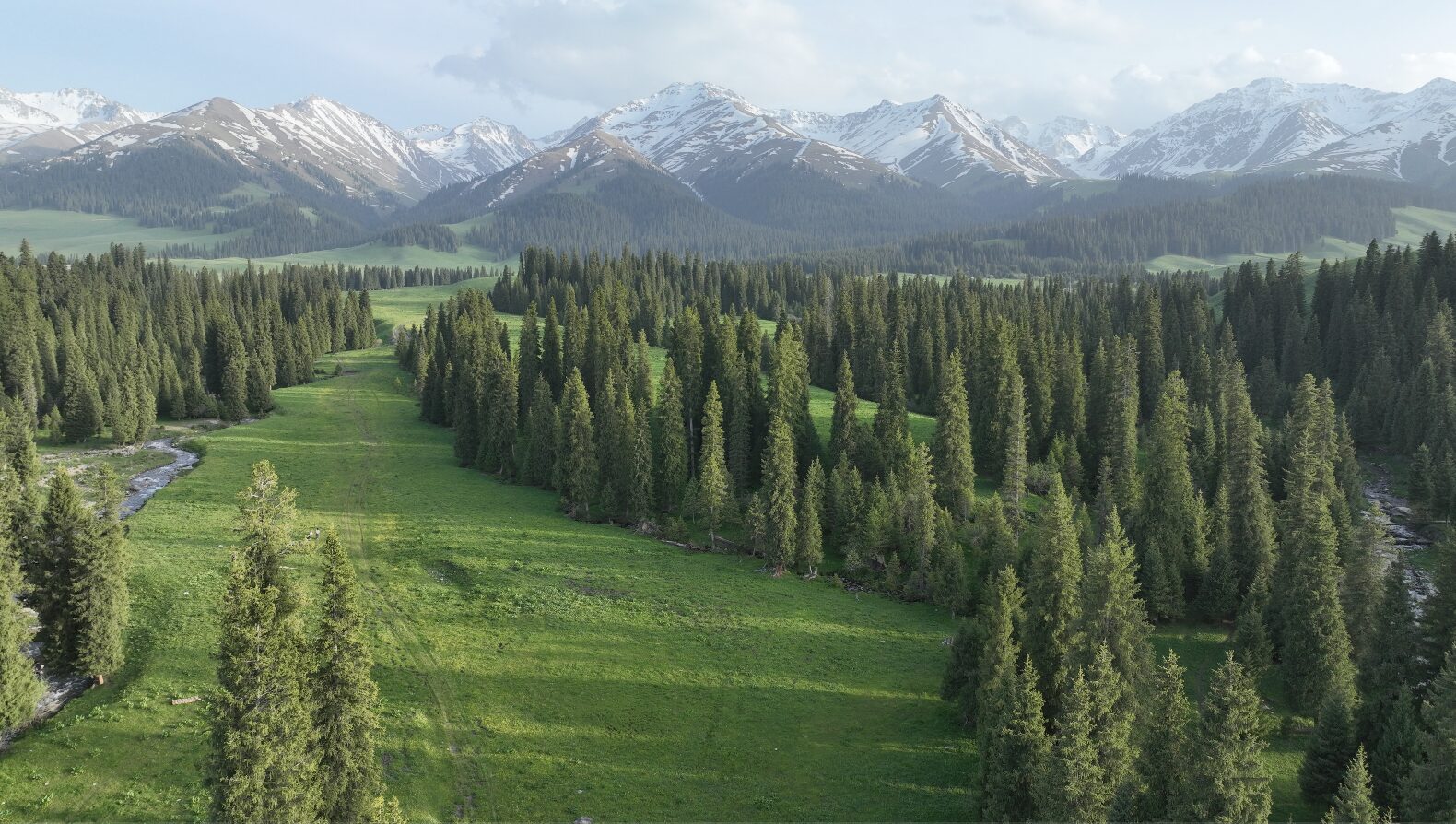
The Ili valley is the wettest corner of Xinjiang and the reason the region isn't only desert — a broad green trough between two arms of the Tian Shan, and the heart of Kazakh China.
Xinjiang’s reputation is desert, and for two-thirds of it that’s fair. The Ili valley is the exception that explains the rest.
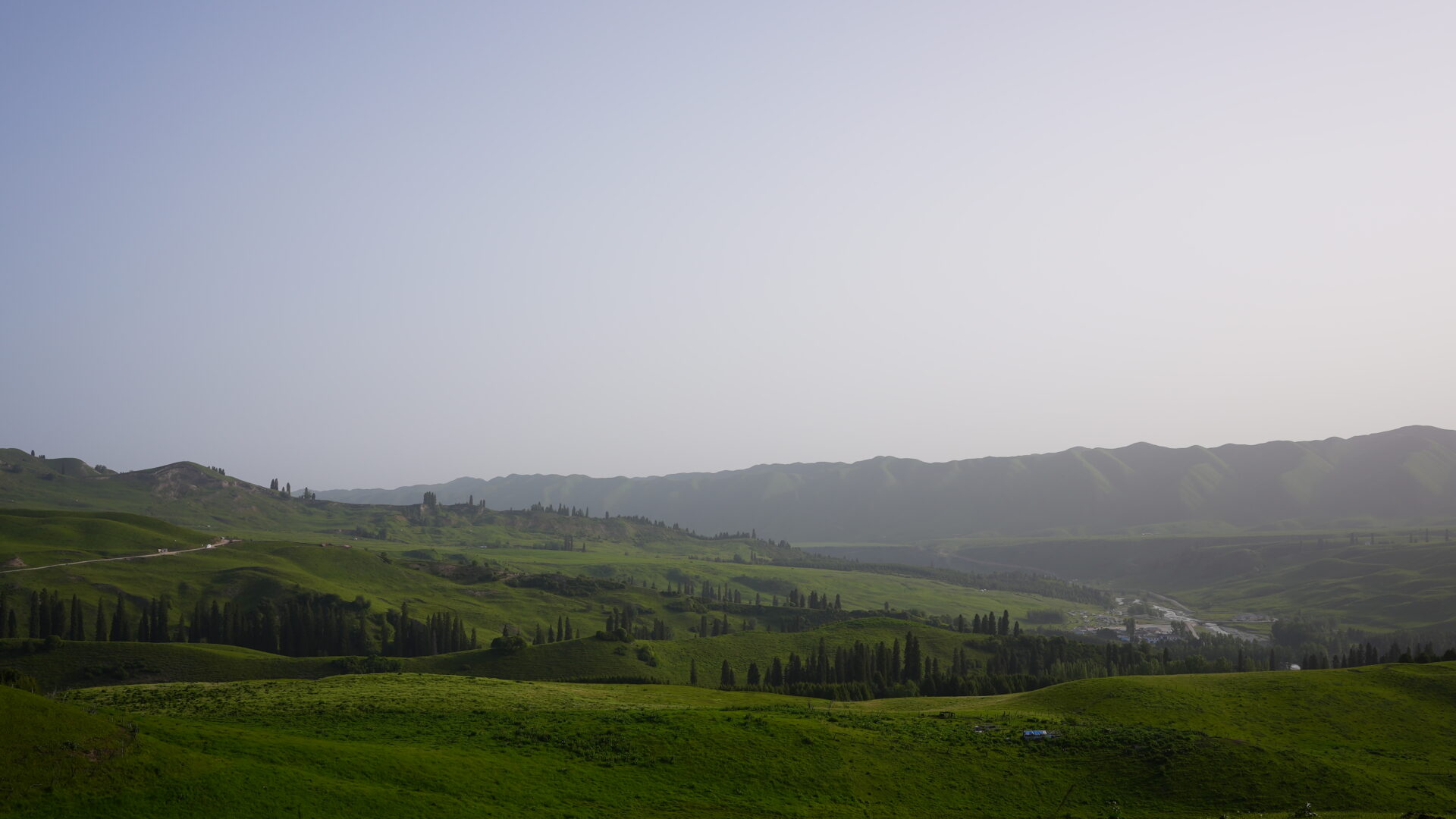
The Ili Kazakh Autonomous Prefecture occupies the far northwest of the region, where the Tian Shan splits into two arms and opens westward toward Kazakhstan. That opening matters: it’s the one gap that lets Atlantic moisture reach this far inland. The result is a broad green trough with snow mountains on both sides, wetter and cooler than anywhere else in Xinjiang, and grass instead of gravel.
The grasslands
The valley’s high pastures are the point of coming, and they work in tiers — herds move up as the season advances and back down before the snow.
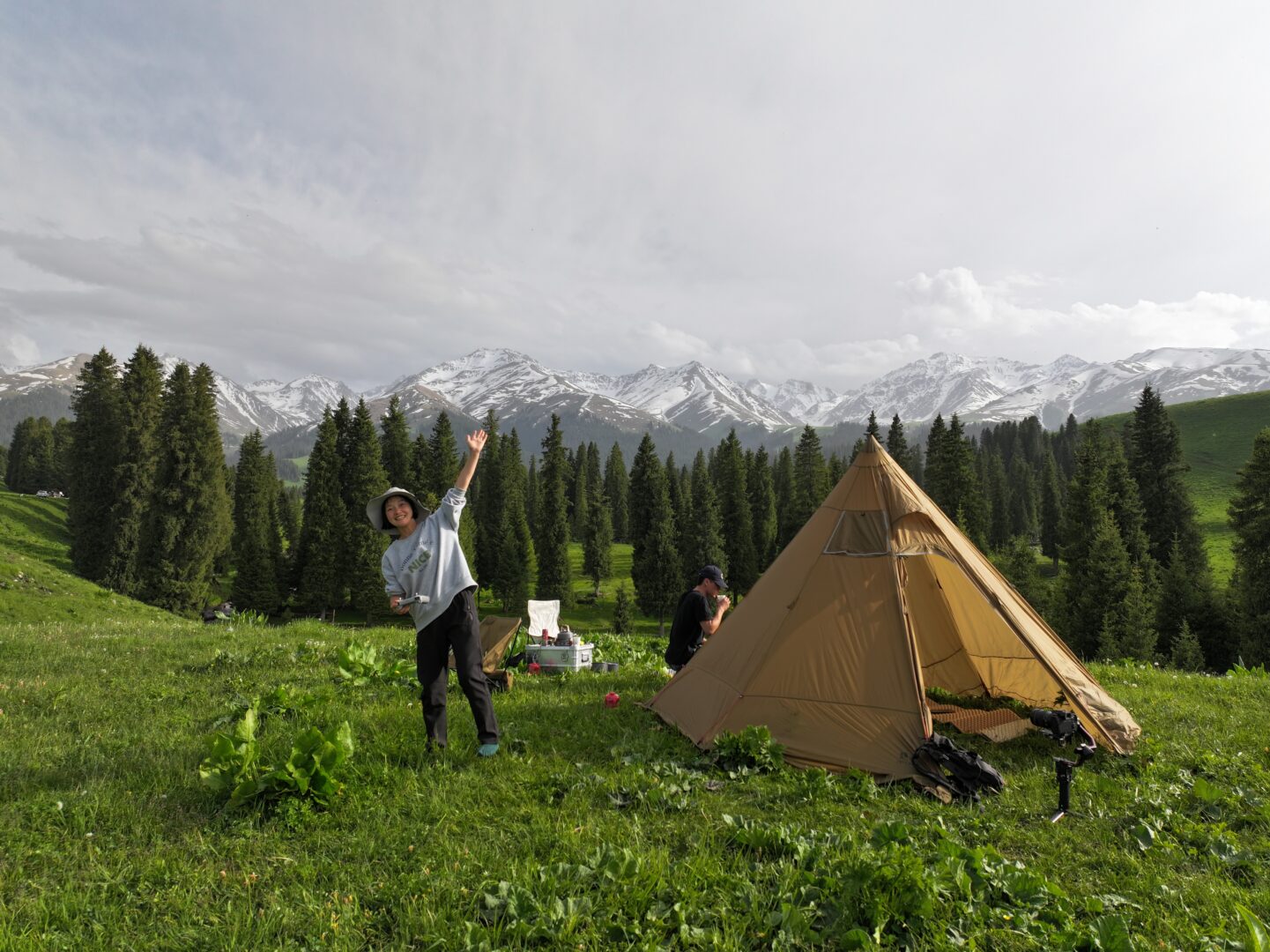
Narat (那拉提) is the famous one: rolling alpine meadow at around 2,000 m on the southern side of the valley, with spruce forest in the folds and horses everywhere. Developed for tourism, and worth it anyway.
Kalajun (喀拉峻) is the better one, if you only pick one. Higher, more open, and shaped in long smooth ridges that look sculpted — early summer, when the wildflowers come through, is extraordinary. It’s a UNESCO-listed section of the Tian Shan.
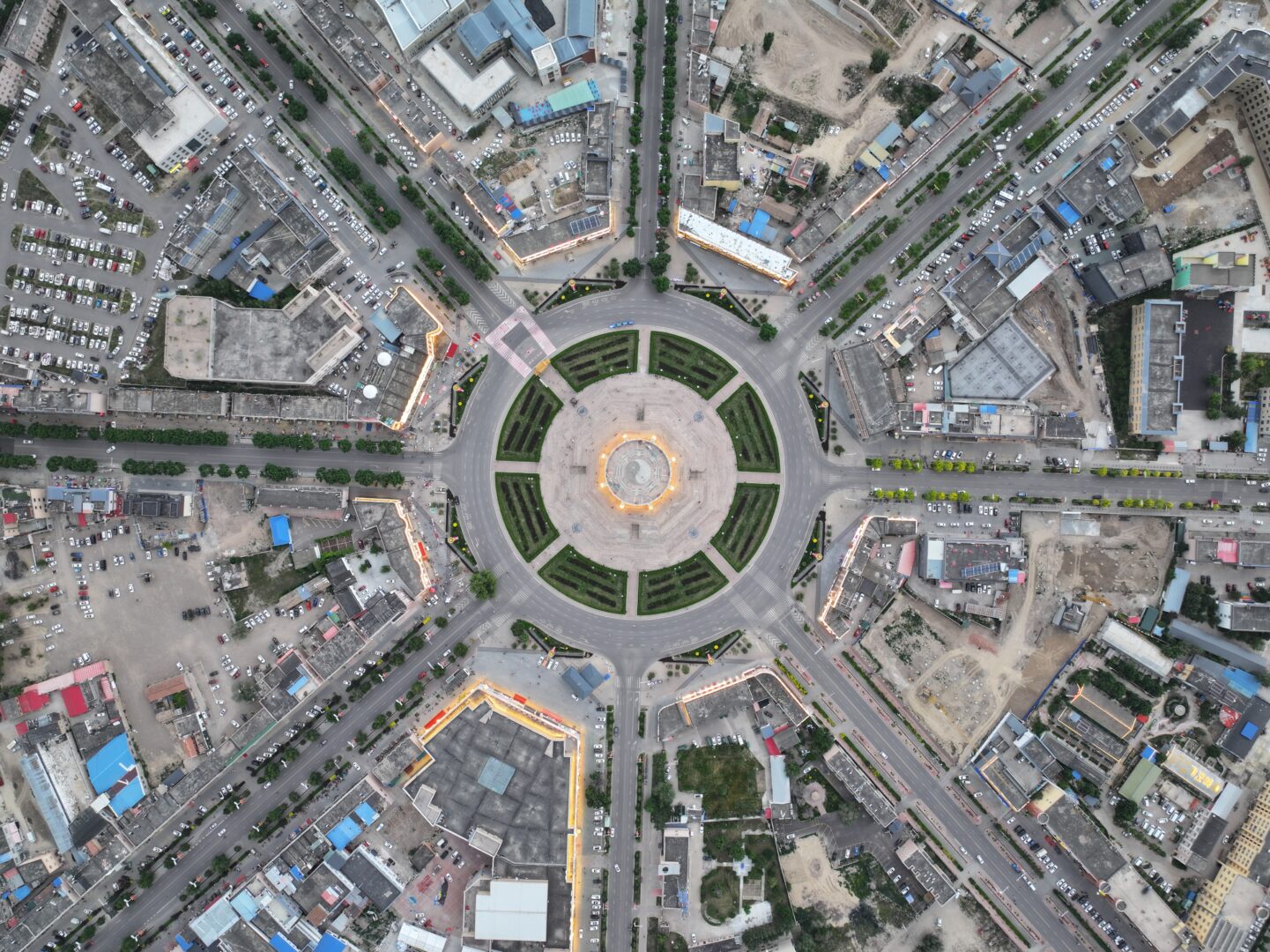
Tekes (特克斯) is the valley’s curiosity: a town laid out as a bagua — an eight-sided radial street plan with no traffic lights, built around a central hub. It reads as strange from the ground and completely coherent from the air.
Ili — grassland to the treeline, snow above it
Kazakh life
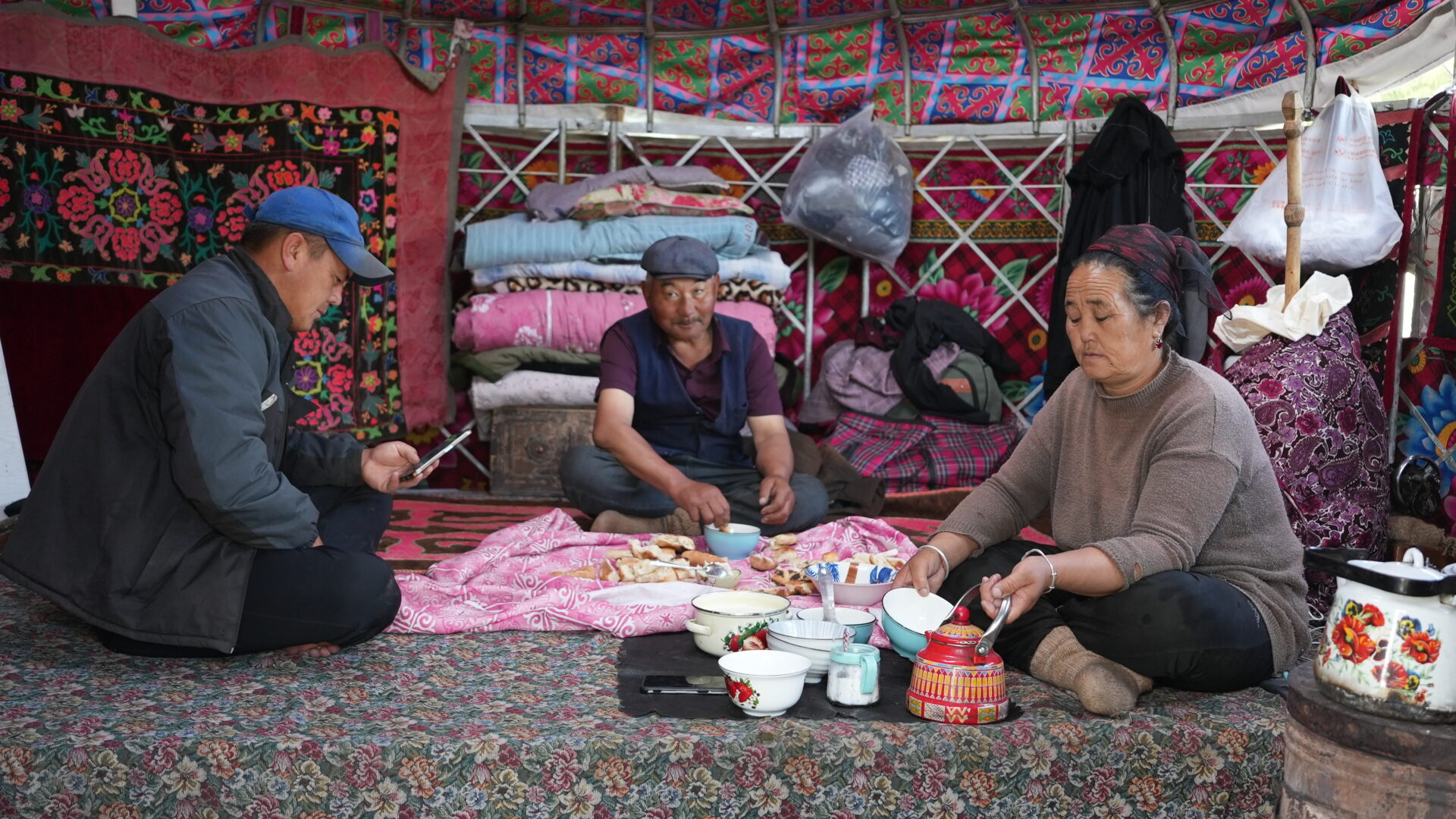
This is the centre of Kazakh China. Around 1.5 million Kazakhs live in Xinjiang, most of them in and around this prefecture, and a substantial number still move livestock seasonally between winter settlements and summer pasture.
What that looks like in practice: yurts appearing on a hillside in June that weren’t there in May, mares being milked in the morning for kumis, sheep on the road, and children riding before they can properly walk. Hospitality is close to obligatory — a stranger at the door gets tea and food, and refusing is harder than accepting.
The music travels with them. The dombra, a two-string long-necked lute, is the instrument, and the songs are long-form narrative pieces rather than tunes. If somebody starts playing, the evening has a shape now.
For a working version of all this, see the summer camps at Jiangbulake and the border county of Tacheng.
The rest of the valley
Yining is the prefectural capital, and unlike anywhere else in China — Uyghur, Kazakh and Russian all at once, with wooden houses and Orthodox churches.
Sayram Lake sits over the pass to the northeast at 2,070 m, the largest and highest lake in Xinjiang.
Huocheng grows lavender at scale — the fields flower in late June and early July, and the comparison to Provence is made often enough that the local industry has leaned into it.
Khorgos, at the western end, is the land crossing into Kazakhstan and one of the busiest freight gateways in Central Asia.
When to go
June to September, and June to early July if you want flowers. The herds are up, the passes are open, and daytime temperatures sit in the low twenties while southern Xinjiang is over forty.
Winter empties the pastures entirely. There is skiing, and there is very little else.
- #xinjiang
- #ili
- #kazakh
- #grassland
- #tian shan