
Jiangbulake is a ticketed scenic area with a real working landscape inside it. Kazakh families move up here for the summer, most keep a spare yurt, and 100 yuan a night gets you a bed in it.
North out of the Hami oasis, the road climbs into the Tian Shan and the landscape changes completely inside two hours.
The first change is Barkol — grassland, higher and cooler than the desert below, and already unmistakably green. Keep going and you reach Jiangbulake (江布拉克), at the northern foot of the range, where the mountains hold enough moisture to stay damp through most of the year. After the Gobi crossing, it does not feel like the same province.
Getting in
Jiangbulake is a designated scenic zone with an entrance fee — about 50 yuan per person when we last passed through.
Access rules differ by vehicle. Motorbikes can ride in. Cars cannot — you’ll either take the shuttle bus or hire a local driver at the gate. The area is genuinely large, a national park rather than a viewpoint, so plan on staying rather than looping through in an afternoon.
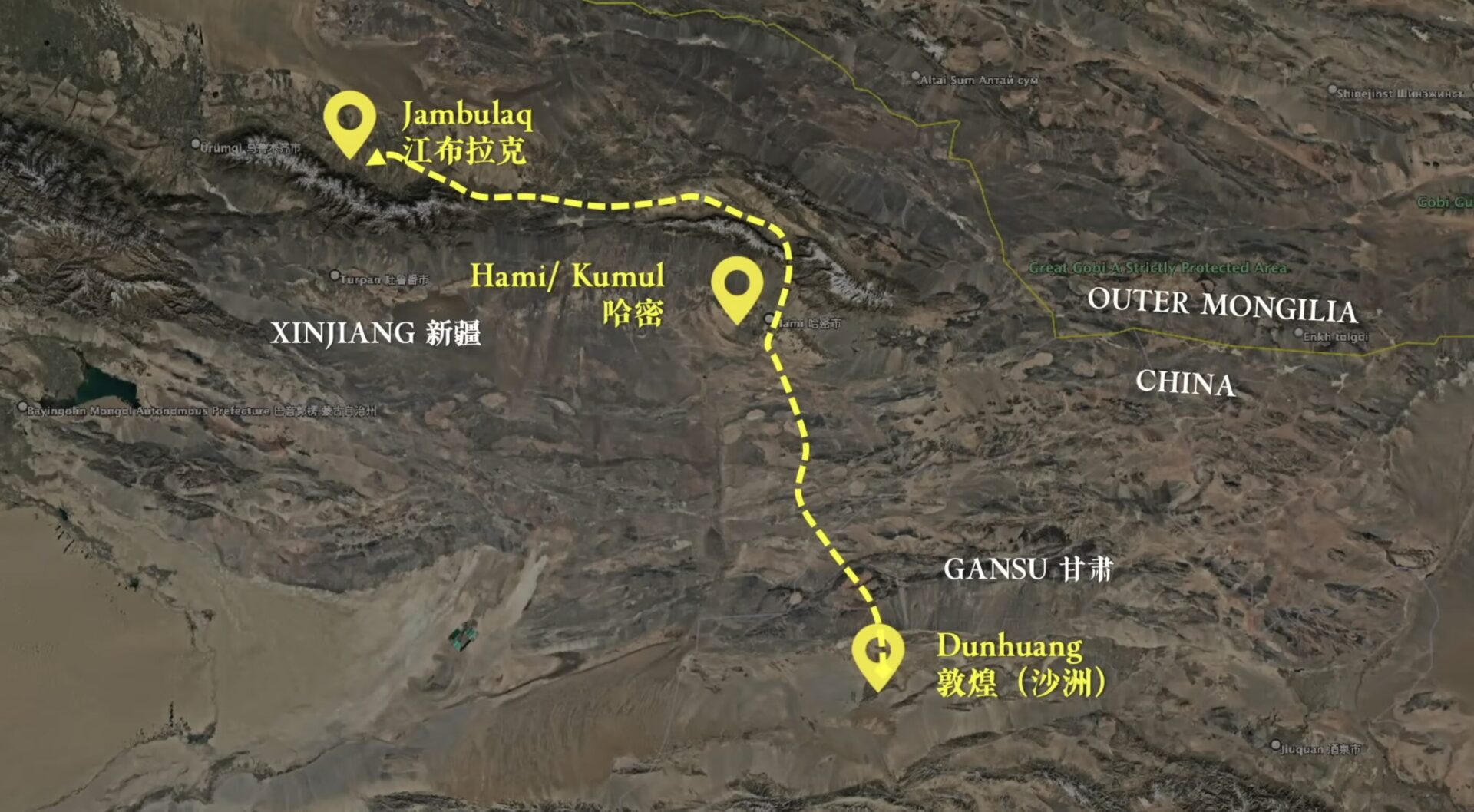
The route in: Dunhuang → Hami → Jiangbulake
What’s actually up there
The scenery brings domestic tour groups, and around the entrance it feels like it. Push further in and the visitors thin out, and what’s left is a working summer pasture.
Kazakh families move up here with their herds when the grass comes through, and the deeper you go the more yurts you see — some set up as small guesthouses, most of them simply where a family is living for the season.
Yurts on the summer pasture
Staying with a family
This is the reason to come, and it’s more straightforward than you’d expect: walk up to a family and ask. Most keep a separate guest yurt, and the going rate is around 100 yuan per person per night, food usually included.
What you get is the day itself. Cows and mares milked at dawn, the milk turned into tea, cheese and kumis. Lamb butchered and cooked over a fire. Children on horseback moving animals between slopes. Long light evenings and complete quiet, at a distance from any road.
There is no mains electricity. Most households run a generator for a couple of hours after dark, which is enough to charge a phone and a camera — bring a power bank anyway, and note the CCC rule if you’re flying onward.
If a yurt isn’t your idea of a night’s sleep, there are conventional hotels and village guesthouses near the entrance area.
A note on being a guest
The hospitality here is real and it is not transactional — which is exactly why it’s worth being a good guest. Some things that help:
- Bring something. Fruit, tea, sweets for the children; anything from the last town is welcome and expected.
- Pay the asking rate without bargaining. It’s already low.
- Ask before photographing people, especially women and children. A phone in someone’s face is the fastest way to make a warm situation cold.
- Accept the food. All of it, including the dairy you’re unsure about.
The best nights we’ve had in Xinjiang have been in a stranger’s guest yurt at 2,000 metres, and the reason it works is that thousands of travellers before us didn’t abuse it.
More of the same culture, differently framed, in the Ili valley and at Tacheng on the Kazakh border. Or see everything we’ve written from Xinjiang.
- #xinjiang
- #kazakh
- #grassland
- #yurt
- #tian shan