
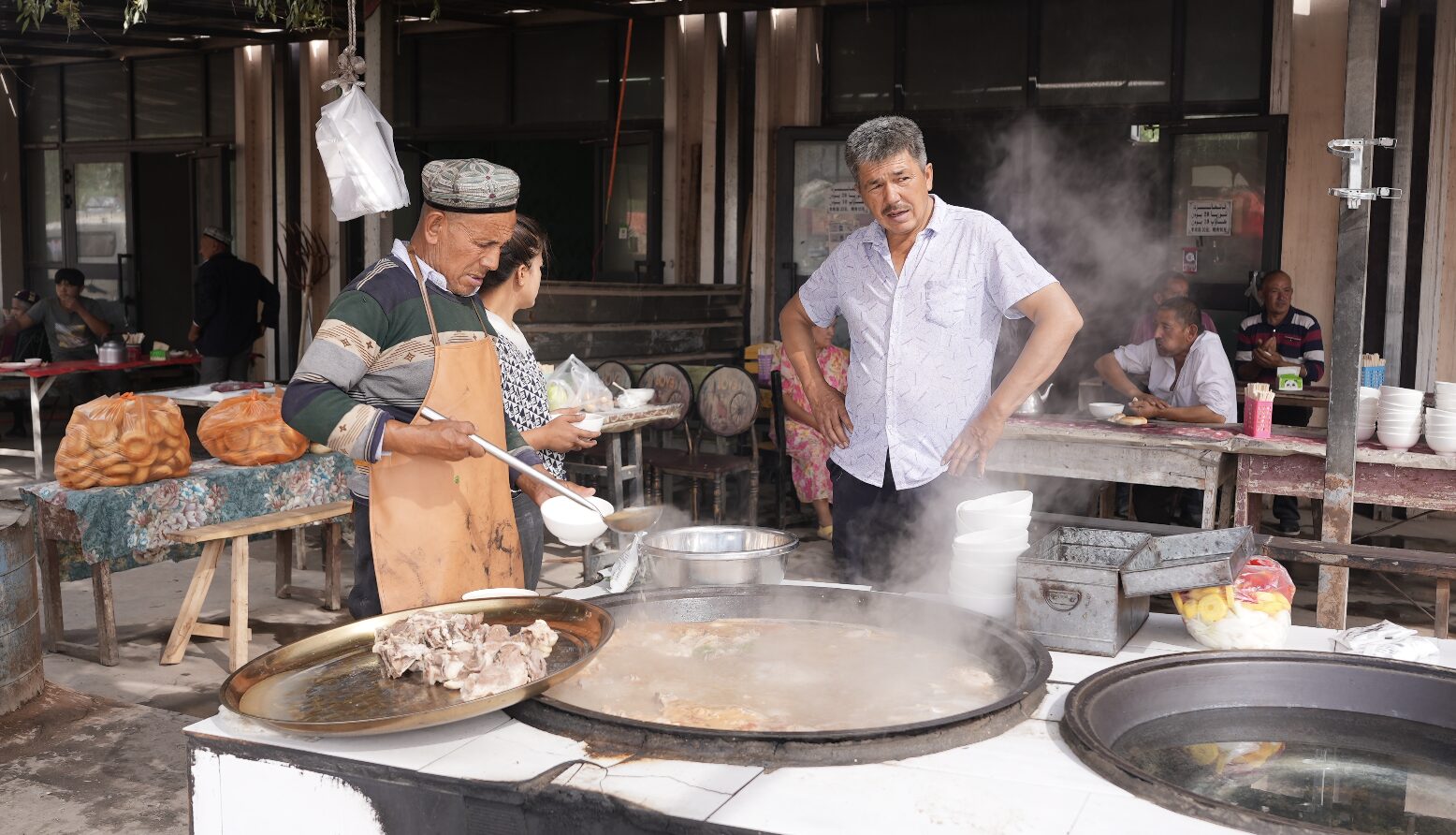
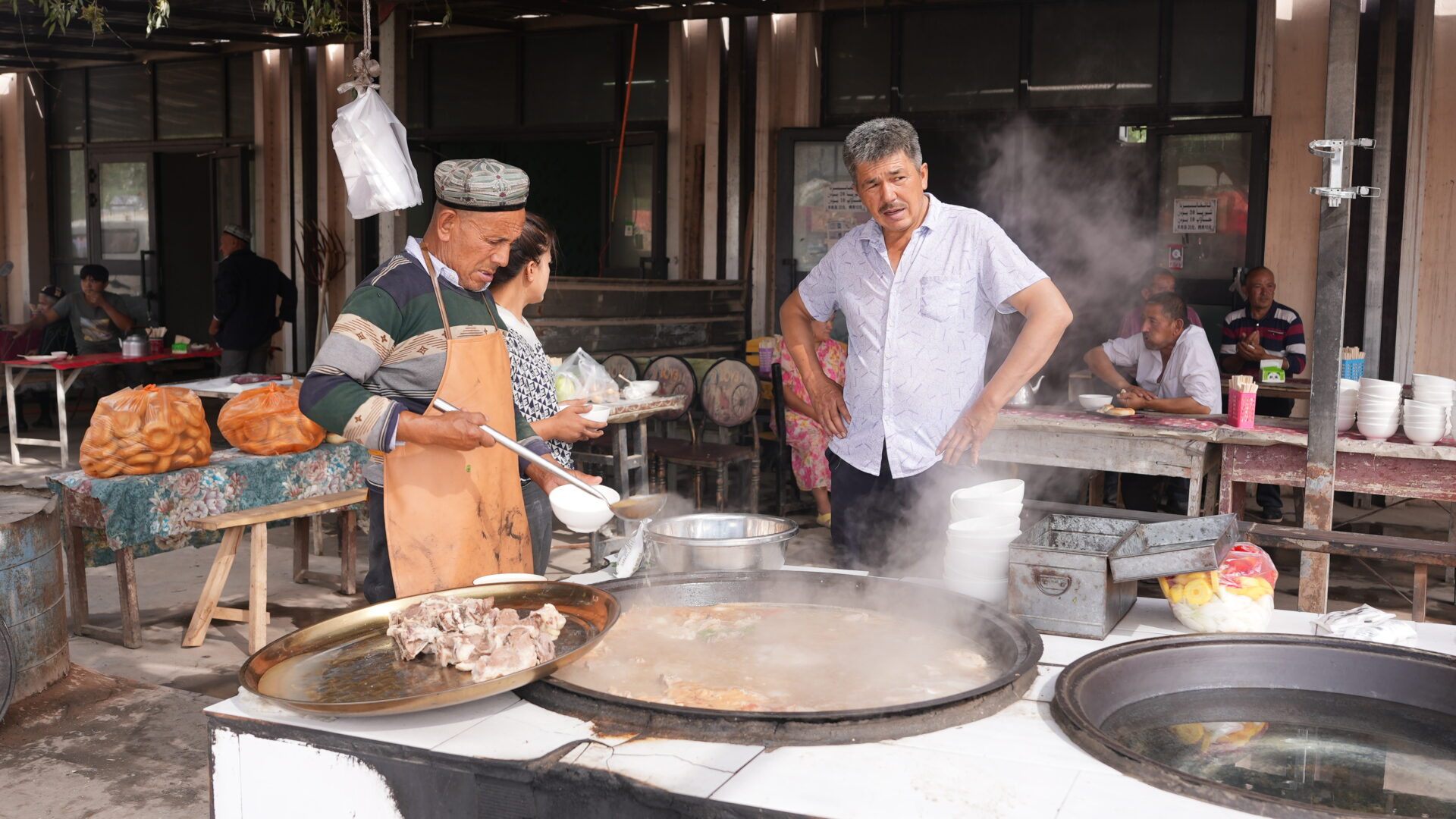
The best Uyghur food isn't in Kashgar's restaurants — it's at the market stalls in the villages around it, cooked in front of you on equipment that hasn't changed in centuries.
Kashgar city has good food. The villages around it have better food, for the simple reason that a stall serving fifty regulars a day cooks one thing well and has no incentive to broaden the menu.
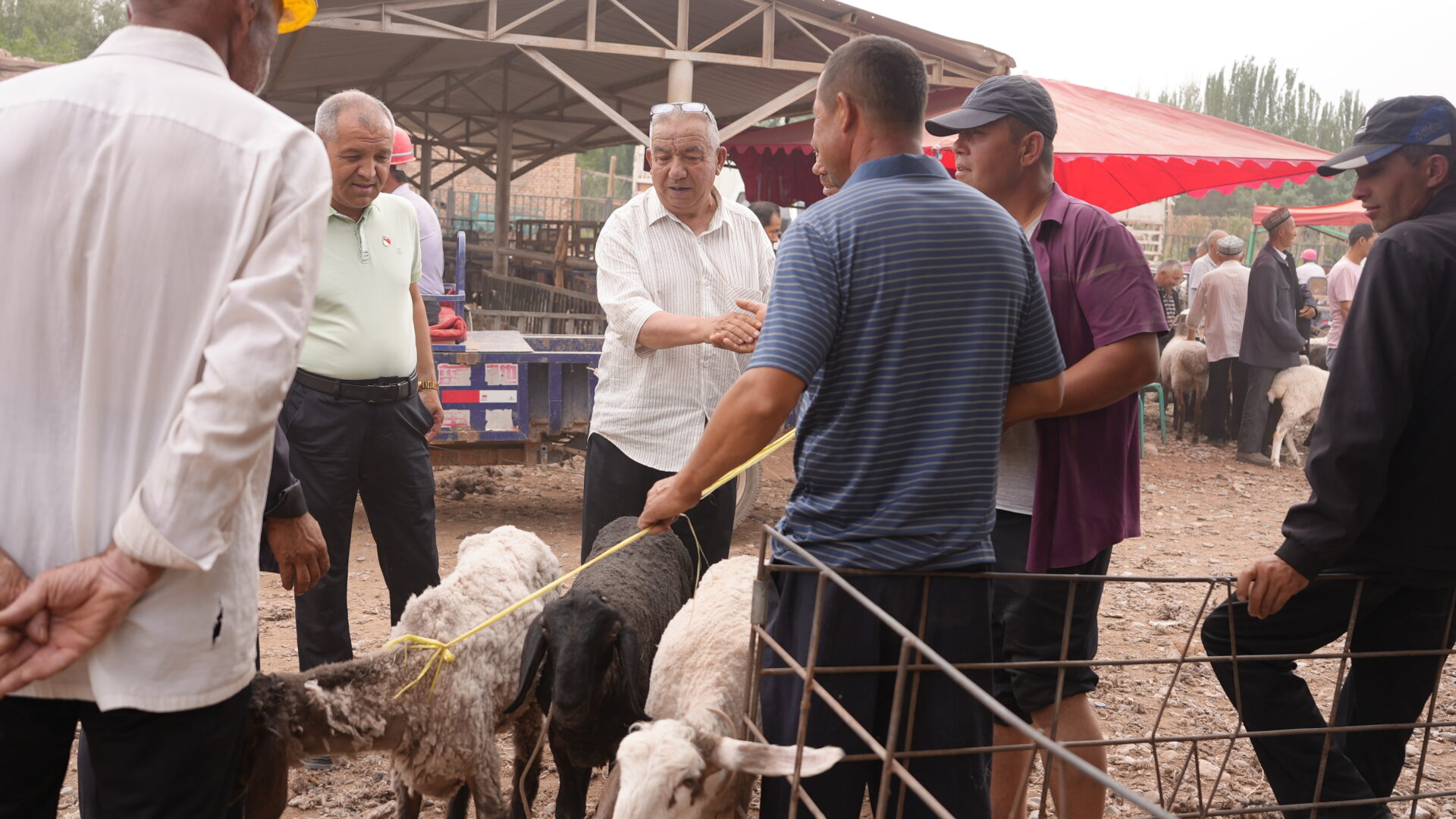
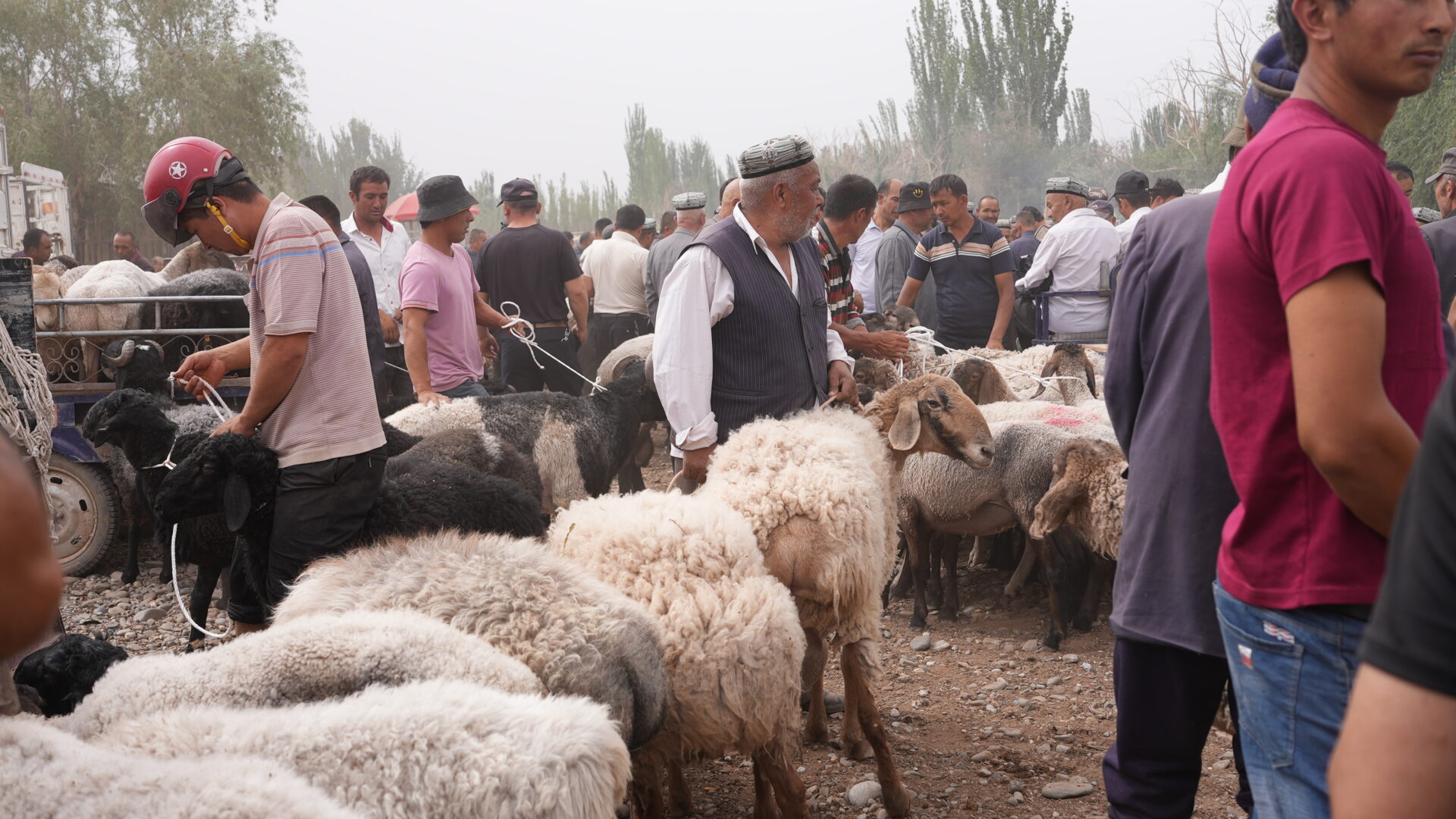
Find a village bazaar — most run one fixed day a week — and eat standing up.
What to order
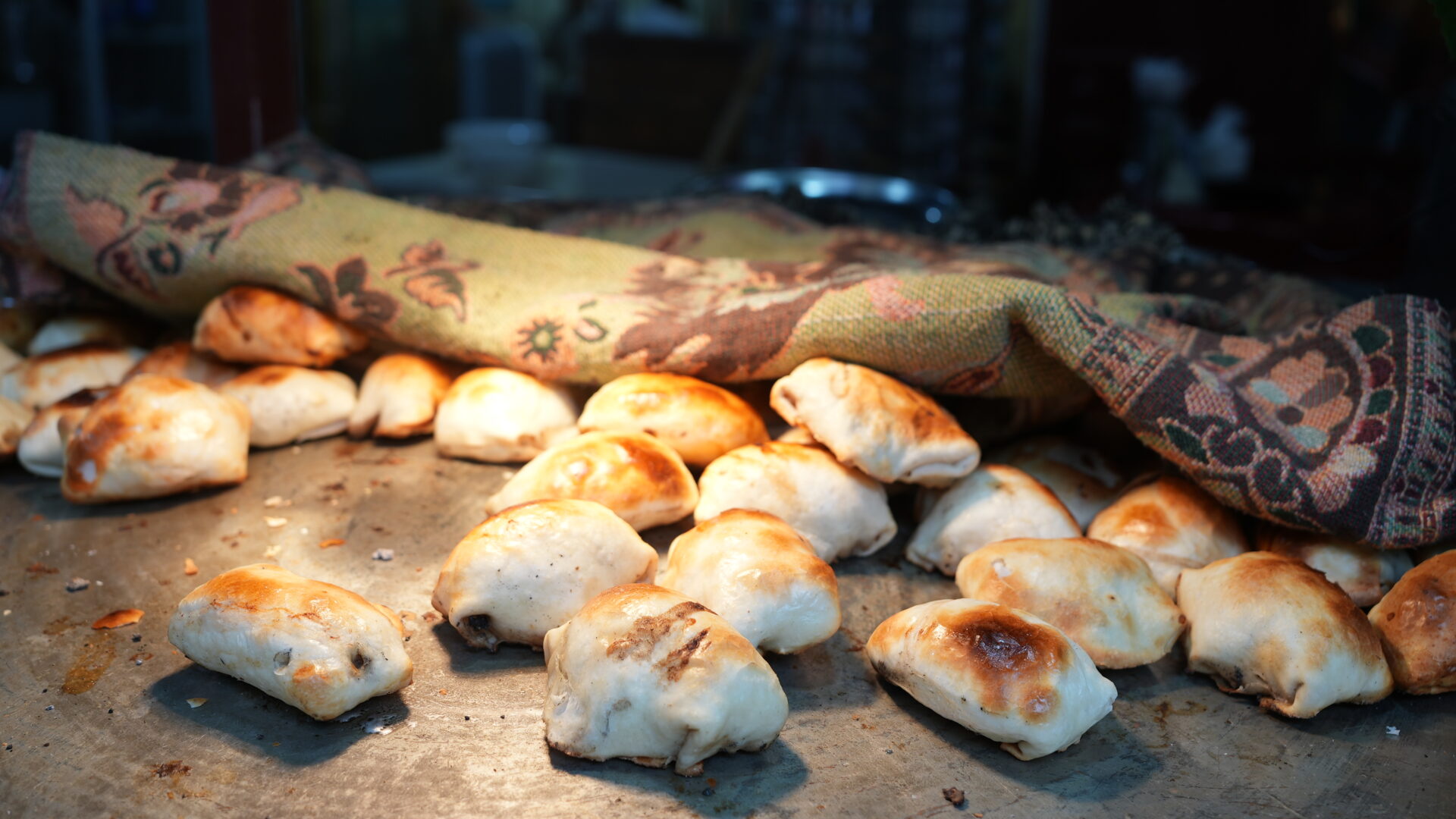
Samsa (烤包子, kao baozi) — hand-folded pastry packed with diced lamb or beef, onion and fat, then slapped onto the inner wall of a clay oven to bake. The bottom crisps against the clay, the top puffs, and the juice inside is the whole point. Eat it carefully; people burn themselves on these constantly.
Samsa (kao baozi) — baked against the oven wall, not fried
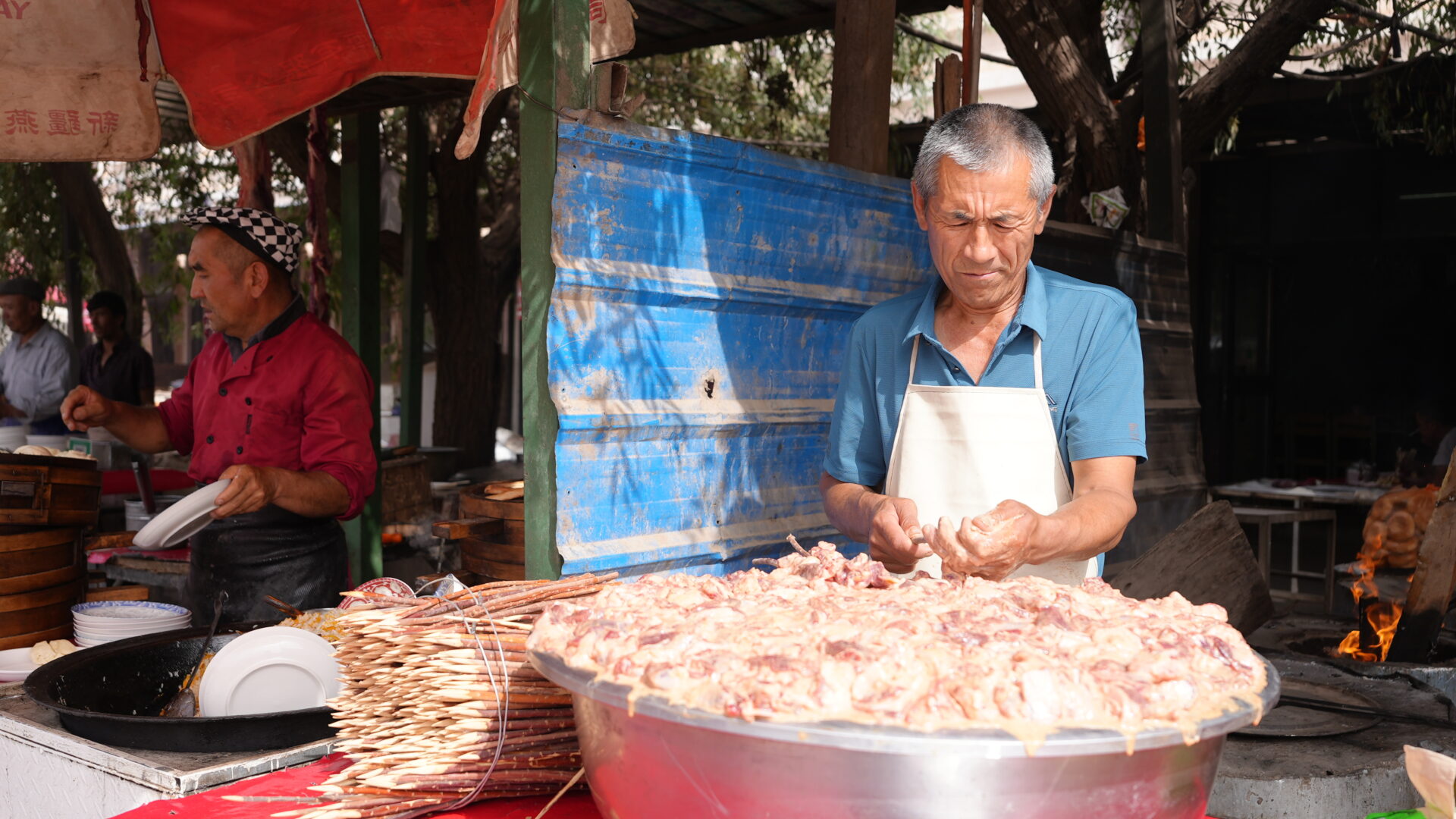
Kebabs (烤肉串) — lamb, cubed with a piece of fat every third or fourth chunk, cumin and chilli, over charcoal in a long narrow trough. The fat is not optional and not a mistake. Six skewers is a light lunch.
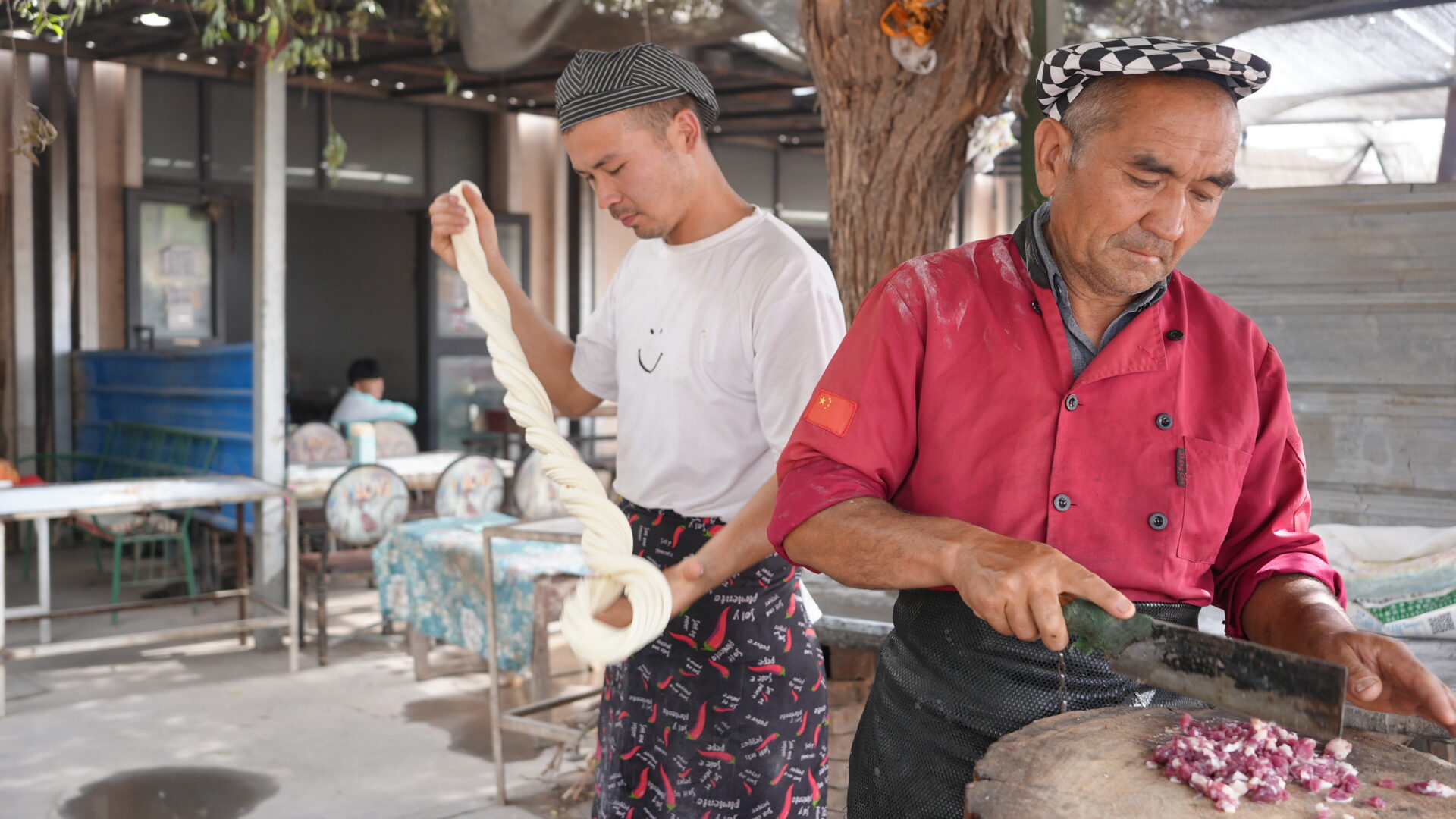
Laghman (拉面) — dough pulled into noodles to order, then either topped with a stir-fry of lamb, peppers and tomato, or dropped into broth. Watch the pulling if you get the chance; it’s a two-minute performance done a hundred times a day without looking.
Polo (抓饭) — rice cooked in lamb stock and fat with carrot, sometimes raisin, with a piece of lamb on top. Sold from an enormous covered pot; when it’s finished, it’s finished, so go before one.
Dapanji (大盘鸡) — “big plate chicken,” a chilli-and-potato braise served on a platter with wide hand-torn noodles laid underneath to absorb the sauce. Made for a table of four minimum, and a genuinely hard dish to finish with two.
Nan (馕) — bread as infrastructure. Every village has an oven and every meal has bread, in variants from thin and crisp to thick and chewy, sesame-topped, onion-flecked, or made rich with lamb fat.
The rhythm of it
The stalls are social infrastructure as much as food businesses. Men sit at long shared tables for an hour over one bowl of noodles and a pot of tea. Bread gets torn and pushed toward whoever else is at the table, including you. Nothing is served in a hurry.
You’ll be a curiosity, and the standard result is that somebody buys you tea. Payment is by phone like everywhere else in China — see the payments guide — although in the smallest villages cash still moves freely.
A few practical notes:
- Bazaar days matter. Village markets are weekly. Ask at your guesthouse in Kashgar which villages run on which day, and go on a market morning rather than an ordinary afternoon.
- Eat early. The good stalls sell out by mid-afternoon; the ones still going at 7pm are the ones you skipped for a reason.
- This is lamb country. Vegetarians can eat well in China, but this specific corner of it is the hardest place to do so — bread, noodles, cold jelly noodles (凉粉) and tomato-and-egg are the reliable options.
- Halal throughout. No pork, no alcohol at most stalls.
For the city version, see Kashgar; for how Xinjiang fits into the wider picture, our food guide by province.
- #xinjiang
- #kashgar
- #food
- #street food
- #uyghur