
Yarkant was the seat of a khanate and the place where Uyghur classical music was first compiled. It still dances — most evenings, in a square by the water, with no audience in mind.
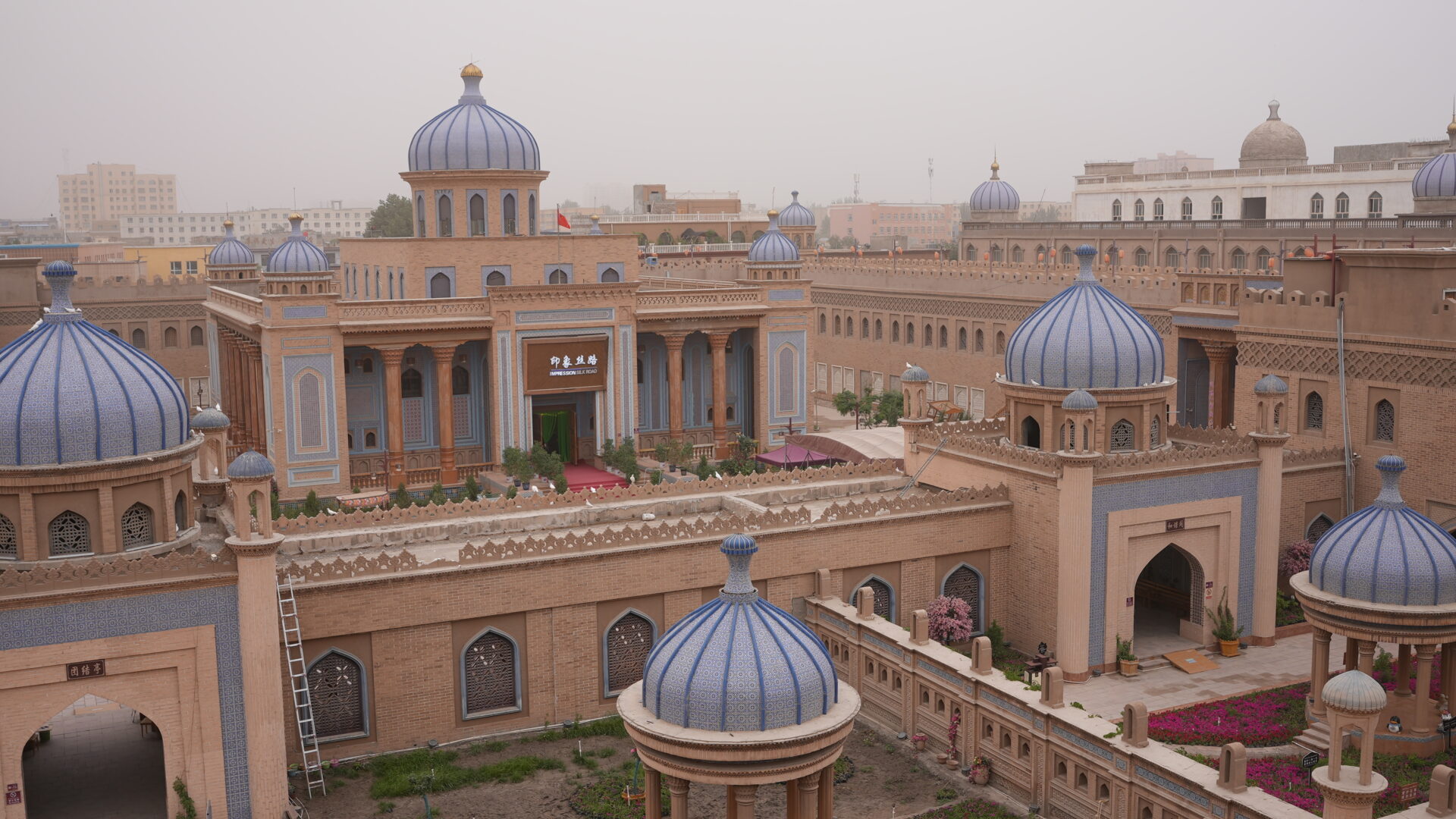
Yarkant — Shache in Mandarin, 莎车 — is one of the old oasis towns of the southern Silk Road, southeast of Kashgar on the rim of the Taklamakan. For a period in the 16th and 17th centuries it was a capital: the seat of the Yarkand Khanate, which ruled most of what is now southern Xinjiang.
Its real claim, though, is musical.
The Twelve Muqam
Uyghur classical music is organised into the Twelve Muqam — vast suites, each running for hours, combining sung poetry, instrumental sections and dance. It’s one of the great classical traditions of Central Asia, and UNESCO lists it as intangible cultural heritage.
Yarkant is where it was gathered and set in order. The queen Amanisahan, a musician and poet of the khanate’s court in the 16th century, is credited with compiling and systematising the repertoire from oral tradition. Her mausoleum is in the town, alongside the royal cemetery and the old Friday mosque — the historic quarter is small and all of it is within a short walk.
You will not hear a full muqam performance by wandering in. What you will find is the tradition alive in fragments: instrument makers, music schools, wedding bands, and people who can sing sections of it from memory.
The dancing
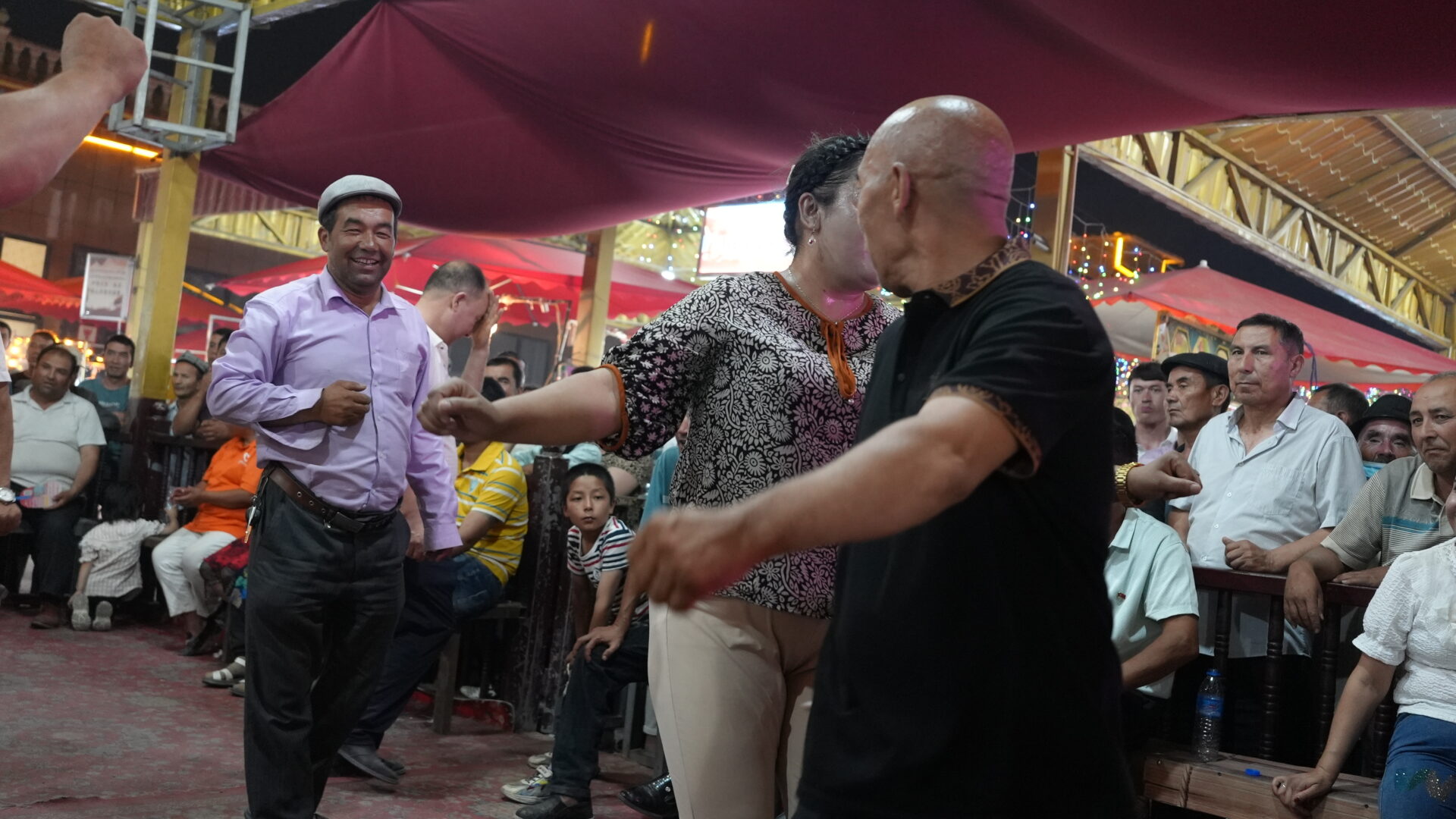
Most evenings, when the heat drops, a square by the water fills up with dancers.
This is sama and social dancing rather than performance — people come after dinner, the music starts, and the ring of dancers builds outward. All ages. Men and women. Nobody is on a stage and nobody has sold a ticket. A visitor standing at the edge will be pulled in within a few minutes, and the correct response is to accept and be bad at it.
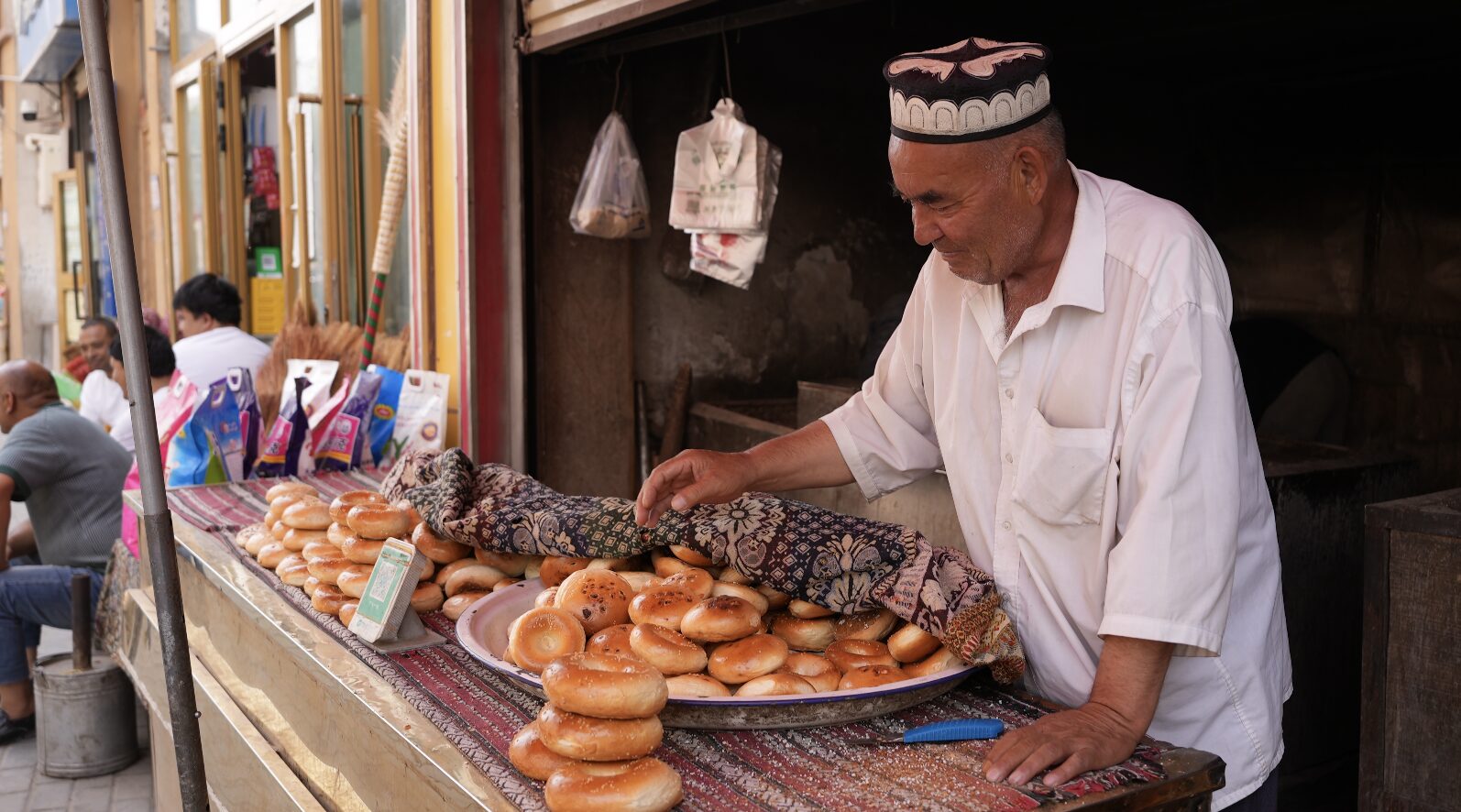
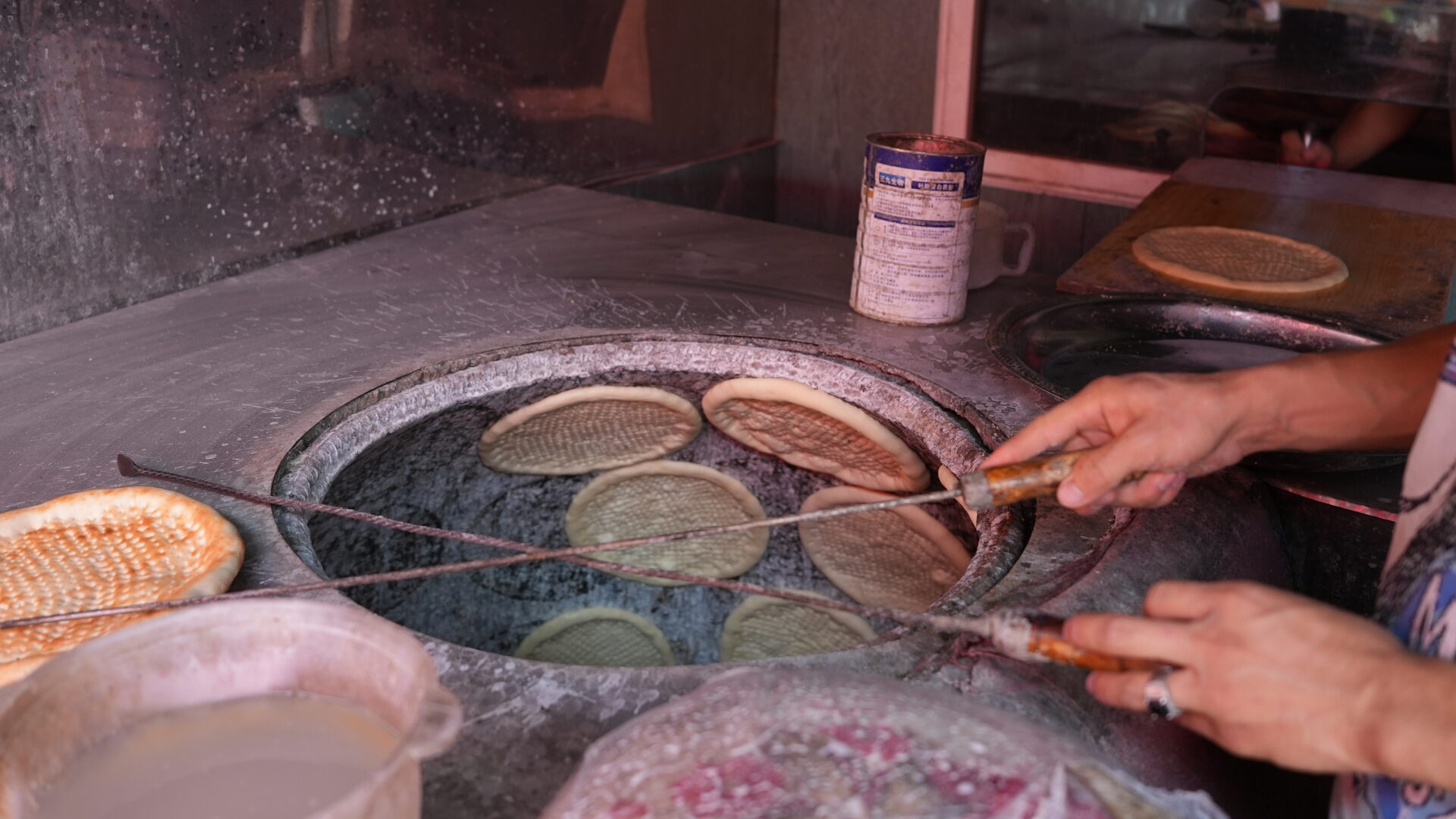
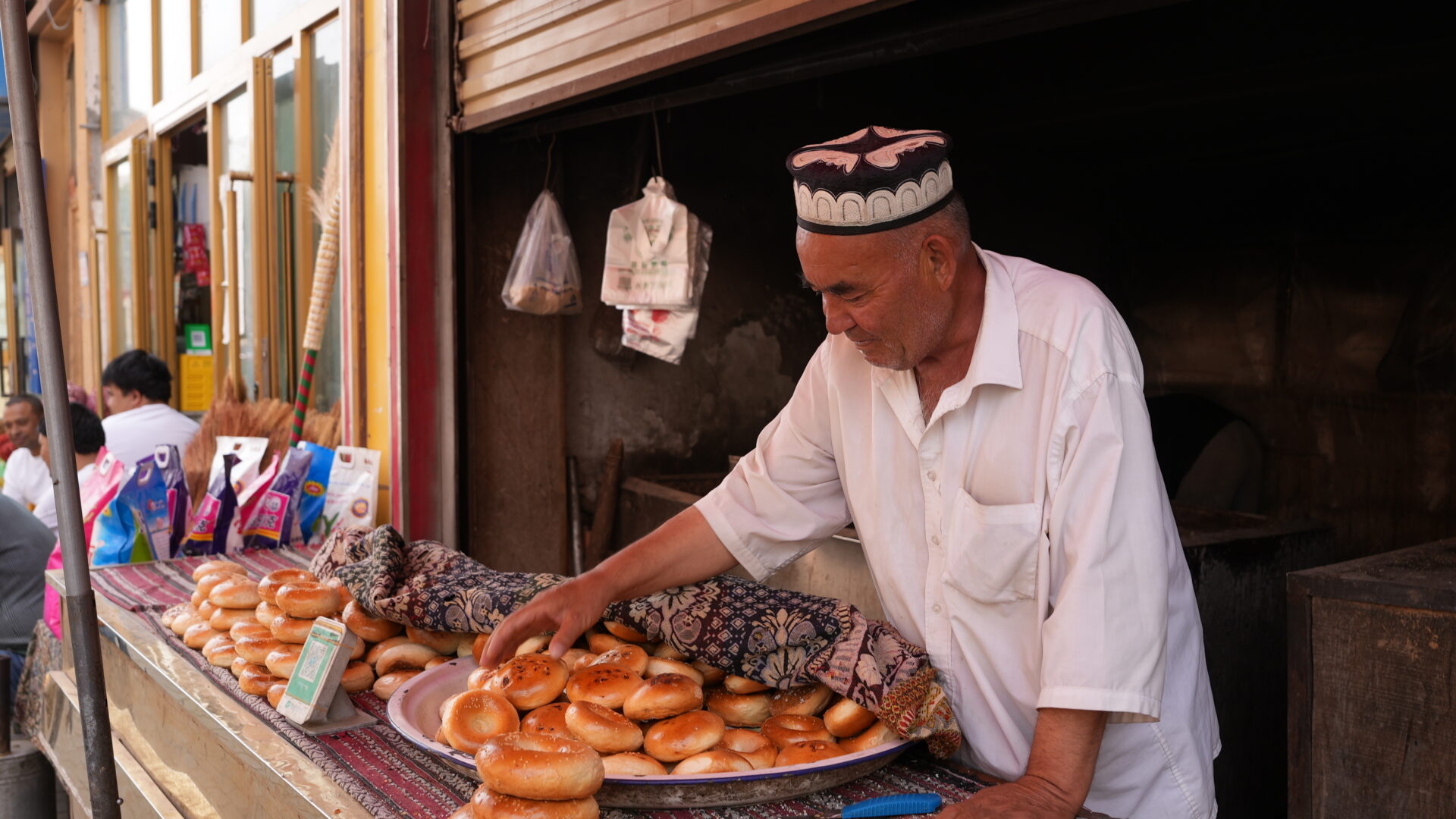
Samsa (kao baozi) — baked in a clay oven, and the standard thing to eat while watching
The Uyghur repertoire is expressive and narrative — courtship, celebration, work, grief — and the dancing carries it in the wrists and shoulders more than the feet. It’s worth watching for an hour before joining, if only to see how much is happening above the waist.
The town itself
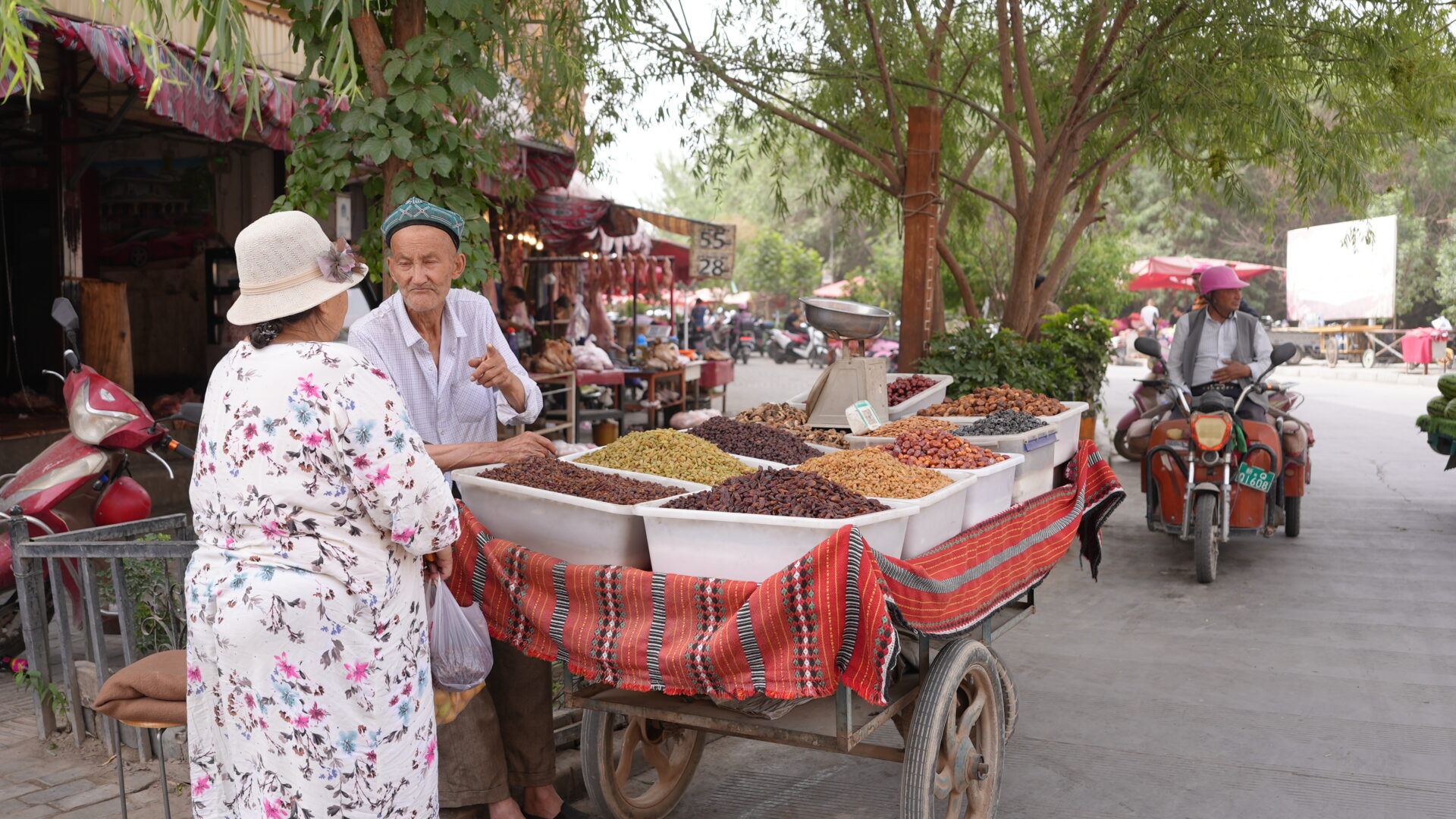
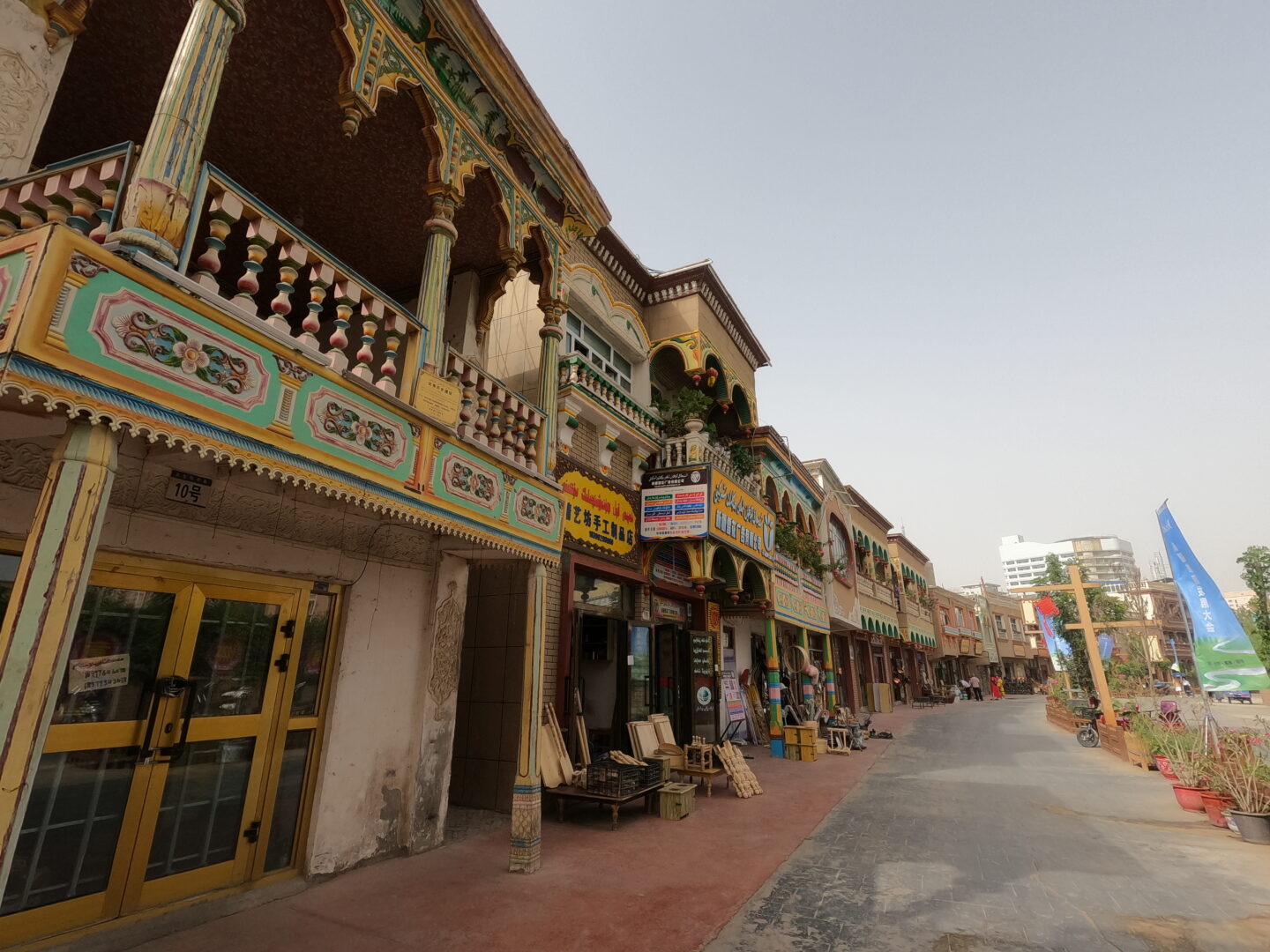
Yarkant is a working oasis town rather than a monument. The bazaar sells what people need: fabric, tools, boots, spices, sacks of dried apricot and walnut. The residential lanes are mud-brick with carved doors and grapevines over the courtyards. The surrounding countryside is orchard and cotton, watered off the Yarkant river coming down from the Karakoram.
The Silk Road inheritance isn’t presented, it’s just there — in the layout, the crops, the faces and the food.
Practical notes
Getting there: a few hours by road southeast of Kashgar, on the southern rim road around the Taklamakan.
When: April to June and September to October. Summer in the Tarim basin is severe, and winter is grey and cold with nothing much happening outdoors.
Where to eat: the roadside — samsa, lamb skewers, laghman, plov. Same standard as rural Kashgar, and just as good.
Permits: parts of southern Xinjiang near the border need advance permission — check restricted areas before planning a route further south.
More from the region under Xinjiang.
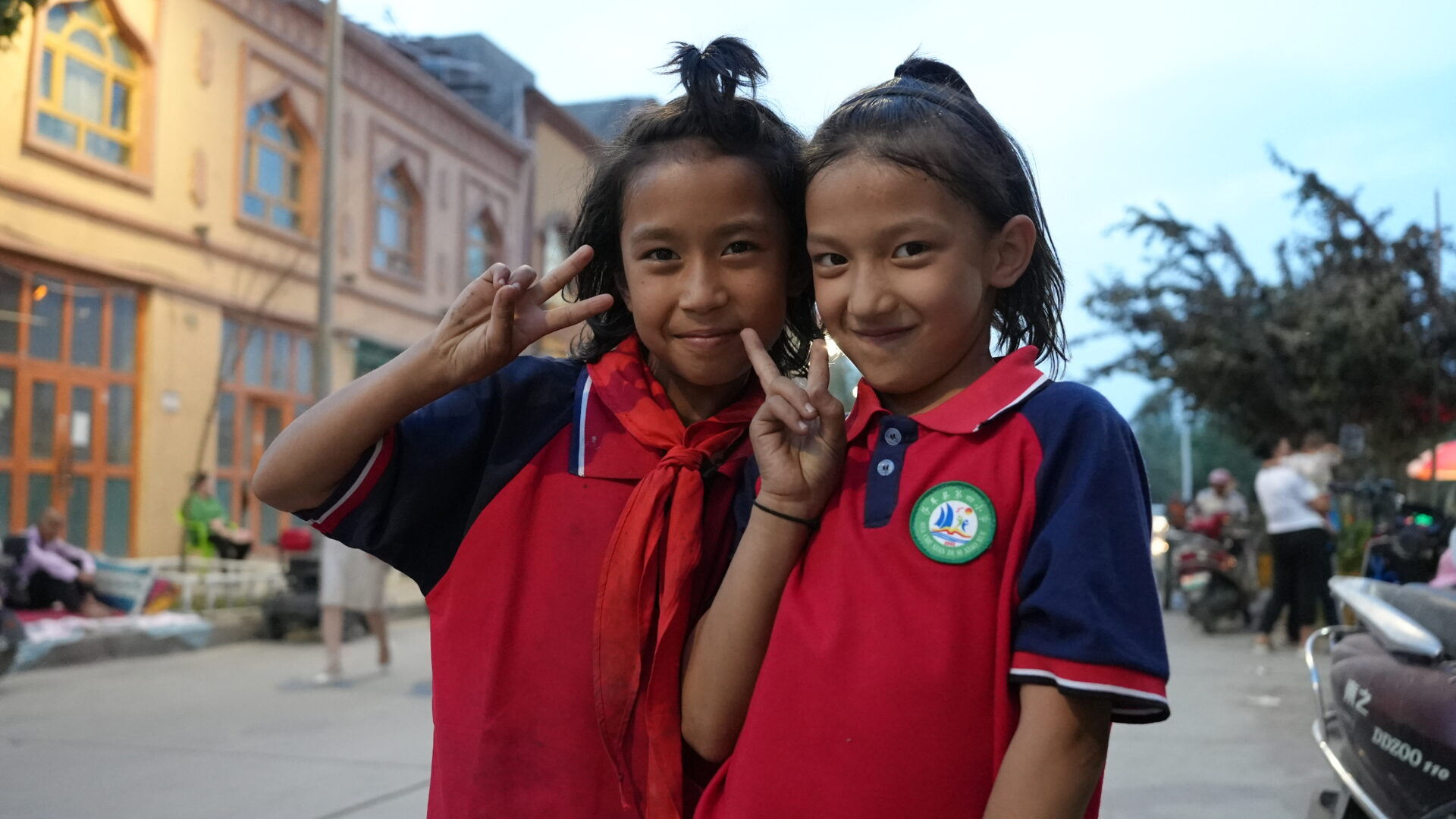
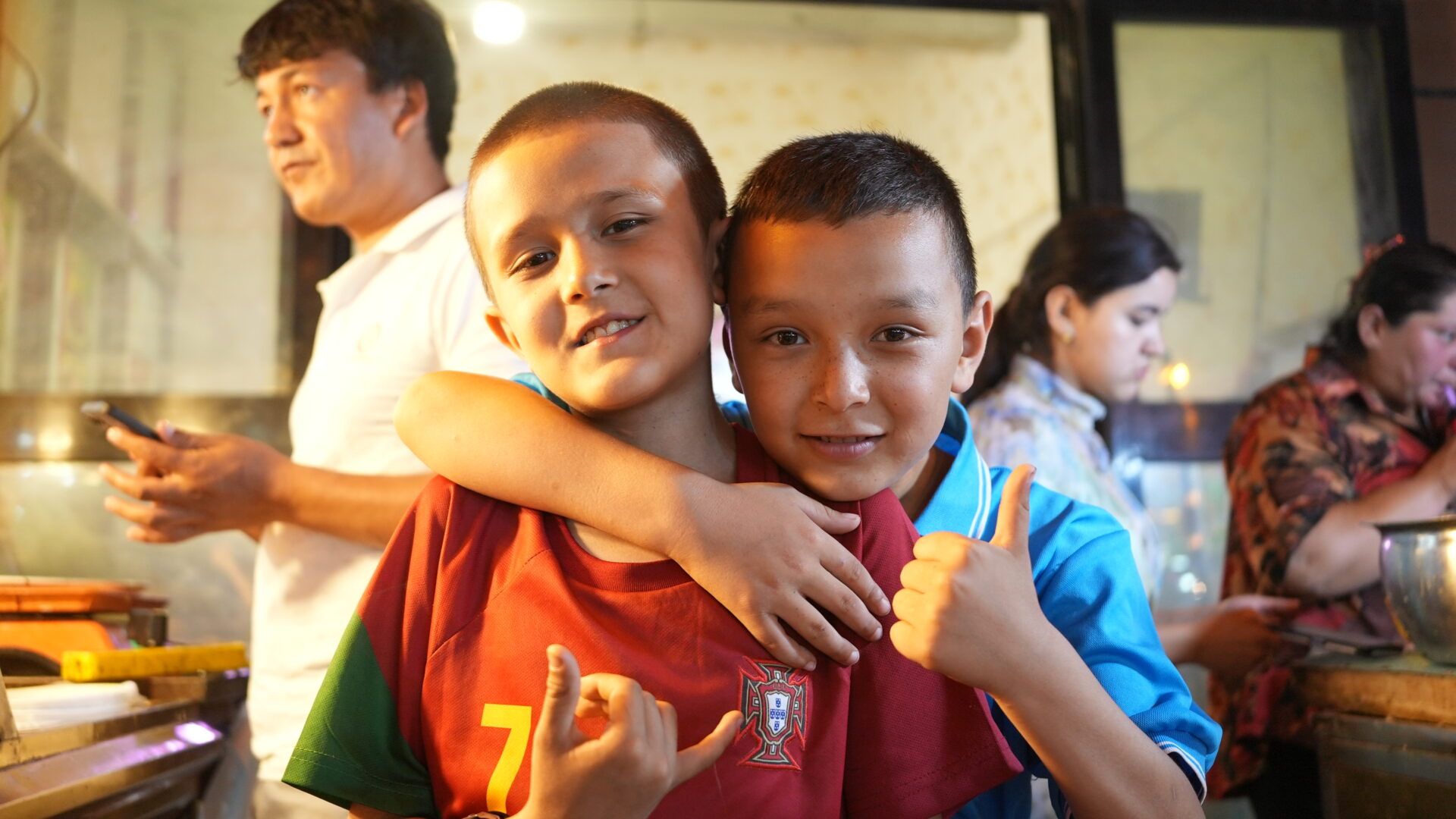
- #xinjiang
- #yarkant
- #muqam
- #uyghur
- #silk road