
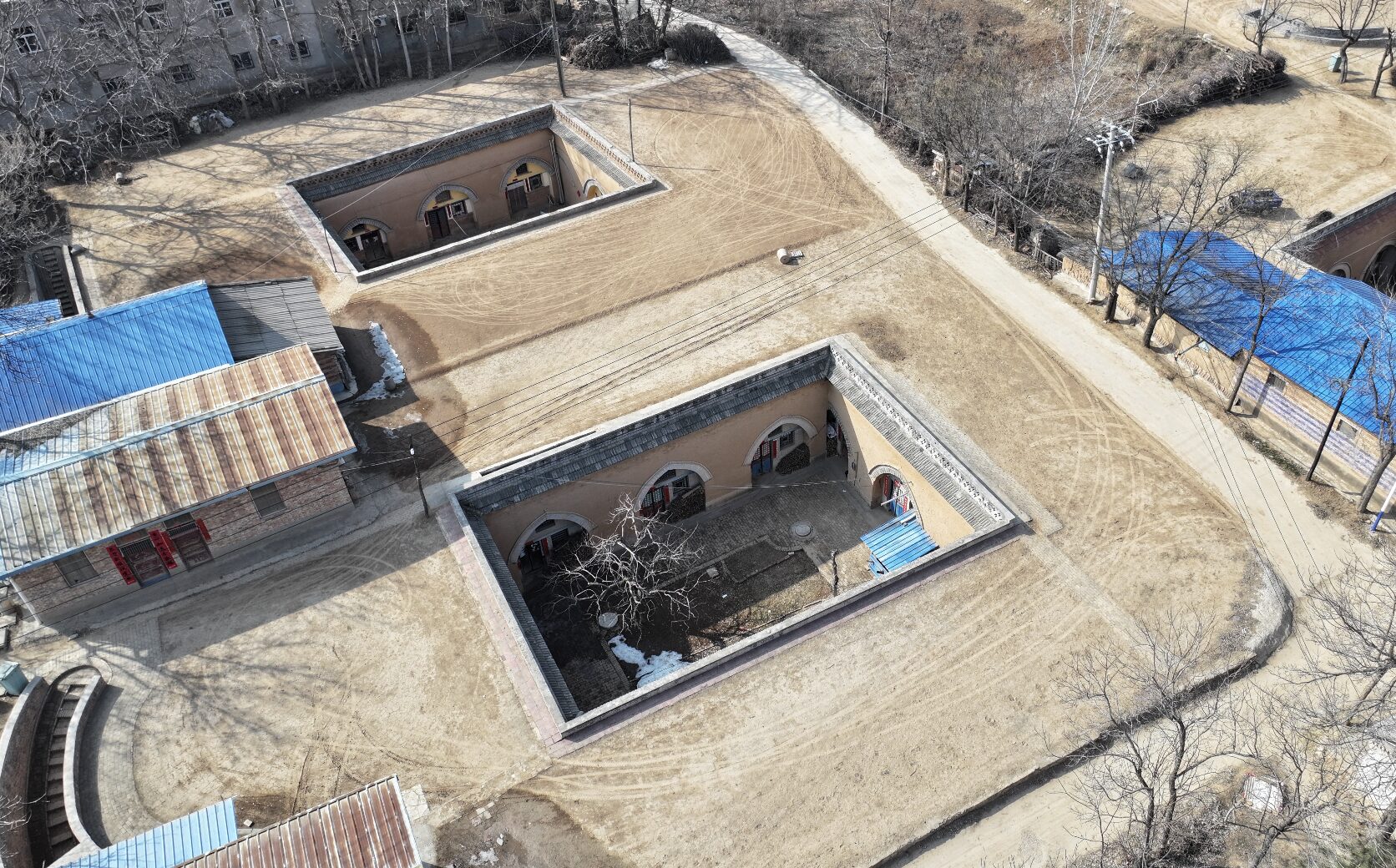
In rural Henan, families still live in courtyard houses excavated into the ground — cool in summer, warm in winter, and completely hidden from the surrounding fields.
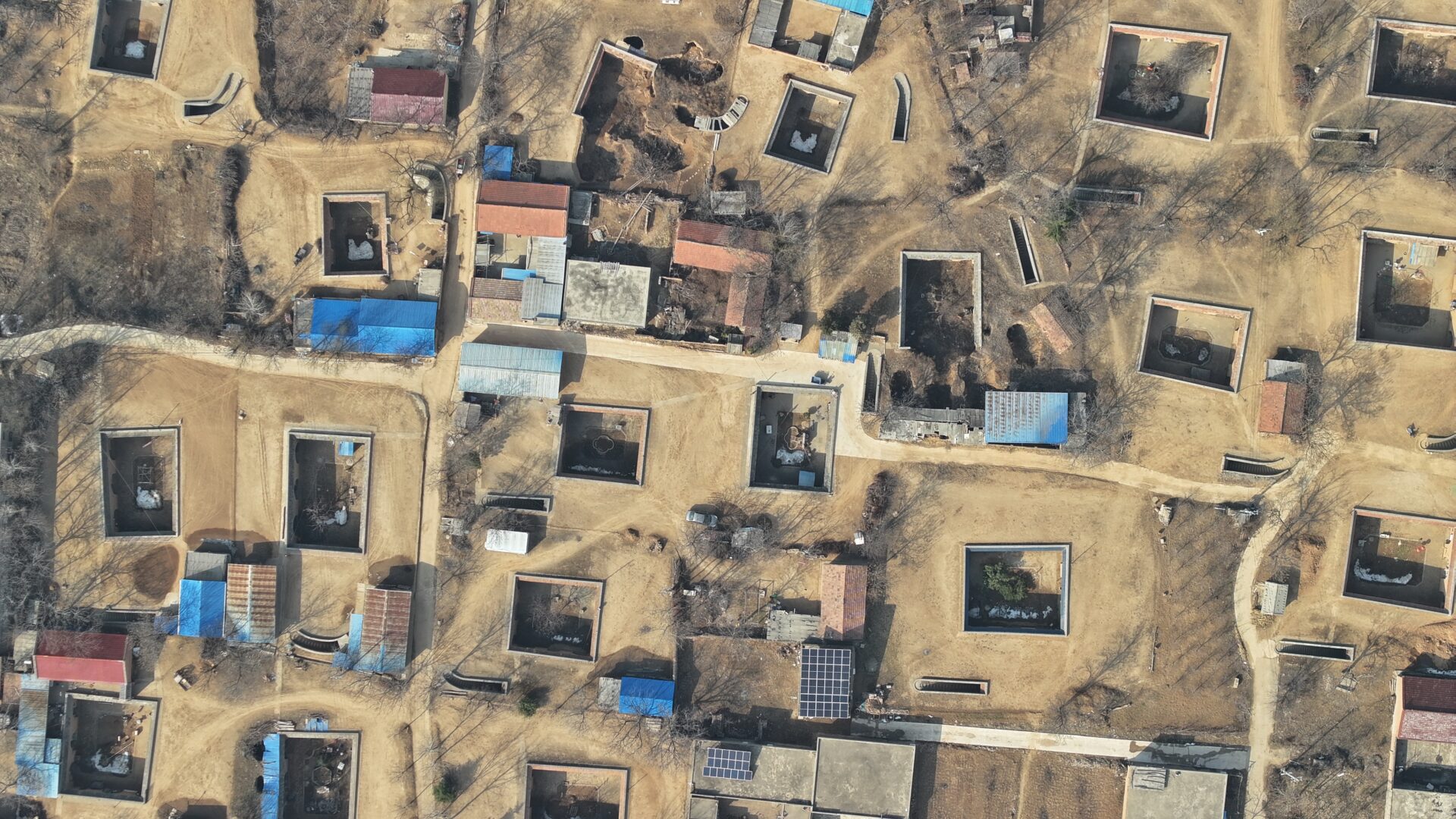
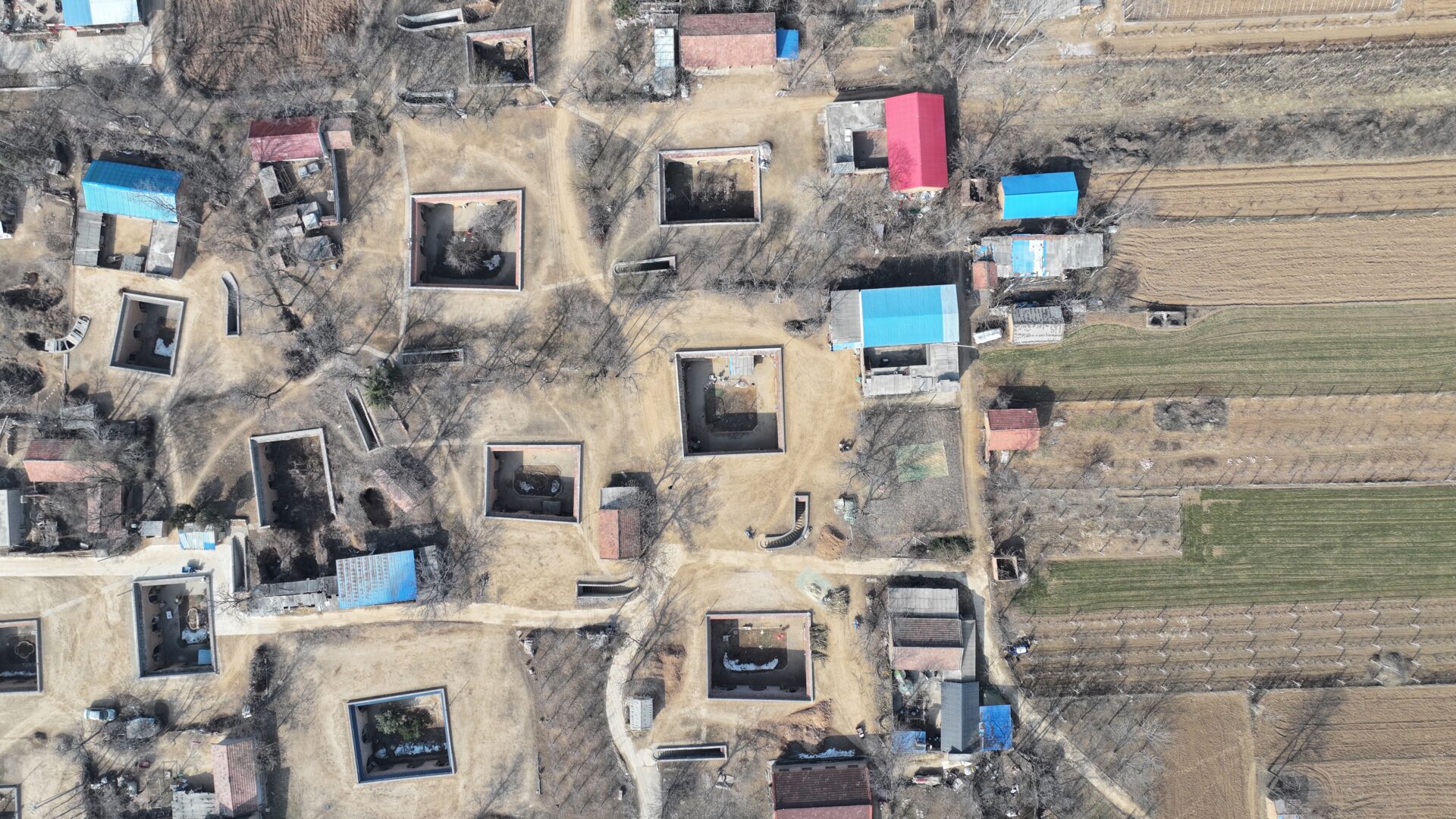
In the countryside outside Sanmenxia in western Henan, you can walk across a flat field and not notice that there are people living underneath it.
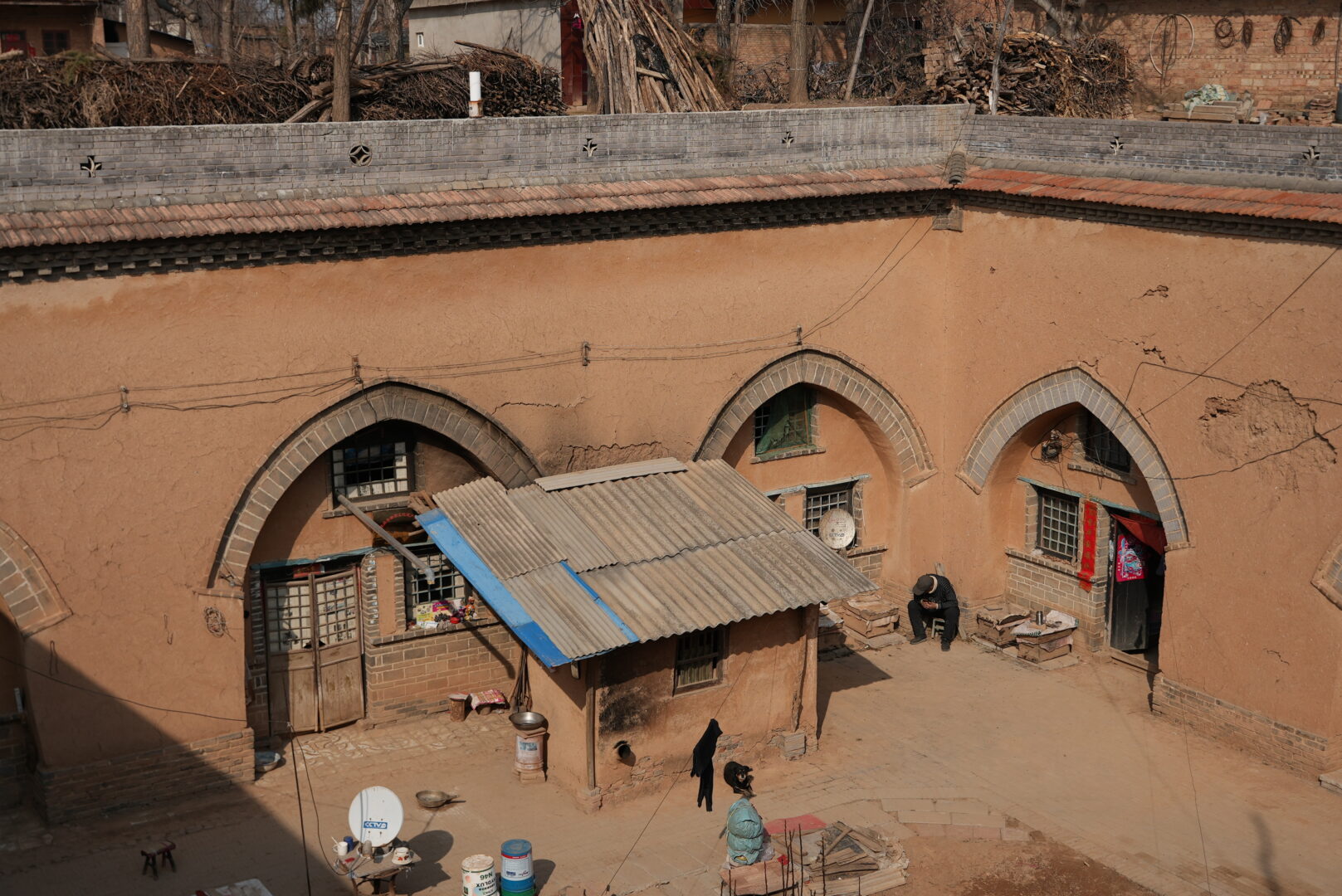
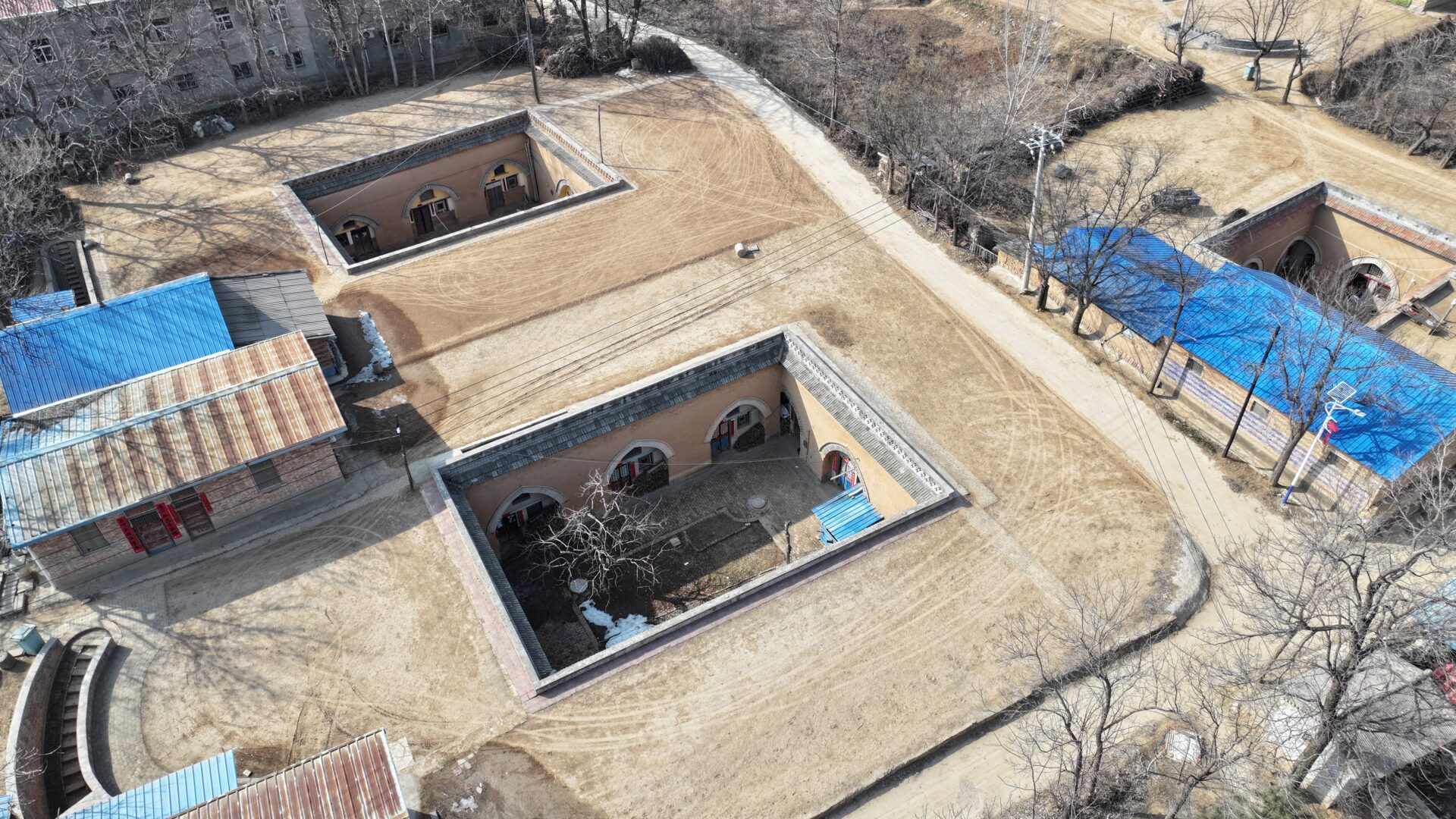
The buildings are 地坑院 (dikengyuan) — sunken courtyard dwellings. A square pit, roughly seven metres deep and ten to twelve metres across, is dug straight down into the loess. Rooms are then excavated horizontally into all four walls of the pit, and a sloping ramp or stepped tunnel provides access from ground level.
From above, all you see is a square hole with a low parapet around it. From inside, you’re in a courtyard with sky overhead and doorways on every side.
Why they work
This isn’t improvisation — it’s a highly refined vernacular solution, and it survives because the physics are excellent.
Thermal mass. Loess is a superb insulator. Interior temperatures stay roughly between 10 and 20°C year-round, in a region that ranges from below freezing to over 35°C. No heating, no cooling.
Material cost: zero. The house is made of the absence of soil. Dig it out, seal the surfaces, add doors and windows, and you have a substantial dwelling built with hand tools and labour.
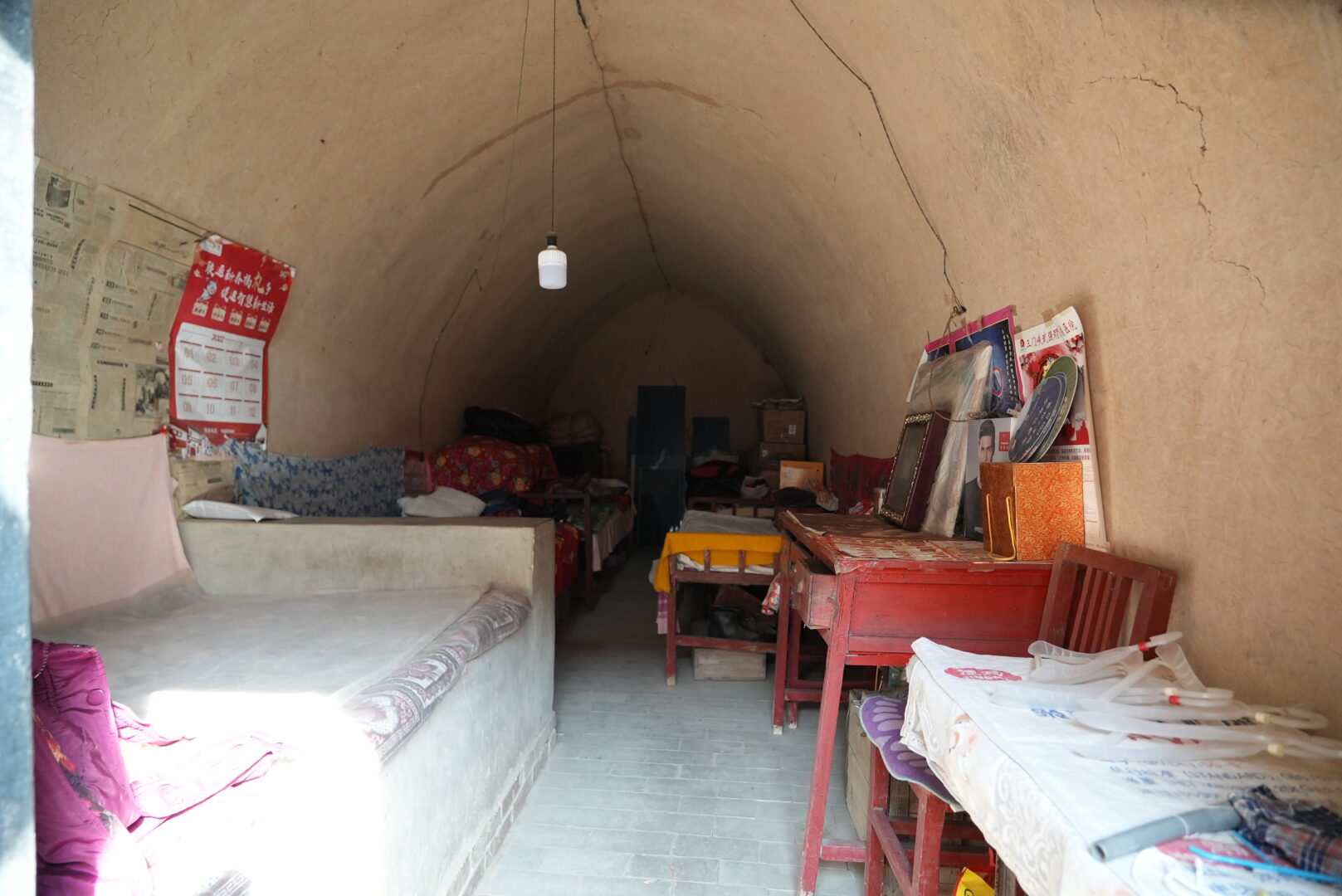
Structural behaviour. Loess cuts vertically and holds an arched roof well, which is why the room openings are arched. Well-maintained examples have stood for centuries.
Water is the enemy. The parapet at ground level keeps runoff out, the courtyard has a soakaway, and the loess must be kept from getting saturated — that’s the whole maintenance job, and where abandoned examples fail.
The wider tradition
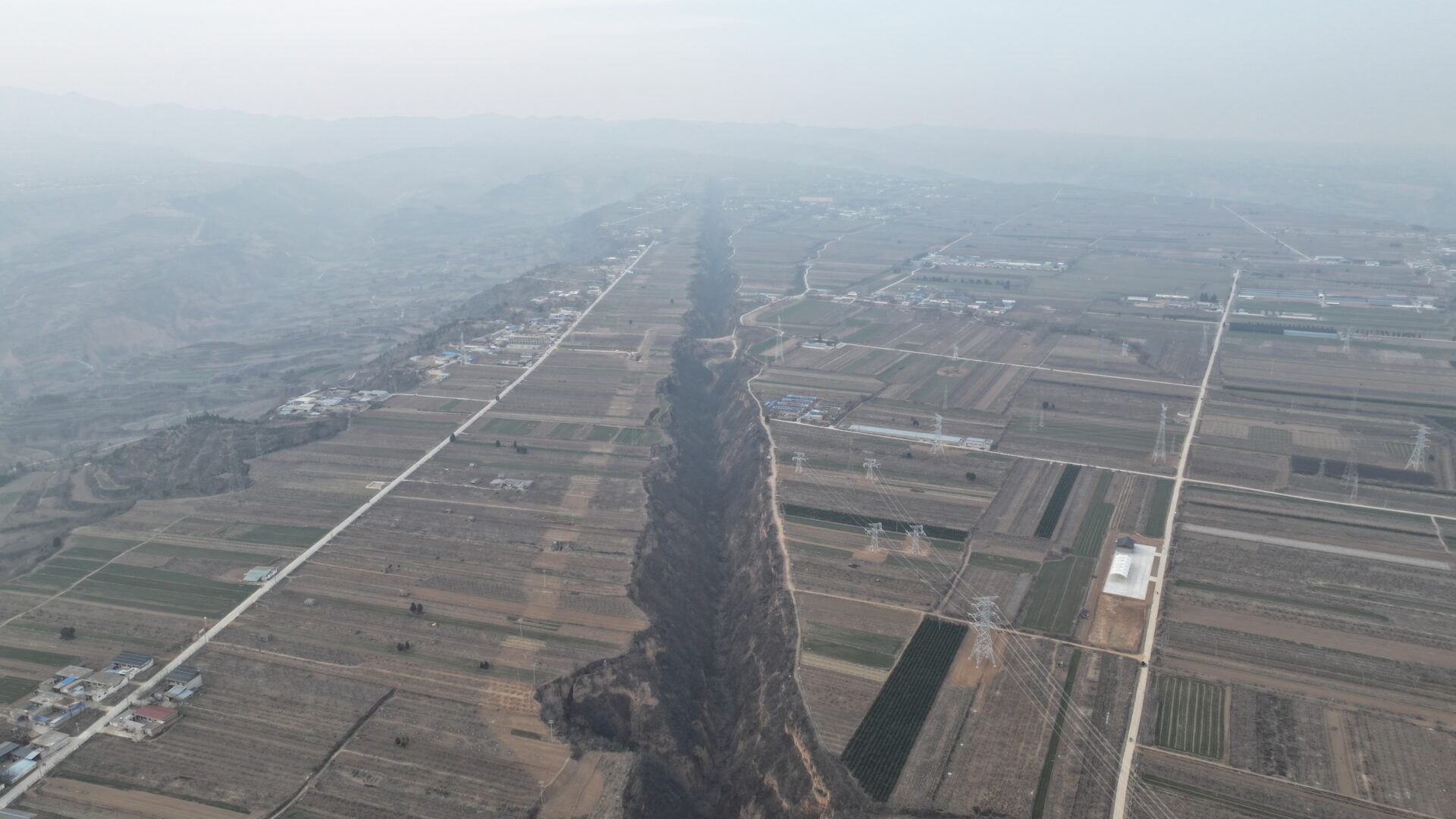
Cave dwelling across the loess plateau — cliff-cut yaodong as well as sunken courtyards — has housed tens of millions of people, and still houses a substantial number across Shaanxi, Shanxi, Gansu and Henan. The Sanmenxia clusters are among the best-preserved examples of the sunken-courtyard variant specifically.
Some villages have been developed for visitors, with restored courtyards, a museum and paid entry. Others are still simply where people live, with a mixture of occupied and abandoned pits, and increasingly modern brick houses built above ground alongside them.
Visiting
The developed sites are the easy option and explain the construction well. The unrestored villages are more interesting and require more care:
- Ask before entering a courtyard. These are private homes with an unusually permeable-looking boundary.
- Ask before photographing people or interiors. Take a no.
- Bring something if you’re invited in — fruit, tea, cigarettes for the older men.
- Be careful at the edges. An unfenced seven-metre drop in a field is exactly what it sounds like, particularly around abandoned pits with eroded parapets.
The honest context: many of these dwellings are being abandoned, not because they’re bad houses but because a brick house at ground level reads as modern, and because the working-age population has left for the cities. Our rural China guide covers that pattern.
Practical notes
Getting there: Sanmenxia is on the Xi’an–Zhengzhou high-speed line, about an hour and a half from Xi’an. The villages are a taxi ride into the countryside from there.
When: spring and autumn. Summer is hot above ground and pleasant below; winter is cold and dusty.
Eat: Henan food — hand-pulled and steamed noodles, hulatang (peppery breakfast soup), braised dishes, wheat everything. See our food guide.
Nearby: Xi’an is 90 minutes west, and the loess plateau continues northwest through Guyuan.
- #henan
- #sanmenxia
- #yaodong
- #loess
- #vernacular architecture