
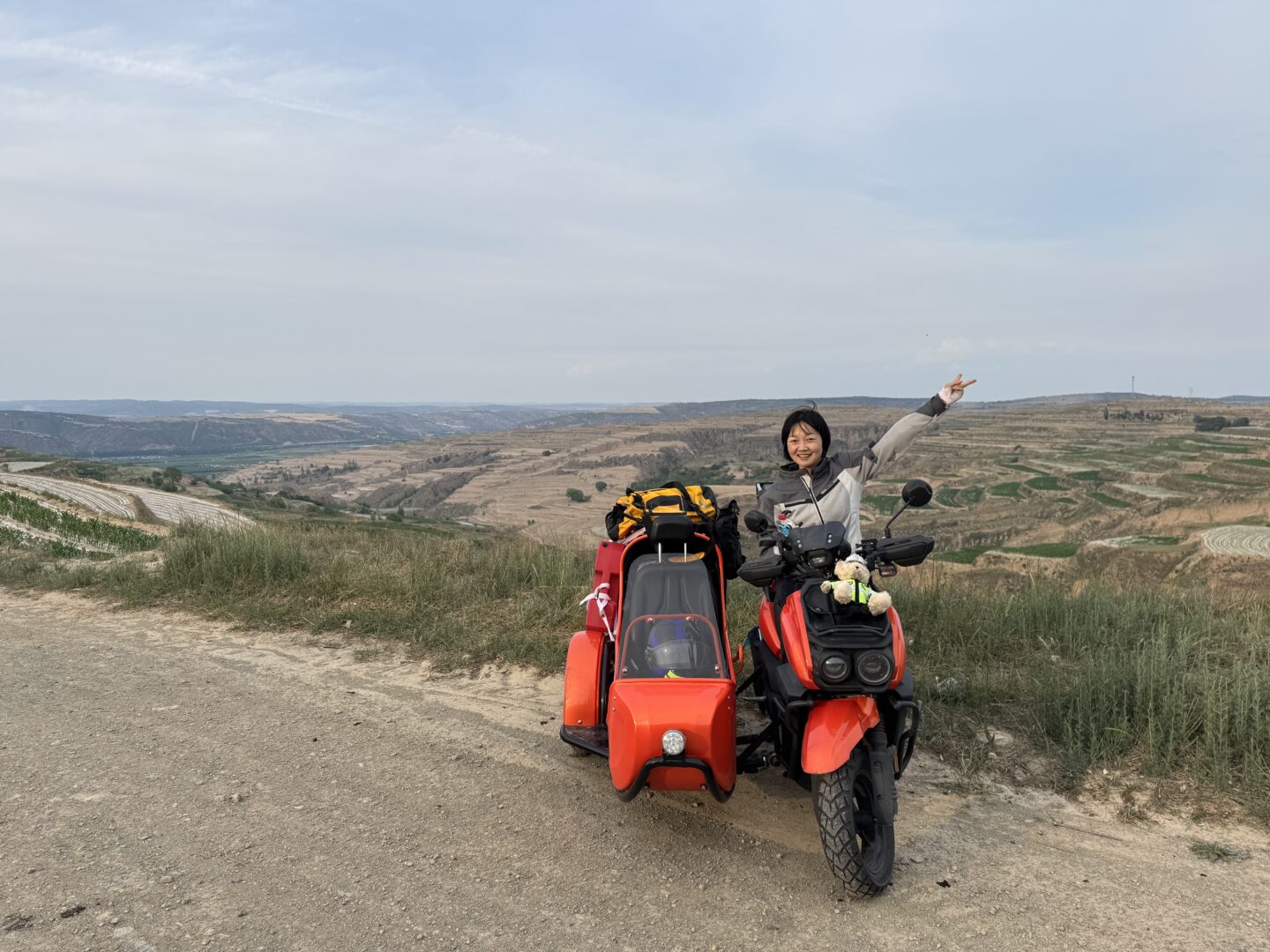
The old Silk Road ran northwest out of Xi'an across the loess plateau. The route still passes Pingliang's sacred mountain and Guyuan's cave temples — and through country the economic boom largely skipped.
Head northwest out of Xi’an and within two hours the flat Wei river plain rises into the Loess Plateau — hundreds of metres of wind-blown yellow silt, cut by erosion into a maze of gullies, ridges and flat-topped remnants, terraced wherever a crop will hold.
This was the first stage of the Silk Road out of the capital. It’s also, still, some of the harder country in China to make a living in.
The loess
Worth understanding, because it explains the whole region. The silt was deposited over hundreds of thousands of years by wind off the Central Asian deserts. It’s extraordinarily fertile and extraordinarily easy to erode — a heavy rain can move a hillside — which is why the Yellow River carries the sediment load it does, and why terracing here is not a picturesque choice but the only way to keep the soil.
It also cuts vertically and holds a roof, which is why people have lived in cave dwellings across this plateau for millennia.
Pingliang
Pingliang, in eastern Gansu, sits where the plateau narrows into steep valleys — a natural staging point for caravans, and a crossroads long before that.
Kongtong Mountain (崆峒山), just outside town, is one of the founding sites of Taoism, with temples up a forested massif and a claimed association with the Yellow Emperor. It’s a proper day: paths, halls, cliffs and very few foreign visitors.
The town is also visibly Muslim — Hui communities are substantial across this stretch of Gansu and Ningxia, and the mosques, halal butchers and noodle shops are part of the streetscape.
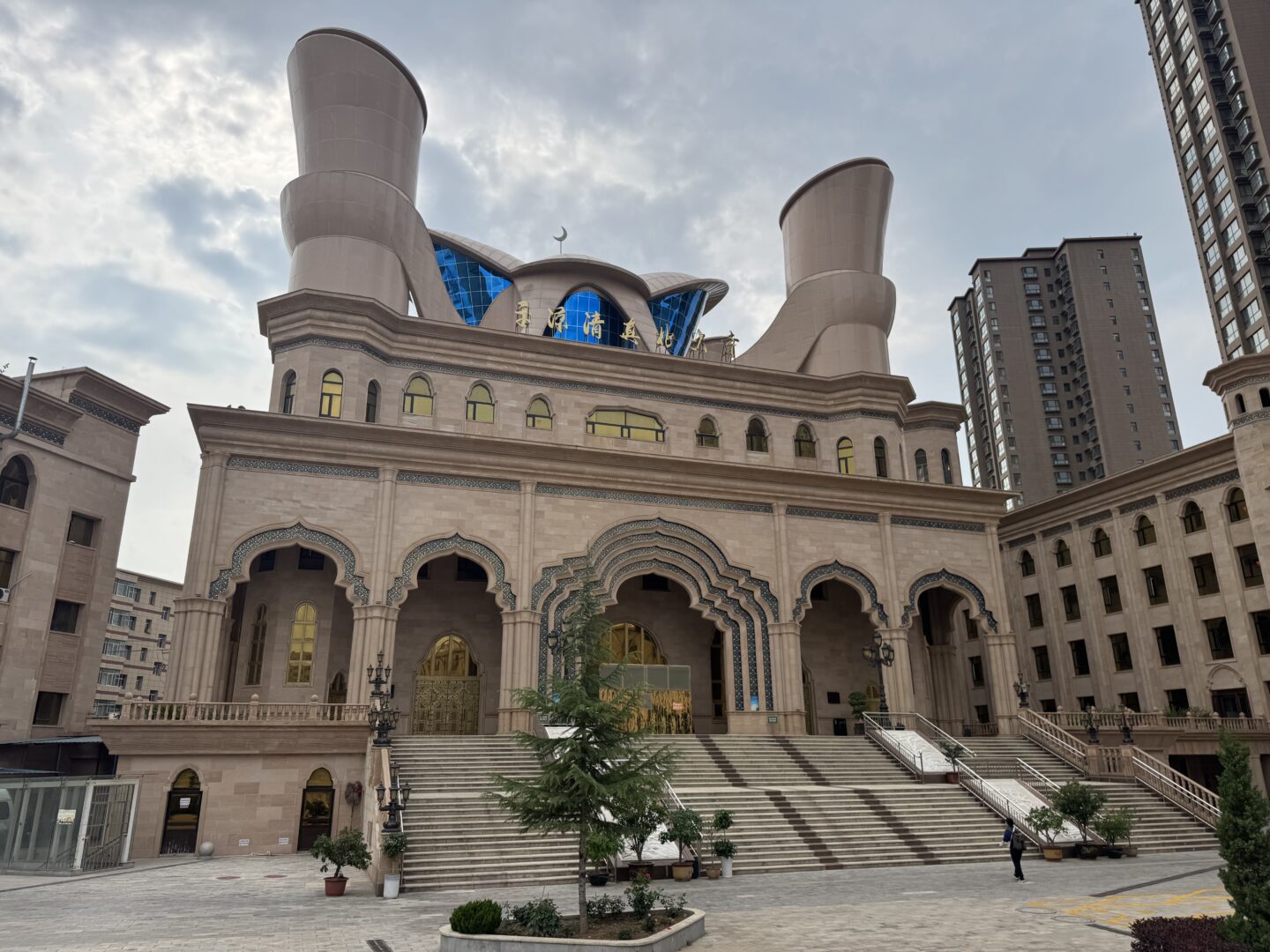
One of Pingliang’s mosques
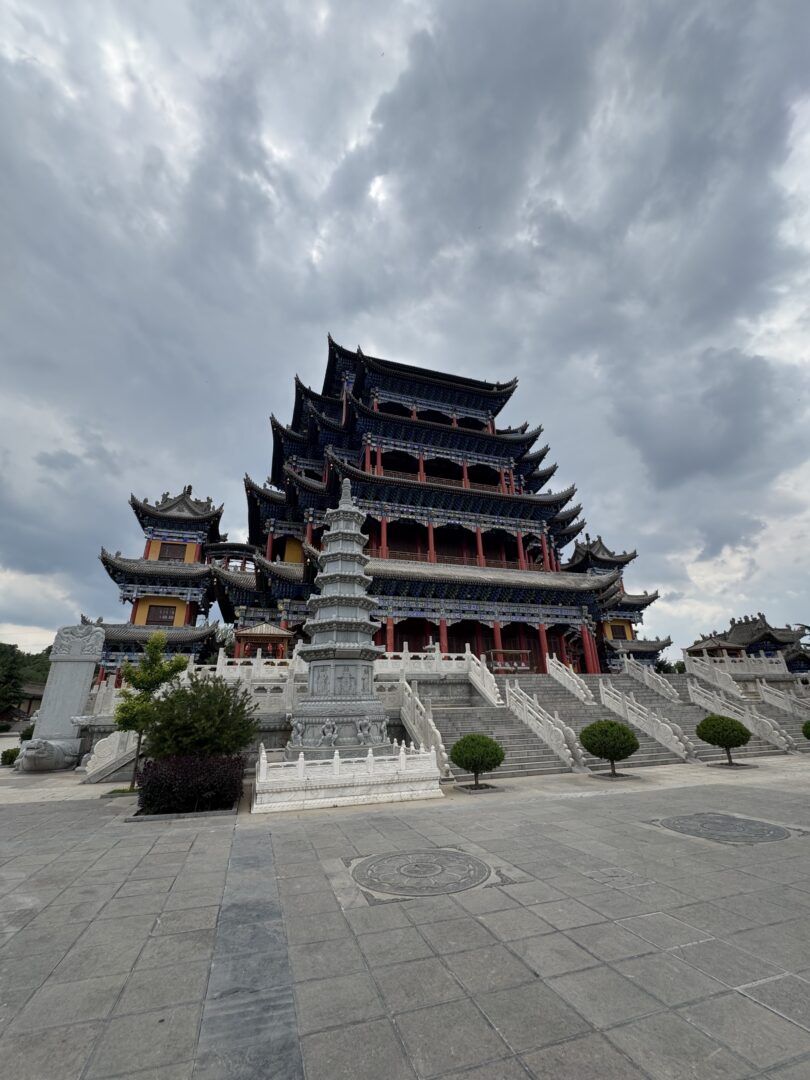
And a Buddhist temple, a few streets away
Guyuan
Continue northwest and you drop toward Guyuan, at the southern end of Ningxia. Historically this was one of the last major stops before traders entered the harder western territory, and its markets handled goods moving in both directions.
Two reasons to stop:
The Xumishan grottoes (须弥山石窟) — a Buddhist cave complex cut into red sandstone from the Northern Wei period onward, including a 20-metre seated Buddha in an open niche. Comparable in age to the more famous sites and with a fraction of the visitors. It’s the best thing in southern Ningxia.
Guyuan Museum — a genuinely good regional collection, heavy on Silk Road material excavated locally, including Sassanian and Central Asian objects that arrived here by trade.
The development picture
Guyuan and the surrounding counties have consistently been among the poorest in China, and it’s worth being straightforward about why: thin soil, unreliable rainfall, severe erosion, and a long distance from any port or major market.
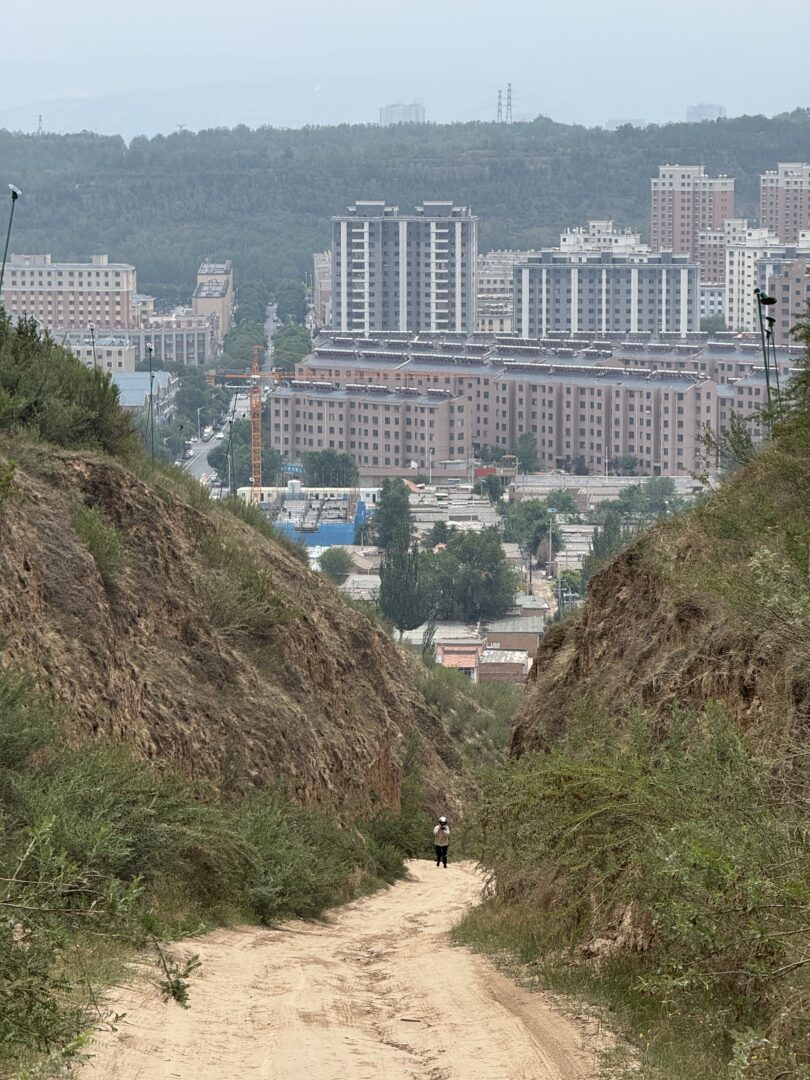
What you see now is a region in the middle of a large state effort — new roads, new housing, relocation programmes, and terracing and afforestation at scale. Some of it is impressive. Some villages are half-empty because the working population is in Yinchuan or on the coast.
Riding through, both things are visible in the same valley, which is a more useful picture of rural China than either half alone. Our rural China guide covers the practicalities of travelling here.
Practical notes
Getting there: rail from Xi’an to Pingliang and Guyuan; the road route is the better experience if you’re driving or riding. A Chinese licence is required to do it yourself.
When: May to October. Summer is hot on the plateau but dry; winter is cold and dusty, and spring brings the dust storms.
Eat: lamb, hand-pulled noodles, flatbread and eight-treasure tea. This is Hui food country and it is excellent — see our food guide.
Onward: Zhongwei and the Tengger desert north, then Alxa Left Banner into Inner Mongolia.
- #ningxia
- #gansu
- #loess plateau
- #guyuan
- #silk road