
Jingdezhen has made porcelain continuously since the Tang dynasty and produced the blue-and-white that defined the material worldwide. It's also become the most interesting art scene in provincial China.
Almost every place claims to be the capital of something. Jingdezhen, in northern Jiangxi, has a genuine claim: it has been making porcelain continuously since the Tang dynasty, and for centuries it made most of the porcelain the world had ever seen.
The name is itself a historical artefact — the town was renamed after the Jingde reign period of the Song, when its wares received imperial recognition. In English, for a long time, fine porcelain was simply called china, and a great deal of what earned it that name came out of these kilns.
Why here
Three things had to coincide, and did.
Kaolin — the white clay that makes true porcelain possible — outcrops in the hills around the city. Fuel was in the surrounding forest. And the Chang river connected the town to Poyang lake and the Yangtze, giving direct water access to the whole empire and, through Guangzhou and Quanzhou, to the export markets.
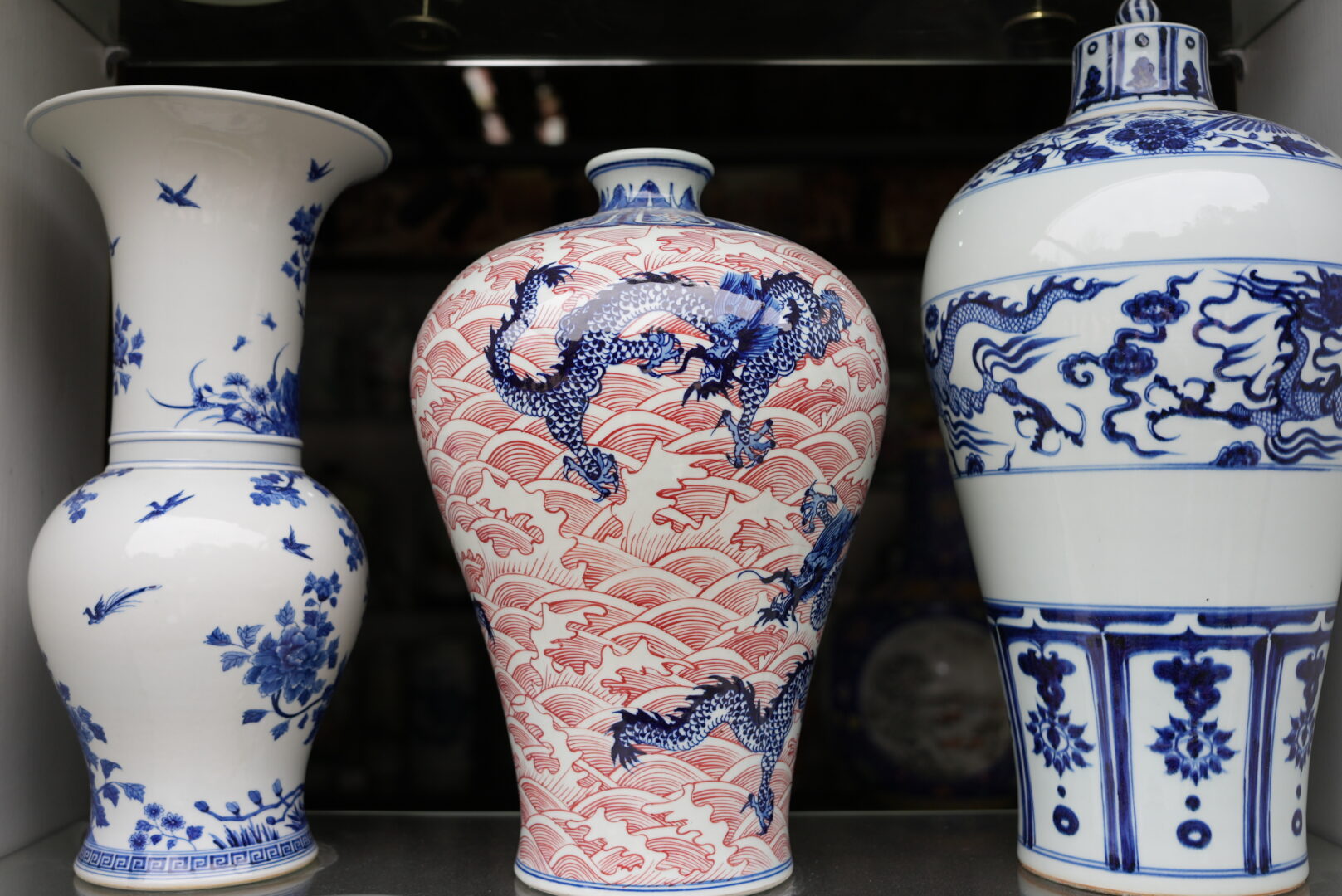
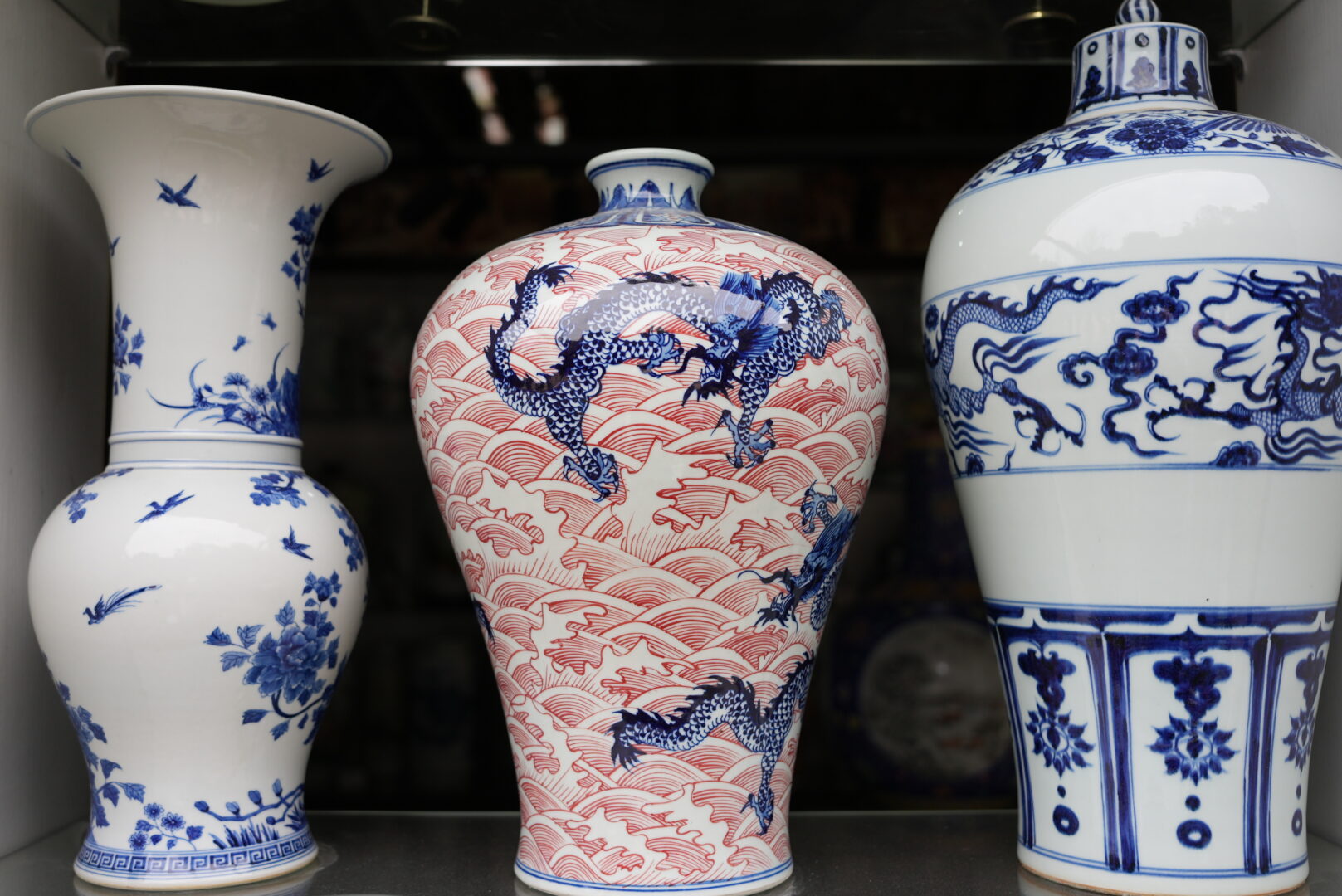
The imperial kilns were established here, which concentrated the best technical talent in the country in one small city for six hundred years. The blue-and-white that Europe went mad for from the 16th century onward — cobalt under a clear glaze, fired at over 1,300°C — is a Jingdezhen product.
What to see
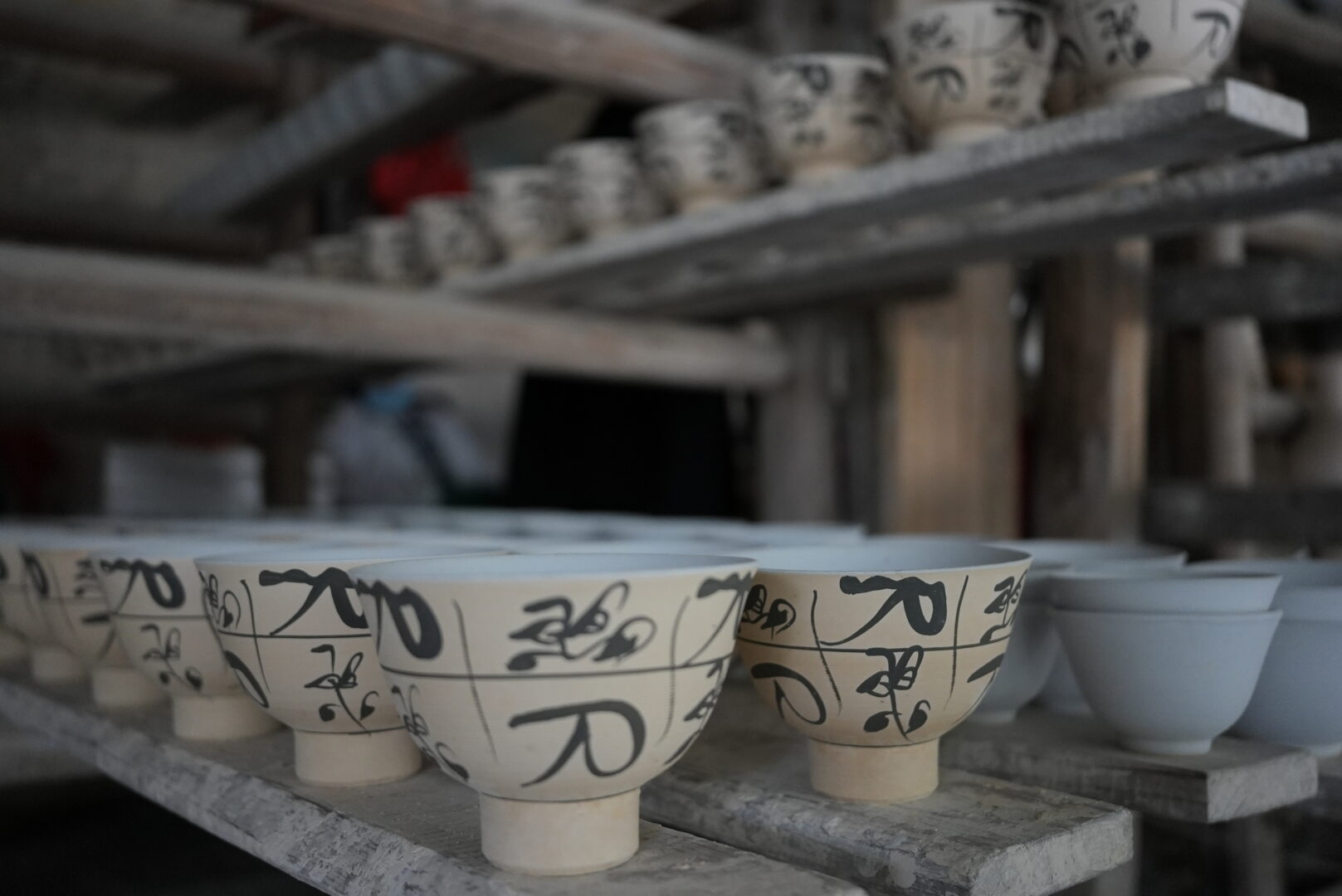
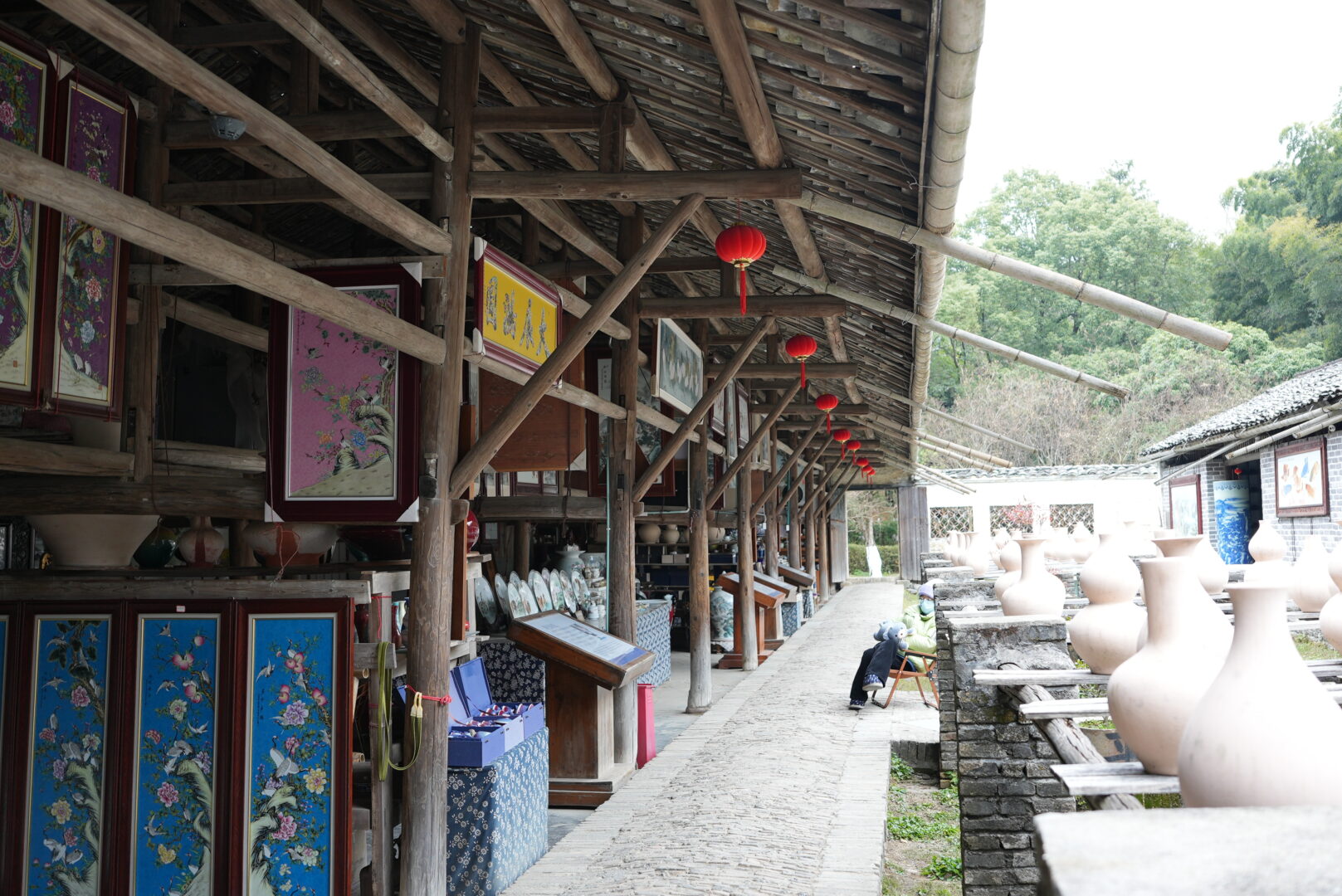
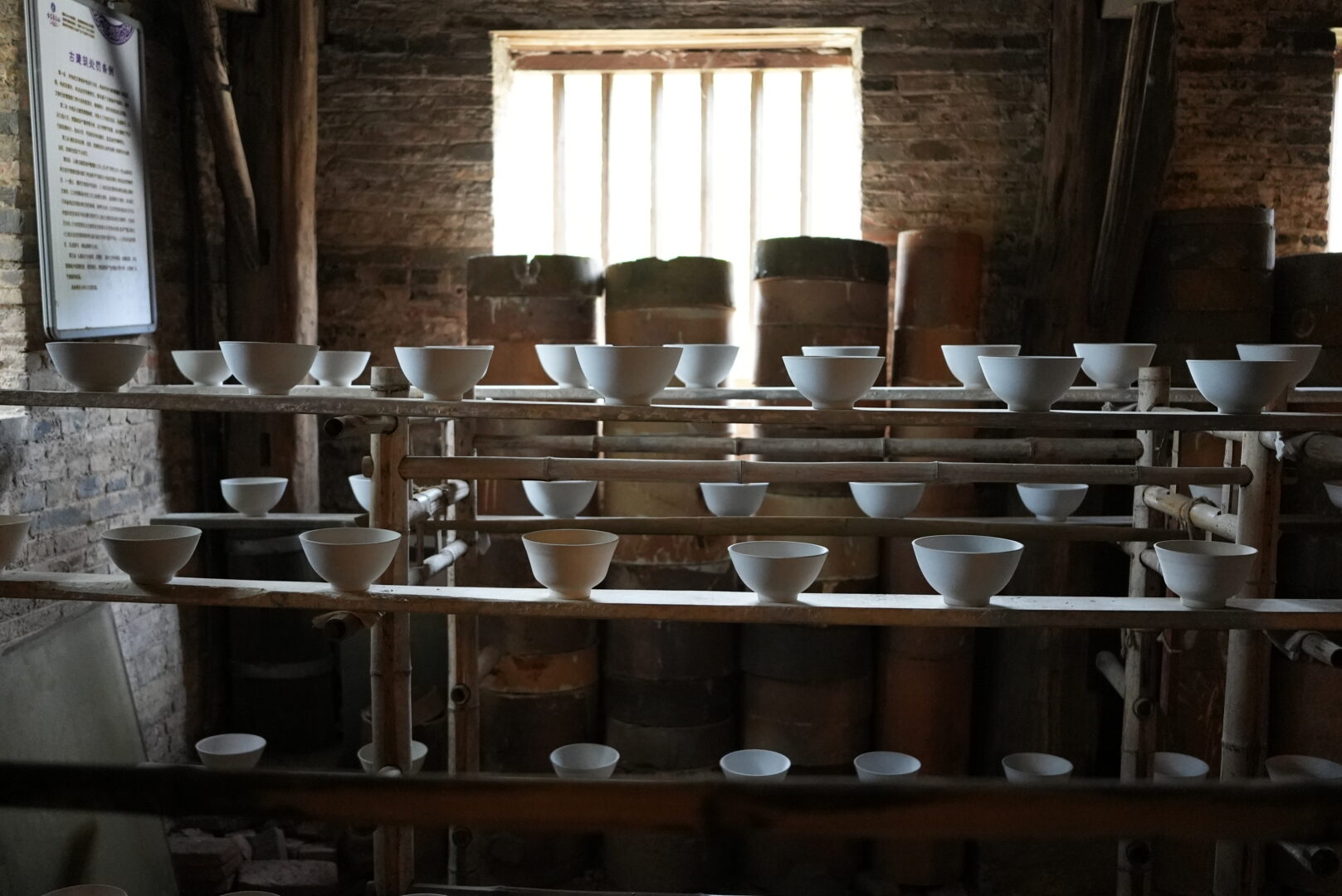
The Ancient Kiln and Folk Customs museum is the essential stop. Reconstructed dragon and egg-shaped kilns, fired periodically, with the full production sequence demonstrated by craftspeople who each do one job — throwing, trimming, glazing, painting, firing — as it was organised historically. That division of labour is the actual technology, and watching it is more interesting than any object.
Taoxichuan art district — a converted state porcelain factory, now studios, galleries, cafés and a weekend market. Best in the evening, when the market runs and it fills up.
Sanbao village, in the hills outside town — a valley of studios, kilns and residencies where a large number of foreign and Chinese ceramicists live and work. There are workshops for visitors, and it’s the calmest part of the trip.
The markets — the weekend fairs at Taoxichuan and elsewhere are where young makers sell their own work directly. This is where to buy.
The old kiln district around Hutian, where shards from a thousand years of production are literally underfoot.
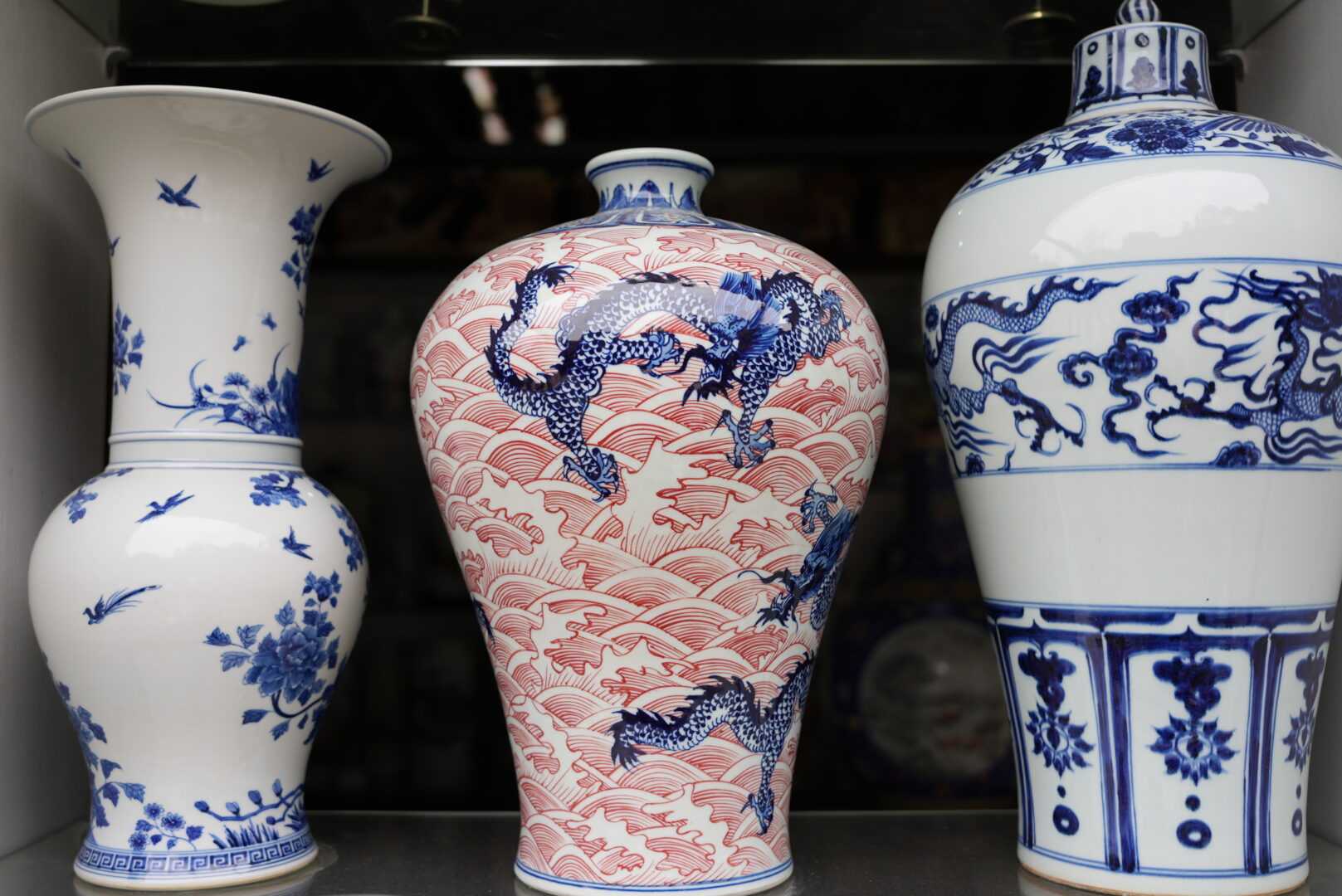
A city where the shards in the ground are the archaeology
Buying
- Buy from the maker at a market. Prices are a fraction of retail elsewhere and you get to ask about the glaze.
- Handle it. Weight, translucency at the rim, and the ring when you tap it all tell you something.
- Ask about firing — reduction, oxidation, wood-fired — because a serious maker will happily talk about it for twenty minutes and you’ll learn more than from any museum caption.
- Pack properly. Studios will wrap for shipping, and it’s worth paying for.
The city itself
Not a mega-city, and pleasantly so: hills, a river, and a pace that allows for tea in a courtyard. There’s a substantial community of young artists — the local term is jingdrifters — who came for a residency and stayed, which gives the place an unusual energy for a provincial Chinese city.
Rainy spring days here, in a kiln-side teahouse, are among the better ways to spend an afternoon in China.
Practical notes
Getting there: high-speed rail from Shanghai, Hangzhou, Nanchang and Huangshan. It’s around 90 minutes from Huangshan, which makes it the natural extension of a southern Anhui trip.
When: spring and autumn. Summer is hot and humid; the plum rains in June are heavy — see when to visit.
Nearby: Wuyuan’s villages and Huangshan, and for the other great ceramic tradition, Dehua in Fujian — white porcelain rather than blue-and-white.
- #jiangxi
- #jingdezhen
- #porcelain
- #ceramics
- #craft