
Chongqing is built into a mountain at the confluence of two rivers, and the result breaks the normal rules of a city. There is no reliable way to know what floor you're on.
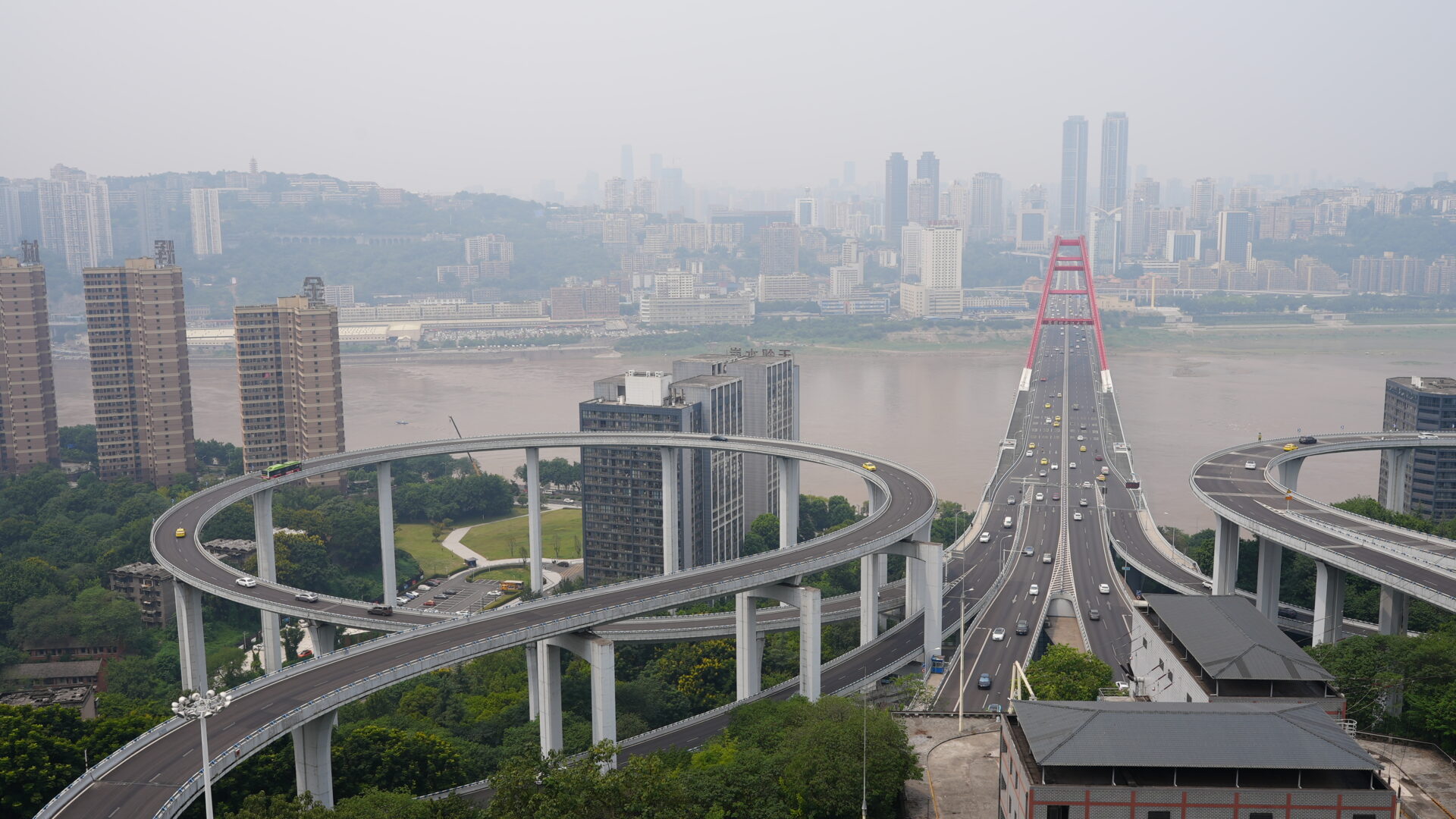
Chongqing is built on a ridge between the Yangtze and the Jialing, in terrain steep enough that the city has had to solve problems other cities don’t have. The local nickname is the 8D city, meaning it has more dimensions than a map can hold, and it’s more accurate than a nickname should be.
Concrete examples, all real:
- You walk in at street level, take a lift down twenty floors, and exit at street level again on a different street
- The Liziba monorail station is built inside a residential tower — the train passes through floors six to eight of an occupied apartment block
- A building’s stated floor number tells you nothing about its height above anything
- Two roads can cross without an intersection because one is forty metres above the other
Navigation apps struggle here in a way they don’t anywhere else in China.
What to see
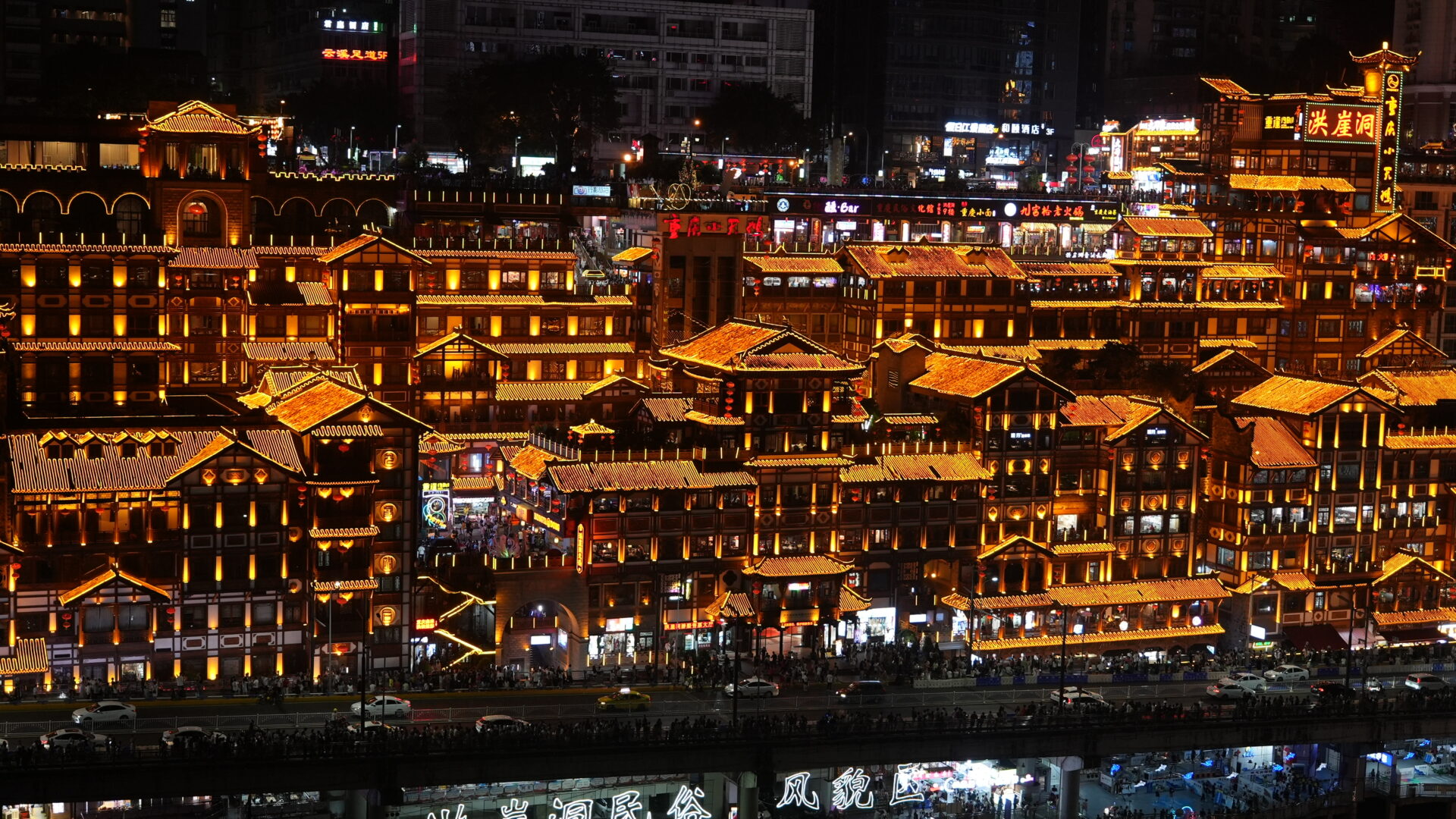
Hongyadong — a stilted complex of traditional-style buildings stacked eleven storeys up a cliff face above the Jialing, lit gold at night. Absurdly popular, genuinely spectacular, and best viewed from the bridge opposite rather than from inside the crush.
The Yangtze cable car — a working commuter link across the river, and the best cheap view in the city.
Liziba — the monorail through the building. There’s a viewing platform for exactly this.
Ciqikou — an old porcelain-shipping town absorbed by the city, now a busy heritage street. Go early or go on a weekday.
Jiefangbei — the central commercial district, and the place to understand the vertical density.
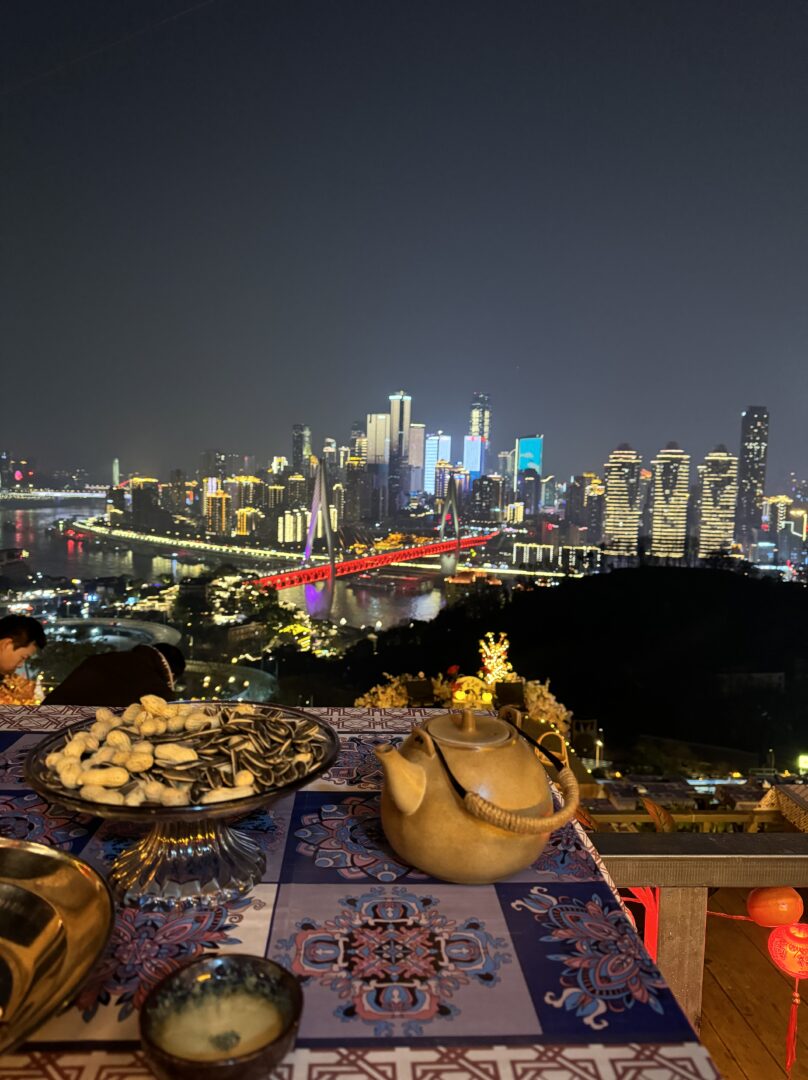
The rivers — an evening boat past the illuminated skyline. Unashamed and worth it.
Eling park and the Kuixinglou viewpoints for the peninsula from above.
The centre — the ground is wherever you happen to be standing
The hotpot
Chongqing hotpot is not Sichuan hotpot with more chilli. It is its own thing and it is the fiercest mainstream food in China: a broth of beef tallow, dried chilli and Sichuan peppercorn, brought to a rolling boil, into which you cook whatever you order.
Some rules:
- The nine-grid pot (九宫格) isn’t decorative — the compartments hold different temperatures, so the tough cuts go in the corners and the delicate ones in the middle
- Order tripe, aorta and duck intestine, all of which cook in seconds and are the point of the exercise
- The dip is oil, not sesame paste. Sesame is a Beijing habit; here it’s oil, garlic, coriander and MSG.
- Ask for a mild pot if chilli isn’t your thing, and accept that “mild” is a relative term
Beyond hotpot: xiaomian (小面), the city’s breakfast noodles in chilli oil, eaten standing at a stall for a few yuan, and by volume the most-eaten dish here.
Practical notes
Getting there: two airports, a national high-speed rail hub, and the eastern terminus of the Chengdu–Chongqing corridor.
When: autumn and spring. Chongqing is one of China’s “furnace cities” — July and August are brutal, humid and inescapable. Winter is mild, grey and foggy, which is atmospheric in its own way. See when to visit China.
Getting around: metro, and then a great deal of walking on stairs. Accept that you’ll get lost and that this is the correct experience.
Nearby: the Wushan gorges downstream on the Yangtze, the Dazu rock carvings — a UNESCO site of Song-dynasty cliff sculpture — two hours west, and Chengdu two hours away by train.
- #chongqing
- #city
- #hotpot
- #yangtze
- #architecture