
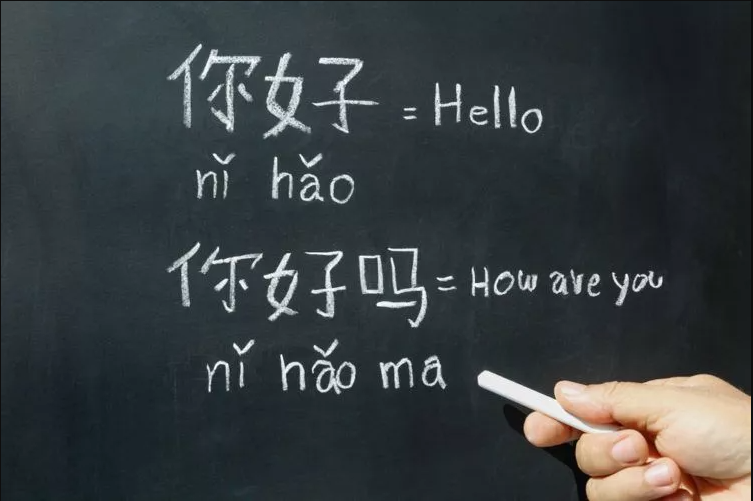
You don't need to learn Chinese to travel China. You need about fifty phrases, in six categories, and the willingness to mangle the tones. Locals meet effort more than halfway.
Nobody expects you to speak Chinese. That’s exactly why trying lands so well — the gap between zero words and five words is the largest social return on effort available to you in this country.
Here’s the working set, grouped by situation.
Greetings and the basics
Start warm. A greeting attempted badly beats a greeting skipped.
你好 (nǐ hǎo) — hello 谢谢 (xiè xiè) — thank you 不客气 (bú kè qì) — you’re welcome 对不起 (duì bù qǐ) — sorry 没关系 (méi guān xì) — it’s fine / no problem 请 (qǐng) — please 再见 (zài jiàn) — goodbye 我不懂 (wǒ bù dǒng) — I don’t understand 没事 (méi shì) — never mind / don’t worry
You can add 你好吗?(nǐ hǎo ma?) for “how are you,” but almost nobody does in daily life. 你好 on its own is the natural greeting.
Getting around
The phrases that turn a stranded moment into a solved one.
我要去… (wǒ yào qù…) — I want to go to… 多少钱?(duō shǎo qián?) — how much? 太贵了 (tài guì le) — too expensive 便宜一点 (pián yi yī diǎn) — a bit cheaper 厕所在哪里?(cè suǒ zài nǎ lǐ?) — where’s the toilet? 在这儿 (zài zhèr) — it’s here 在那儿 (zài nàr) — it’s there
One practical note about taxis: show the driver your destination written in characters, not pinyin. Most drivers can’t read romanised Mandarin — it isn’t taught as a reading system — so a screenshot of the Chinese address is worth more than perfect pronunciation.
Ordering food
Menus without pictures or English are common and shouldn’t stop you.
我要这个 (wǒ yào zhè gè) — I’ll have this one (while pointing) 不要辣 (bú yào là) — no chilli 一点辣 (yī diǎn là) — a little spicy 很好吃 (hěn hǎo chī) — this is delicious 买单 (mǎi dān) — the bill, please 水 (shuǐ) — water 啤酒 (pí jiǔ) — beer 米饭 (mǐ fàn) — rice 面条 (miàn tiáo) — noodles
For dietary restrictions:
我吃素 (wǒ chī sù) — I’m vegetarian 不要肉 (bú yào ròu) — no meat 不要猪肉 (bú yào zhū ròu) — no pork
If a restriction is medical rather than a preference, get it written out in Chinese and show the note. Spoken, it can be heard as fussiness; written, it’s taken seriously.
Numbers and money
一 (yī) 1 · 二 (èr) 2 · 三 (sān) 3 · 四 (sì) 4 · 五 (wǔ) 5 六 (liù) 6 · 七 (qī) 7 · 八 (bā) 8 · 九 (jiǔ) 9 · 十 (shí) 10
The system is beautifully regular after ten: 十二 (shí èr) is twelve — “ten two” — and 三十六 (sān shí liù) is thirty-six, “three ten six.” Learn ten numbers and you have a hundred.
At the till:
太贵了 (tài guì le) — too expensive 便宜一点 (pián yi yī diǎn) — a bit cheaper 可以刷卡吗?(kě yǐ shuā kǎ ma?) — can I pay by card? 我用微信支付 (wǒ yòng wēi xìn zhī fù) — I’ll use WeChat Pay 我用支付宝 (wǒ yòng zhī fù bǎo) — I’ll use Alipay
The last two come up constantly — see the payments guide for why.
Emergencies
Hopefully dead weight in your vocabulary. Learn them anyway.
救命!(jiù mìng!) — help! 我要去医院 (wǒ yào qù yī yuàn) — I need to get to a hospital 报警!(bào jǐng!) — call the police! 我的护照不见了 (wǒ de hù zhào bú jiàn le) — my passport is missing 你能帮我吗?(nǐ néng bāng wǒ ma?) — can you help me?
In a small town, few people will speak English — but showing the written phrase, or handing over a translation app, gets help quickly. Chinese strangers are notably willing to stop and sort out a problem that isn’t theirs.
Small talk
The phrases that turn a transaction into a conversation.
你叫什么名字?(nǐ jiào shén me míng zì?) — what’s your name? 我叫… (wǒ jiào…) — my name is… 你来自哪里?(nǐ lái zì nǎ lǐ?) — where are you from? 我来自… (wǒ lái zì…) — I’m from… 你会说英语吗?(nǐ huì shuō yīng yǔ ma?) — do you speak English? 一点点 (yī diǎn diǎn) — a little bit
These are the icebreakers. They rarely lead to deep discussion and frequently lead to someone insisting you try something from their stall. See making friends in China for where it goes from there.
Three closing thoughts
Tones matter, but not as much as you fear. Mandarin is tonal and getting a tone wrong technically changes the word. In practice, context carries you — nobody hearing 多少钱 at a fruit stall thinks you’re asking something else.
Practise on low stakes. 你好 to the hotel receptionist, 谢谢 to the driver, 好吃 after a good bowl of noodles. Twenty repetitions a day, no pressure, and by the end of a week it’s automatic.
Keep a translation app for the rest. Pleco works without a VPN and is the better dictionary; anything more complex than these phrases belongs in an app rather than in your memory.
Fifty words won’t make you a speaker. They will change how the country responds to you — more patience, more help, and a noticeably better price at the market.
- #china essentials
- #mandarin
- #language
- #phrases