
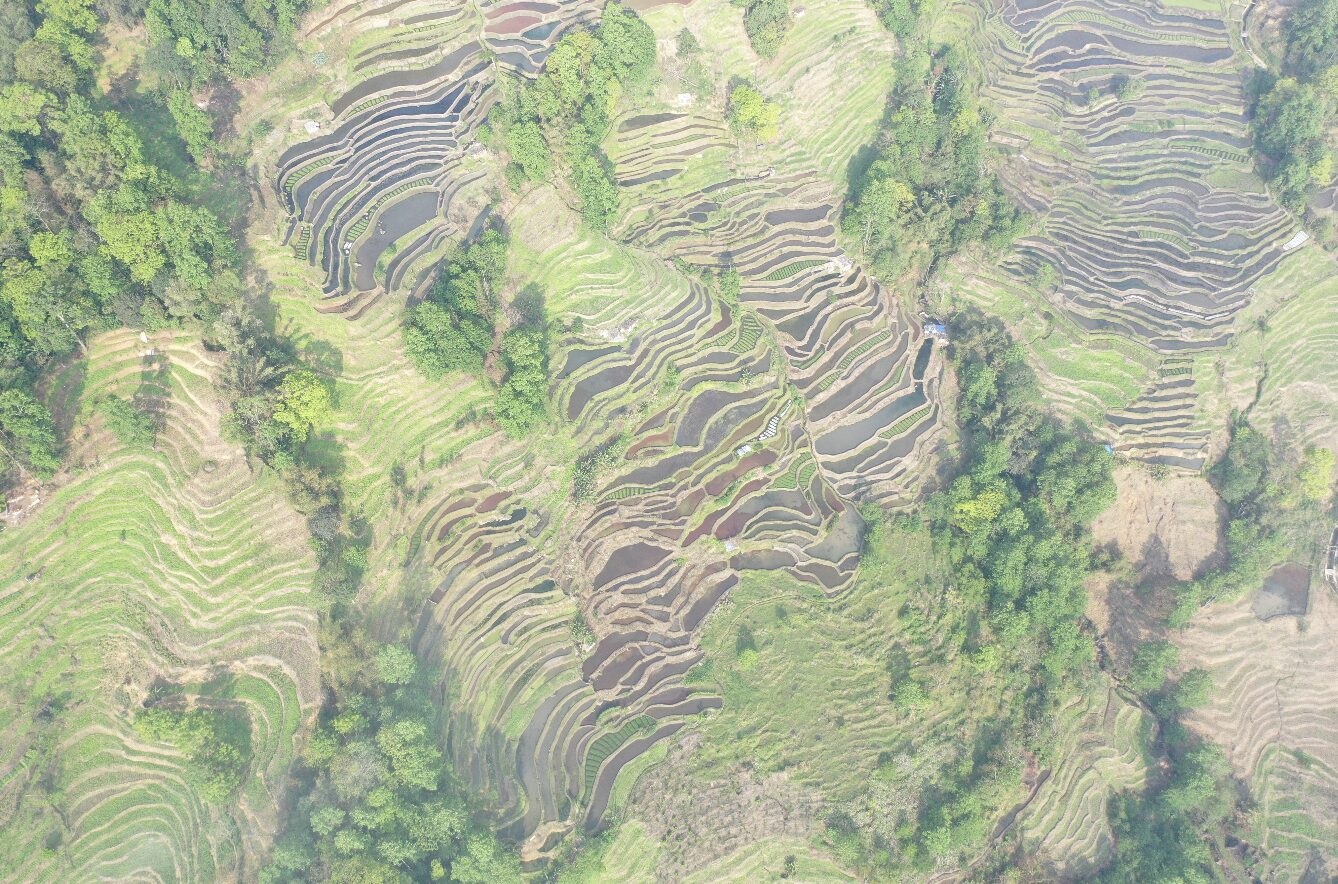
The Hani terraces climb 1,500 metres of mountainside in Honghe, and they are still farmed. Azheke, the village at their centre, runs an unusual scheme: residents share the ticket revenue for keeping their houses traditional.
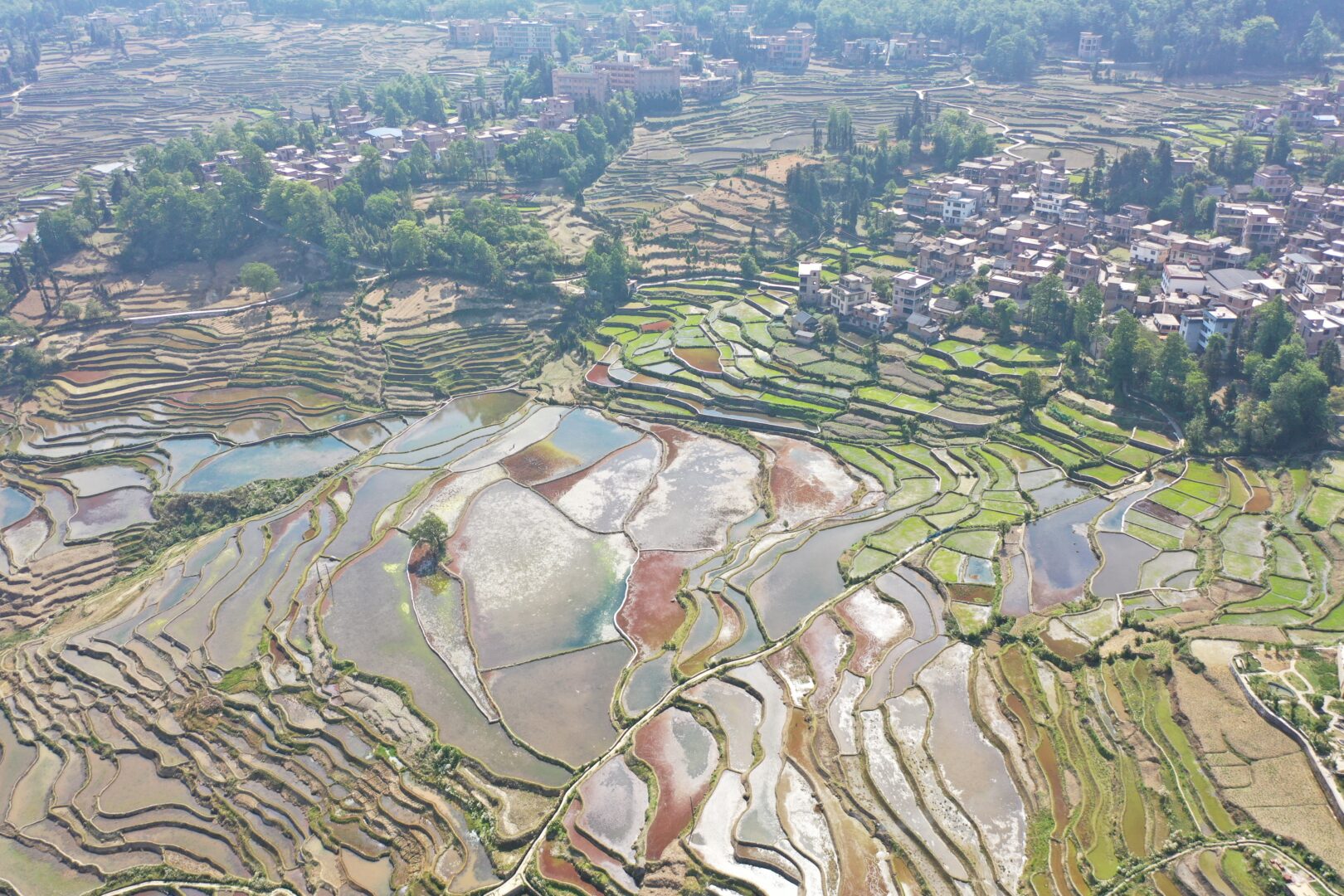
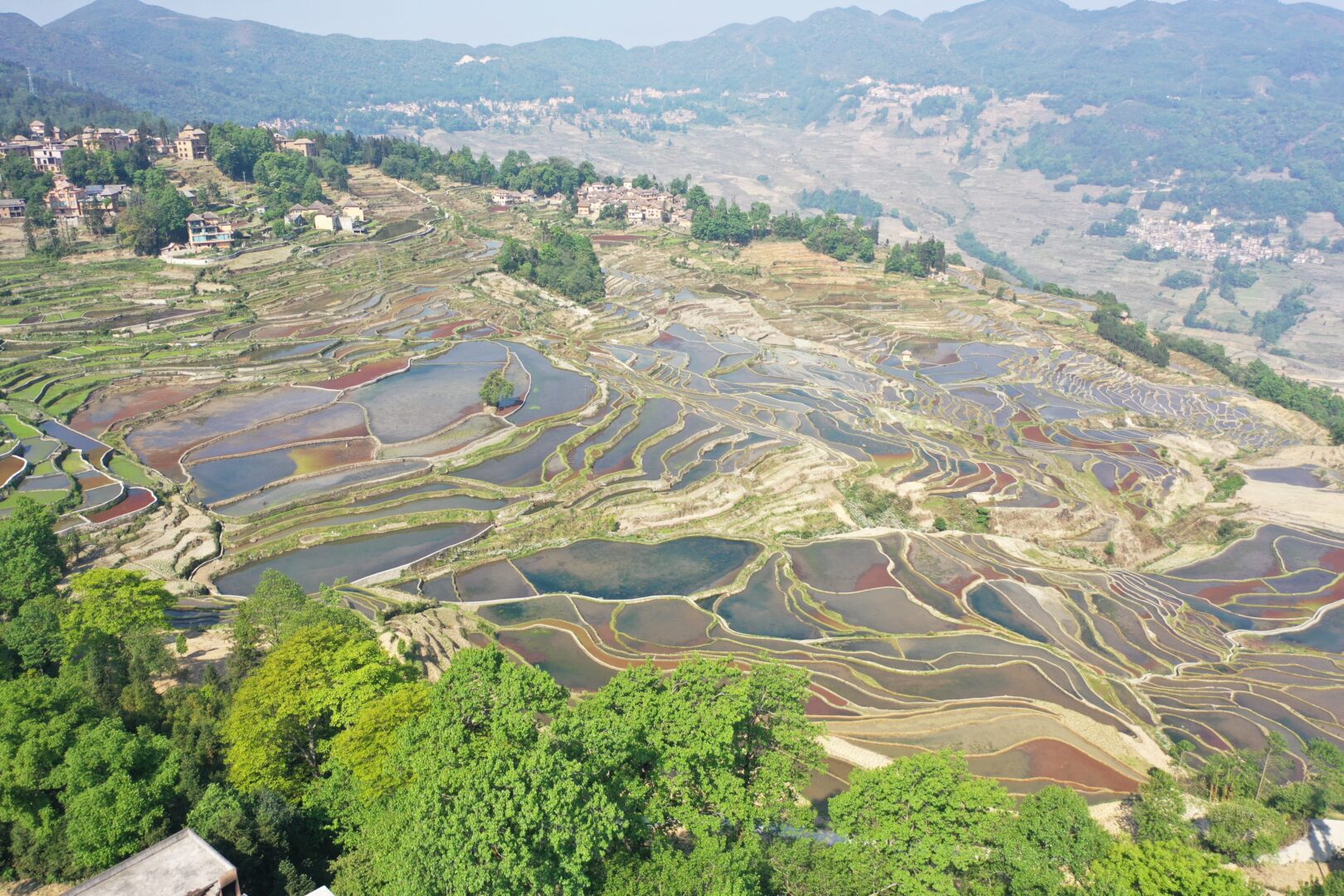
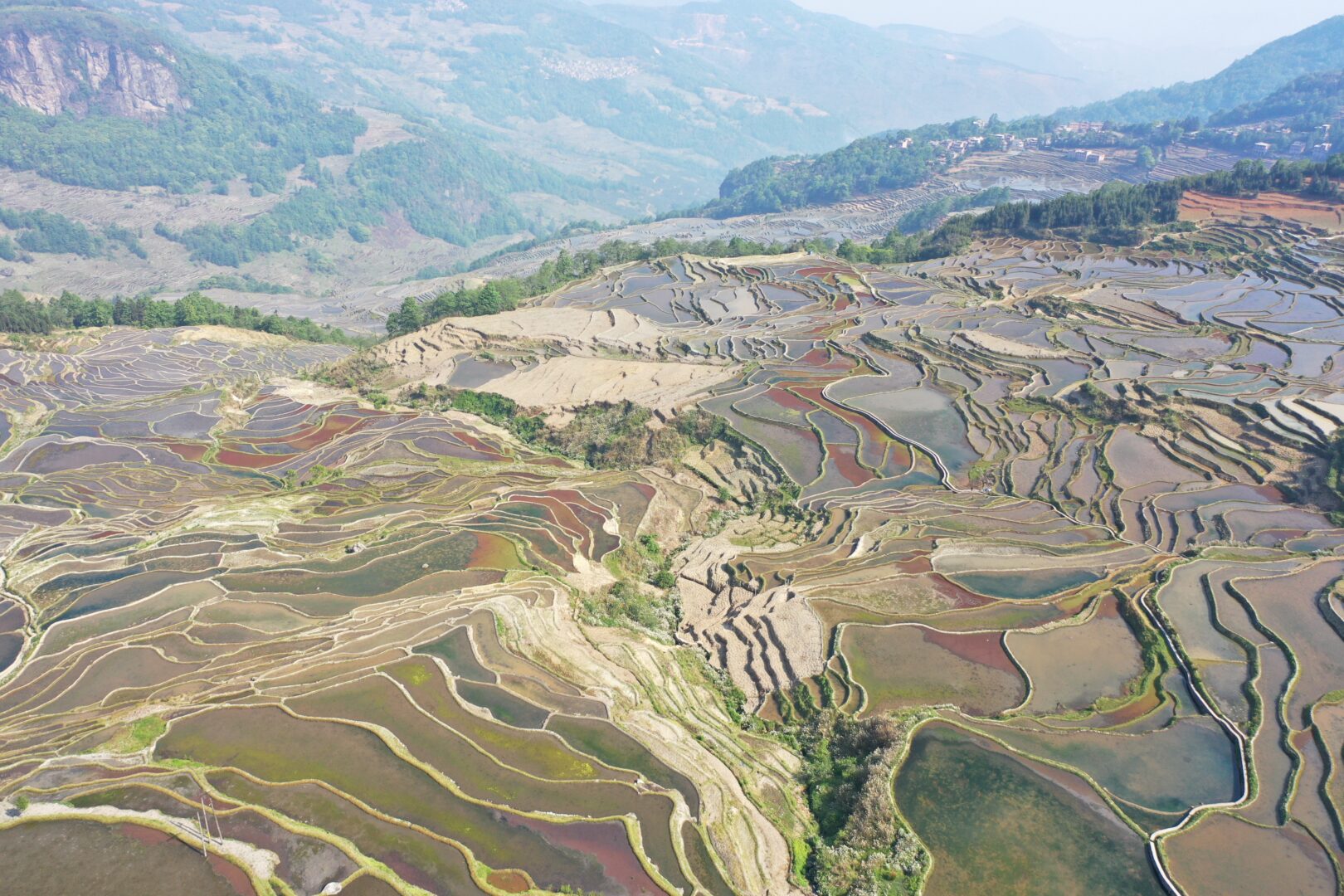
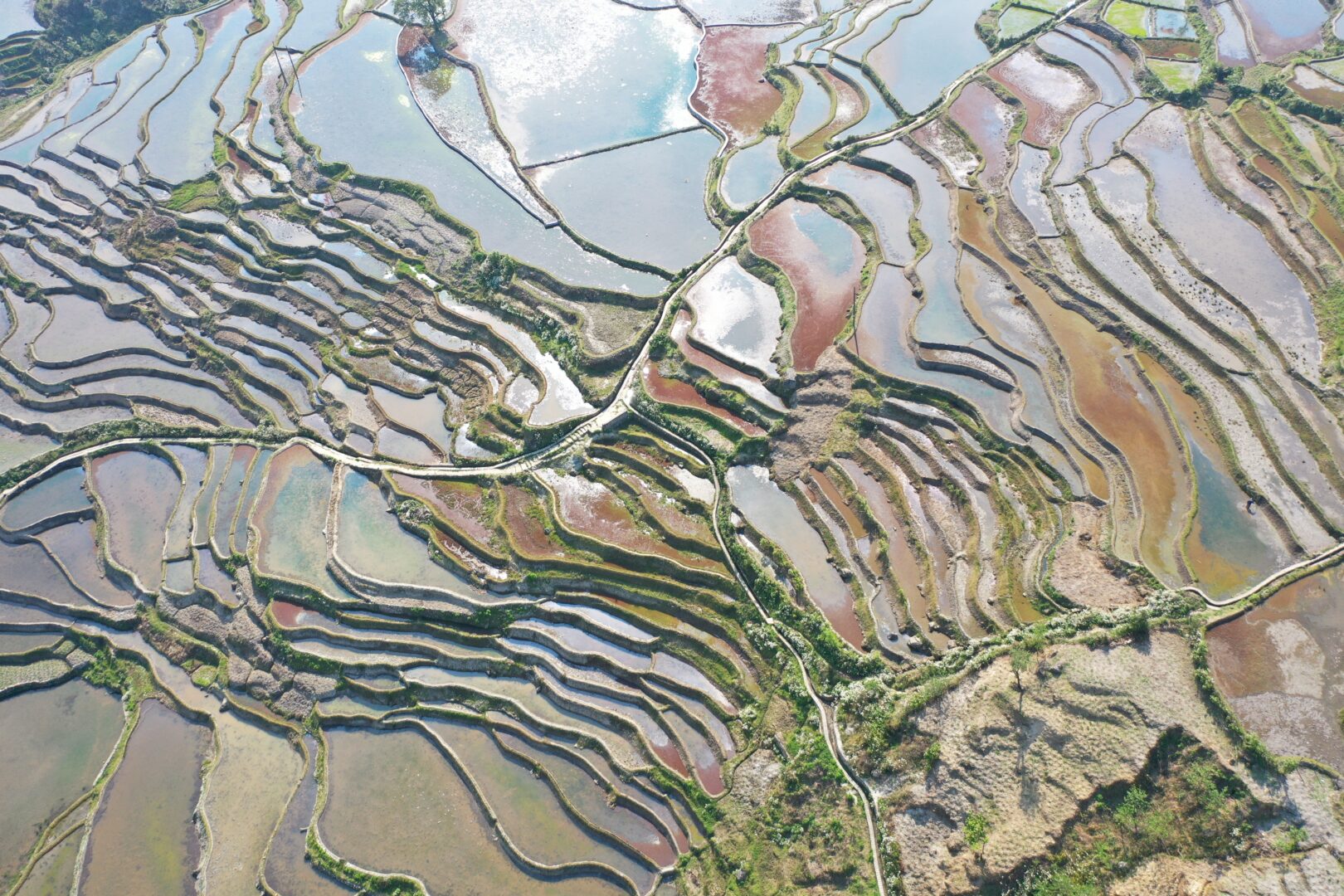
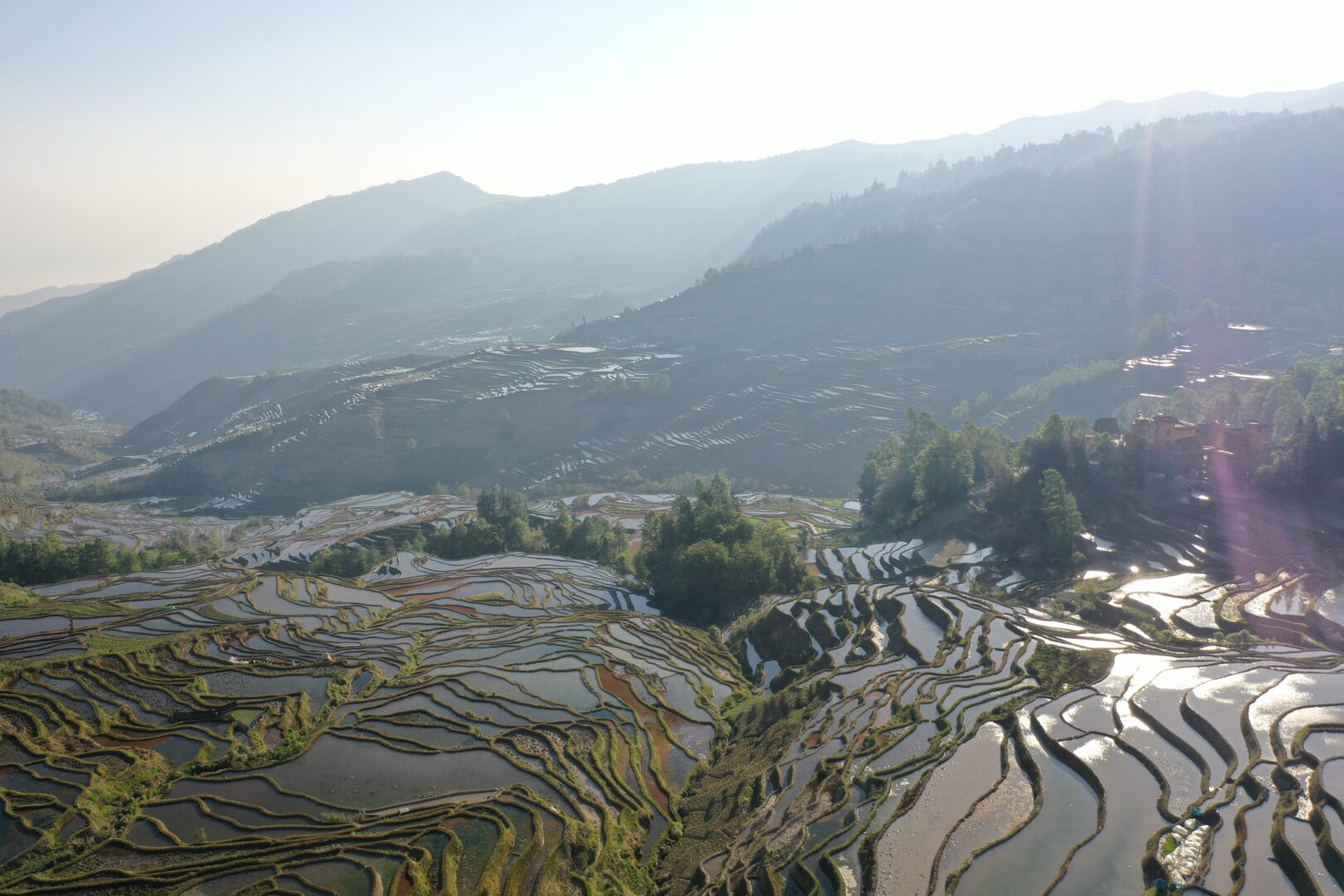
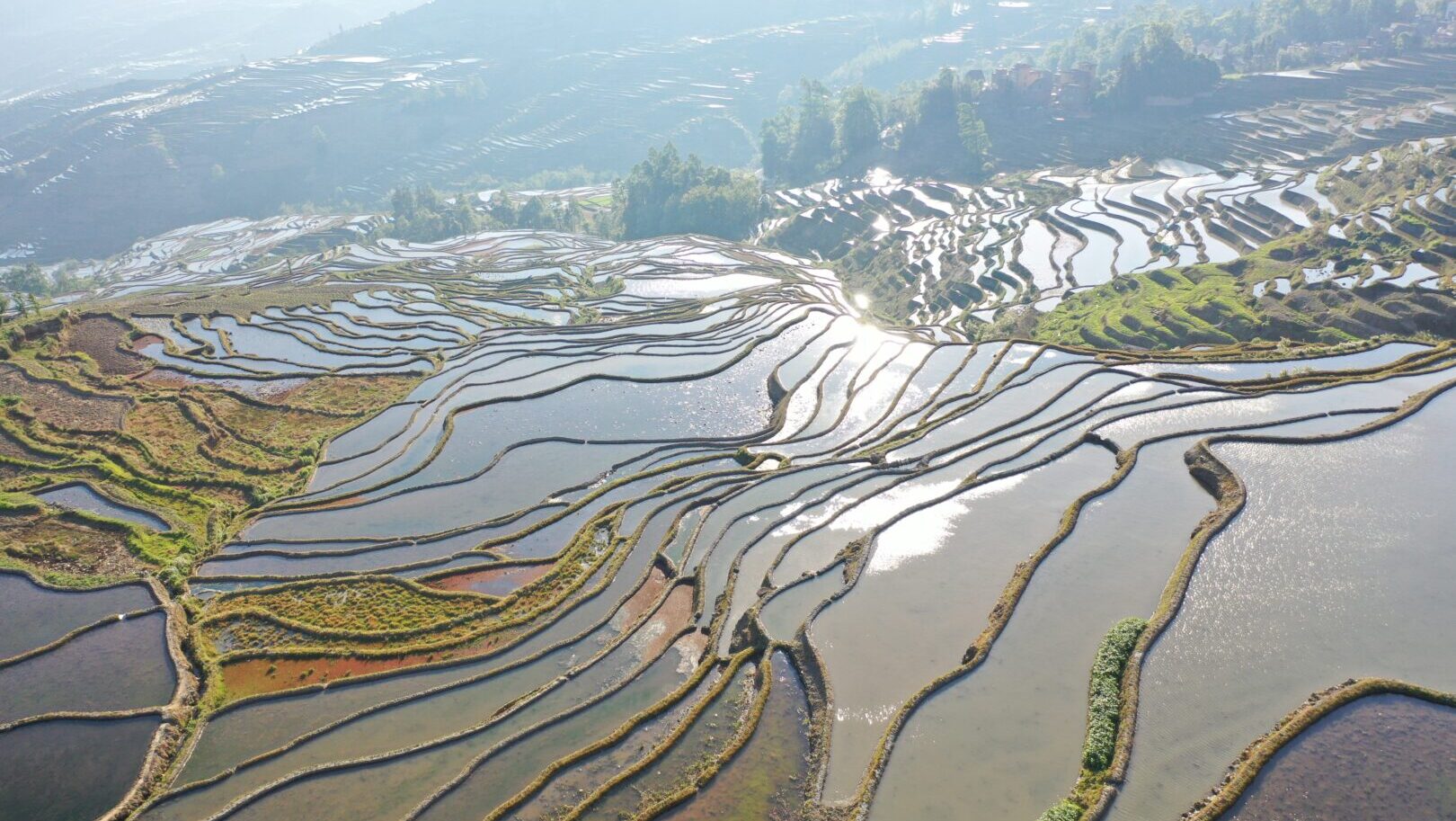
The Hani terraces in Honghe prefecture are on the UNESCO list, and unusually for a World Heritage landscape they are still fully in production. Around 3,000 individual terraces climb the Ailao mountains through as much as 1,500 metres of vertical, following the contour so precisely that from the valley floor the whole mountainside reads as a topographic map of itself.
The Hani built this over roughly a thousand years, and the system is more sophisticated than the photographs suggest.
Four layers, in order
The design is a single integrated machine, arranged top to bottom:
- Forest on the summits — protected, never cleared, because it captures cloud moisture and holds it
- Water — spring-fed channels distributed by hand-cut ditches, with the flow allocated between households by long-standing agreement
- Villages — sited in the middle band, above the fields and below the forest, so waste water flows down into the terraces as fertiliser
- Terraces below, down to the valley floor
Nothing here is decorative. Move the village and the fertility drops; cut the forest and the water stops.
Azheke
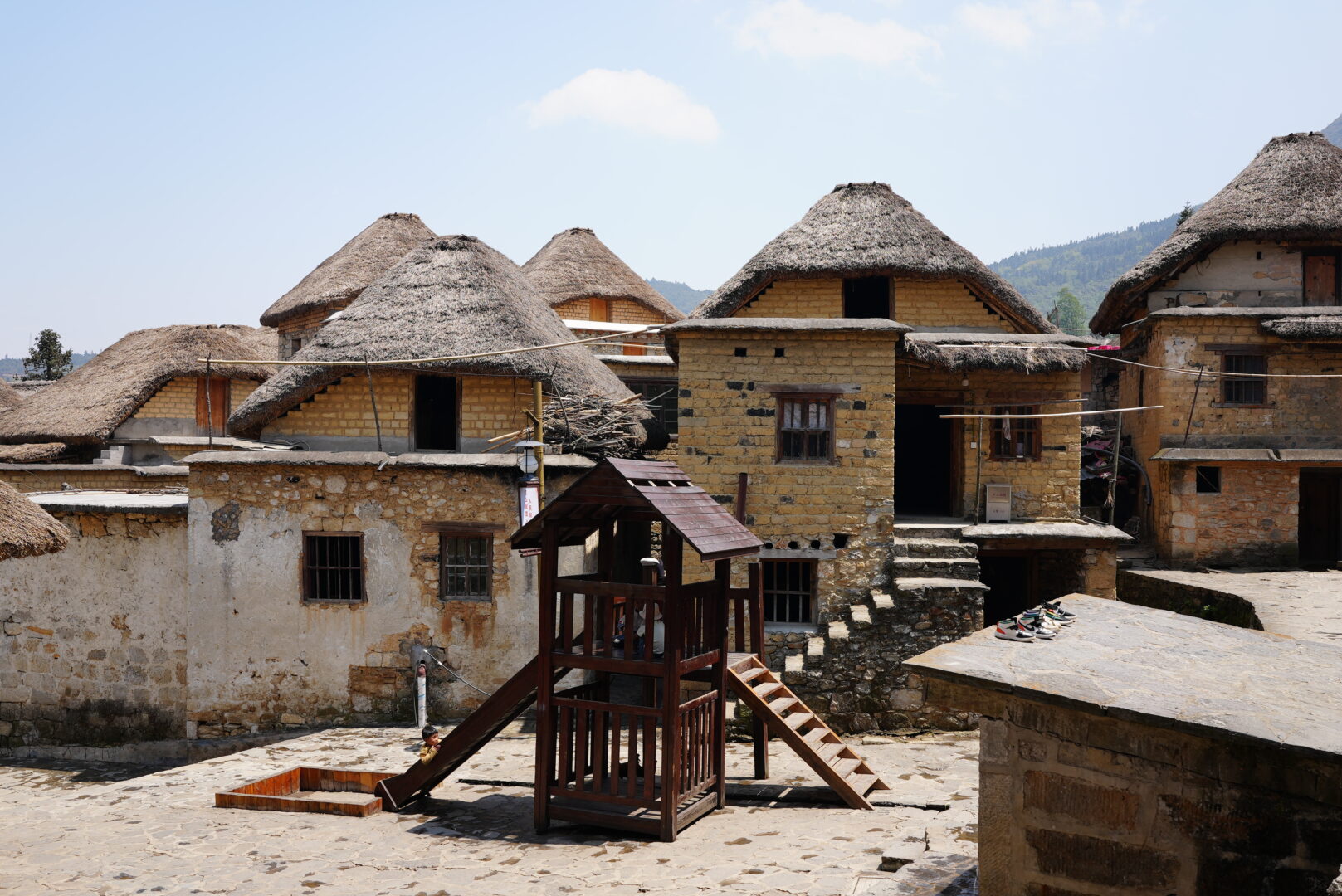
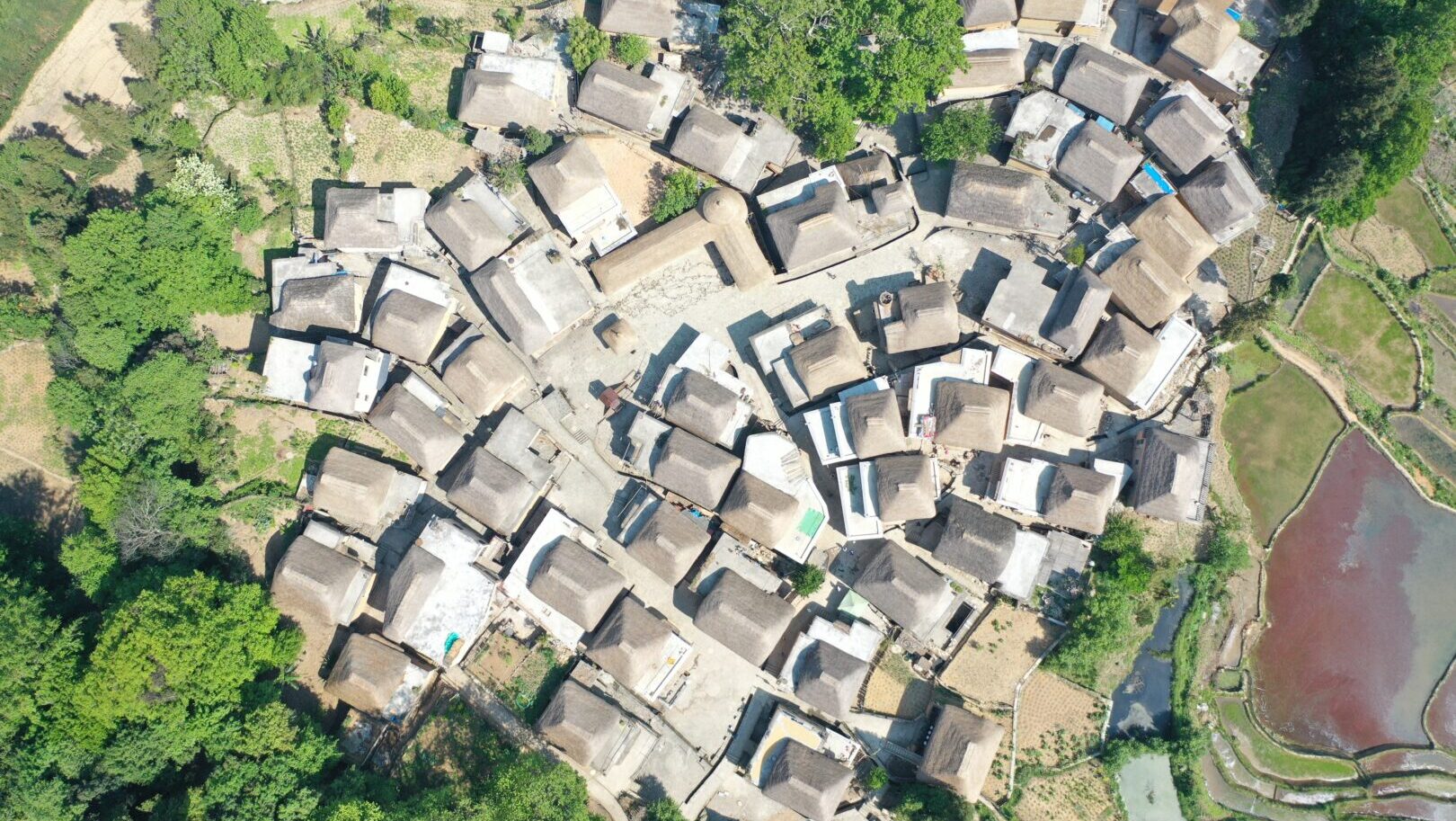
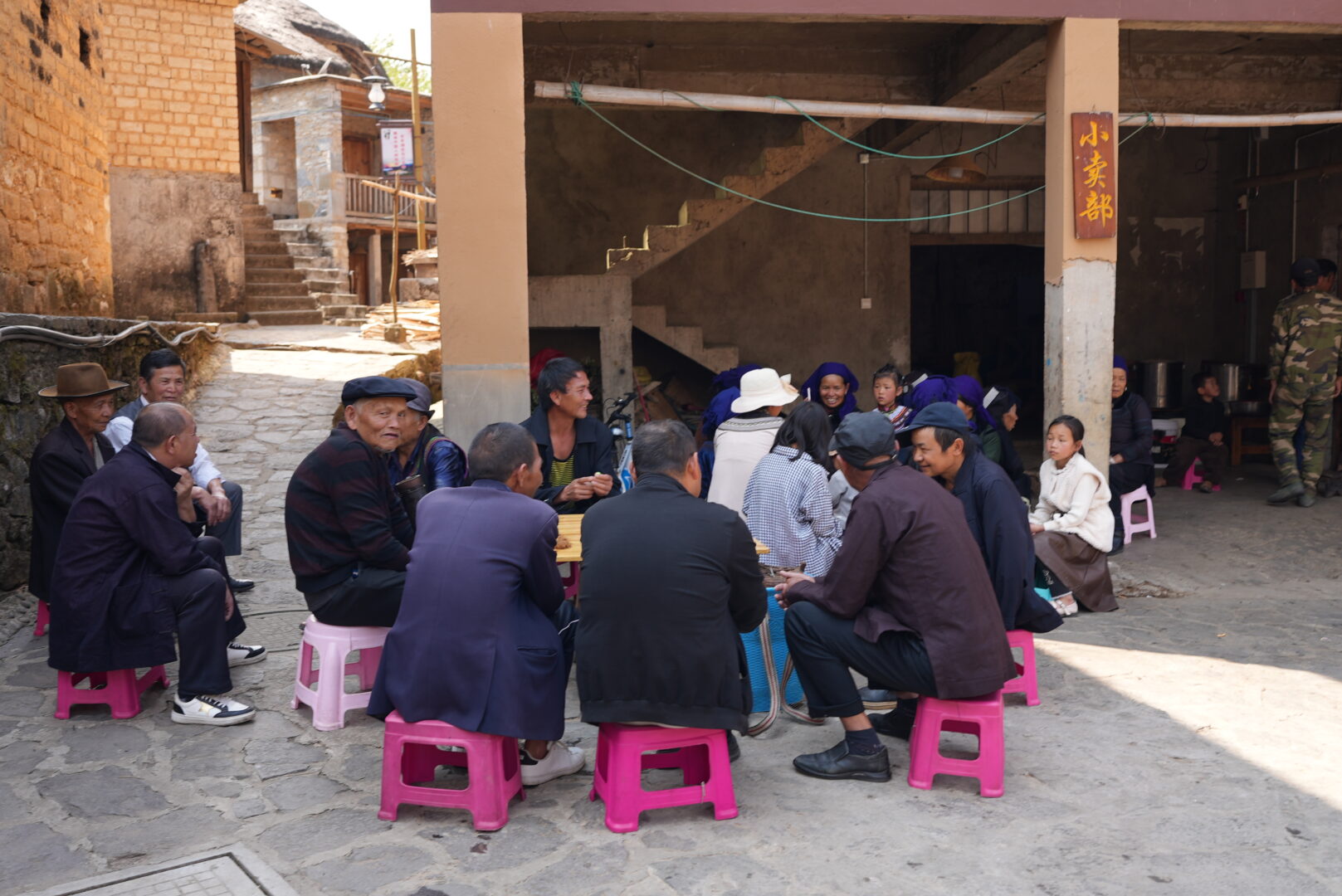
Azheke (阿者科) is a small Hani village in the middle of the terraces, with traditional mushroom houses — mud walls, thatched four-sided roofs, so-called for their shape.
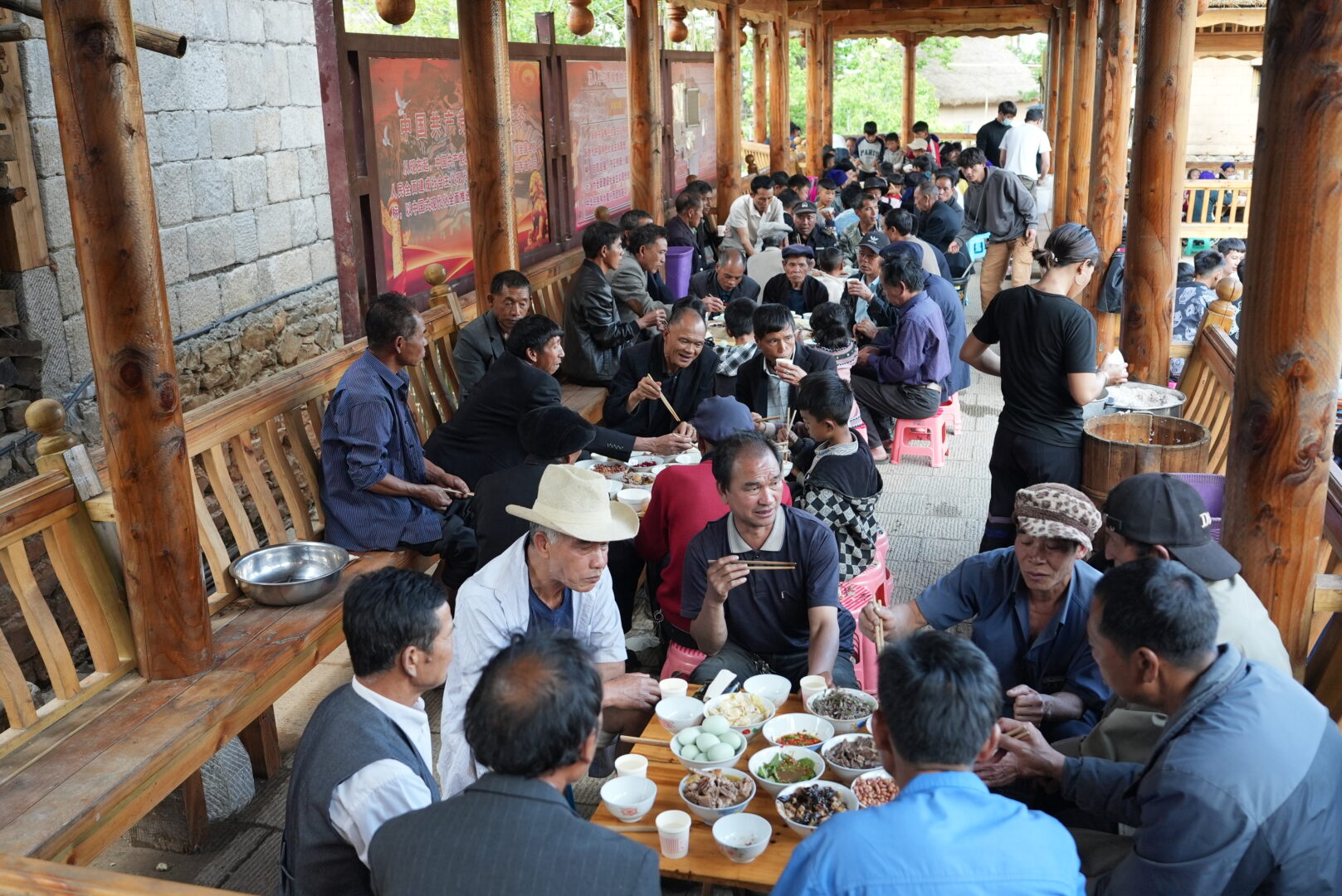
What makes it worth singling out is the arrangement it runs. Rather than selling land to developers or converting the houses into guesthouses, the village operates a shared-revenue scheme: ticket income is distributed to households according to criteria including keeping their house traditional and continuing to farm the terraces. Villagers are paid to remain villagers.
The result is a place that feels neither abandoned nor turned into a set — a rare thing in Chinese rural tourism, and worth supporting by paying the entrance fee and buying lunch there.
When to come
This is the whole ball game, and most people get it wrong.
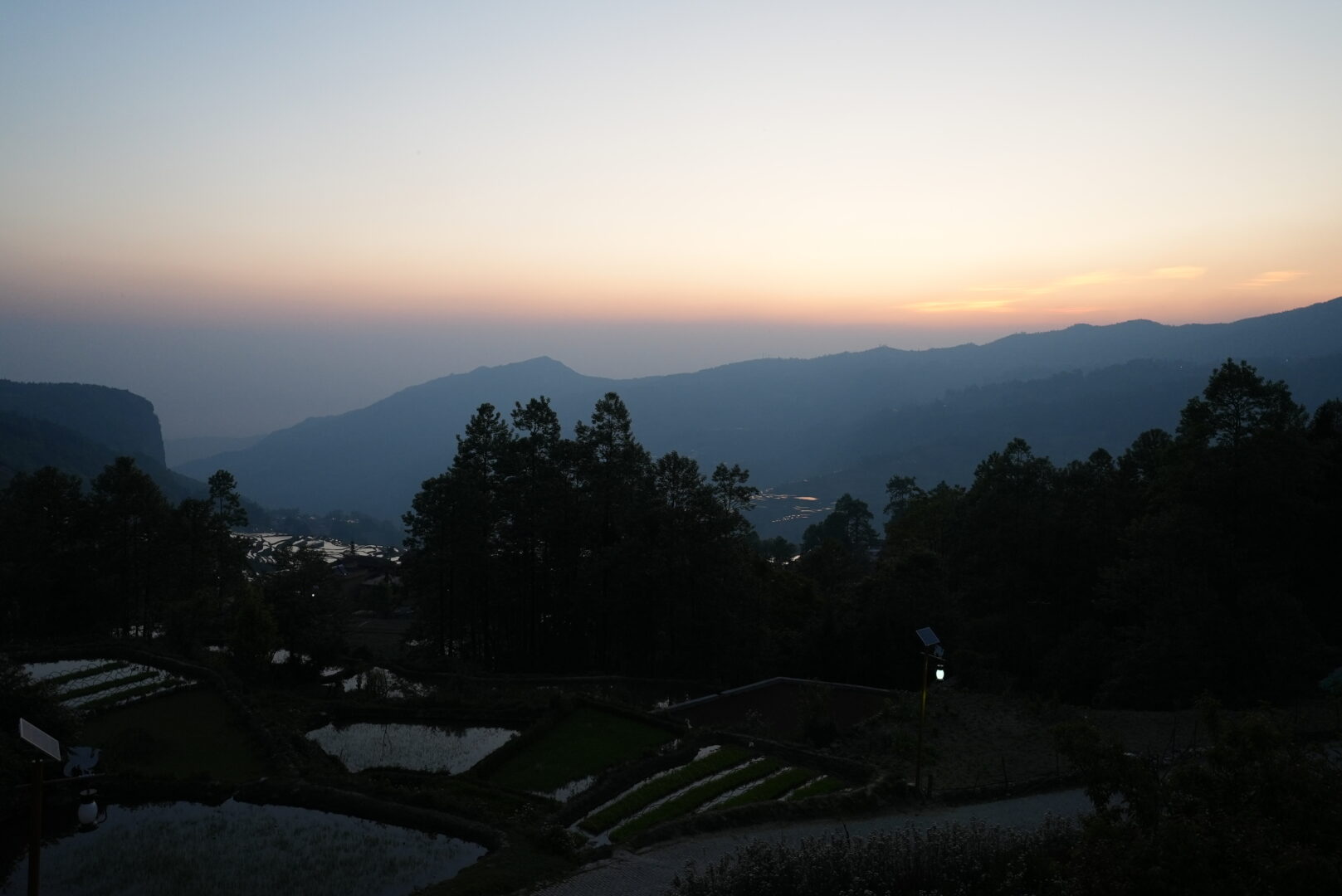
Come between November and March, when the terraces are flooded and empty. That’s when they mirror the sky, and it’s the image everyone knows — pink at dawn, silver at midday, and the whole mountainside doubling the sunset. Late winter is the peak.
Summer is green — pleasant, much less dramatic, and often obscured by cloud and heavy rain.
Mornings bring cloud inversions into the valleys, which is either the best or worst thing depending on your luck. Give yourself two or three dawns rather than one.
Practical notes
Where: Yuanyang county, Honghe prefecture, southern Yunnan. Roughly five hours by road from Kunming; the nearest railhead is Jianshui or Nansha.
Base yourself in Duoyishu or Pugaolao for dawn access to the viewpoints — the classic ones are Duoyishu (sunrise), Bada (sunset) and Laohuzui (tiger’s mouth).
Sleeping: village guesthouses, mostly simple. Nights are cold in winter at 1,600–2,000 m and heating is basic. Bring layers.
Getting around: viewpoints are spread across dozens of kilometres of mountain road. Hire a driver for a day; walking between them is not realistic.
Nearby: the Vietnamese border at Honghe, and Jianshui’s old town on the way back to Kunming.
- #yunnan
- #hani
- #rice terraces
- #honghe
- #yuanyang