
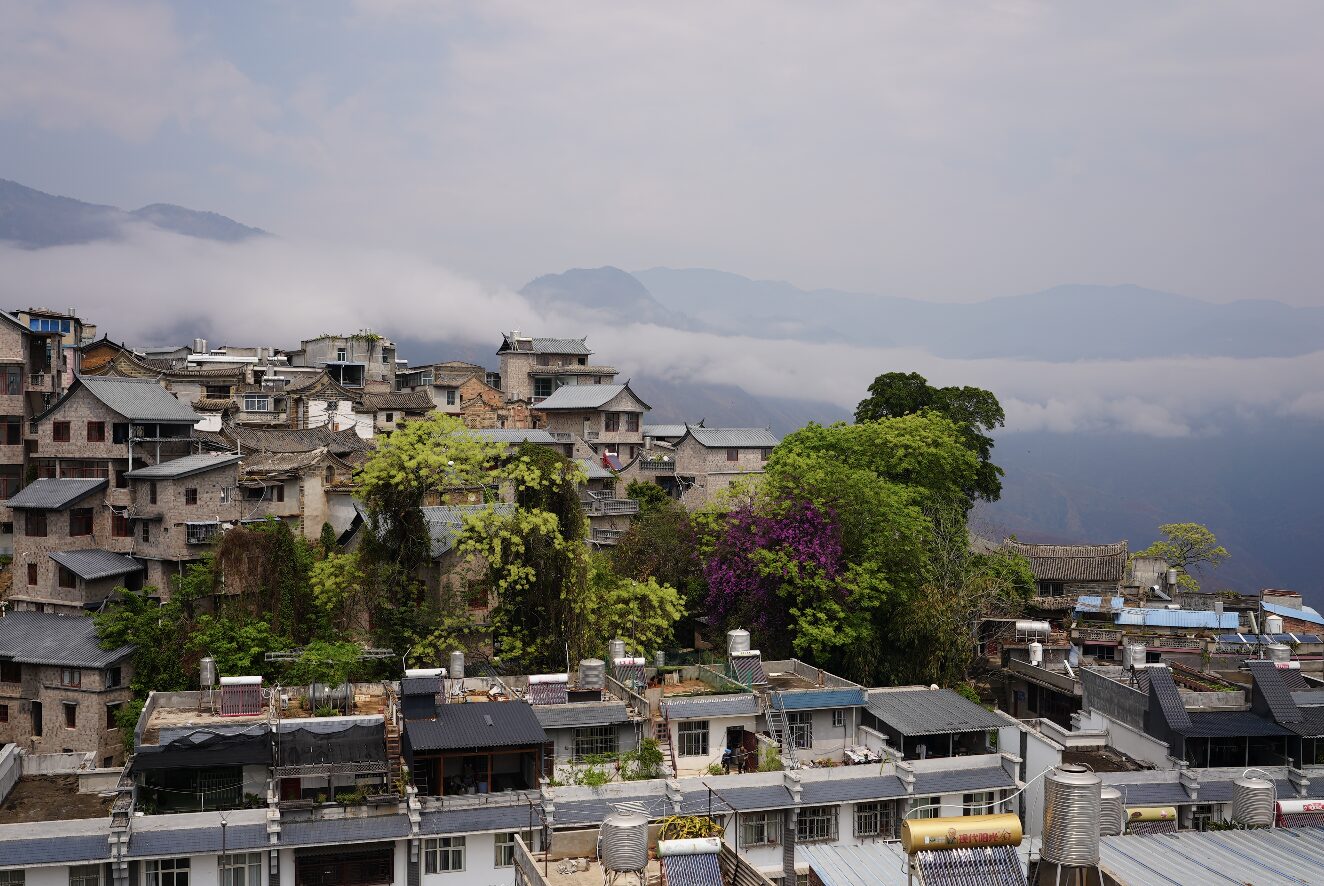
Honghe runs from the Hani rice terraces down to the Vietnamese frontier, taking in a metre-gauge French railway, a tin-mining city and one of China's great Confucian temples on the way.
Honghe — the Honghe Hani and Yi Autonomous Prefecture — takes its name from the Red River, which rises in Yunnan and reaches the sea in the Gulf of Tonkin. The prefecture follows it down to the Vietnamese border, and along the way it packs in more variety than most Chinese provinces manage.
The terraces
The headline is the Hani rice terraces around Yuanyang — a UNESCO World Heritage landscape of terraced mountainside climbing well over a kilometre in vertical, still worked by hand.
Time it for November to March, when the fields are flooded and mirror the sky. That’s the version you’ve seen photographs of, and the green summer terraces are a different and lesser thing.
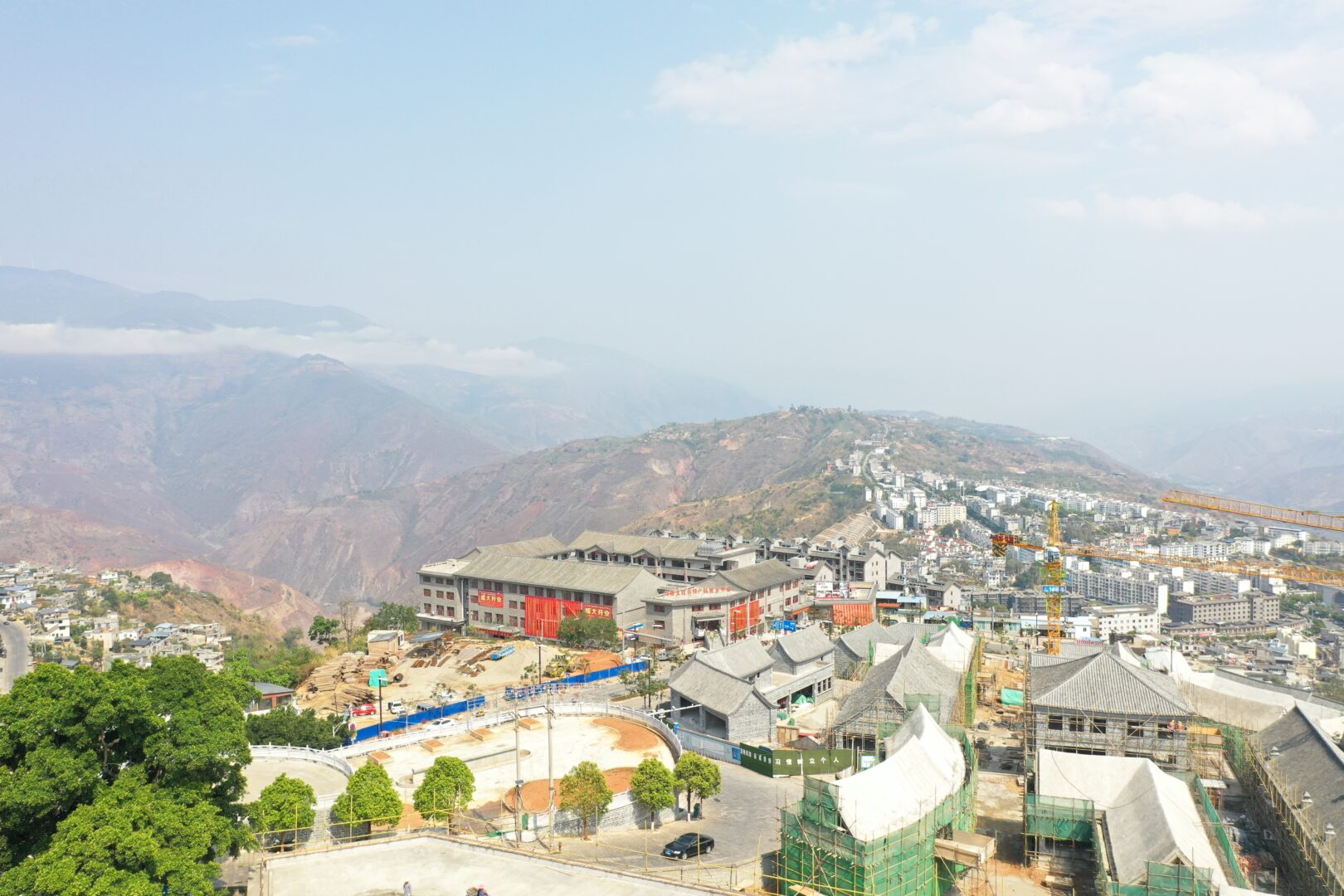
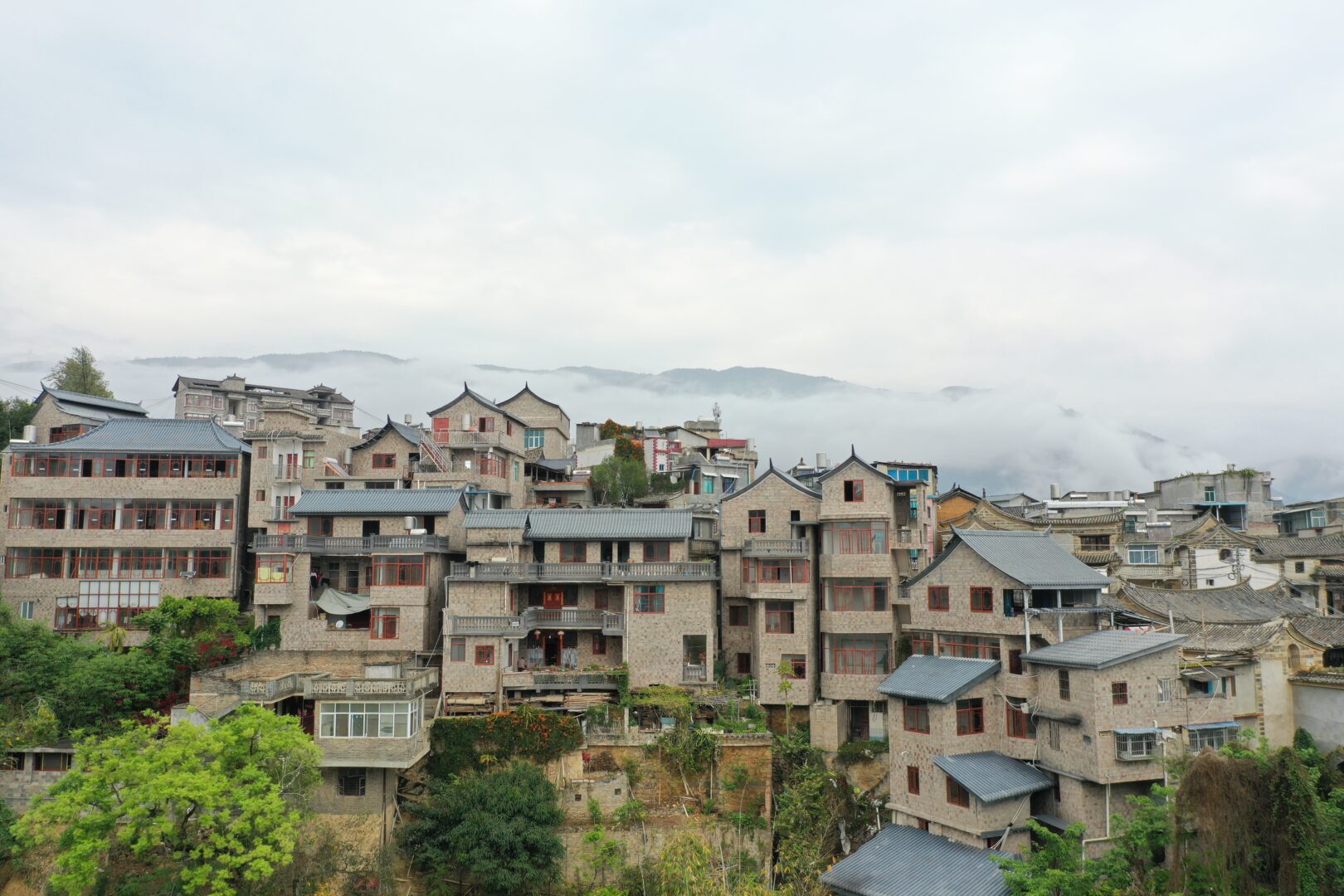
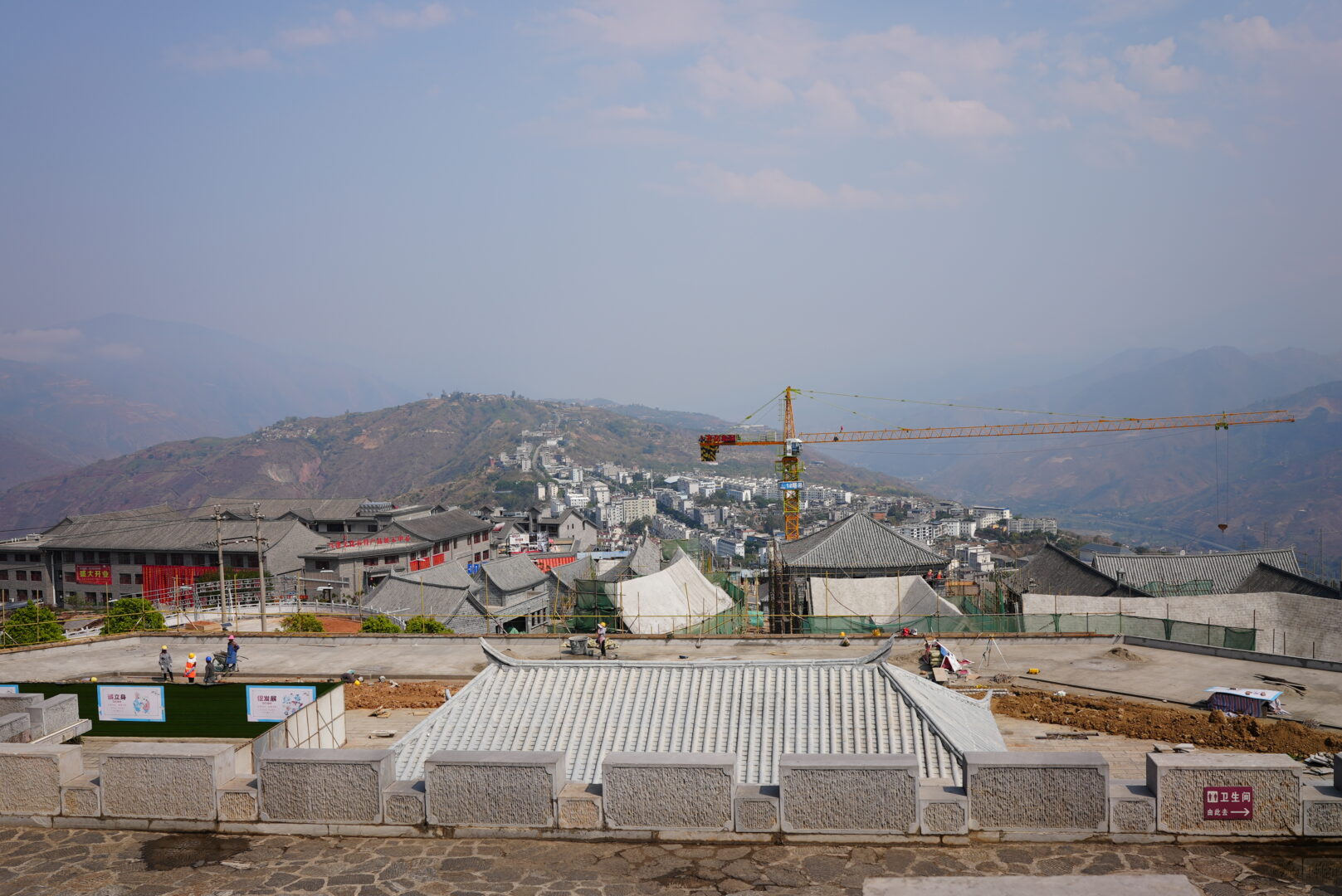
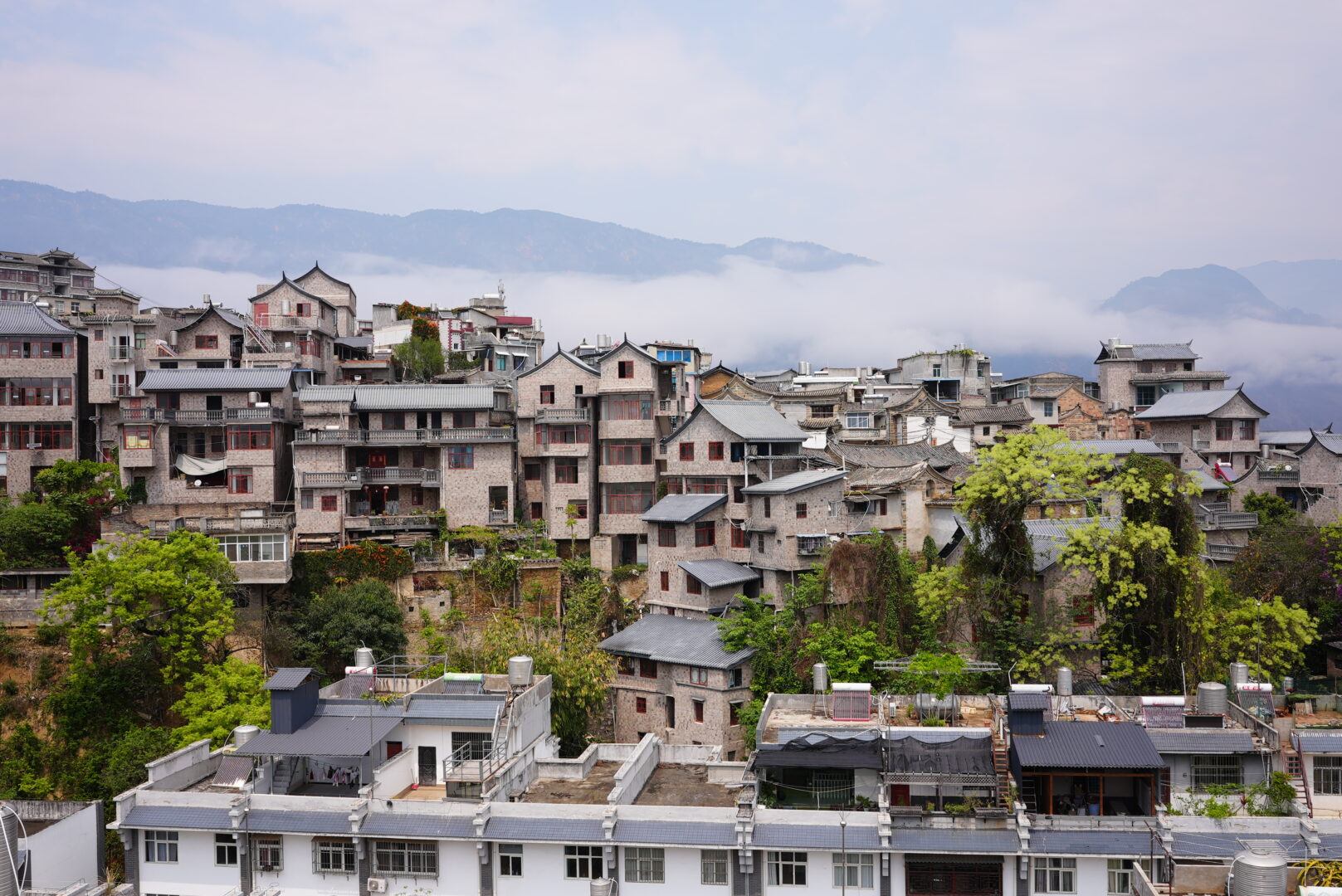
Honghe town — built along a ridge, frequently above the clouds
Four cultures, minimum
The prefecture’s name lists two — Hani and Yi — and undersells it. Zhuang, Miao and Dai communities hold significant territory here too, and the differences are visible: dress, architecture, staple crops, festival calendars.
Practical consequence: the markets are the best thing to plan a day around. Each is on a rotating schedule, each draws from different villages, and what’s for sale — embroidery, indigo cloth, silverwork, herbs, livestock — tells you which communities are within walking distance.
More on who’s who in our ethnic groups guide.
Jianshui
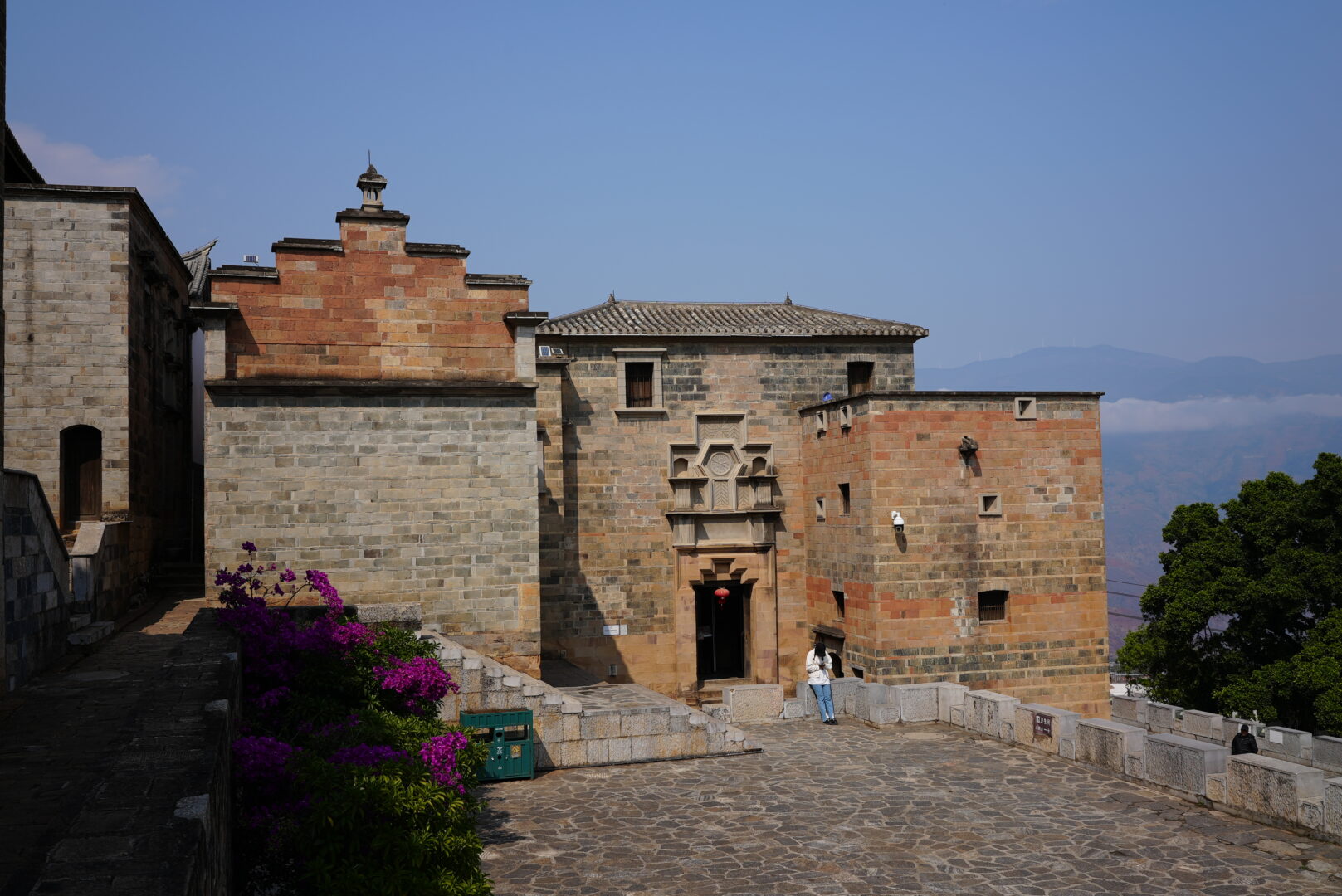
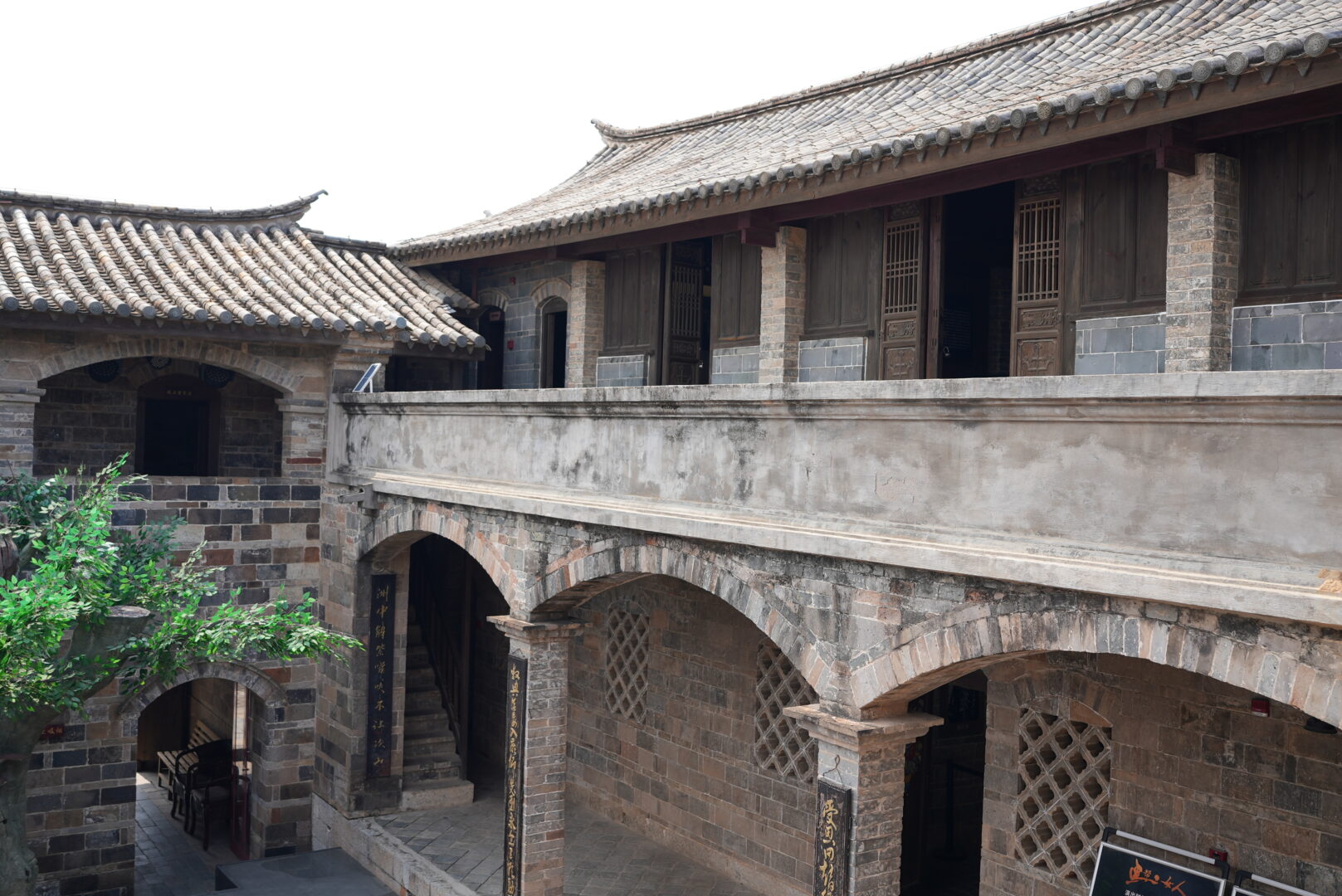
The prefecture’s historic town, and an underrated one. Jianshui’s Confucian temple is among the largest in China — second only to Qufu, by most accounts — and the old town around it has intact Qing merchant courtyards, notably the Zhu family gardens.
Just outside, the Tuanshan village and the Twin Dragon Bridge are worth an afternoon. And the town runs the best breakfast in southern Yunnan: guoqiao mixian, crossing-the-bridge noodles, which are supposed to have been invented here.
The French railway
From 1910, a metre-gauge railway ran from Kunming through Honghe to Hanoi — a French colonial project of considerable ambition and considerable human cost, with tunnels and trestles cut into gorges that still look impossible.
Passenger services on the Chinese section are long gone, but the alignment, the stations and the famous Renzi bridge — a steel trestle wedged between two cliff faces — are still there. A short tourist train runs between Jianshui and Tuanshan on the original gauge.
The border
Hekou is the crossing point, facing Lào Cai across the Red River. It’s a working land border with all the trade that implies — a bridge, two customs halls, and a market on each side selling to the other.
If you intend to cross, check visa requirements ahead and note that leaving China uses your exit; see the visa guide and restricted areas.
Practical notes
Getting there: high-speed rail from Kunming reaches Jianshui and Mengzi in a couple of hours. The terraces need a car from there.
When: November to March for the flooded terraces and clear air. The summer rains make the mountain roads slow.
Onward: Dongxing in Guangxi is the other Vietnam crossing we’ve written about, at the coastal end of the same border.
- #yunnan
- #honghe
- #hani
- #vietnam border
- #jianshui