
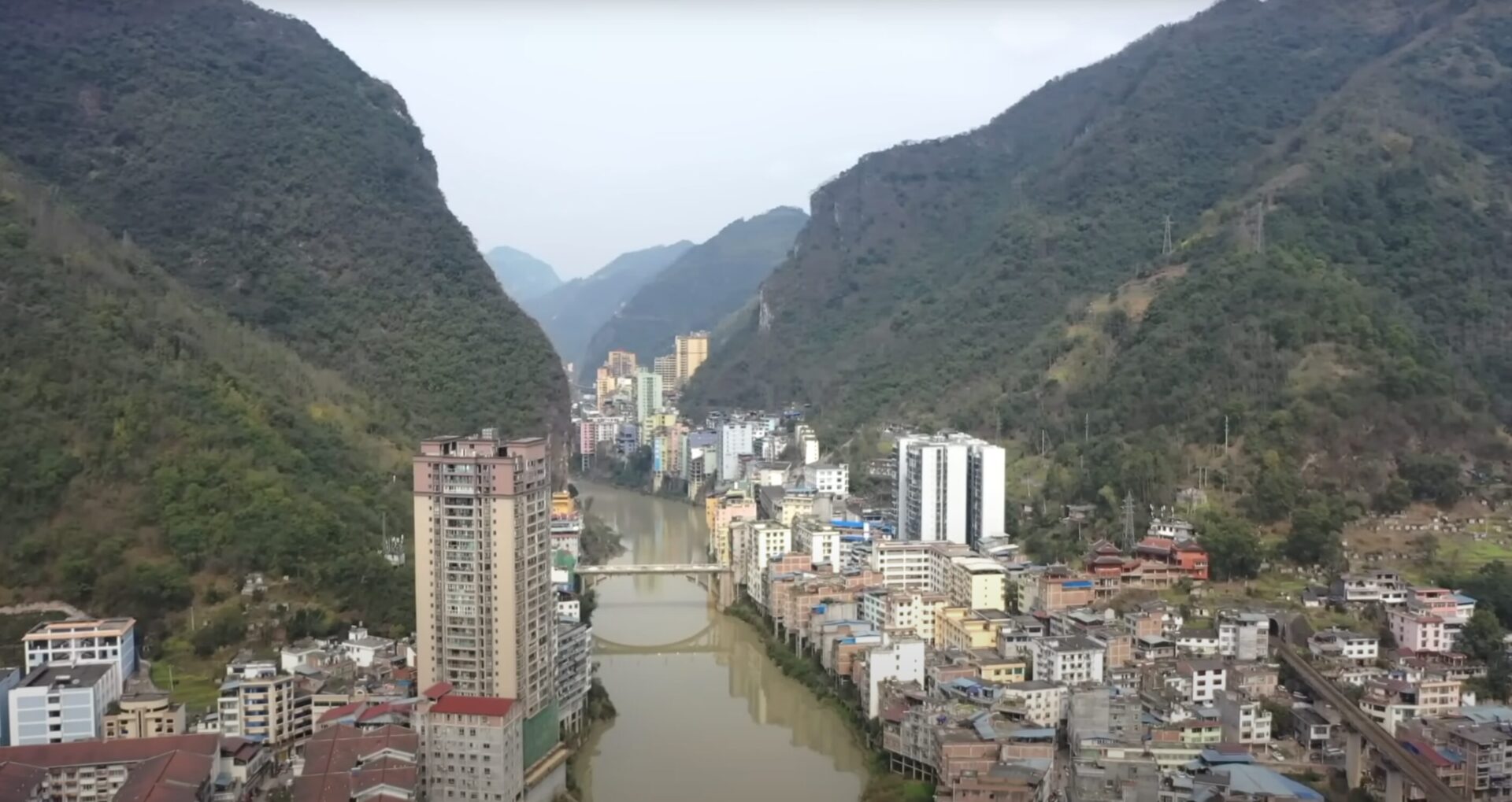
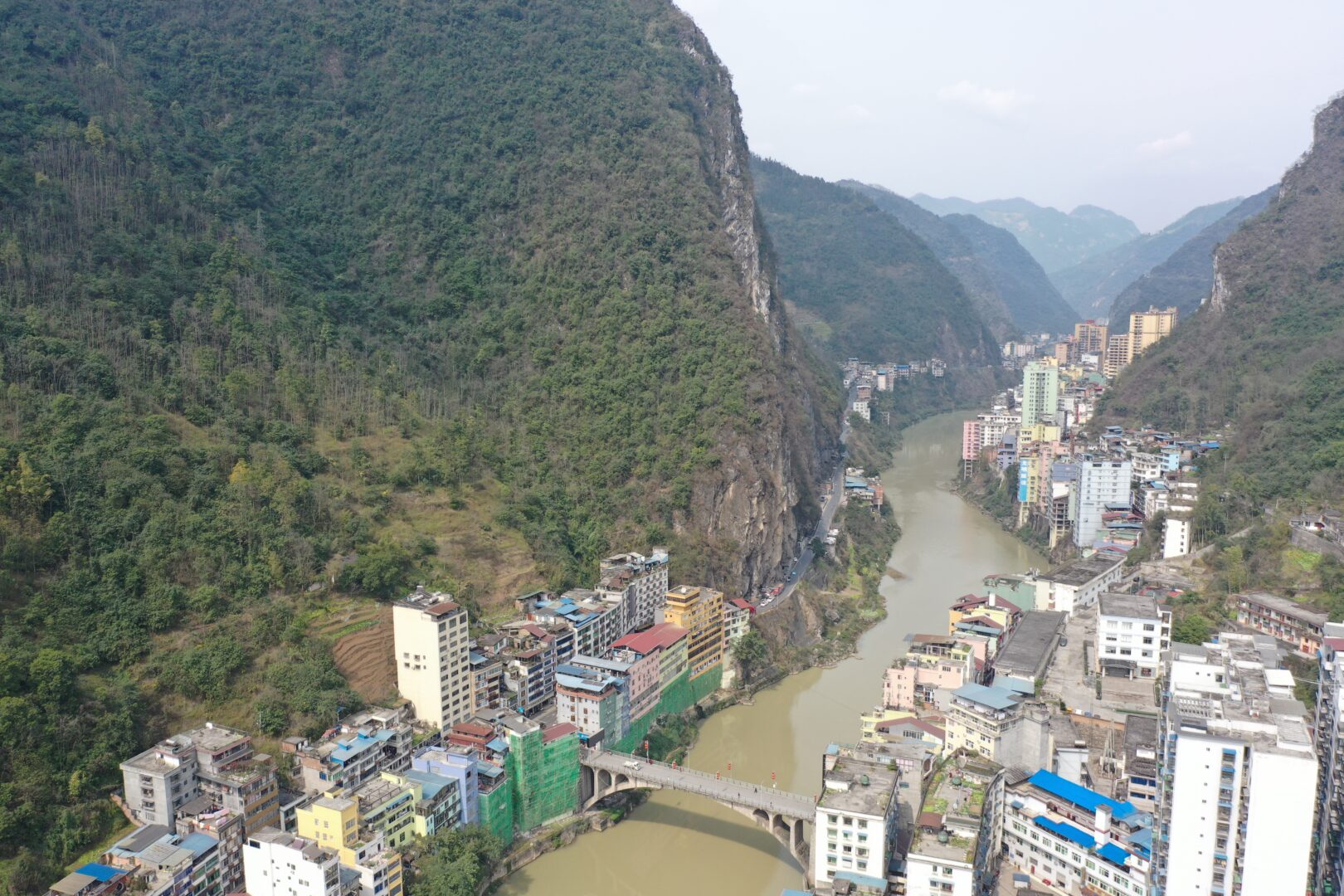
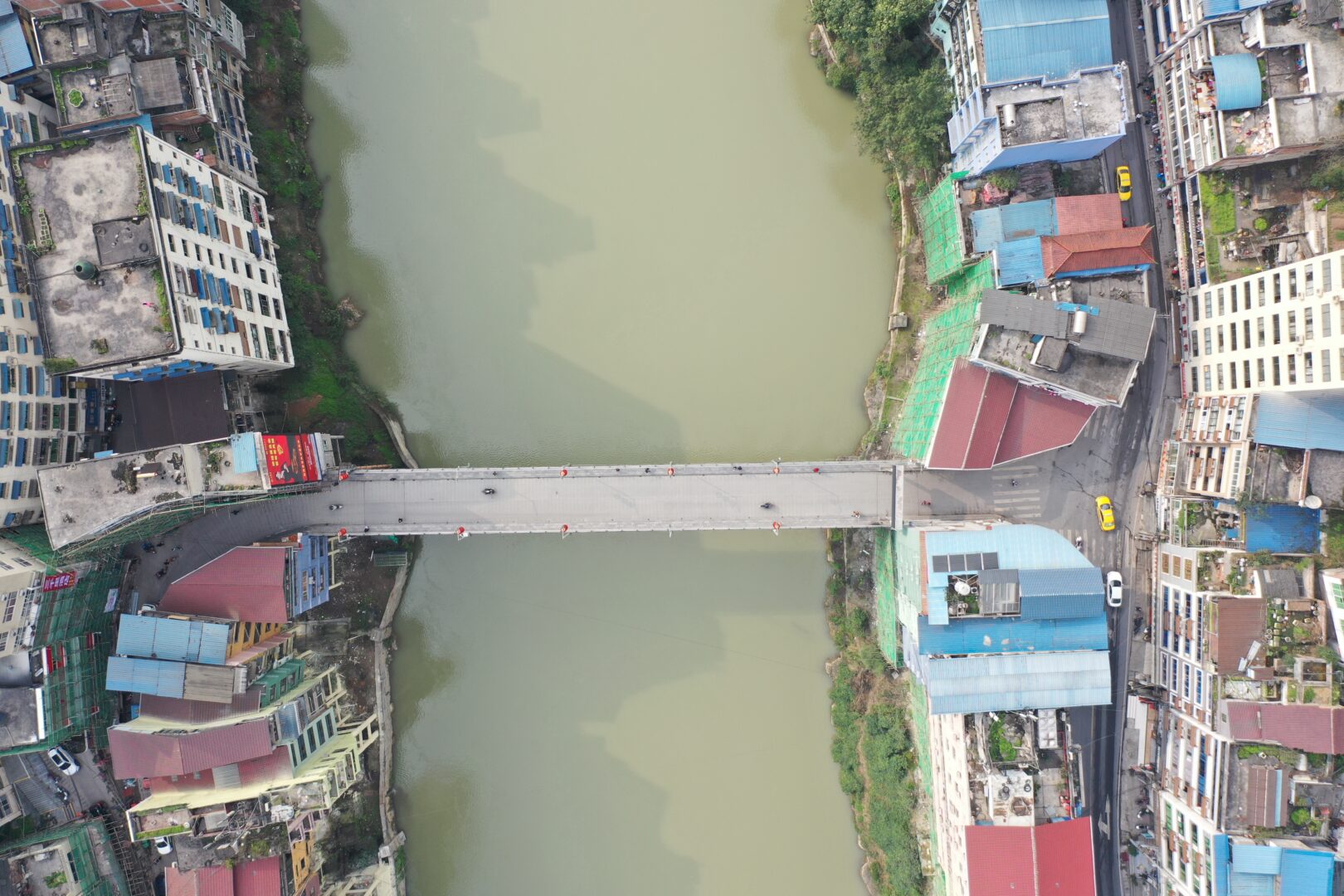
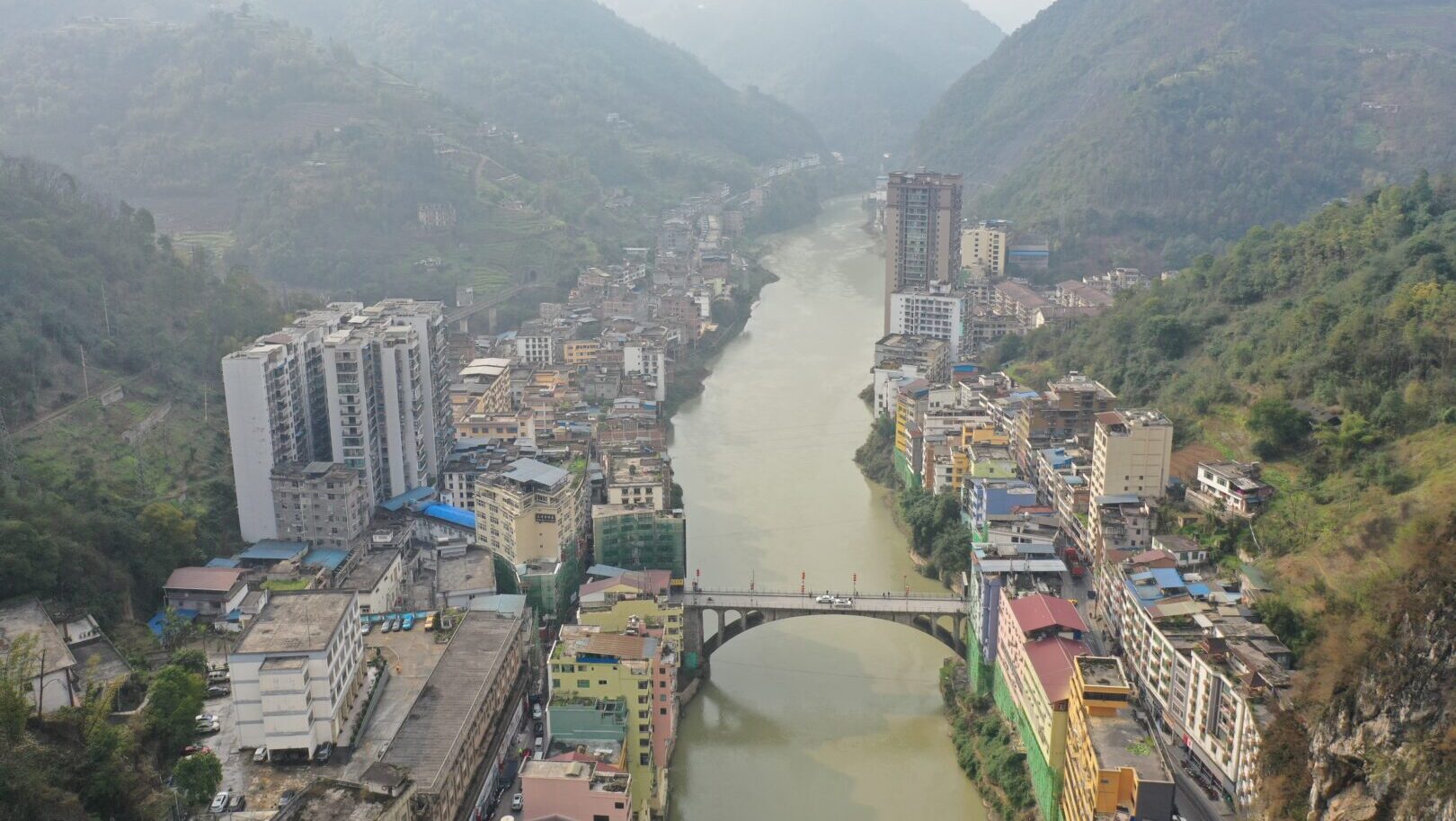
Yanjin's town centre is a strip of buildings a few dozen metres wide, wedged between a cliff and a river. There was nowhere else to put it, so it went up instead of out.
Yanjin is in the far northeast of Yunnan, in Zhaotong prefecture near the Sichuan border, and it’s known for one thing: it is the narrowest county town in China.
That isn’t a slogan. The Guan river has cut a gorge here with near-vertical walls, and the only flat ground is a ribbon along the water. So the town occupies it — a strip a few dozen metres wide in places, with the river on one side, cliff on the other, and the buildings going up instead of out. The road, the river and the rail line all share the same slot.
What it feels like
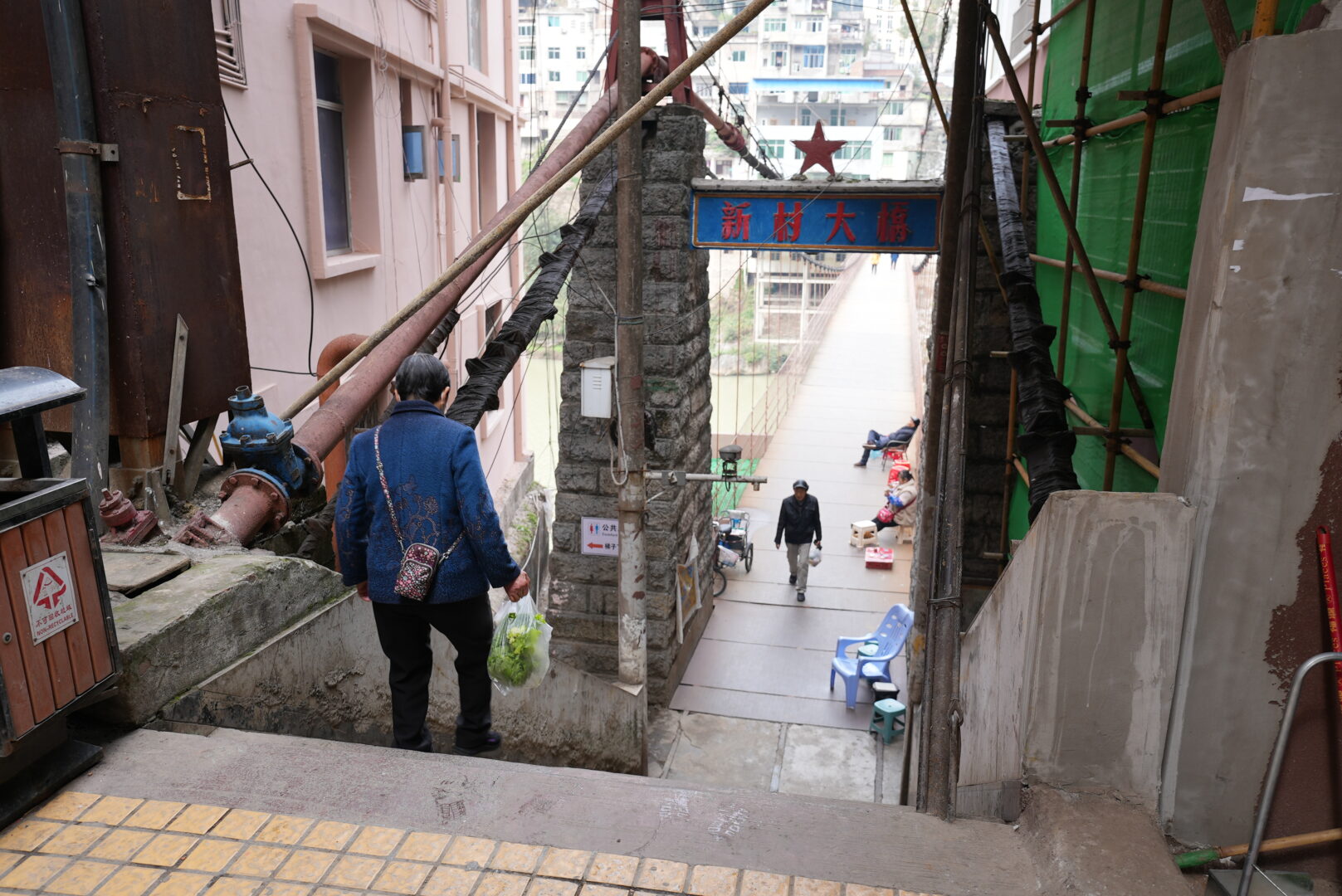
Standing in the middle of it, you can see both cliff faces at once. Apartment blocks are built hard against the rock, some of them with the mountain as a back wall. Stairways climb between levels because streets can’t. The sun arrives late and leaves early, so the town spends much of the day in shadow with a bright band of light above it.
It’s an entirely functional place — shops, market, noodle stalls, schools, people getting on with it — and the strangeness is purely geometric. This is what a town looks like when it has one dimension to grow in.
Doushaguan
The historical reason to come is 20 kilometres away, and it’s better than the town.
Doushaguan (豆沙关) is a pass on the Five-Foot Road (五尺道) — a route cut through these mountains in the Qin dynasty, over two thousand years ago, to link Sichuan with what is now Yunnan and eventually Southeast Asia. Sections of the original paving survive, worn into hollows by hooves and feet.
At the same site, high on the cliff face above the river, are hanging coffins of the Bo people — wooden caskets wedged into natural clefts and on beams driven into the rock, some of them several hundred years old. The Bo disappeared as a distinct people in the Ming dynasty; the coffins are all that’s left of them, and nobody is entirely sure how they were placed.
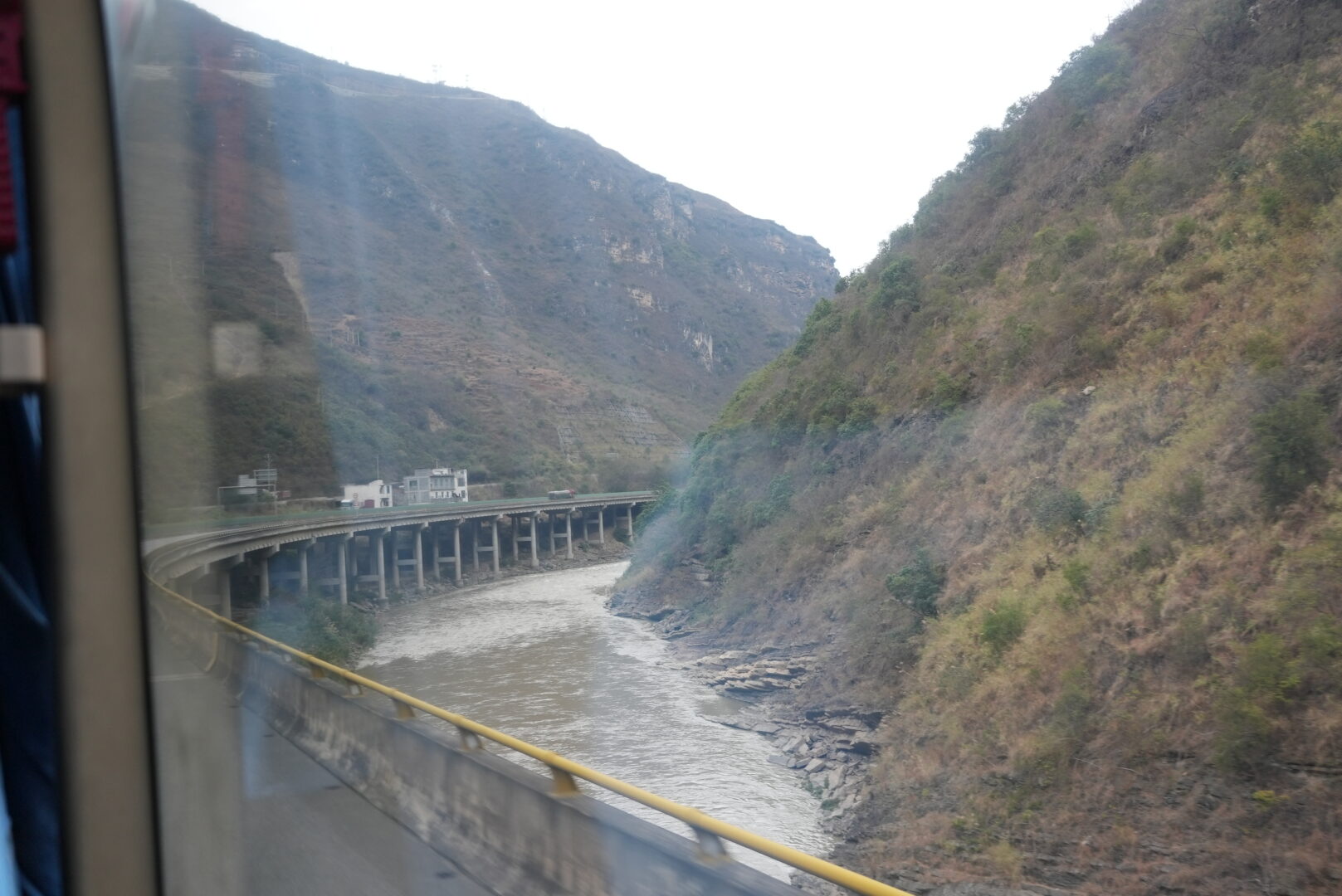
The layering at this one spot is remarkable: a Qin road, Bo burials above it, and a modern expressway on stilts across the gorge in the same field of view.
Practical notes
Getting there: Zhaotong is the nearest city, with rail and air links; Yanjin is a couple of hours further by road. It’s also a reasonable stop between Chengdu and Kunming for anyone driving.
Where to sleep: basic hotels in the county town. Nothing designed for visitors, which is fine for a night.
When: spring and autumn. The gorge is humid and hot in summer, and heavy rain brings landslide risk on the mountain roads.
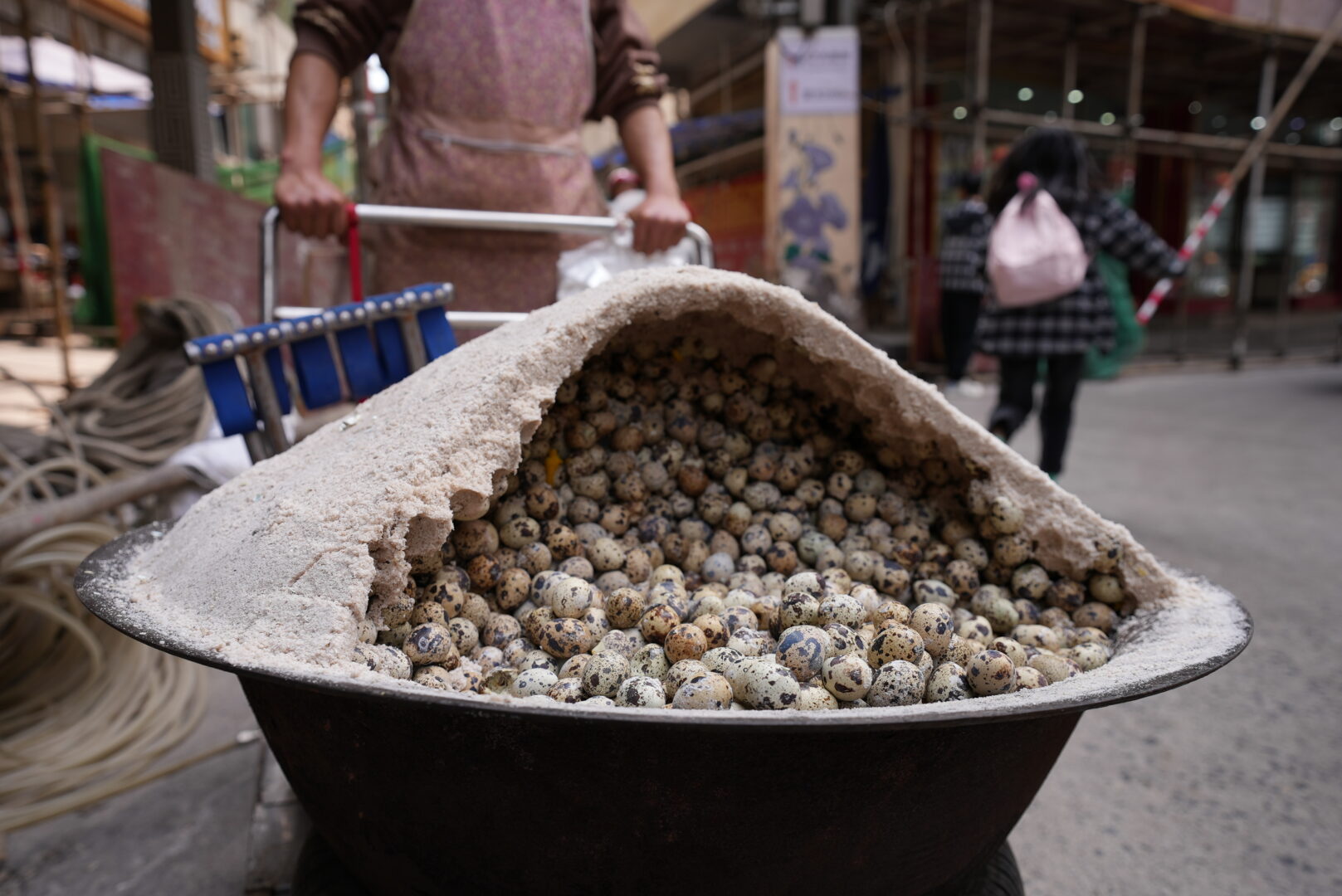
Eat: this is northeast Yunnan and the cooking leans Sichuanese — more chilli and Sichuan pepper than the rest of the province. See our food guide.
Nearby: Luoping’s rapeseed fields are a long way south, but the Sichuan border country begins immediately north.
- #yunnan
- #yanjin
- #zhaotong
- #gorge
- #doushaguan