
Daliyabuyi sits deep inside the second-largest sand desert on earth, where the Keriya River runs out. Reaching it takes most of a day on a sand track — and the people there have farmed and herded that riverbed for centuries.
Most “remote” places are a long drive from a small town. Daliyabuyi is a long drive from the end of the road — roughly 240 kilometres north of Yutian, straight into the Taklamakan, following a river that never reaches the sea because it simply runs out in the sand.
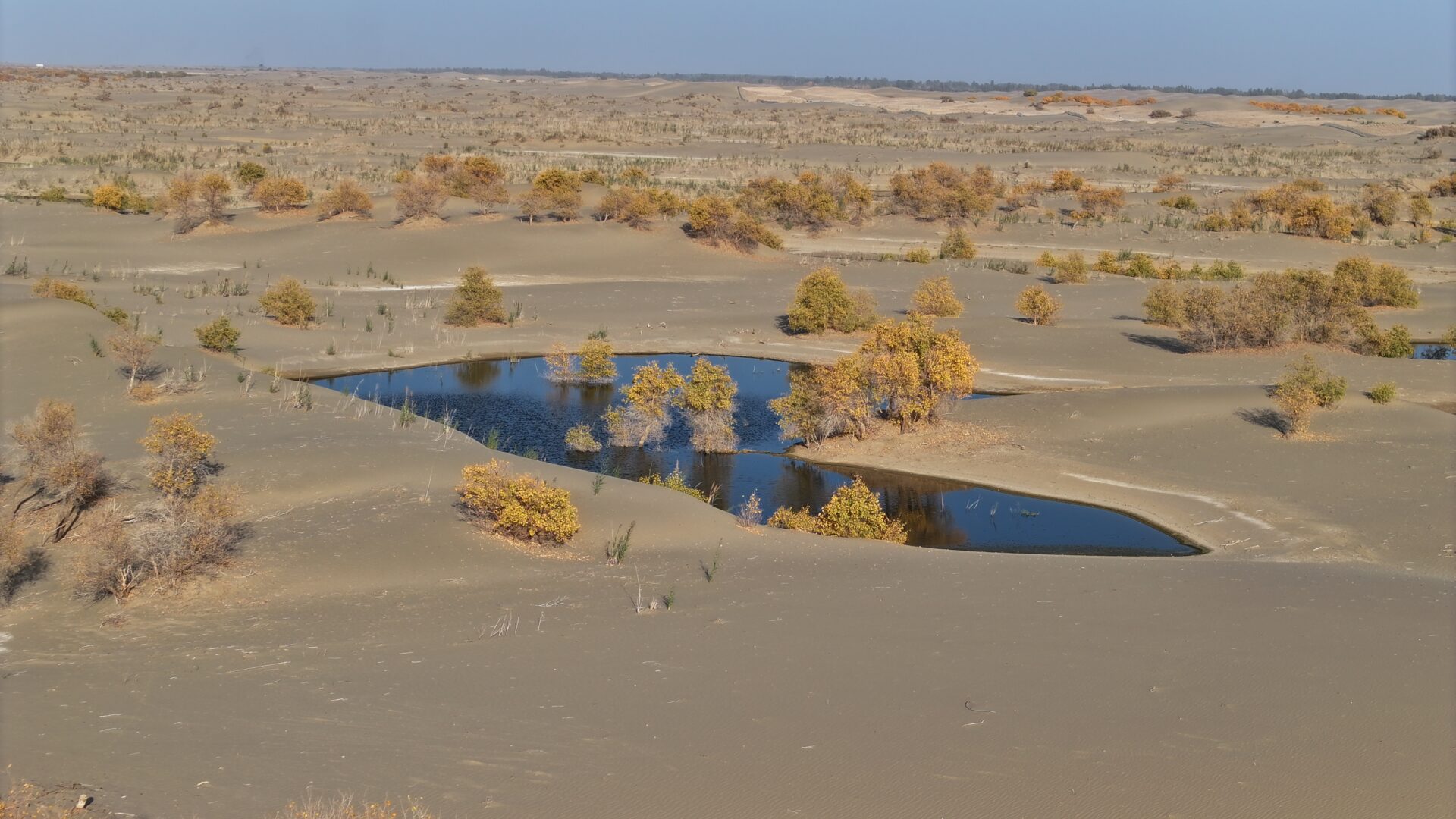
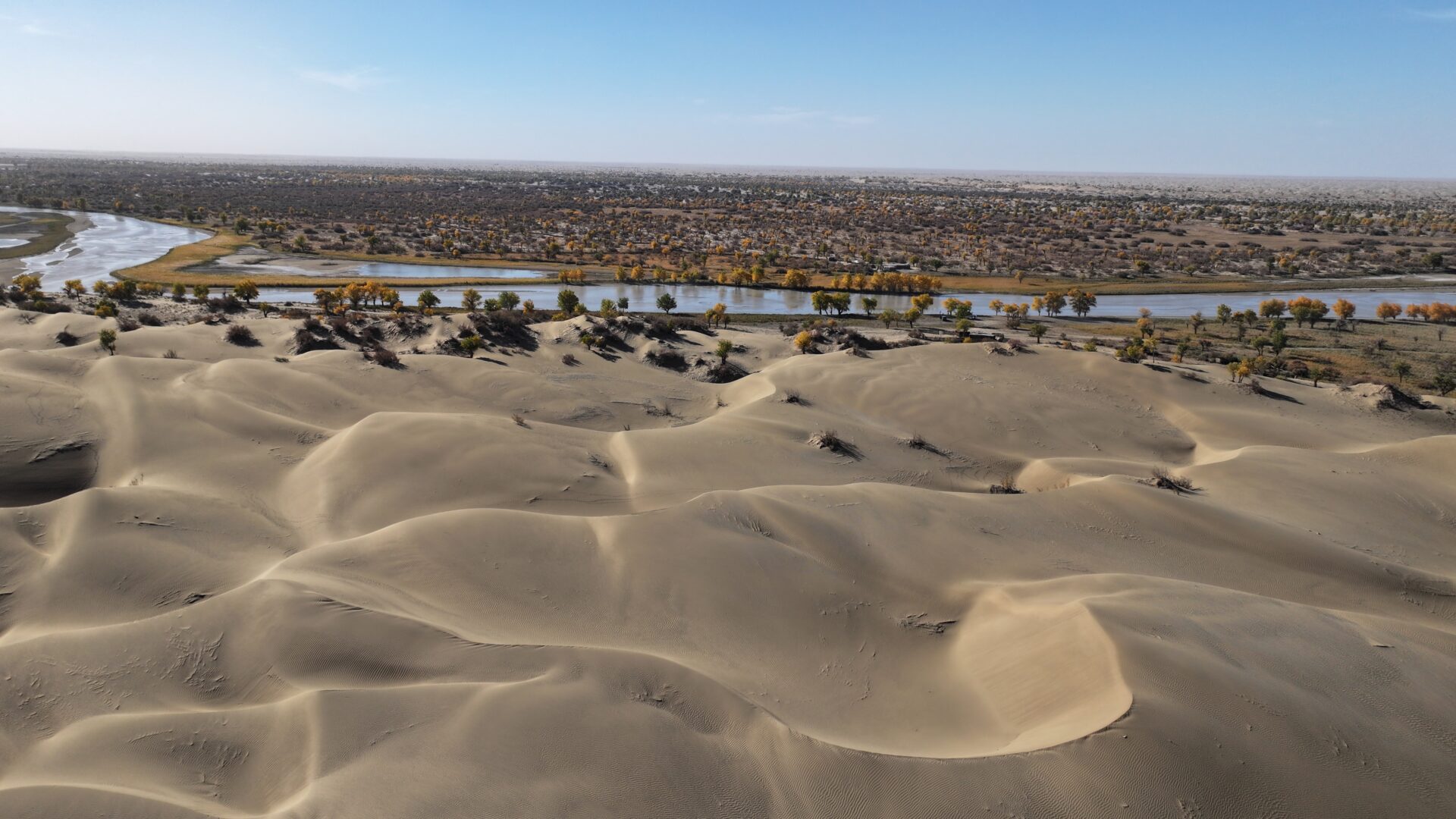
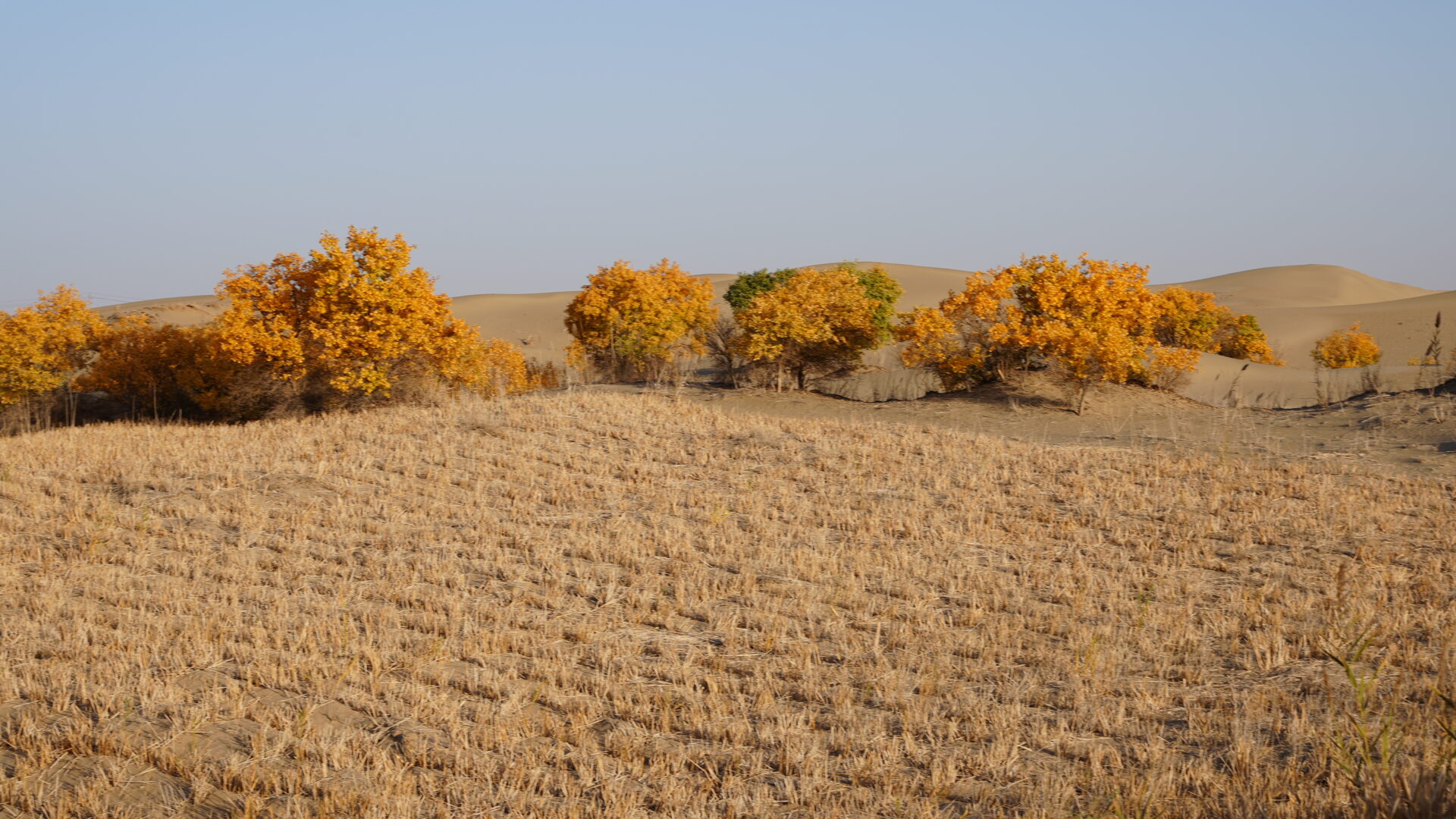
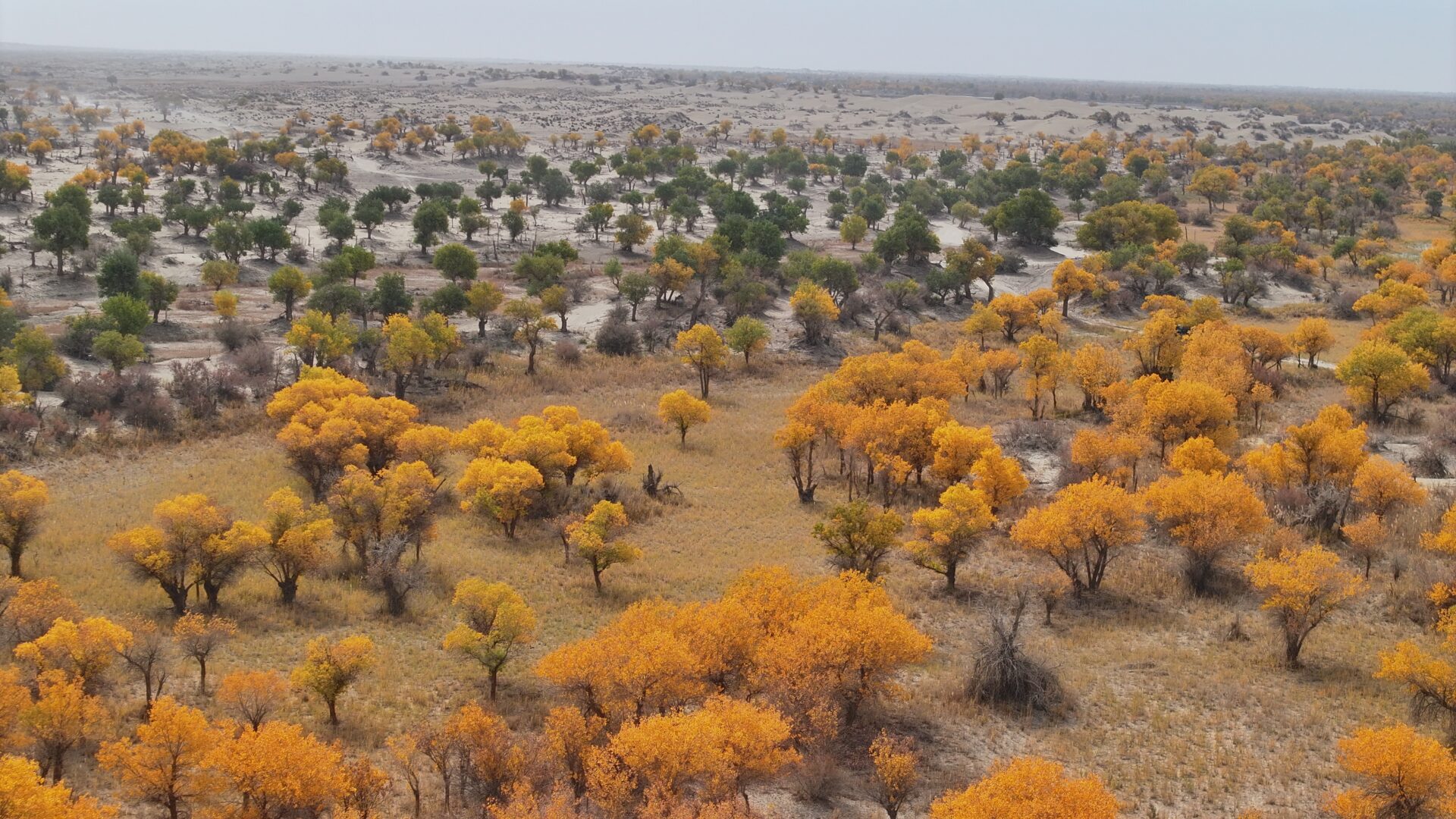
The Keriya rises in the Kunlun to the south, crosses the desert northward, and dies somewhere out in the dunes. Along its last stretch, groundwater keeps a thread of tugai forest alive: desert poplar, tamarisk, reeds. That green line, a few hundred metres wide with a thousand kilometres of sand around it, is where the village lives.
Getting there
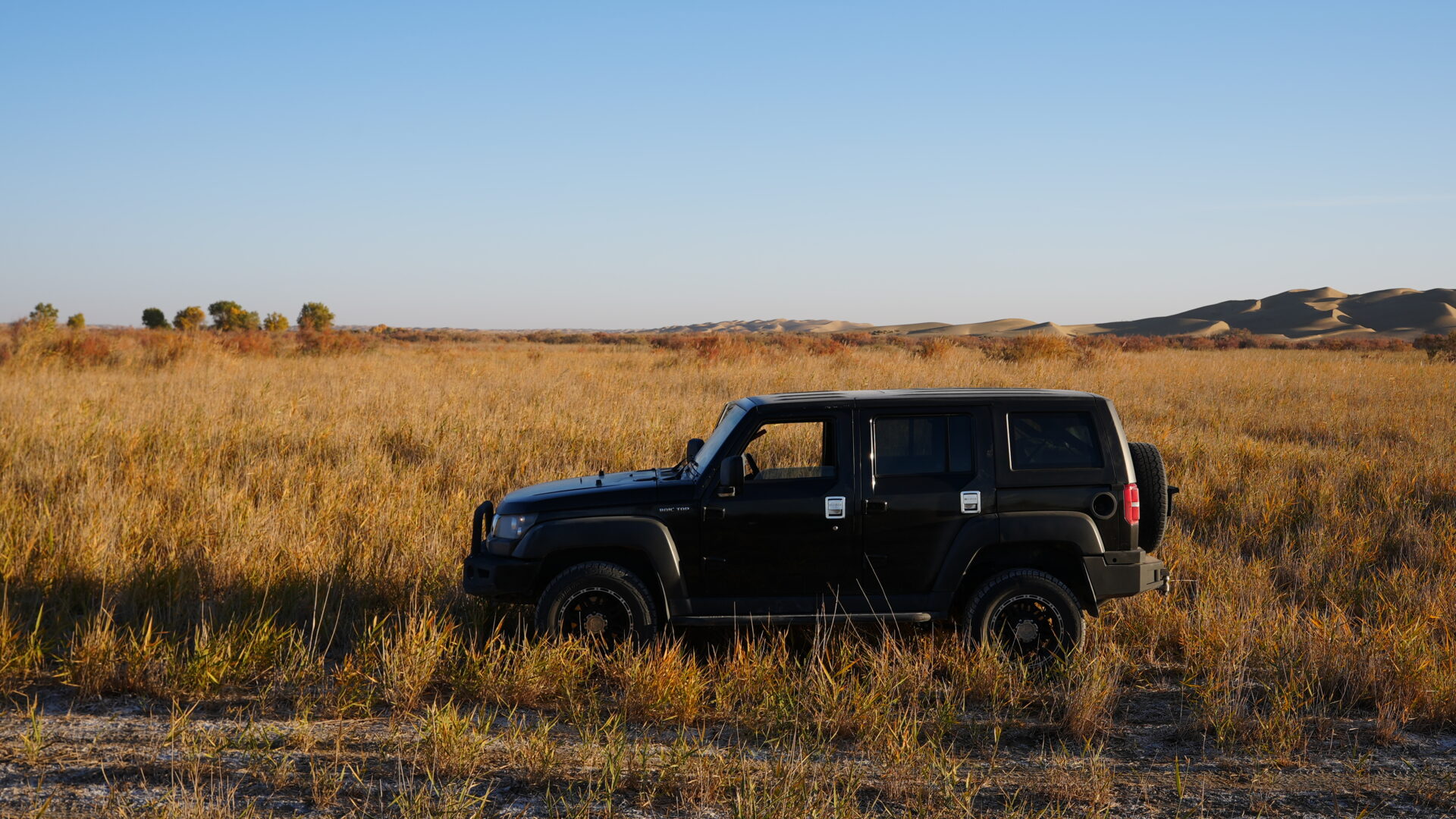
There is a track. Calling it a road oversells it — it’s a graded sand route that shifts with the wind, and the trip takes most of a day in a high-clearance vehicle with a driver who has done it before. Sandstorms close it. Nobody attempts it alone.
That difficulty is the whole reason the place is what it is. It was too far to administer, too far to develop, and too far for anybody to visit casually — so for generations the community was left to work out its own arrangement with the desert.
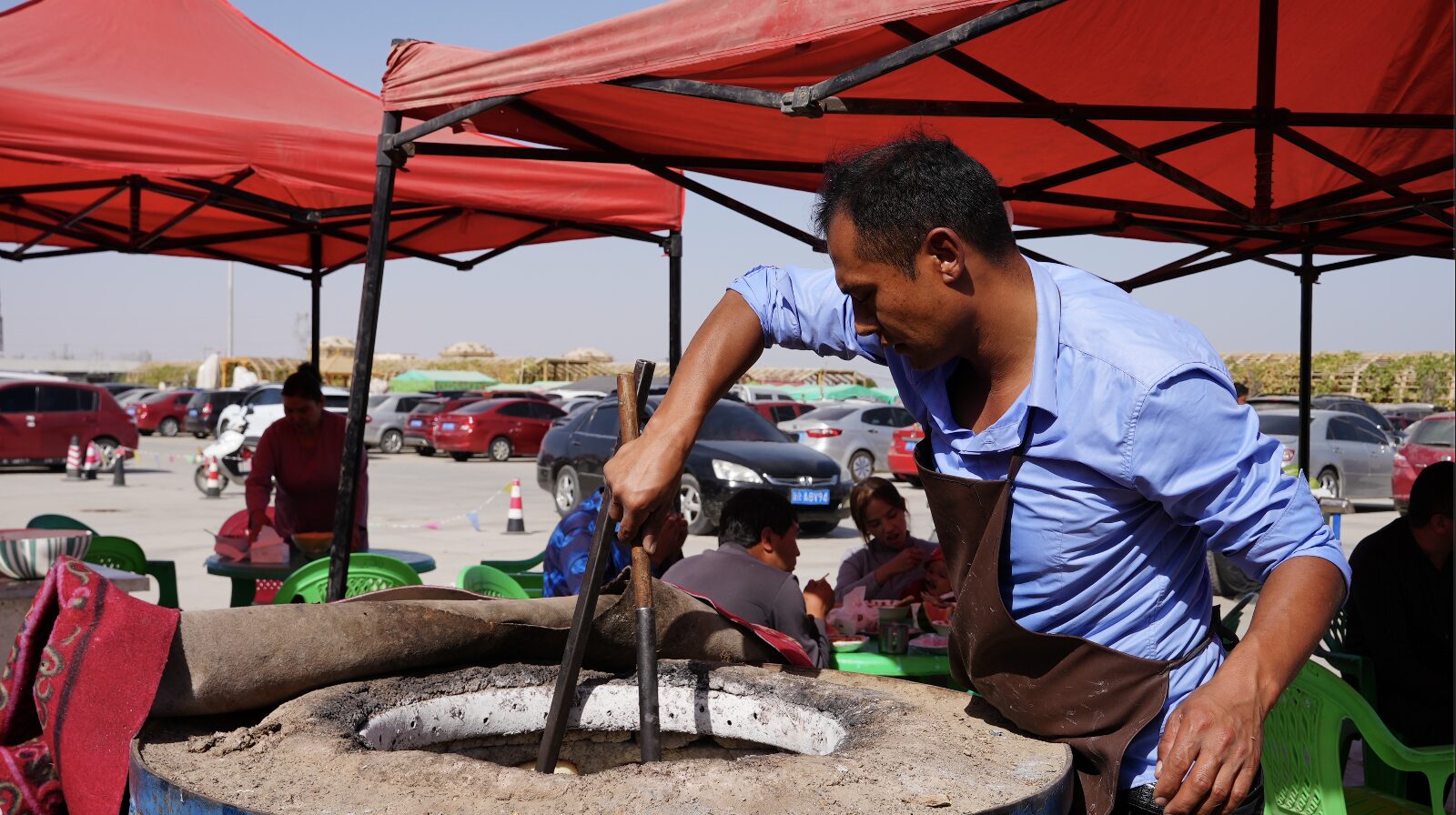
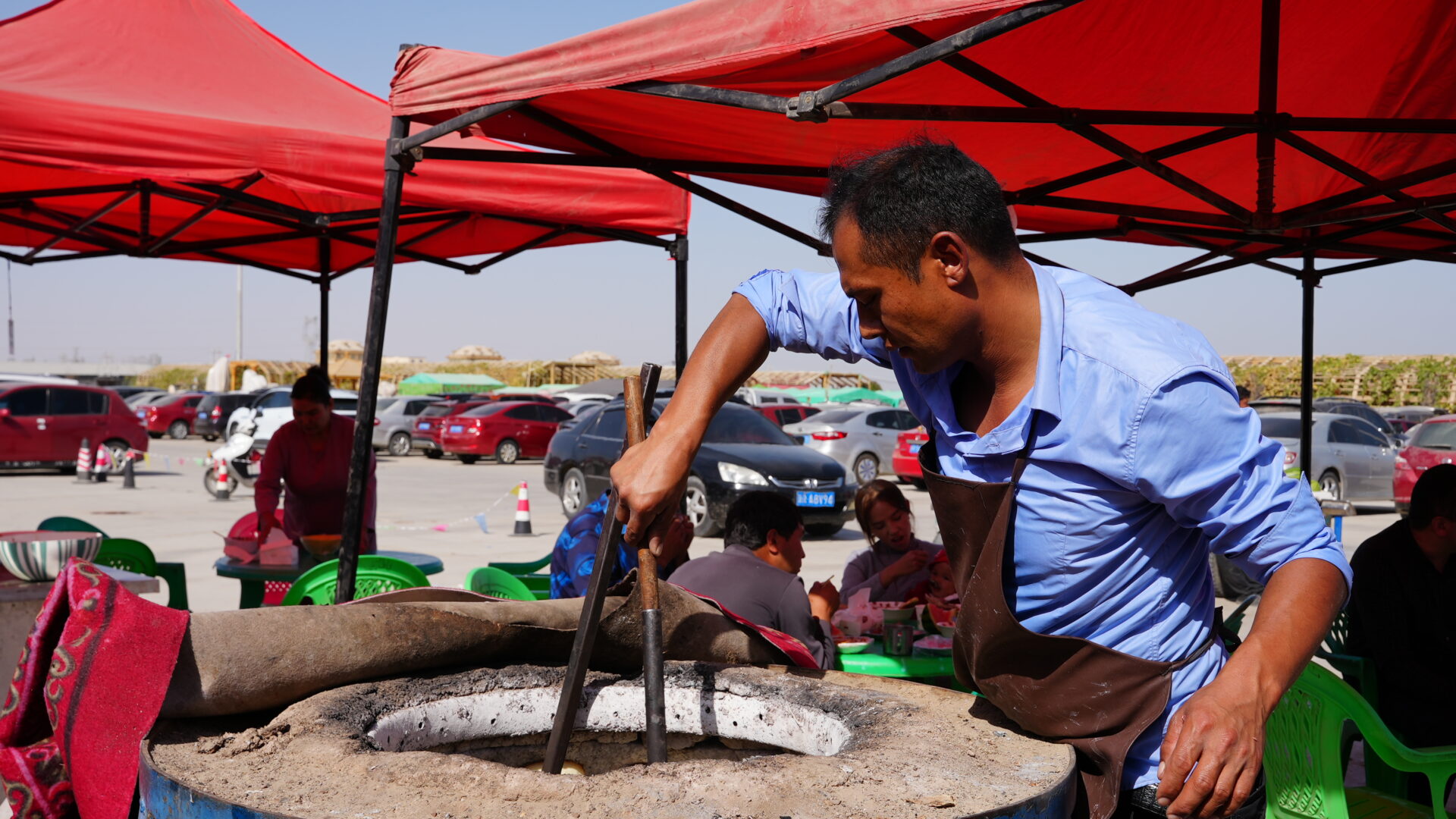
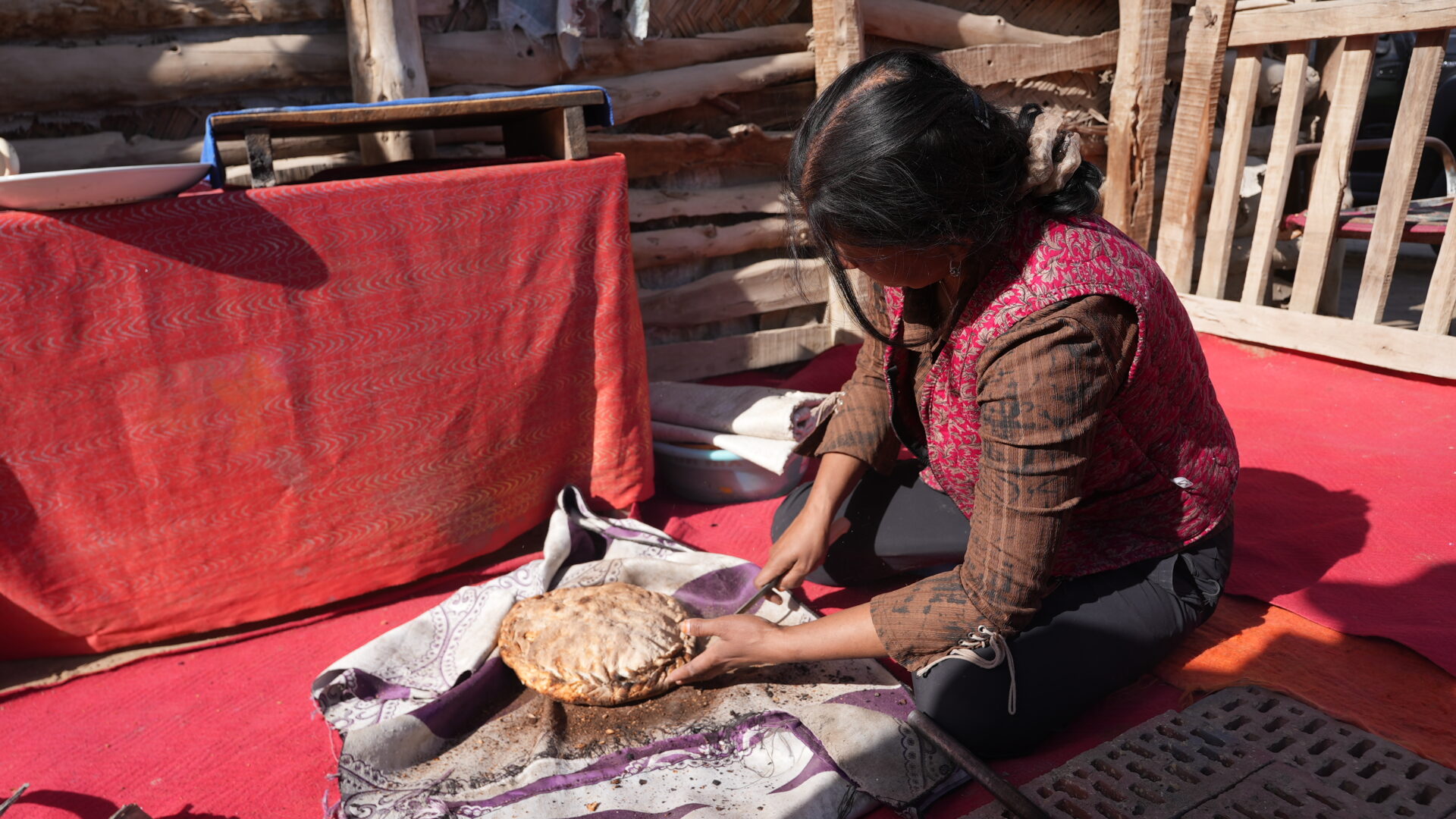
Bread baked in hot sand — the desert version of a clay oven
How life works out there
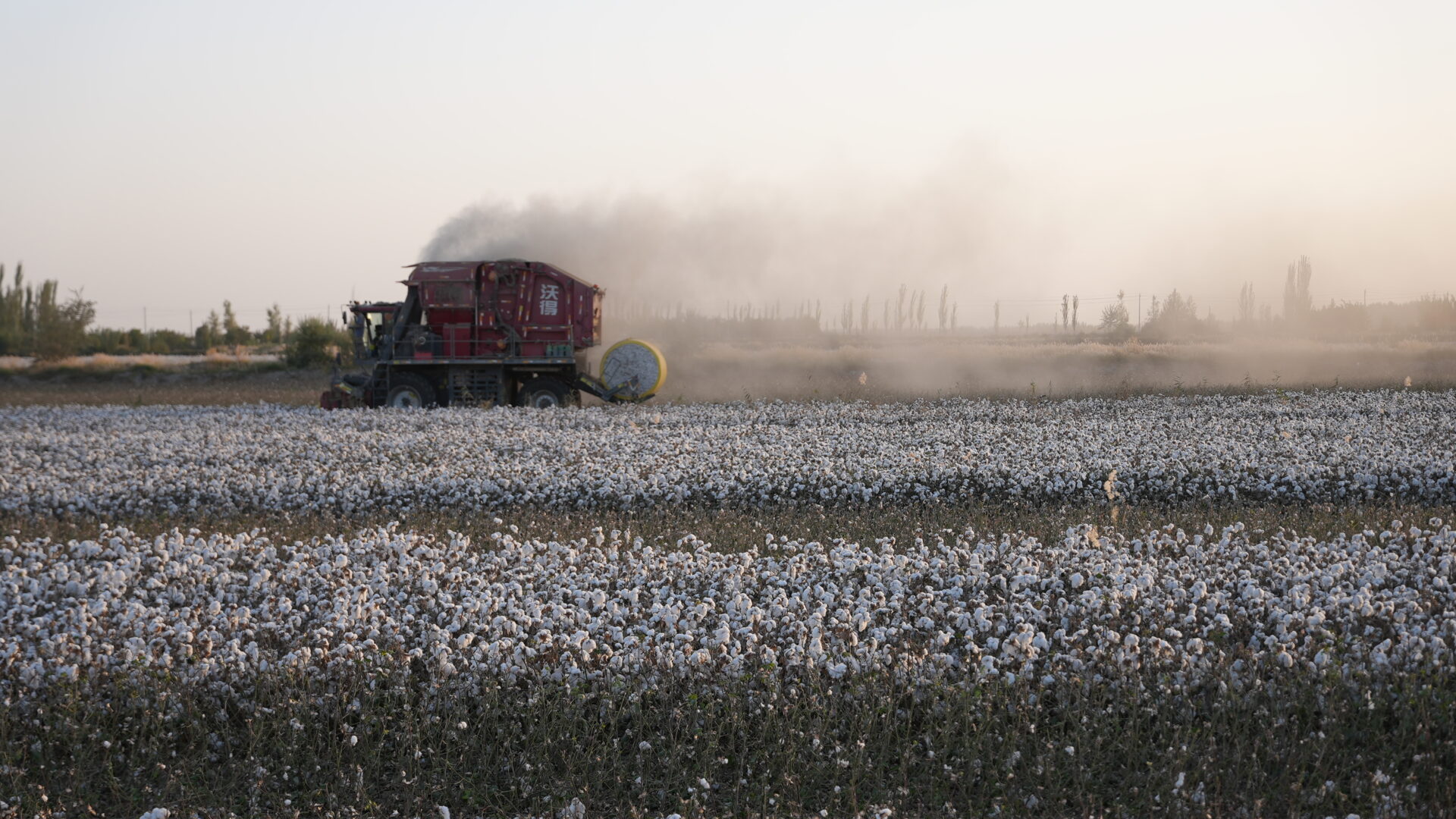
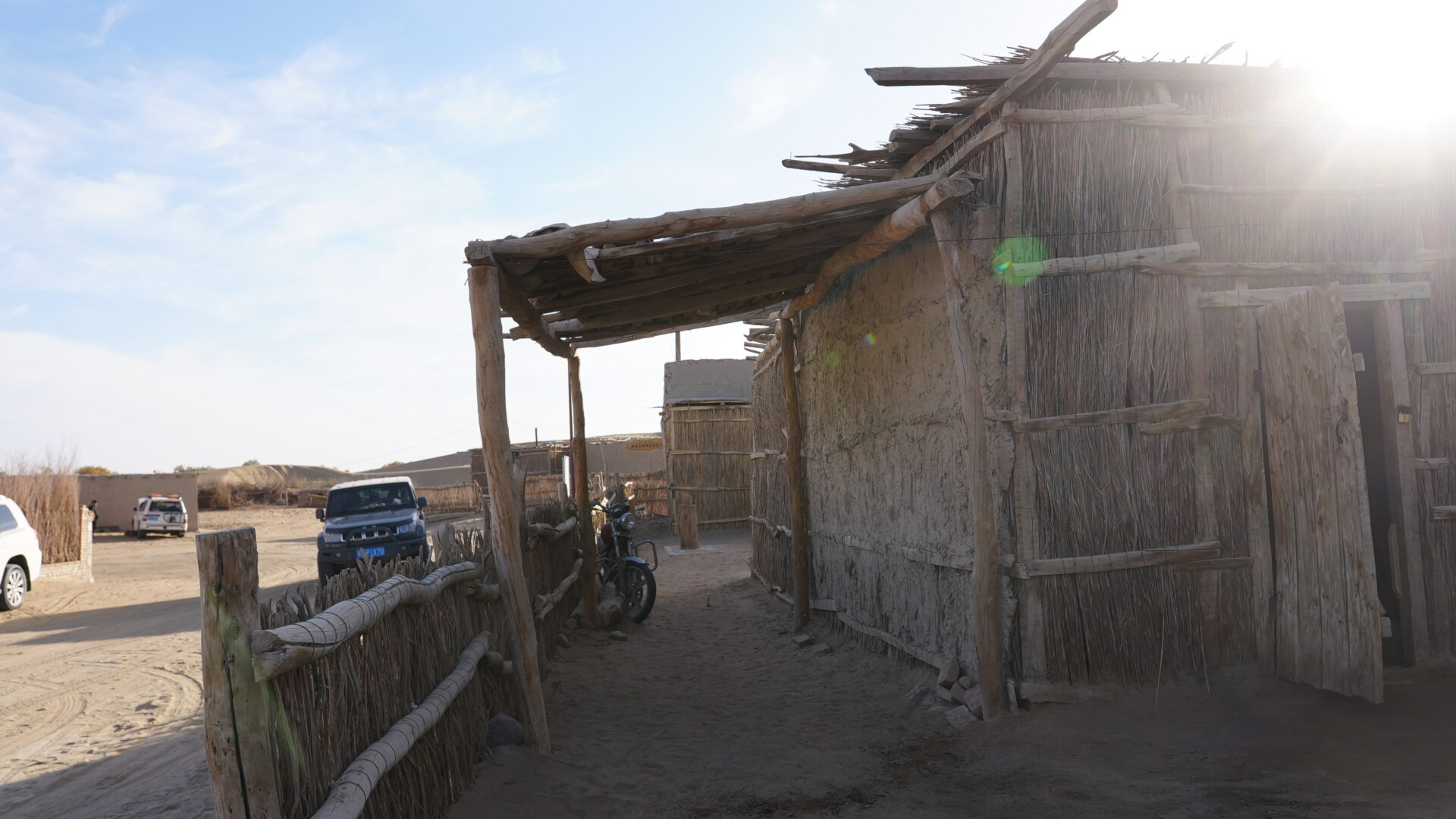
The economy is sheep and goats, grazed on riverbed scrub, plus a little farming where the water allows. Traditional houses were built from what grows locally: poplar frames packed with reeds and mud, low and thick-walled, since the temperature swing between noon and dawn is brutal.
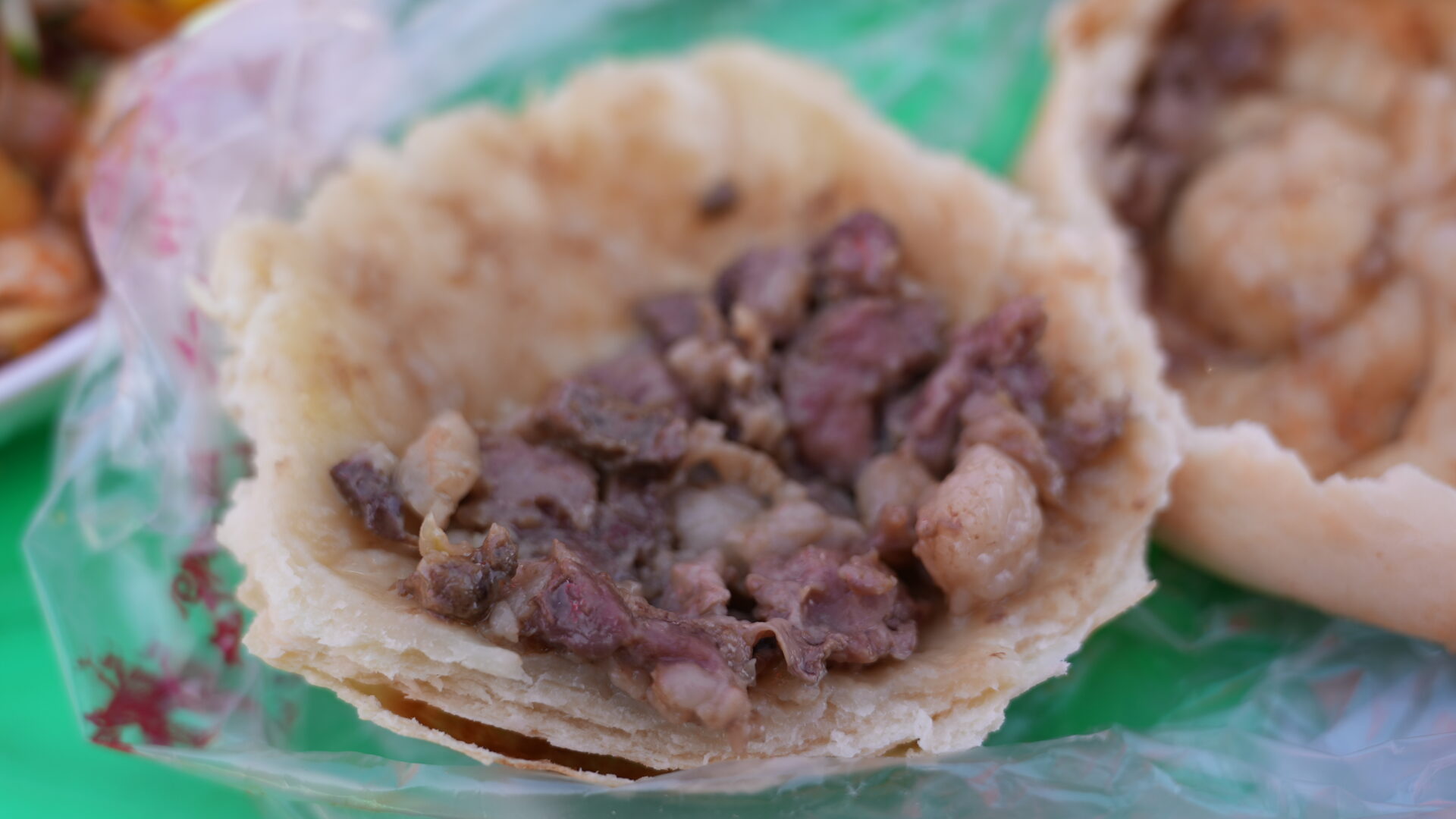
The cooking is the thing you remember. Kumach — bread baked directly in hot sand rather than an oven — comes out grey on the outside and perfect inside once you knock the sand off. Whole sheep goes into a pit. It is the most resourceful food you’ll eat in China, and it exists because there was never any alternative.
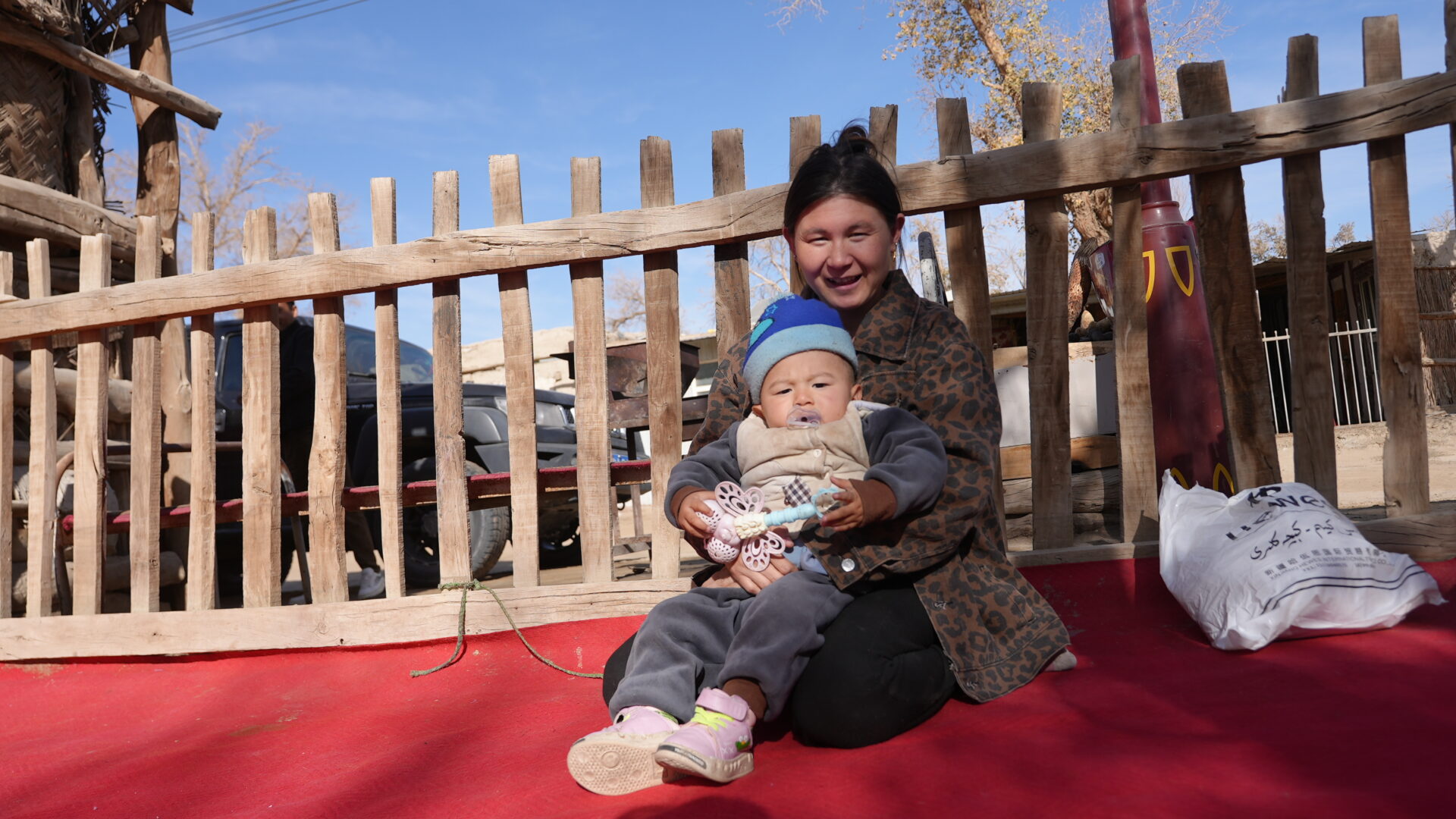
The people are Uyghur, and by every account remarkably hospitable to the very small number of outsiders who make it in. Curiosity runs both ways.
What’s changed
This is not a place frozen in time, and pretending otherwise does it a disservice. Over recent years a substantial part of the population has been resettled into new housing closer to Yutian, with mains power, schools and a clinic — real improvements, and a real loss for a way of living that only existed here.
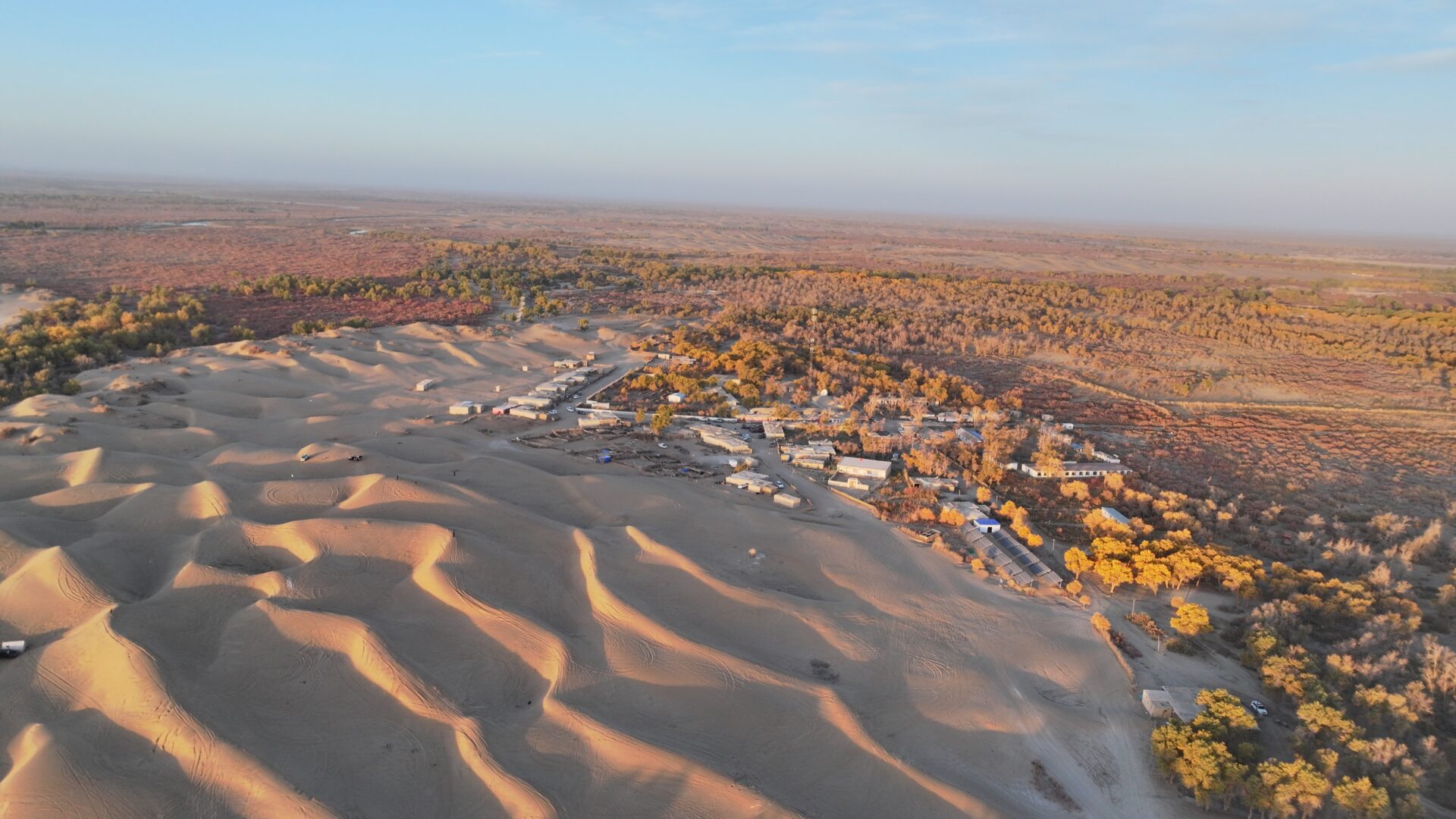
Some households stayed. Some moved and come back for the grazing. The village you can visit today is a working settlement in the middle of a transition, not a diorama.
The landscape
The Taklamakan is the second-largest sand desert on earth and its dunes run to 200 metres. Flying a drone over that country is the only way to understand the proportions: the river’s green thread, the village at its edge, and then sand in every direction to the horizon and well beyond it.
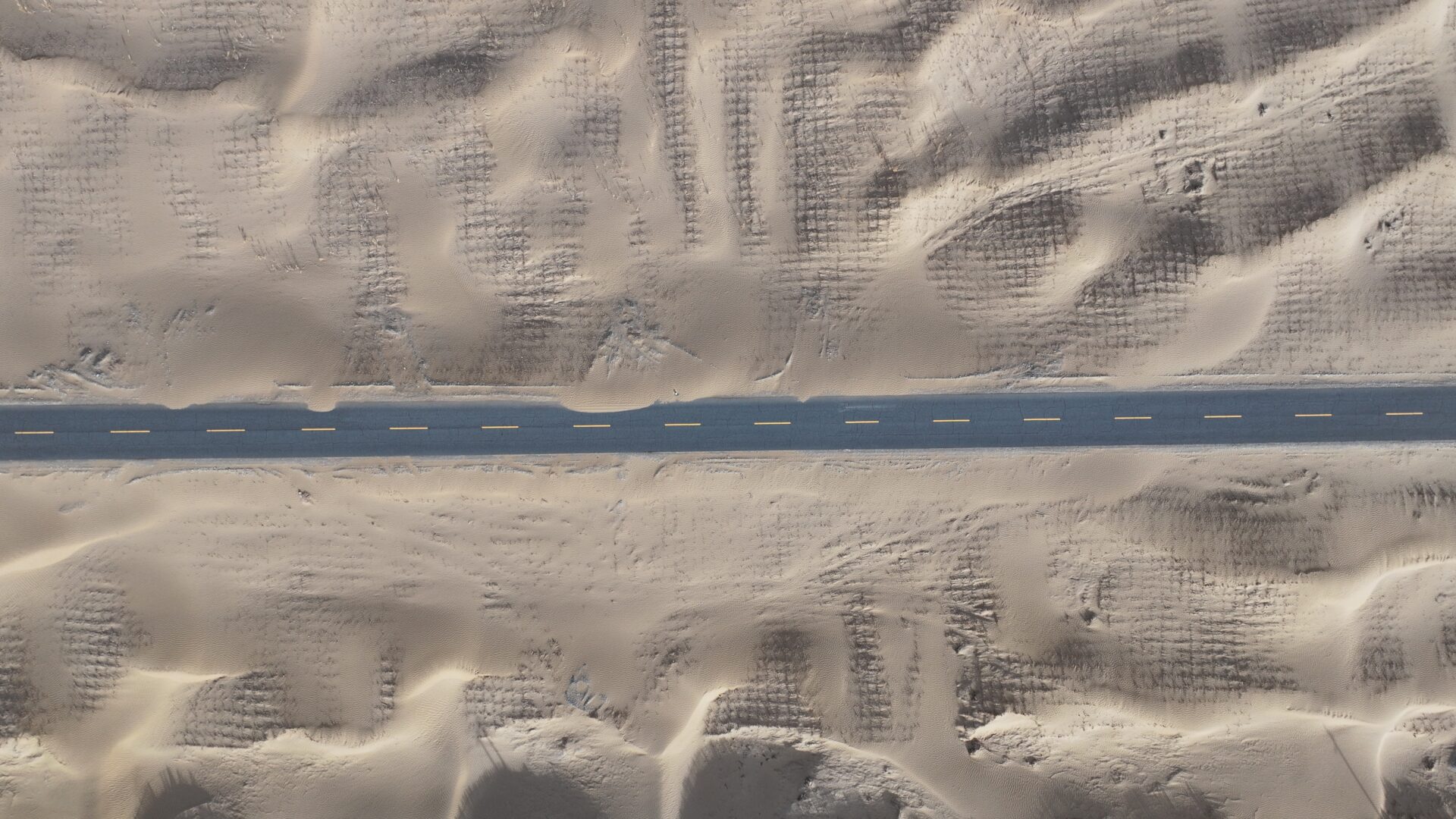
On the way in you’ll pass the counter-desertification works — grids of planted tamarisk and reed fencing holding the dunes back from the track. They’re a good part of why the trip is possible at all.
If the desert interests you, the Taklamakan crossing is the accessible version of the same landscape, and Kashgar is where most trips into southern Xinjiang begin.
- #xinjiang
- #taklamakan
- #desert
- #uyghur
- #remote