
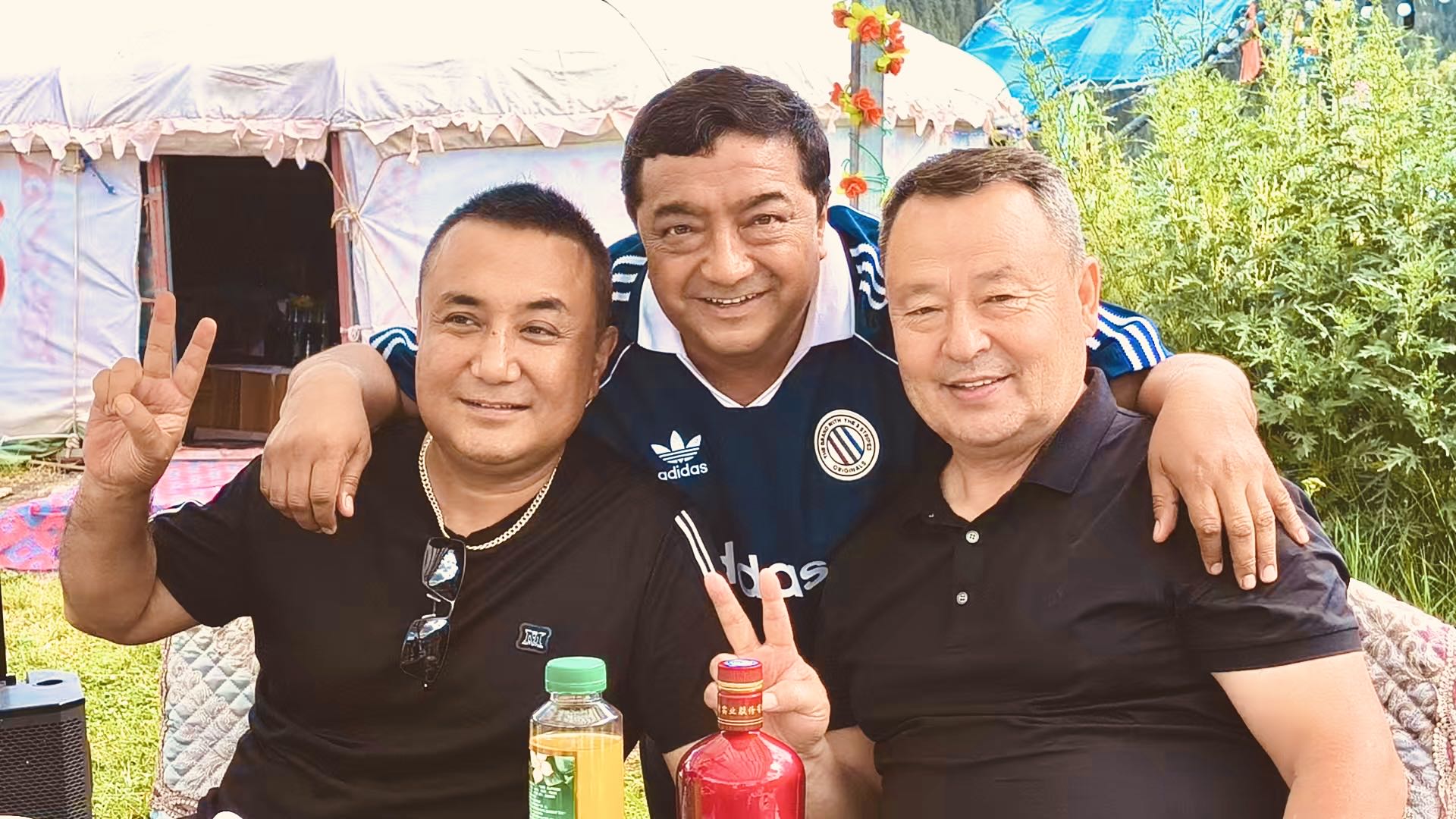
Karamay's name means "black oil" in Uyghur, and the crude comes out of the ground here by itself. We came for the oilfields and ended up at a wedding — which is how most good things in Xinjiang happen.
Karamay’s name is a straight description. Qara is black in Uyghur, may is oil, and the city sits beside one of China’s largest crude fields — a field that announced itself, because in places the oil rises to the surface on its own.
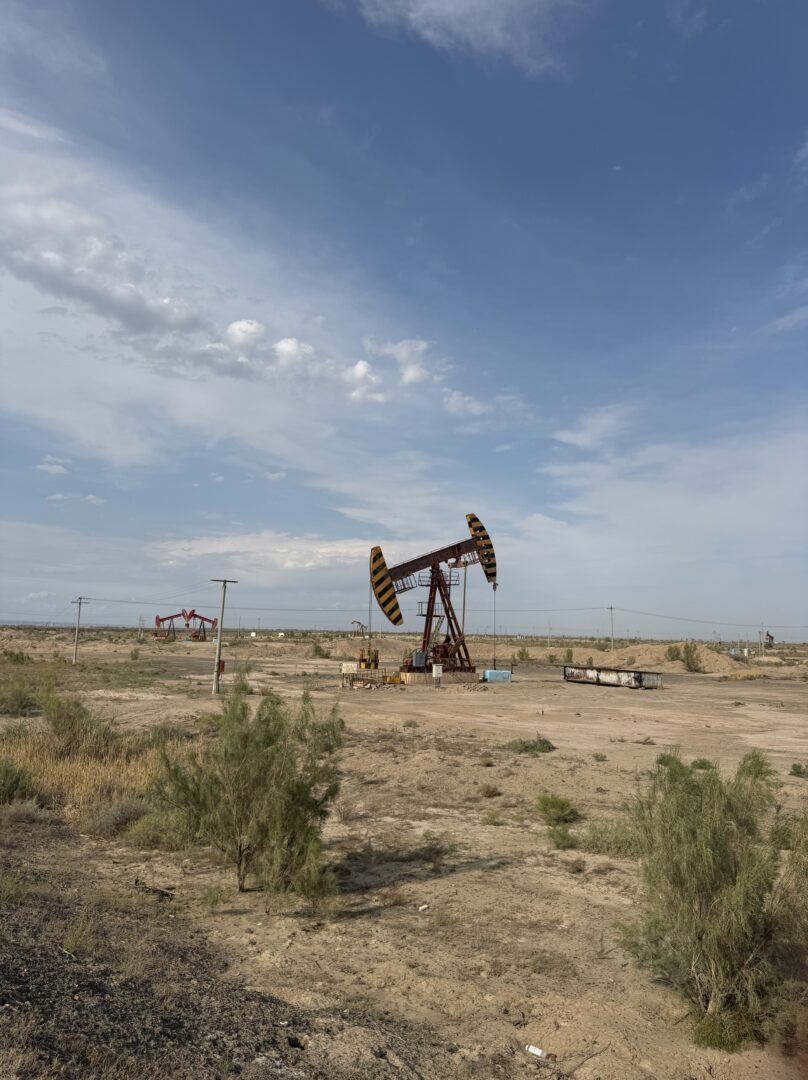
The whole city exists because of that. It was farmland and grazing in 1955 and a purpose-built industrial city within a decade, and today you can’t drive ten minutes in any direction without passing a pump jack nodding away in the gravel.
The oilfields
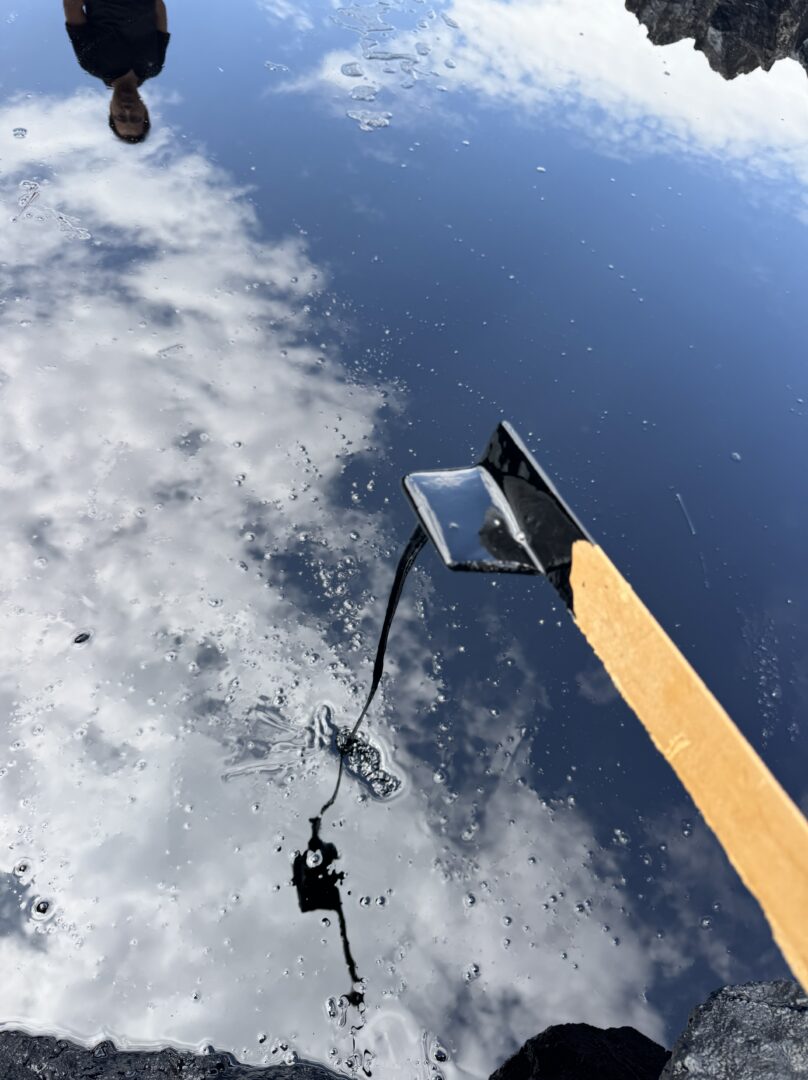
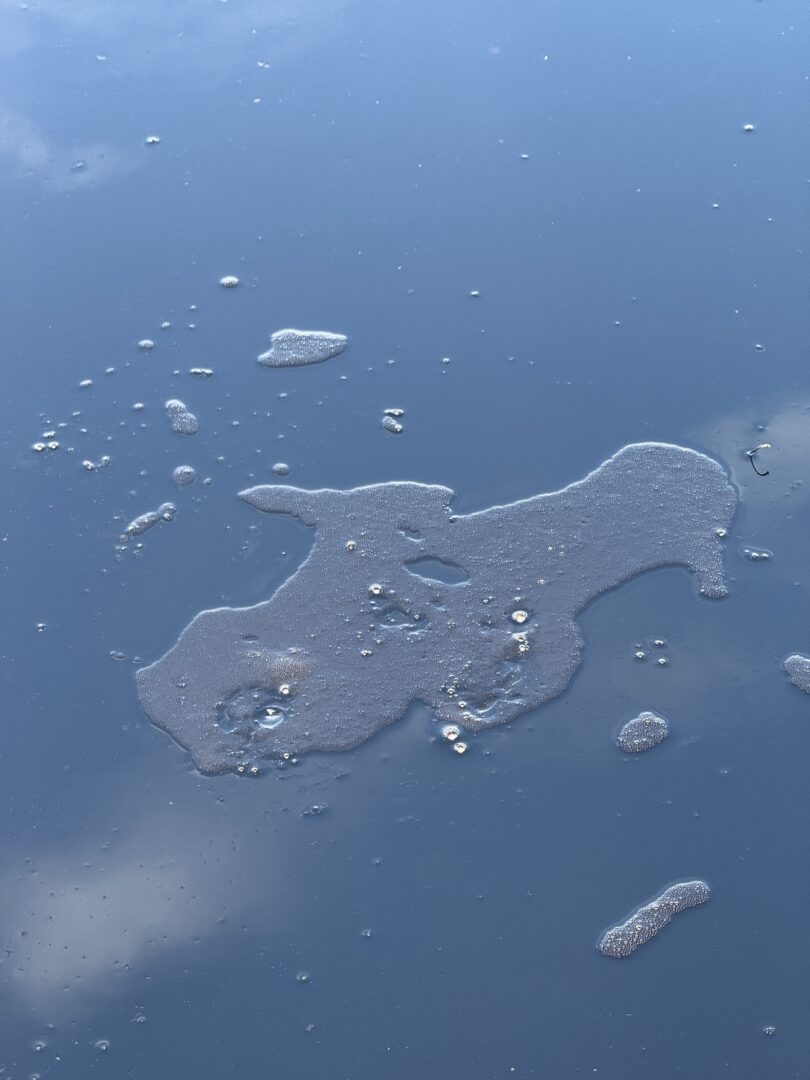
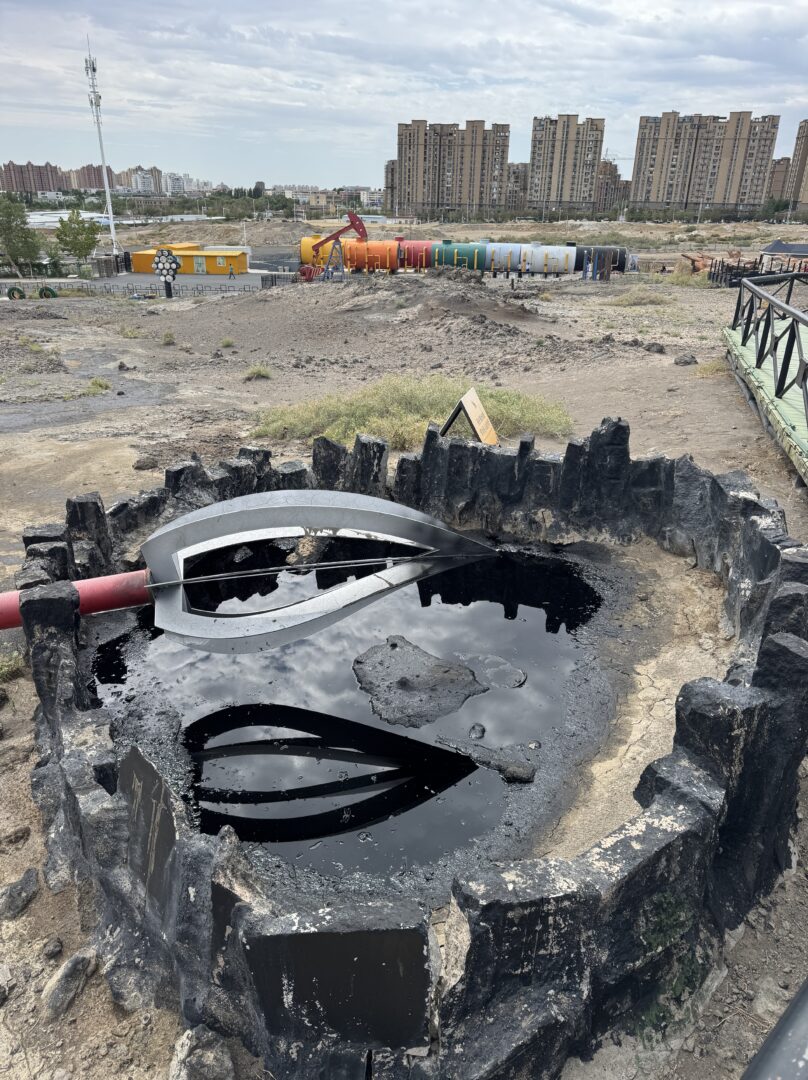
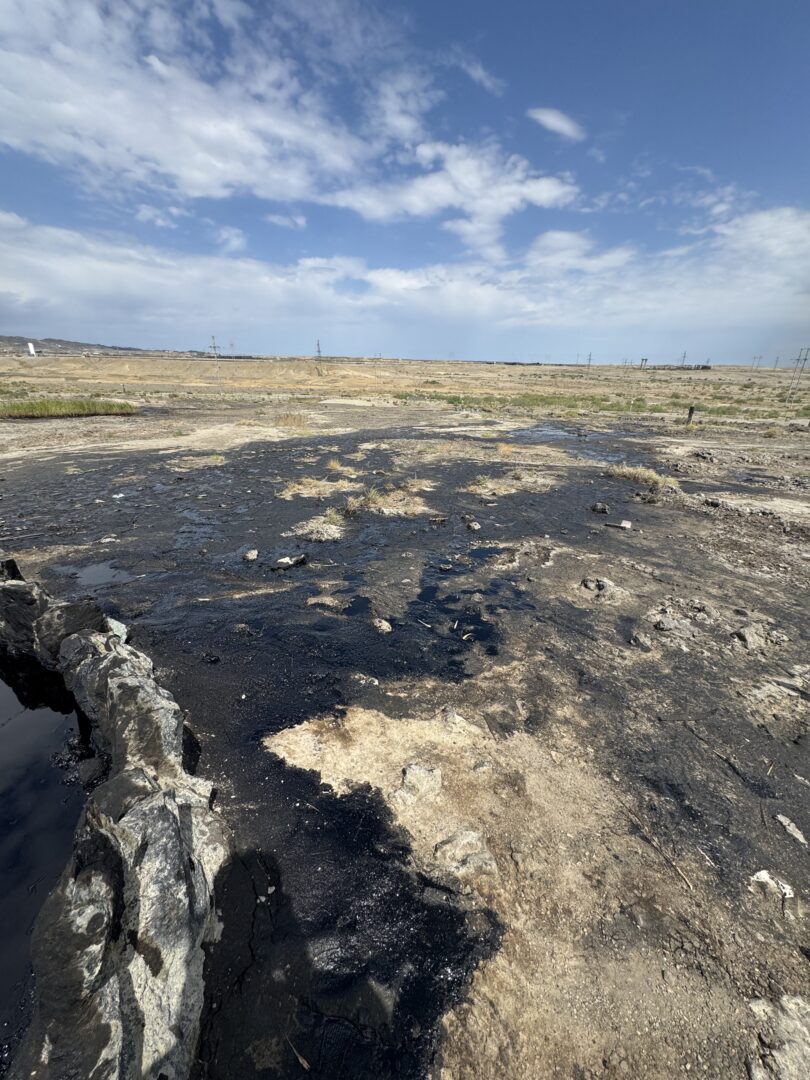
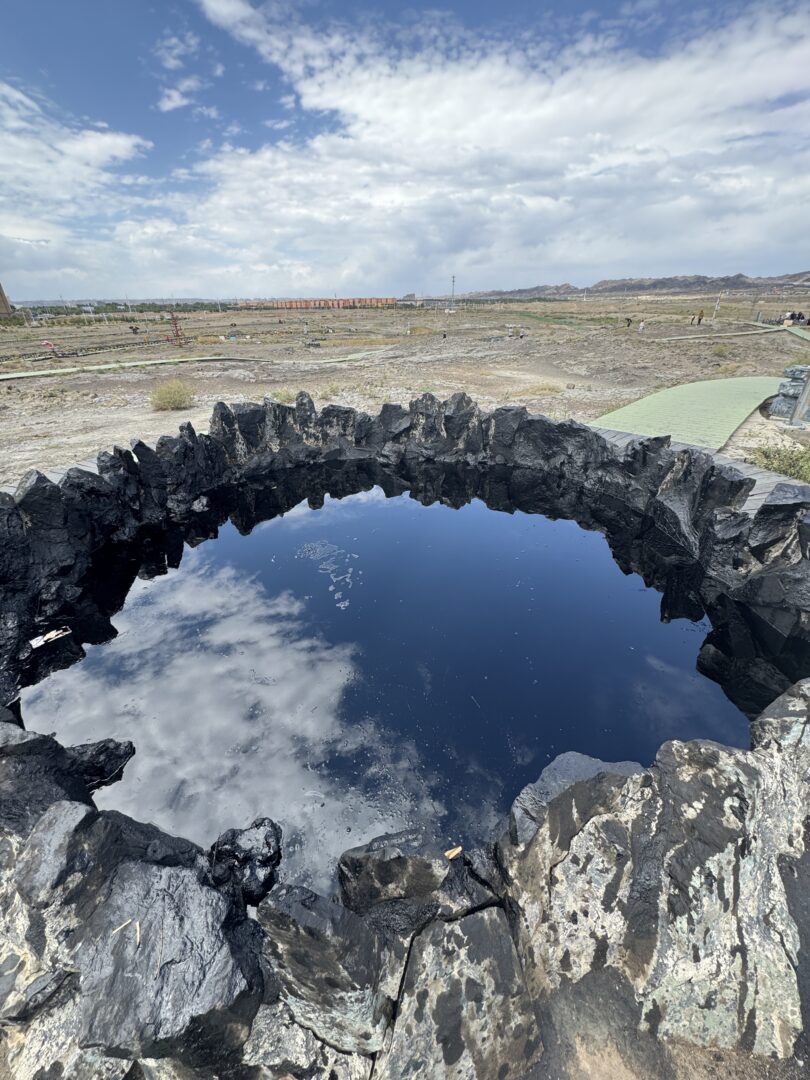
The oil museum is much better than it sounds. It walks through the geology and the extraction process clearly enough to be interesting even if you arrived indifferent, and — the reason to go — there are natural seeps on the site where crude wells up out of the ground like a spring. Thick, black, faintly warm, moving very slowly. It’s the most direct encounter with the substance you’re likely to have.
Outside, the landscape does the rest. Pump jacks in ranks across bare ground to the horizon, in a light that turns the whole scene sepia in the late afternoon. It’s not conventionally beautiful and it’s genuinely worth photographing.
The wedding
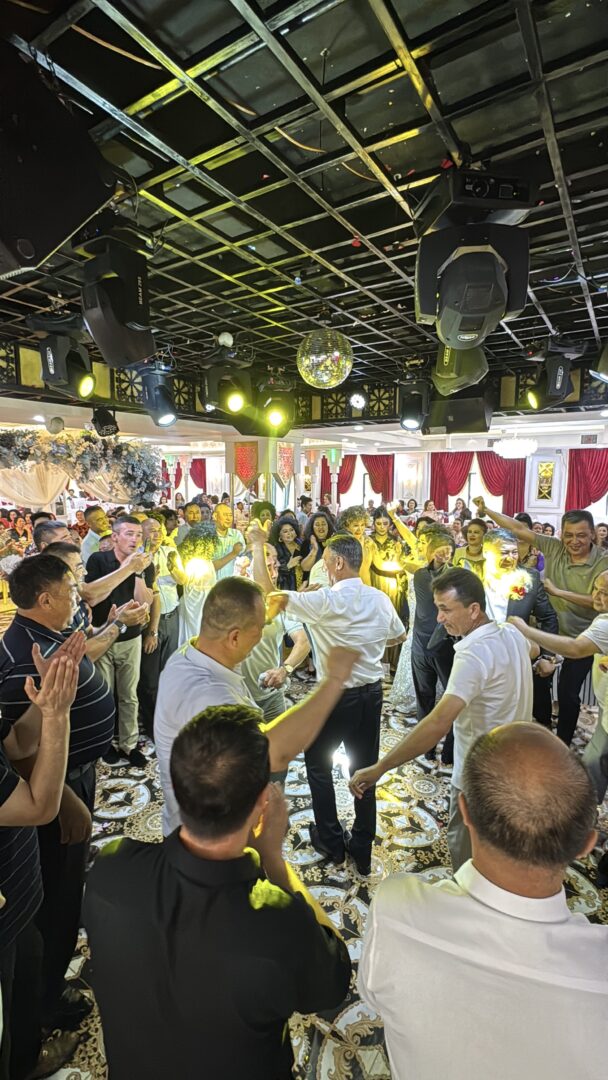
Here’s how it actually happened: we were parked up in Ürümqi catching up on work, got talking to the security guard at the hotel over several days, and were invited — with no preamble — to a friend’s wedding in Karamay. We were driving that way anyway. So we went.
Uyghur weddings are usually split into two events on different days: one for the parents and the older generation, another for the couple and their friends. The two have quite different energy, and if you’re invited you may well only be at one.
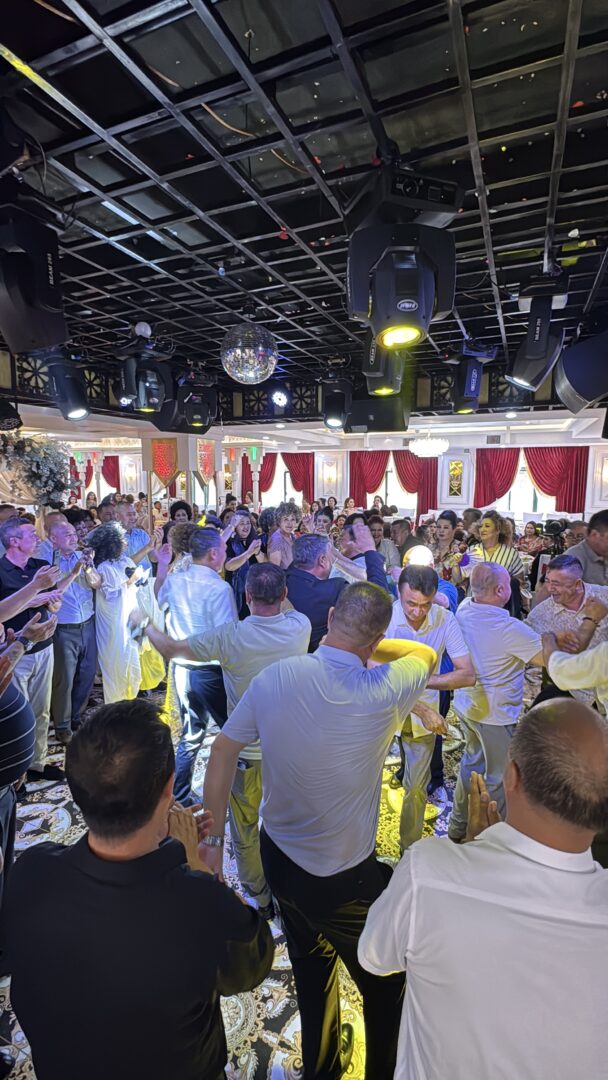
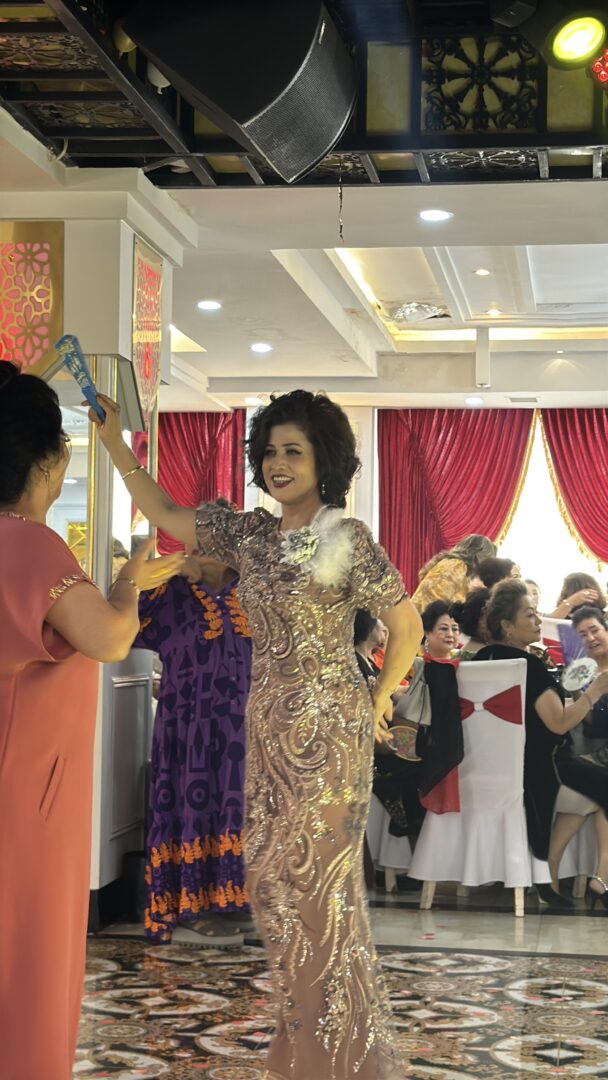
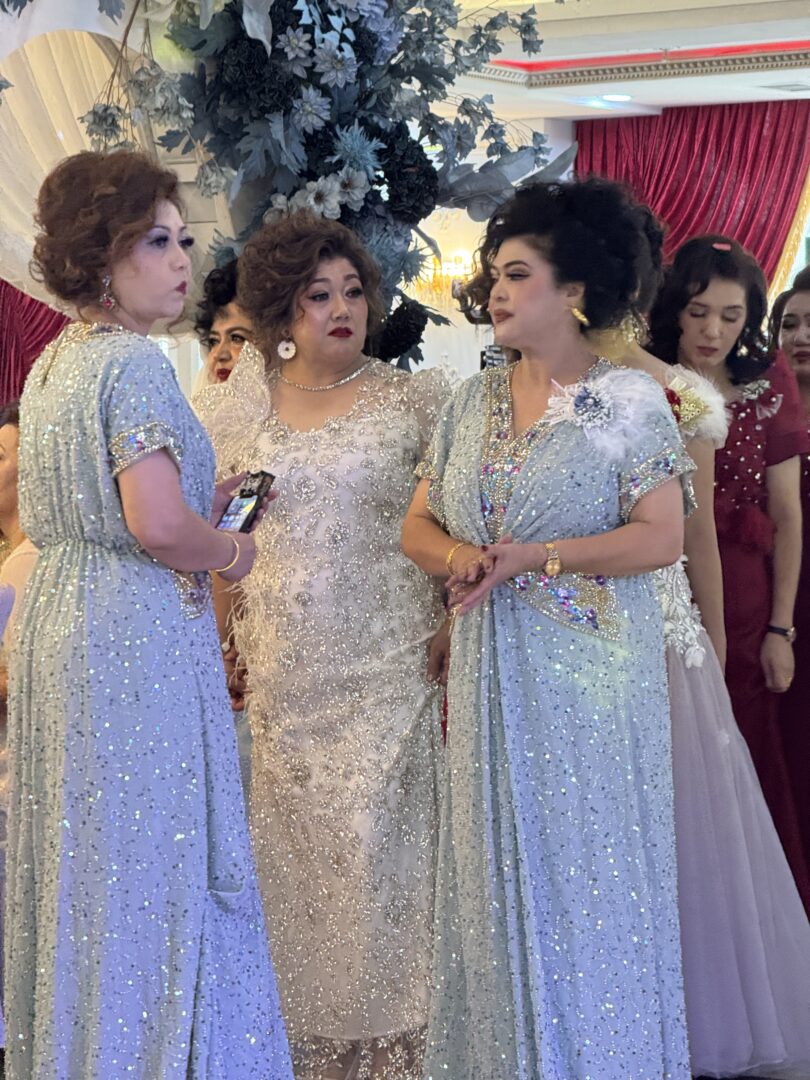
The ceremony itself is short — a few hours in the afternoon — and the substance of it is food, music and dancing. Long tables, dishes arriving continuously, and a dance floor that fills up early and stays full. The dancing is participatory rather than performed: men and women both, in groups, all ages, and a guest who doesn’t dance will be collected and brought out.
You will not be permitted to remain a spectator, and you will not want to be.
Practical notes
Where to sleep: plenty of business hotels at reasonable prices; the city was built for engineers on rotation and the accommodation reflects that.
What to eat:
- Breakfast — milk tea (奶茶), naan (馕), baked buns (烤包子)
- Lunch and dinner — plov (抓饭), home-style laghman (家常拉面), tomato and egg with peppers (西辣蛋)
- Street food — lamb skewers (烤肉串), cold jelly noodles (凉粉)
The general rule in Xinjiang holds here: eat wherever looks busy, including the roadside. Quality is high almost indiscriminately, and lamb is the default protein. More on the region’s cooking in our food guide.
Getting there: Karamay sits in northern Xinjiang, a few hours by road from Ürümqi, and has its own airport.
Nearby: the yardang badlands north of the city — locally the “ghost city” — where wind has carved the sandstone into ridges that howl in a strong blow.
More from the region under Xinjiang, including the Tajik weddings of the Pamir, which are a completely different affair.
- #xinjiang
- #karamay
- #uyghur
- #wedding
- #oil