
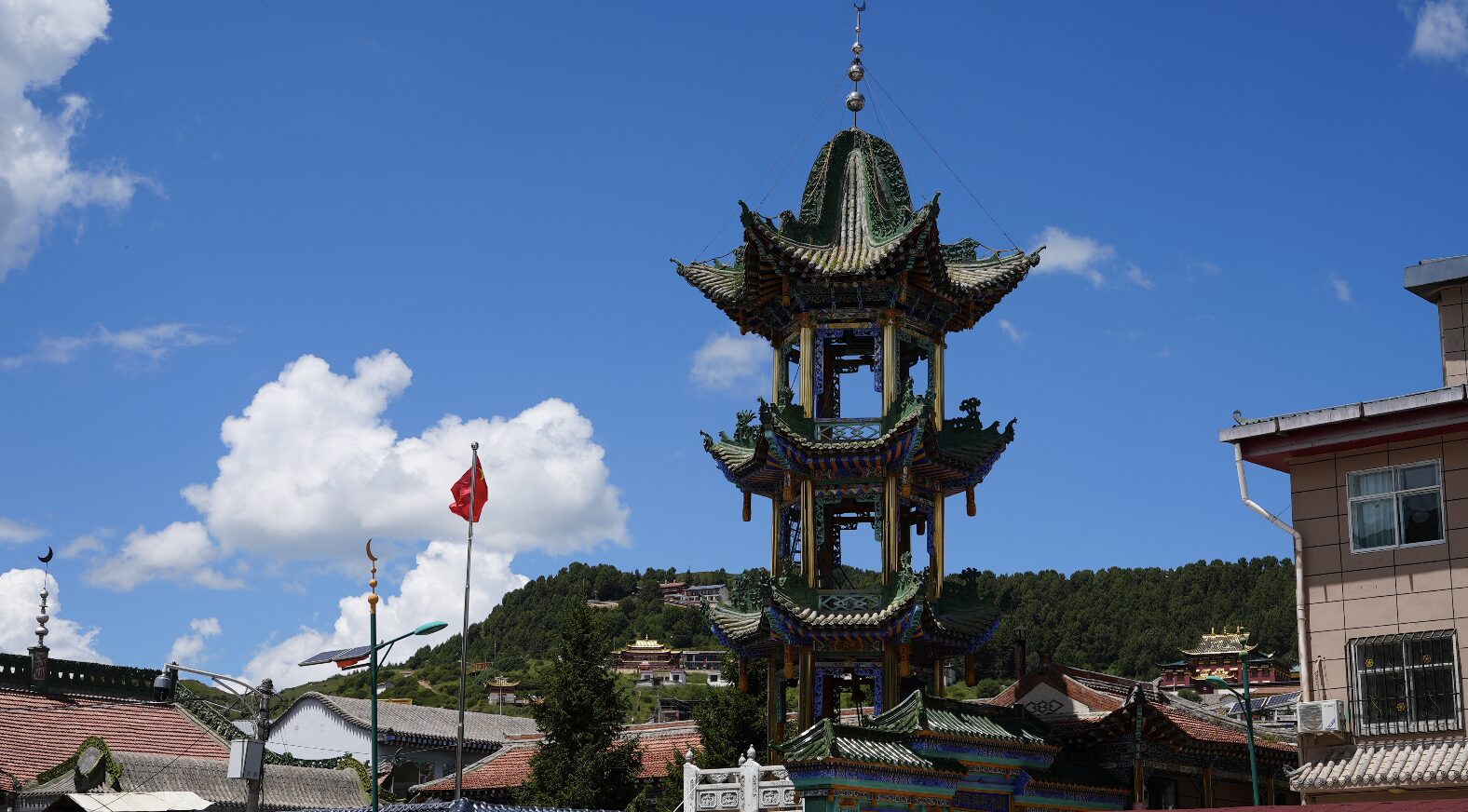
Ngawa is the other half of Tibetan Sichuan — flatter, wetter and greener than Garzê, with the Zoige wetlands, the Yellow River's first great turn, and Jiuzhaigou at its edge.
Sichuan has two Tibetan prefectures and they don’t look alike. Garzê in the west is mountains and gorges. Ngawa — Aba — in the north is where the plateau flattens into something wider and wetter, and the result is a landscape of grassland, marsh and slow rivers instead of switchbacks.
It’s also the prefecture that holds Sichuan’s two most famous scenic areas and its least-known architecture.
The Zoige wetlands and the first bend
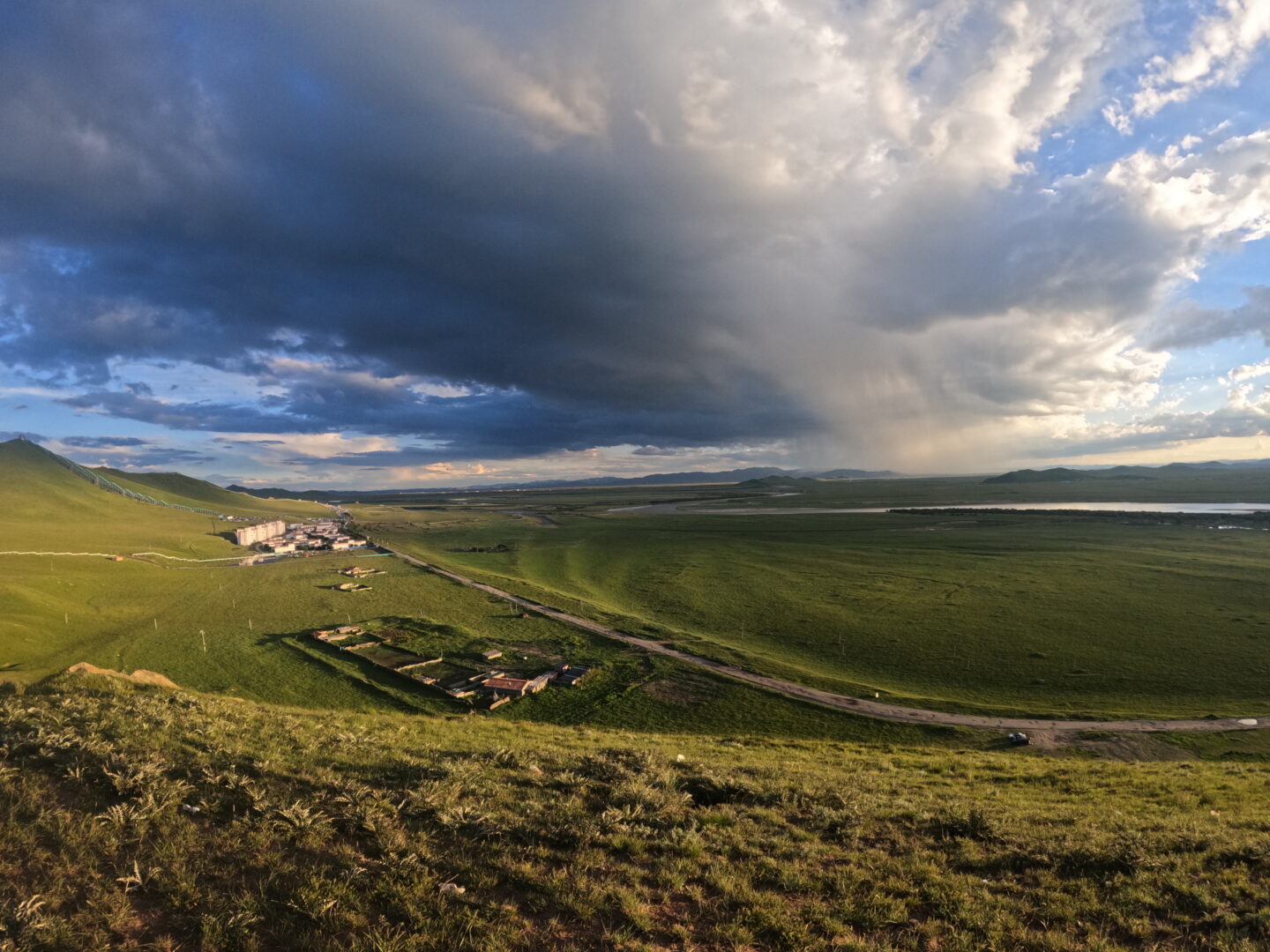
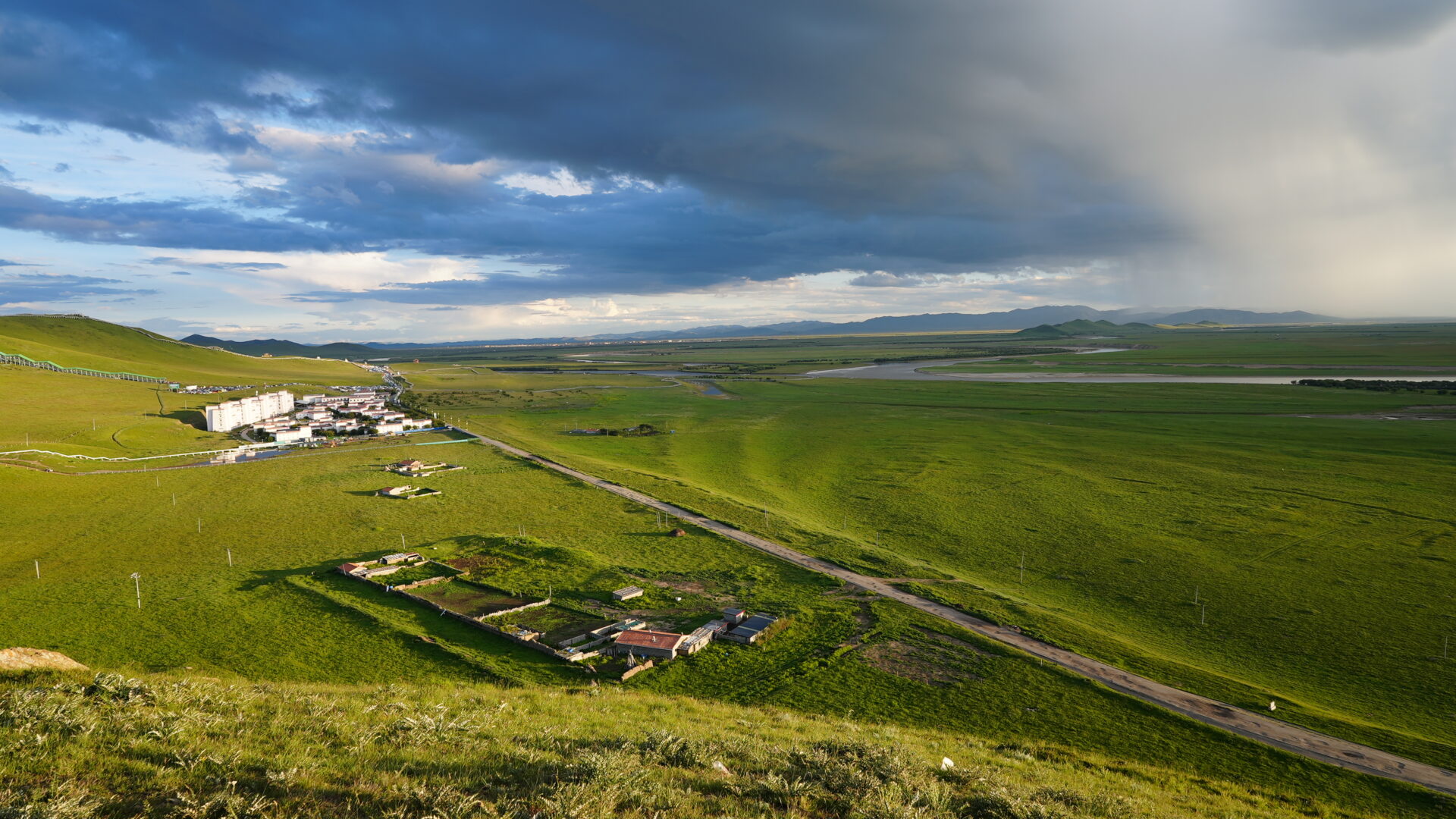
The Zoige (Ruoergai) grasslands sit at around 3,500 metres and form one of the largest high-altitude wetlands on earth — peat bog, meander, oxbow lake and pasture, with black-necked cranes breeding in it and tens of thousands of yak on the drier ground.
At Tangke, the Yellow River makes its first great bend. Having risen on the plateau, it arrives here as a wide braided river across flat grassland, doubles back on itself, and heads north toward the loess country. There’s a viewing hill above it, and at sunset the channels turn to strips of light across a green plain. It is the best single view in northern Sichuan.
The famous two
Jiuzhaigou — a valley of travertine-dammed lakes in extraordinary colours, blue to green to orange depending on depth and mineral content. It was badly damaged in the 2017 earthquake and has since reopened with visitor caps and a managed route. Book ahead; it is not a place you can turn up to.
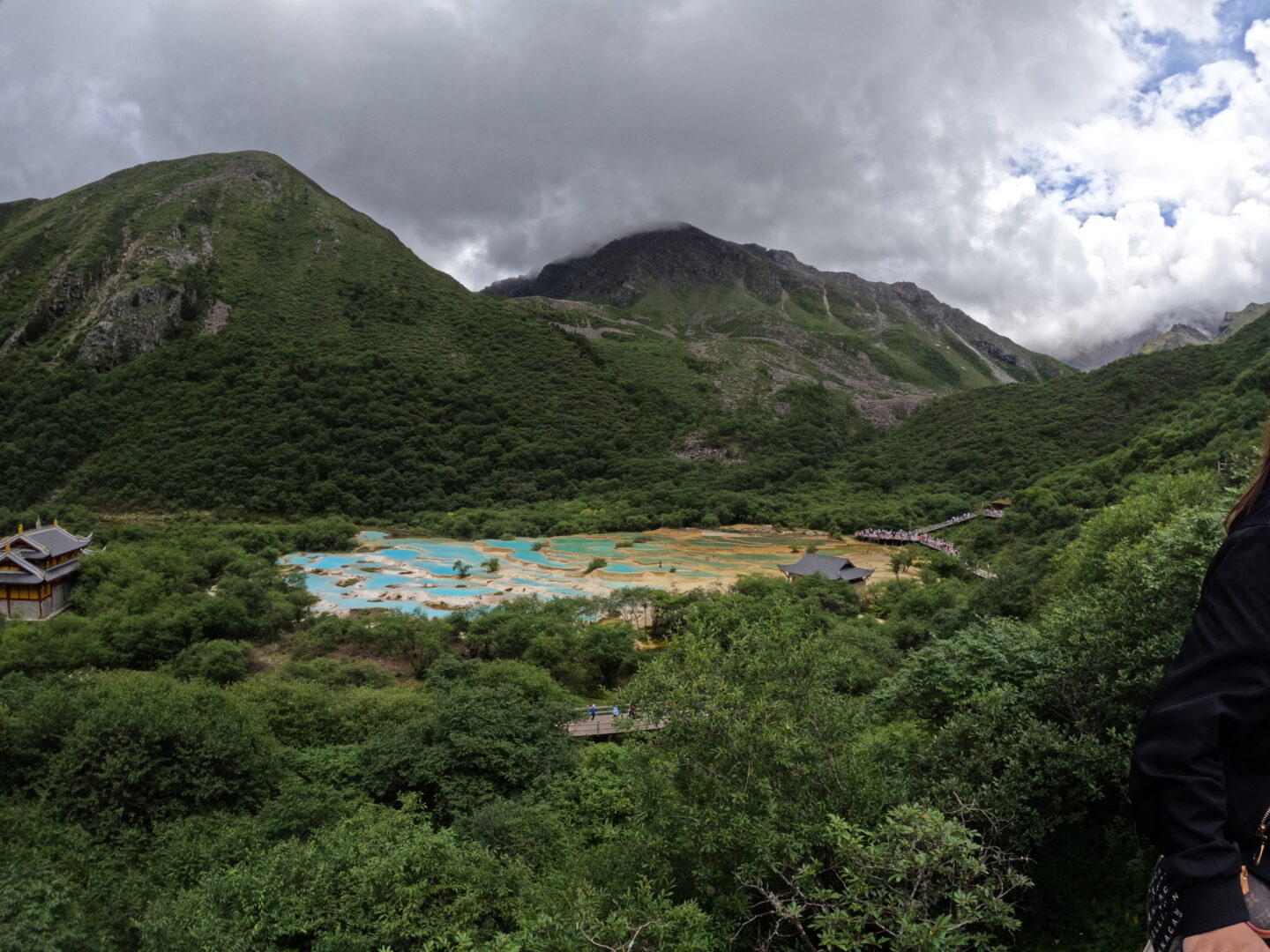
Huanglong — terraced travertine pools on a mountainside at up to 3,500 m, and less crowded than Jiuzhaigou because the altitude thins the crowd. Bring a warm layer regardless of the season.
Both are genuinely spectacular and both are thoroughly managed. Plan them as day trips inside a longer prefecture itinerary rather than the reason for it.
The Qiang towers
The other thing here, largely ignored by visitors: the Qiang and Tibetan stone watchtowers of the Danba and Li county valleys — square or star-plan towers of dry-stone masonry, some over thirty metres tall, several hundred years old and still standing after repeated earthquakes.
The villages built around them — Jiaju and Zhonglu in Danba, Taoping in Li county — are among the most photogenic settlements in China and receive a fraction of Jiuzhaigou’s traffic.
People and food
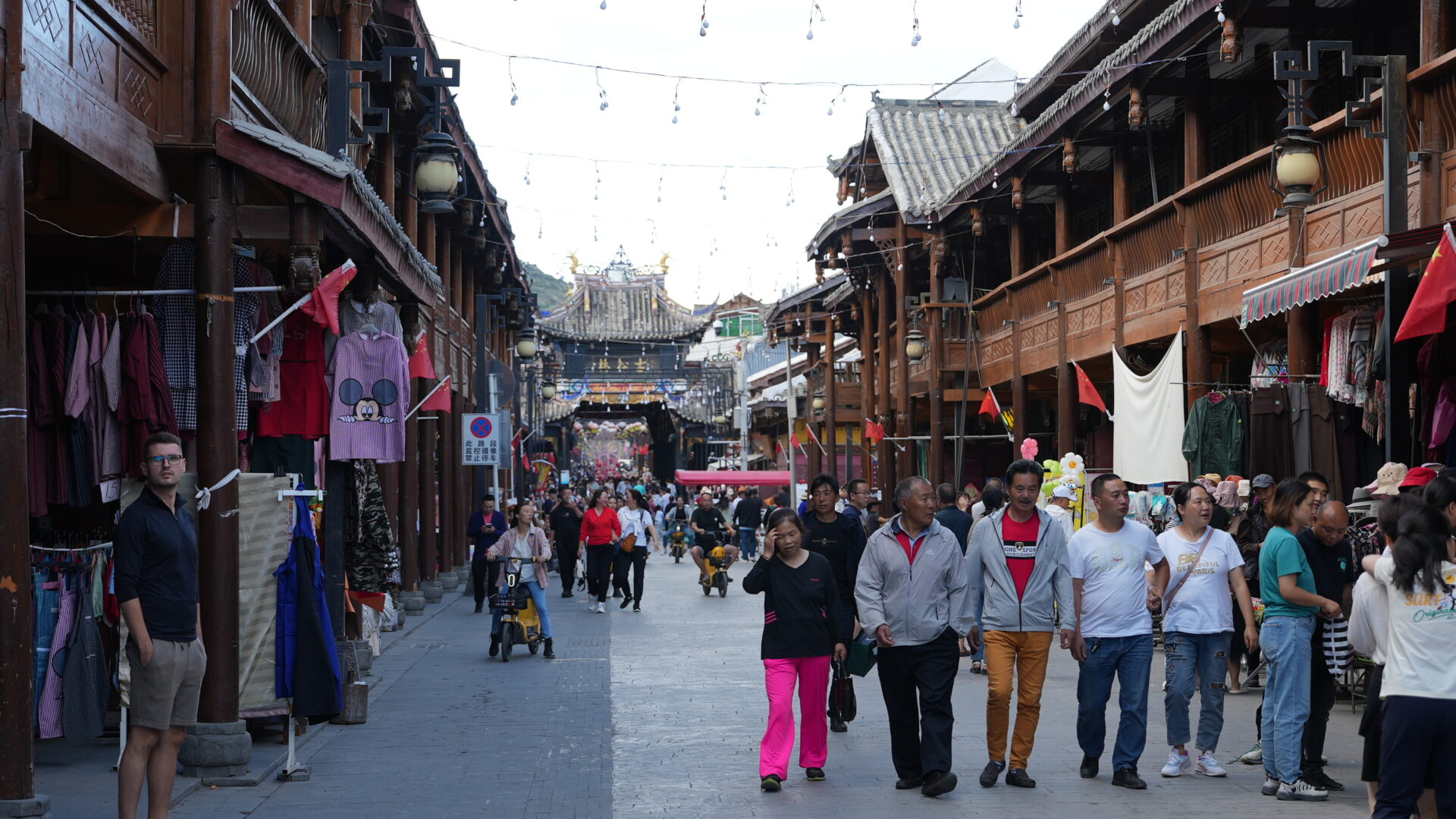
Tibetan on the grassland, Qiang in the eastern valleys, Han in the towns, and the cooking splits accordingly: yak, barley, butter tea and yoghurt up high; Sichuan chilli and pepper as you drop back toward Chengdu. Both are excellent, and having them within a day of each other is one of the pleasures of the region. See our food guide.
Practical notes
Getting there: Chengdu is the base. Jiuzhai Huanglong airport serves the north of the prefecture; the overland route via Wenchuan and Maoxian takes a day to reach the grassland.
Altitude: grassland at 3,400–3,600 m, Huanglong higher. Chengdu is at 500 m — don’t do both in one day.
When: June to September for green grass, flowers and the cranes; October for autumn colour in the valleys; winter is clear, empty and severely cold.
Driving: an excellent self-drive region with a Chinese licence. Roads are good and the distances are manageable.
- #sichuan
- #ngawa
- #aba
- #zoige
- #yellow river