
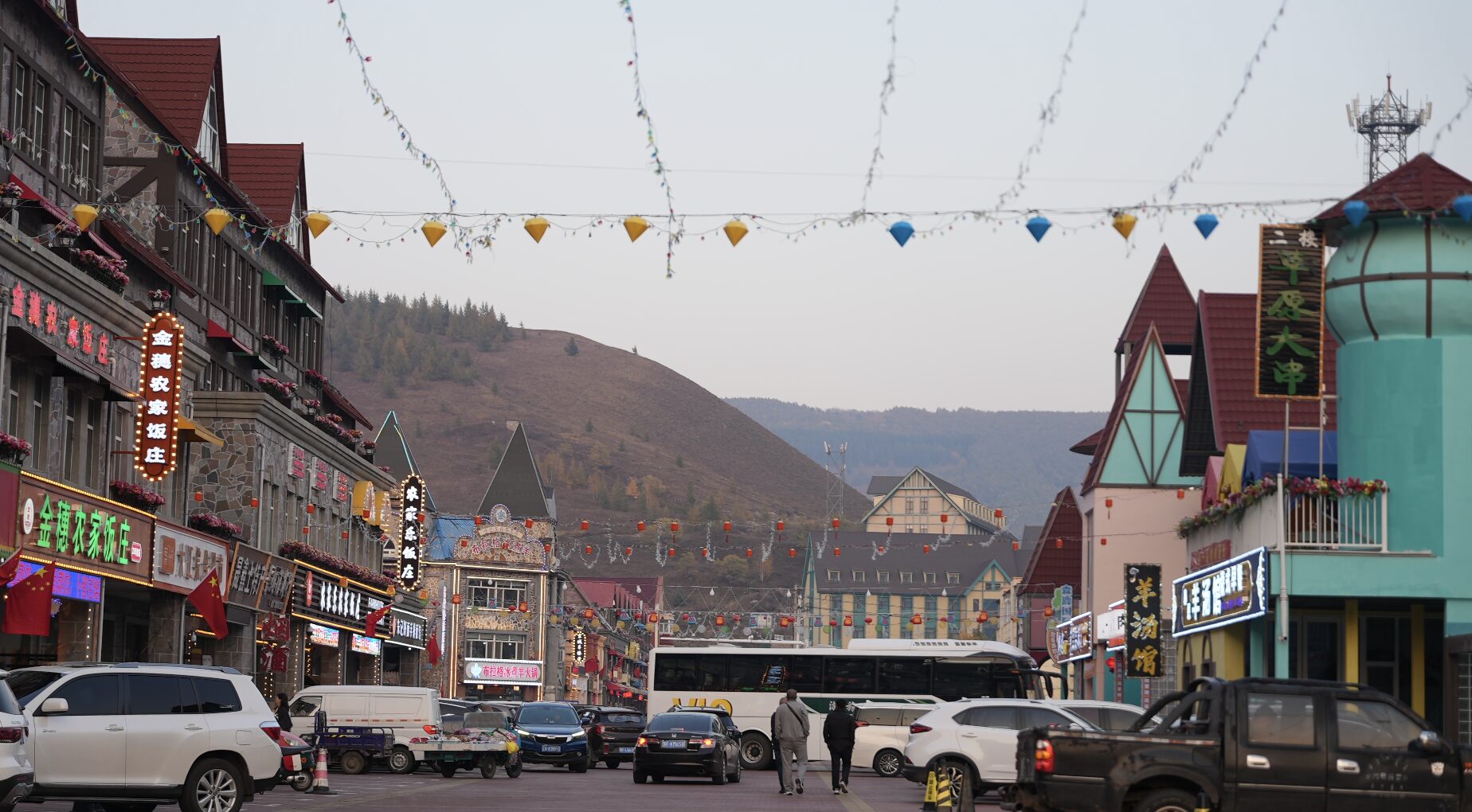
Arxan is the least likely town in Inner Mongolia: European chalet architecture, mineral hot springs and a volcanic field, all in forest on the Mongolian border.
Arxan does not look like Inner Mongolia. It sits in the Greater Khingan range in the Hinggan League, close to the Mongolian border, and instead of steppe it has birch and larch forest, volcanic craters, mineral springs and buildings with steep alpine roofs.
The name itself is Mongolian, from a term for holy hot water — the springs are why anything is here.
The architecture
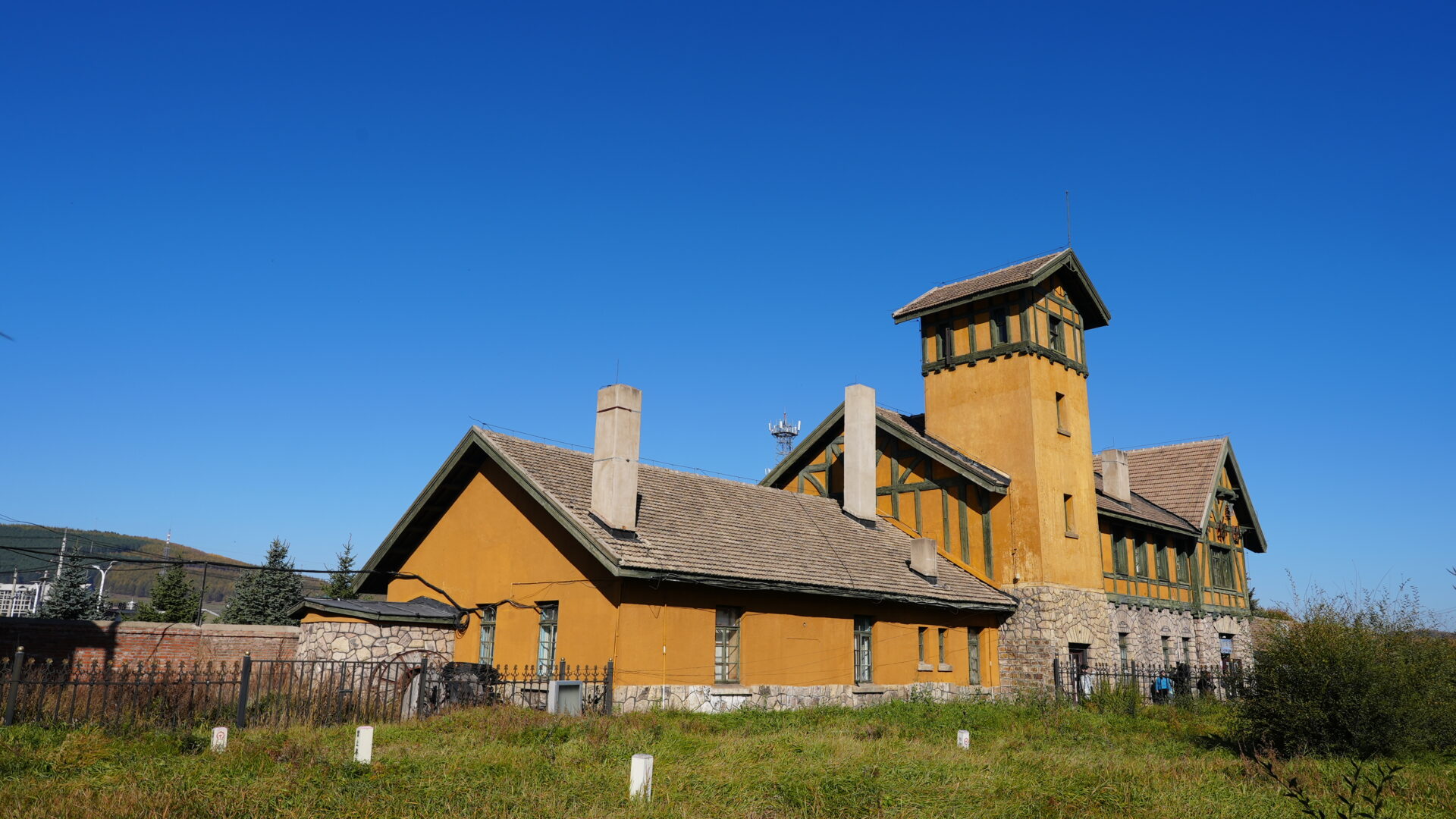
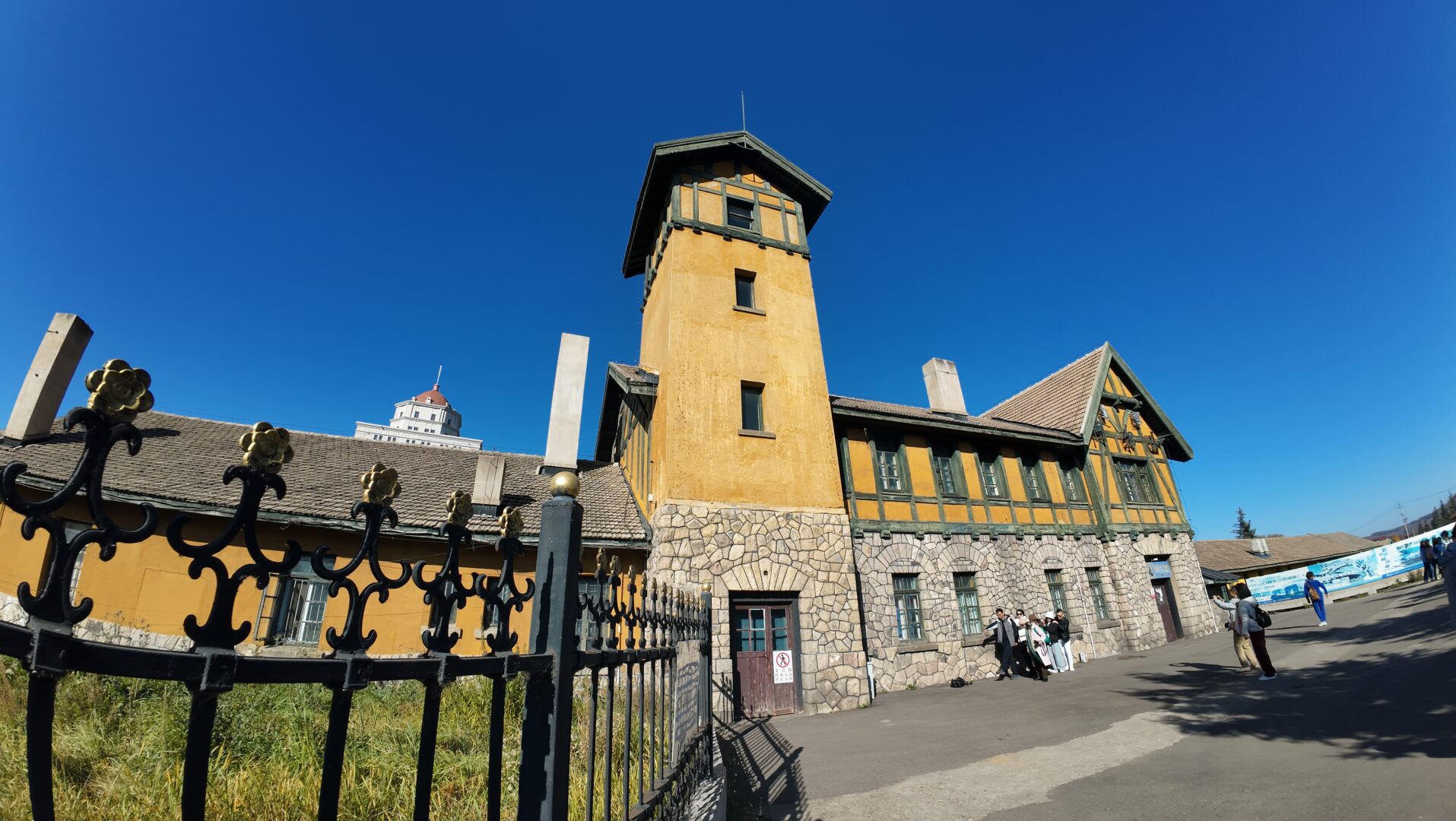
The building everyone photographs is the railway station, completed in 1937 during the Japanese occupation of Manchuria: stone and timber, steep gables, dormers — a European mountain-resort idiom dropped into northern Inner Mongolia. It’s a protected heritage structure and still a working station.
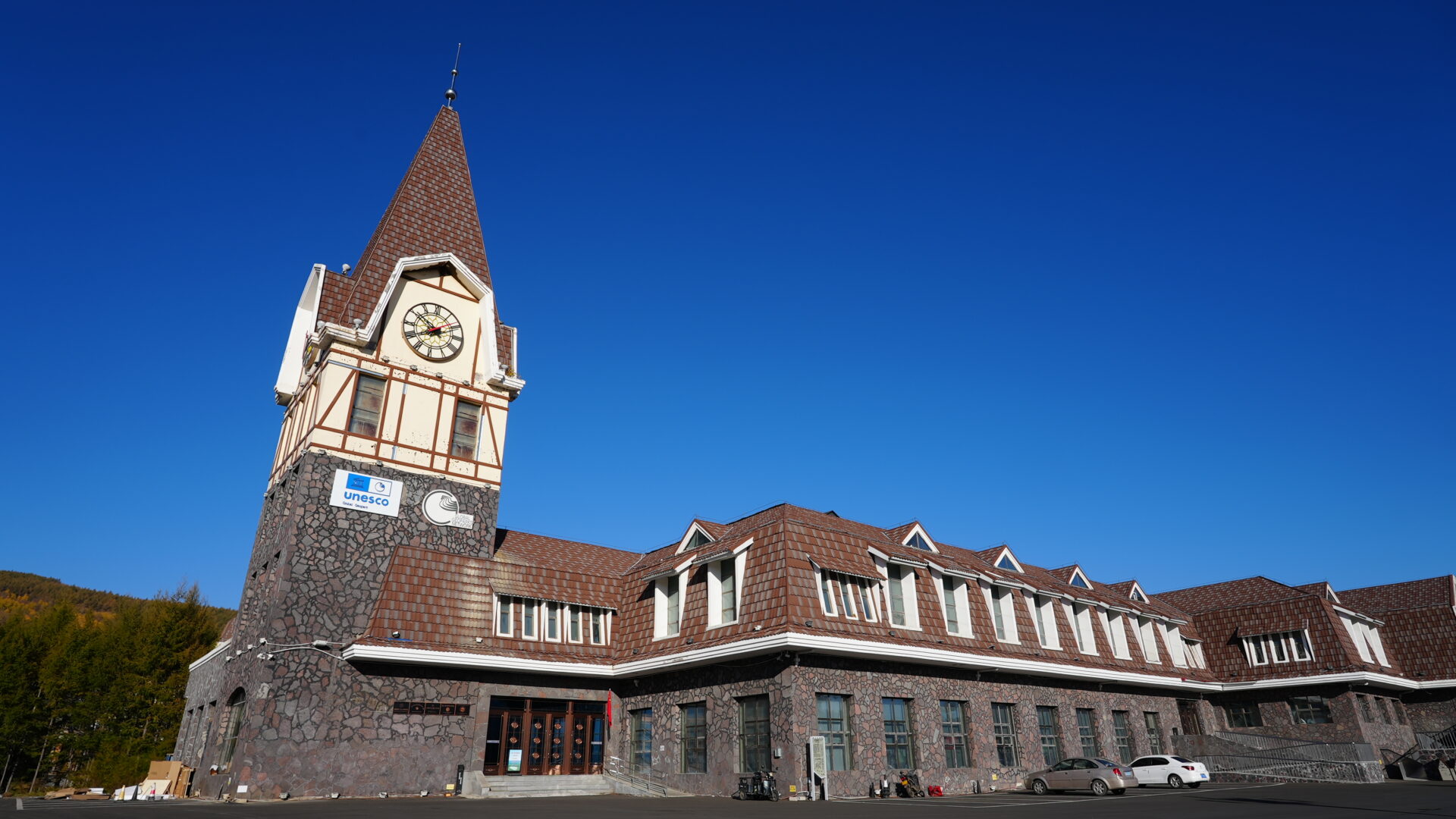
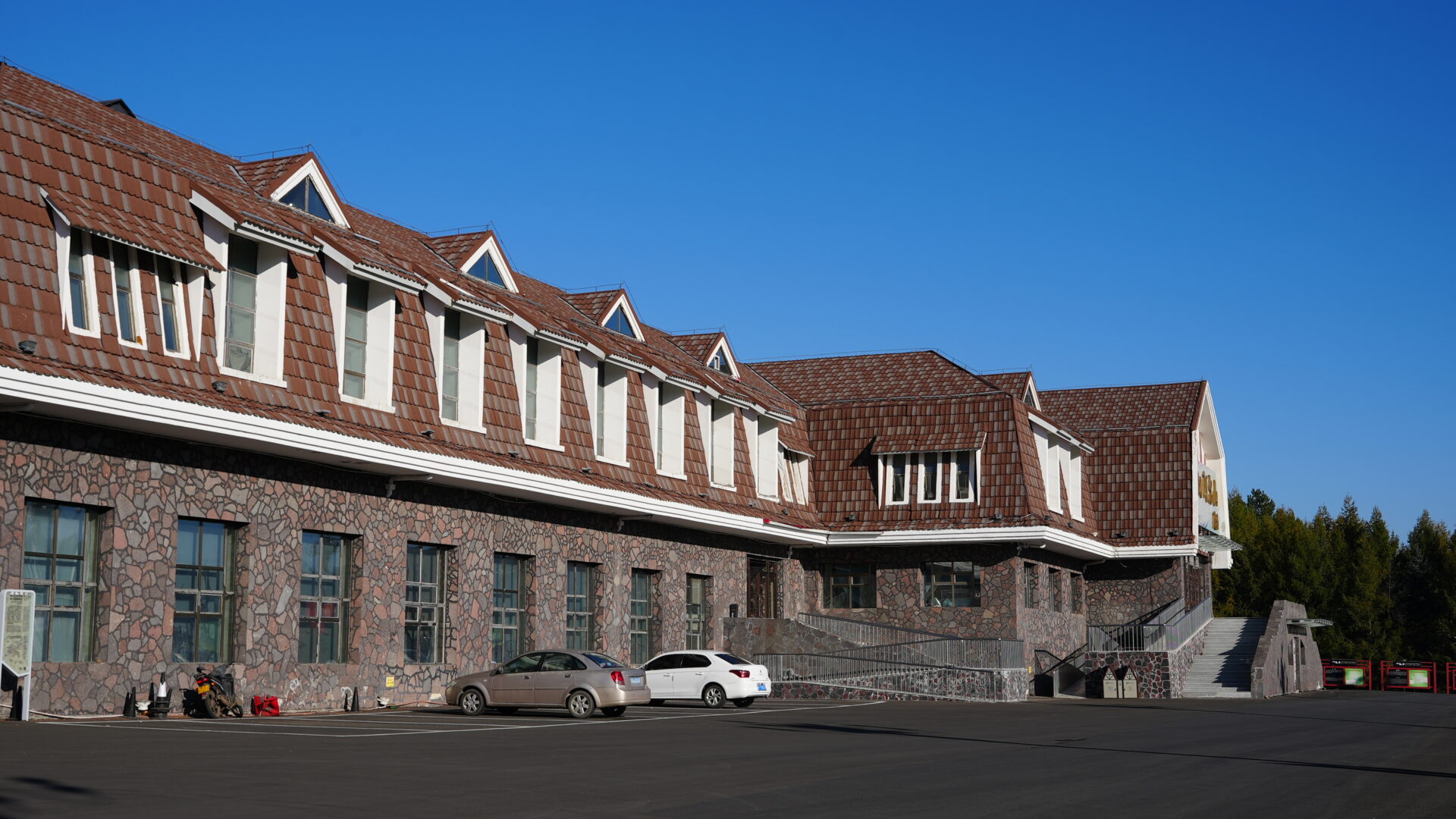
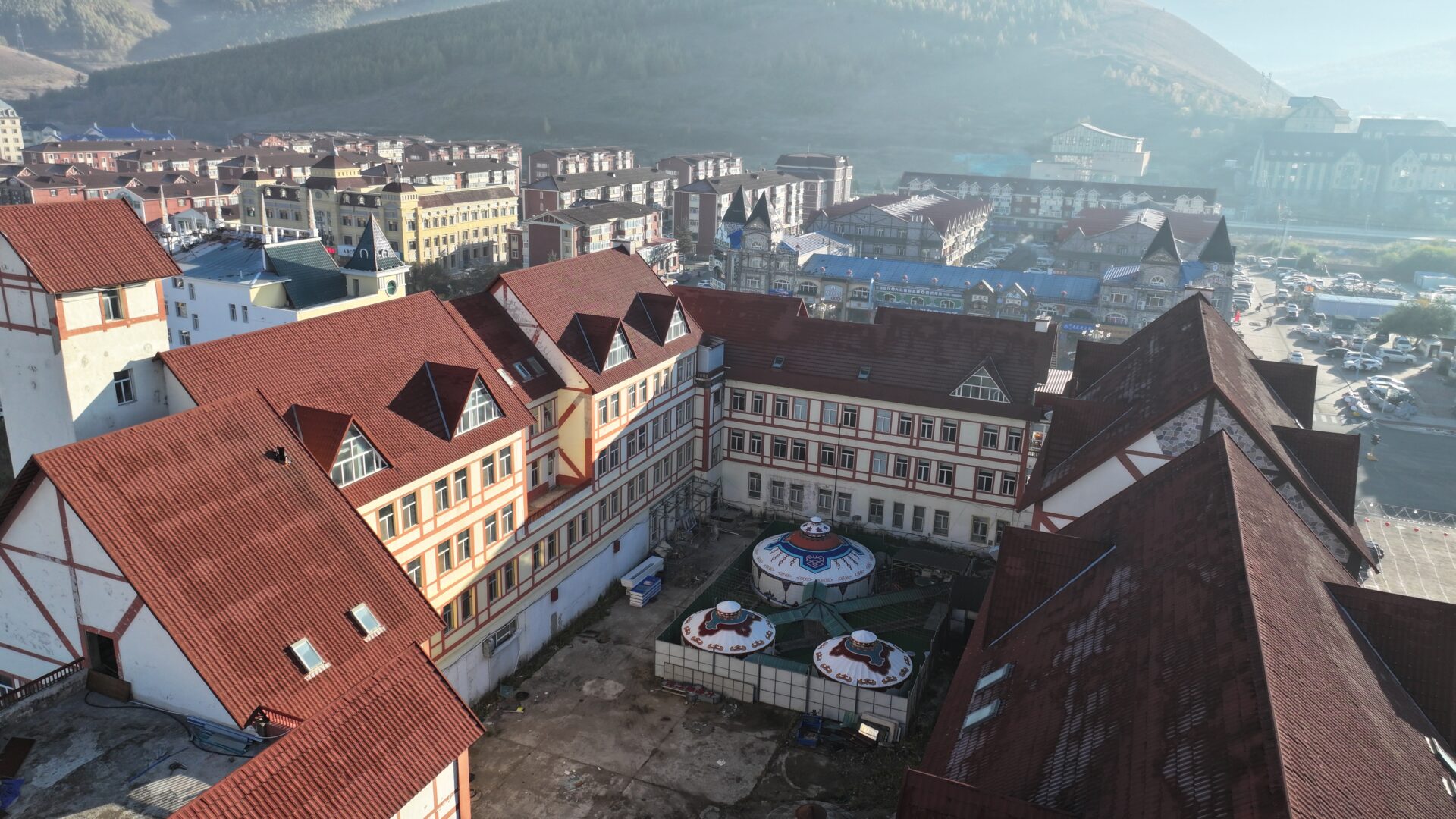
The town has taken the cue. Much of what has been built around it since — hotels, spa buildings, shopfronts — follows the same chalet vocabulary, so the overall effect is of an alpine spa town that has ended up on the wrong continent.
Whether you find that charming or odd, it’s genuinely unlike anywhere else in the country.
The chalet idiom, in Inner Mongolia
The volcanoes
Arxan National Forest Park is the reason to stay more than a night. The area is a young volcanic field, and the features are unusually accessible:
- Crater lakes — several, including a near-perfect circular one reached by a stairway up the cone
- Lava fields — the shitanglin, “stone pond forest,” where birch has colonised broken basalt and the ground is all fissures and hollows
- Springs and streams running through the forest, some of which don’t freeze in winter because of geothermal input
- Wetland and river valleys with boardwalks, good for birds
It’s laid out as a scenic area with a shuttle system between sites, which makes it easy and means you’re seeing it with other people. Early starts help.
The hot springs
Dozens of springs in the immediate area, at a range of temperatures and mineral compositions, and the historic basis of the town’s existence. The traditional understanding assigns different springs to different complaints — the same medical-bathing logic found across Mongolia and Tibet.
Today it’s a mixture of resort spa facilities and older public bathhouses. The bathhouses are cheaper, hotter and considerably more interesting.
When to go
Summer — June to August. Cool forest while the rest of the country bakes, wildflowers, and full access to the park.
Autumn — September, brief and spectacular. Larch and birch turn gold against black lava.
Winter — Arxan is a serious cold-weather destination: skiing, ice, and steam rising off open water at −30°C. Well set up for it, and genuinely severe.
Spring is short, muddy and skippable.
Practical notes
Getting there: rail to Arxan (the old station), or fly to Ulanhot and drive. The train journey through the Khingan forest is a good part of the trip.
Where to sleep: plenty of hotels, many with spring water plumbed in. Prices spike in high summer and around the winter holidays.
Nearby: the Ujimqin grasslands south, Enhe and the Hulunbuir grassland north, and the northeastern provinces — Jilin and Heilongjiang — east.
- #inner mongolia
- #arxan
- #hot springs
- #volcano
- #architecture