
Pu'er is not a plantation region pretending to be historic. The tea trees on Jingmai mountain are centuries old, grown in forest rather than rows, and the trade route out of here shaped half of Asia.
Yunnan is where the tea plant is native, and Pu’er prefecture in the south is where the most storied version of it is made. This is not a place trading on a marketing story — the trees are genuinely old, some of them centuries, and the tea made from them is the only major category in the world deliberately aged rather than drunk fresh.
Forest, not plantation
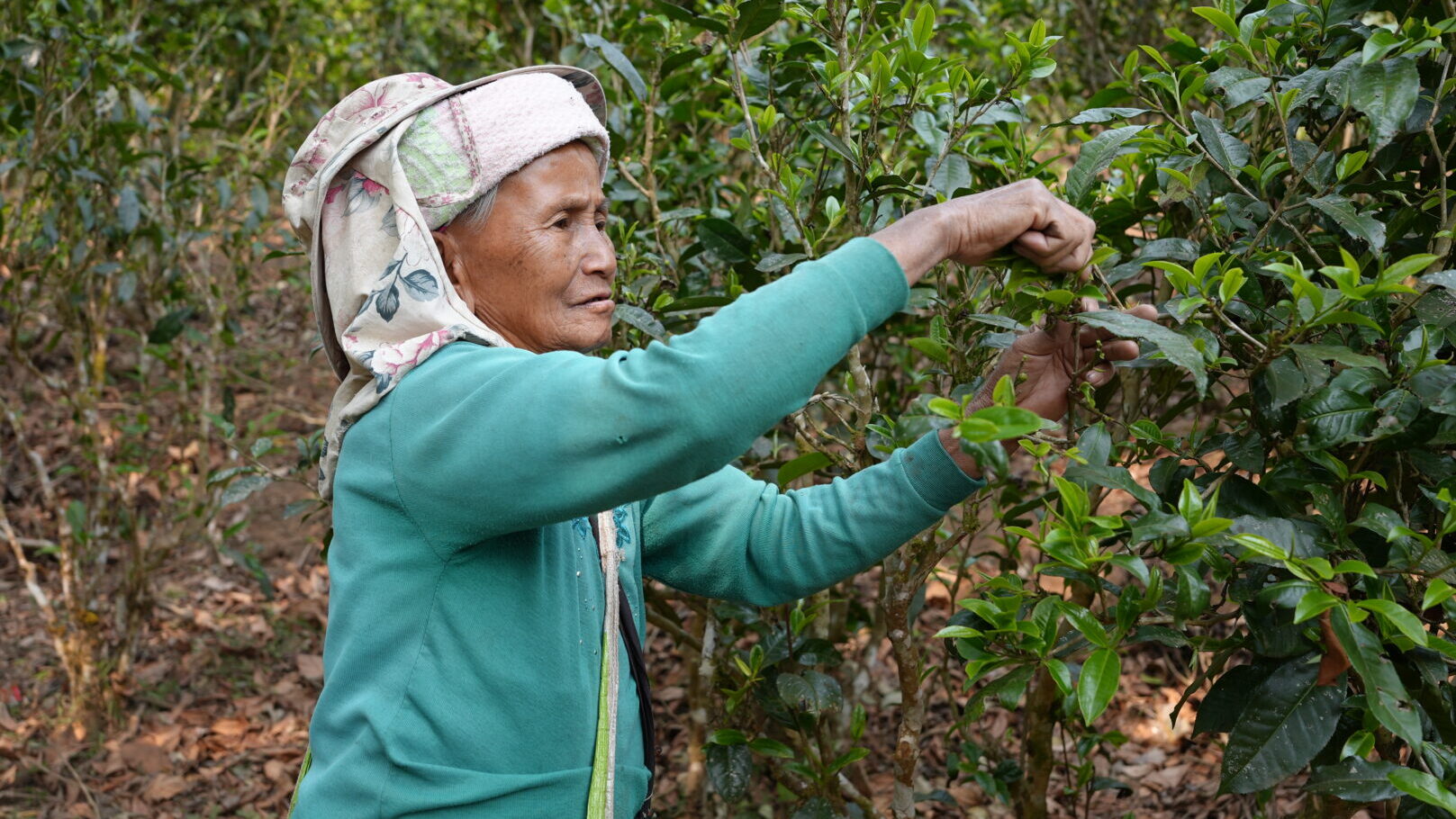
The distinction that matters here: most tea grows in clipped waist-high rows. The old pu’er material grows as trees, in mixed forest, at spacing that lets other species stand between them.
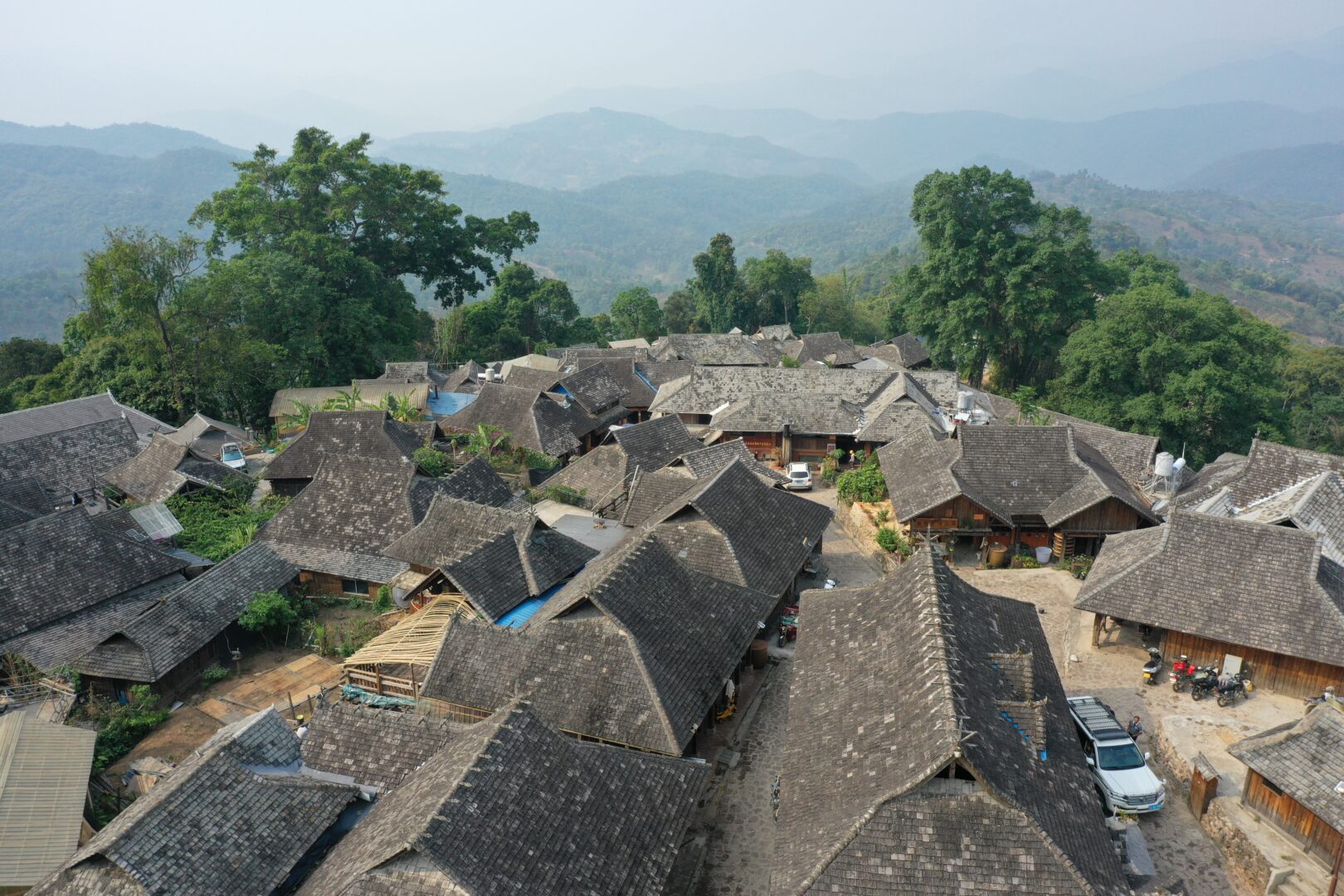
Jingmai mountain is the flagship — a landscape of ancient tea forests, added to the UNESCO World Heritage list in 2023, farmed for around a thousand years by Blang and Dai communities who manage the forest as a whole system rather than as a crop. The tea grows in the understorey; the canopy stays.
Walking through it doesn’t look like agriculture. It looks like woodland with ladders in it.
Raw and ripe
Two things are sold as pu’er and they’re barely the same drink.
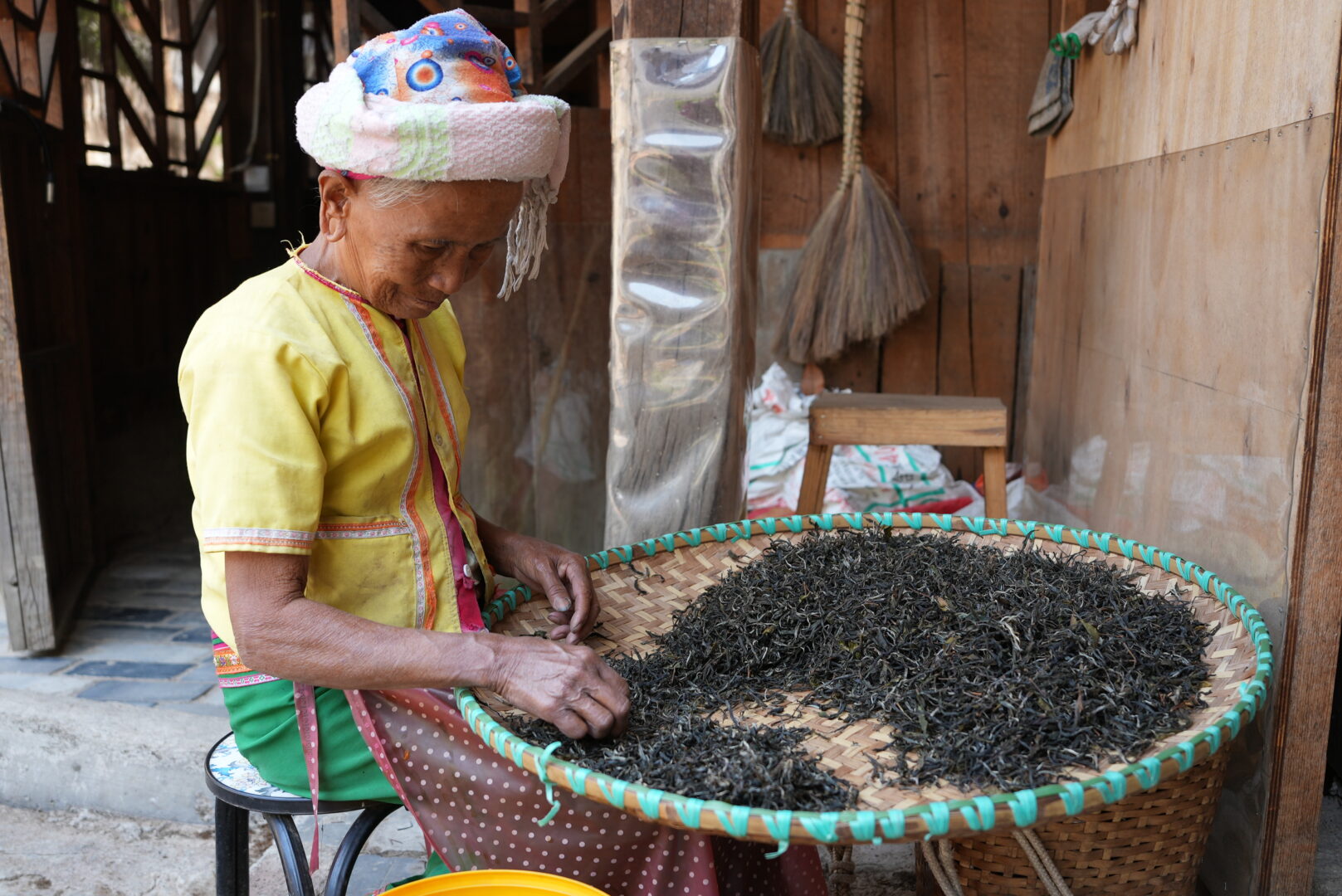
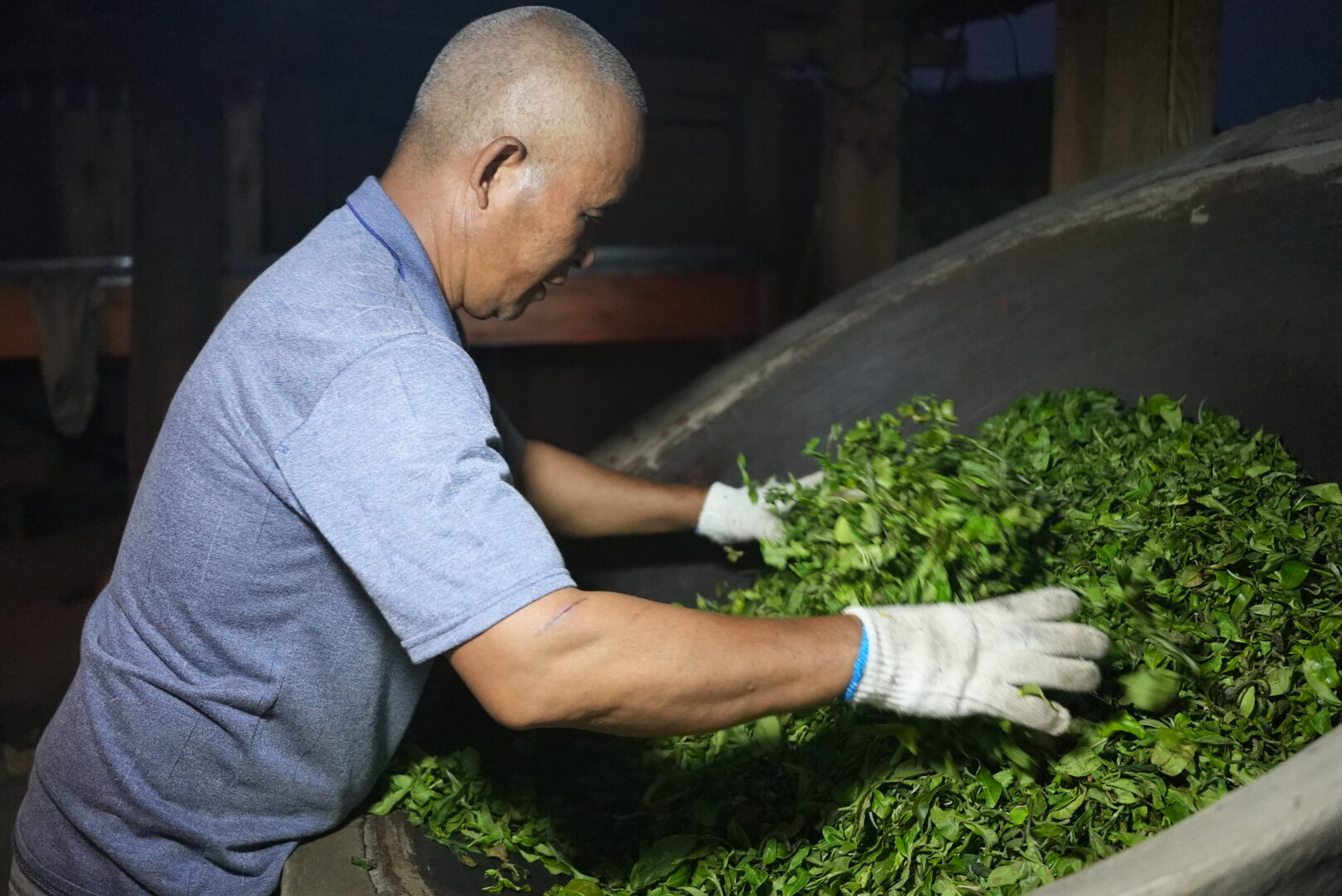
Sheng (raw) is the traditional form: leaves picked, wok-dried, sun-dried, then pressed into cakes and left to ferment slowly over years or decades. Young sheng is bright, astringent, almost green. Twenty-year-old sheng is dark, sweet and expensive.
Shu (ripe) is a 1970s invention — a controlled wet-piling fermentation that produces something resembling aged tea in a few months. Dark, earthy, smooth, and vastly cheaper.
Neither is fake. The confusion is only ever about which one you’re paying for.
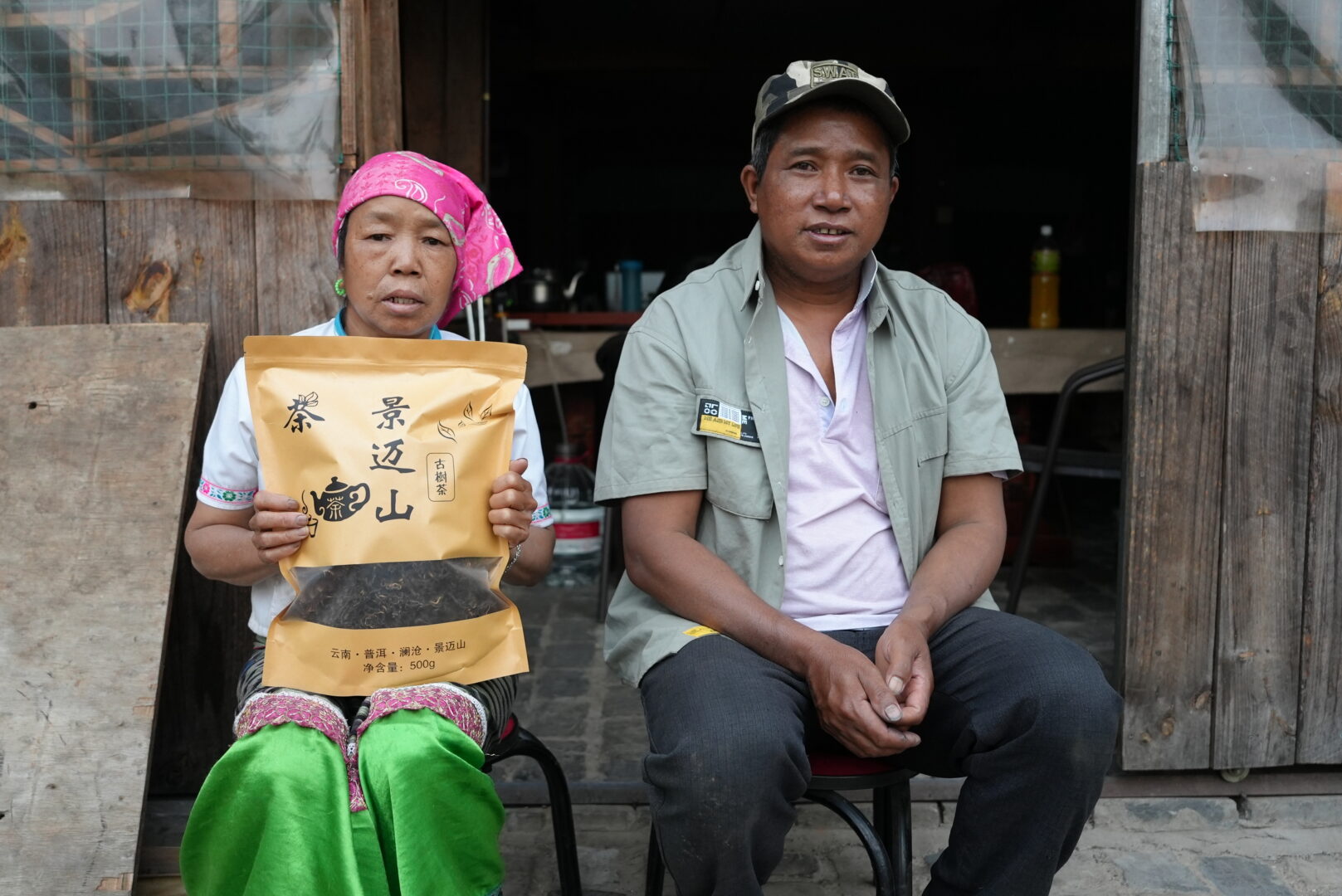
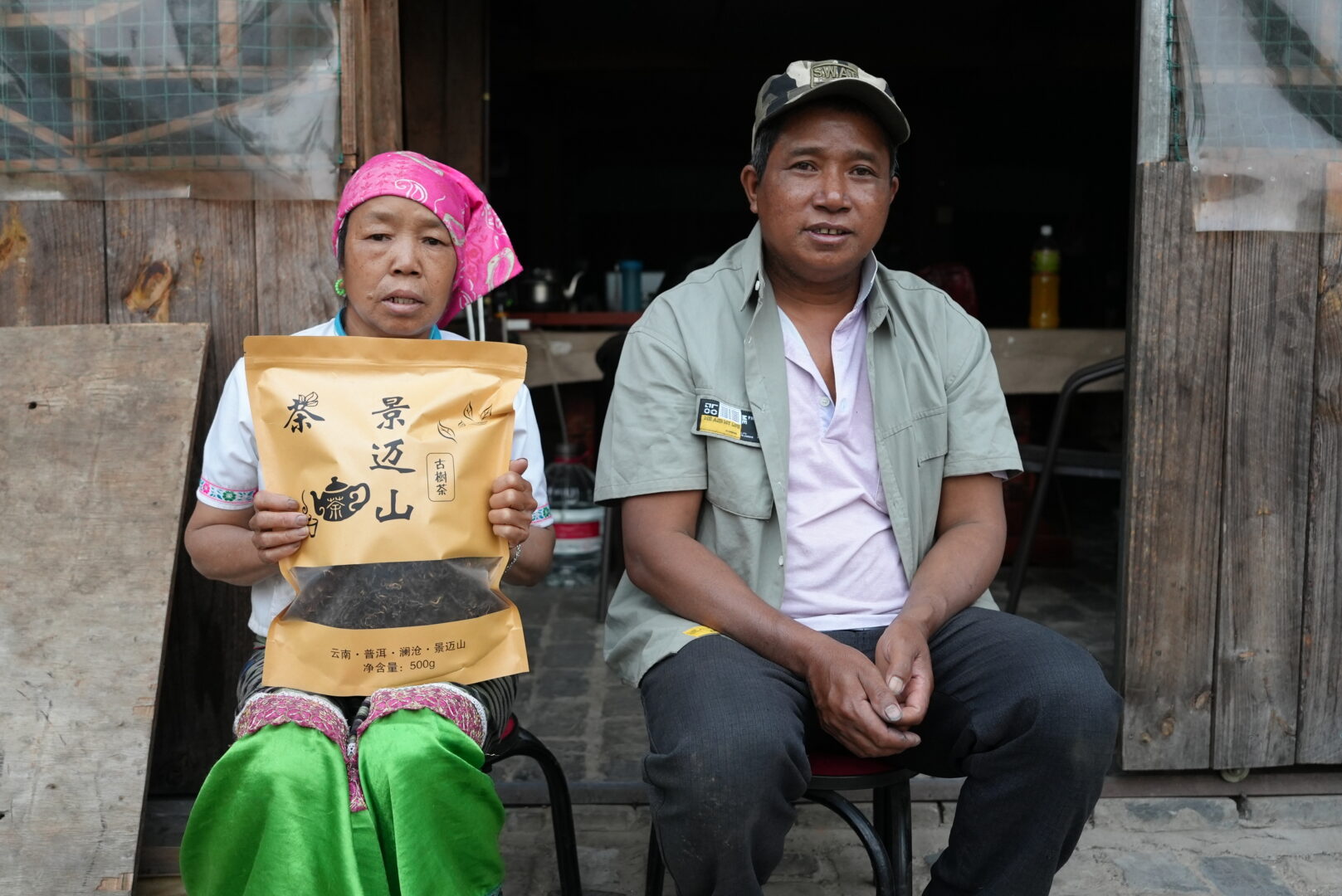
Buying tea in the market — the transaction always starts with drinking it
Buying without being taken
The market is enormous, and quality claims are hard to verify. A few rules:
- Drink before you buy. Every stall will brew for you and expects to. If they won’t, leave.
- Age claims are cheap. A cake presented as 30 years old at a low price is not 30 years old.
- Village-specific tea is where the interest is — Jingmai, Bulang, Nannuo, Yiwu all taste different, and a seller who can talk about that is worth listening to.
- Buy small. A 100 g sample beats a 357 g cake you’ll never finish.
The Tea Horse Road
Pu’er was the southern terminus of the Ancient Tea Horse Road — the caravan network that carried compressed tea north into Tibet and returned with horses, running for centuries over 3,000-metre passes through Dali, Lijiang and Shangri-La. Compression into cakes was a shipping decision that turned out to make better tea; the fermentation that happens in transit is now the point.
Traces are still on the ground — paved mule steps, staging towns like Shaxi, and the old warehouses in the tea towns.
Practical notes
Getting there: Pu’er city has an airport and rail; the Kunming–Vientiane line has made the whole south far easier to reach. Jingmai is a couple of hours further by road, near Lancang.
When: spring, March to April, for the first flush and the picking. Autumn is a second, lighter harvest. Summer is the rainy season — atmospheric mornings, difficult roads.
Where to sleep: guesthouses in the Jingmai villages, which is much better than staying in the city. Several are run by tea-growing families and include tastings.
Nearby: Menglian for Dai temples and the Myanmar border, and Xishuangbanna further south. More in our food and drink guide.
- #yunnan
- #puer
- #tea
- #jingmai
- #tea horse road