
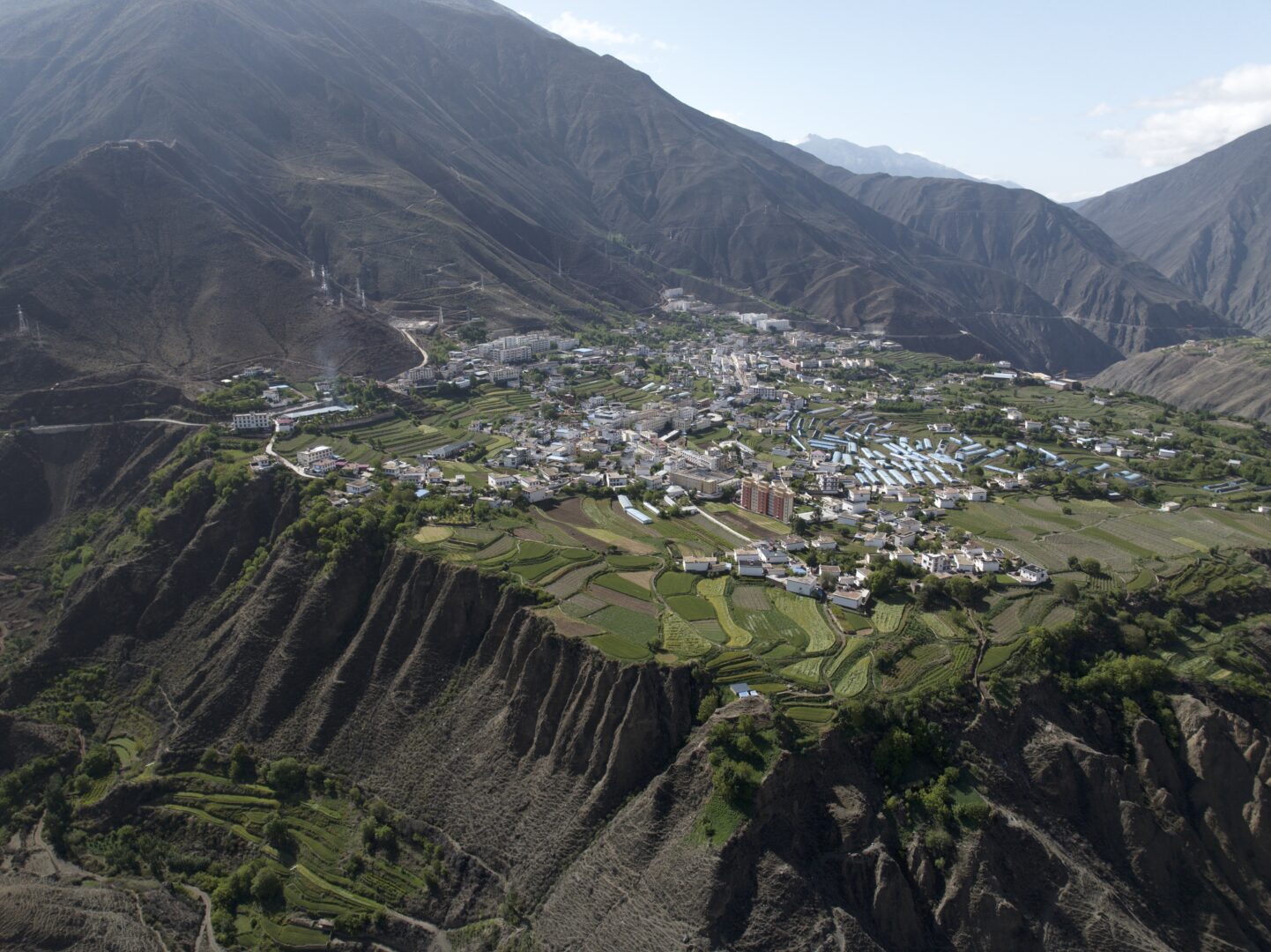
Chamdo is eastern Tibet — Kham, the horse-and-monastery half of the plateau. Down on the Mekong it also holds a thousand hand-built salt pans and a French mission church still holding mass.
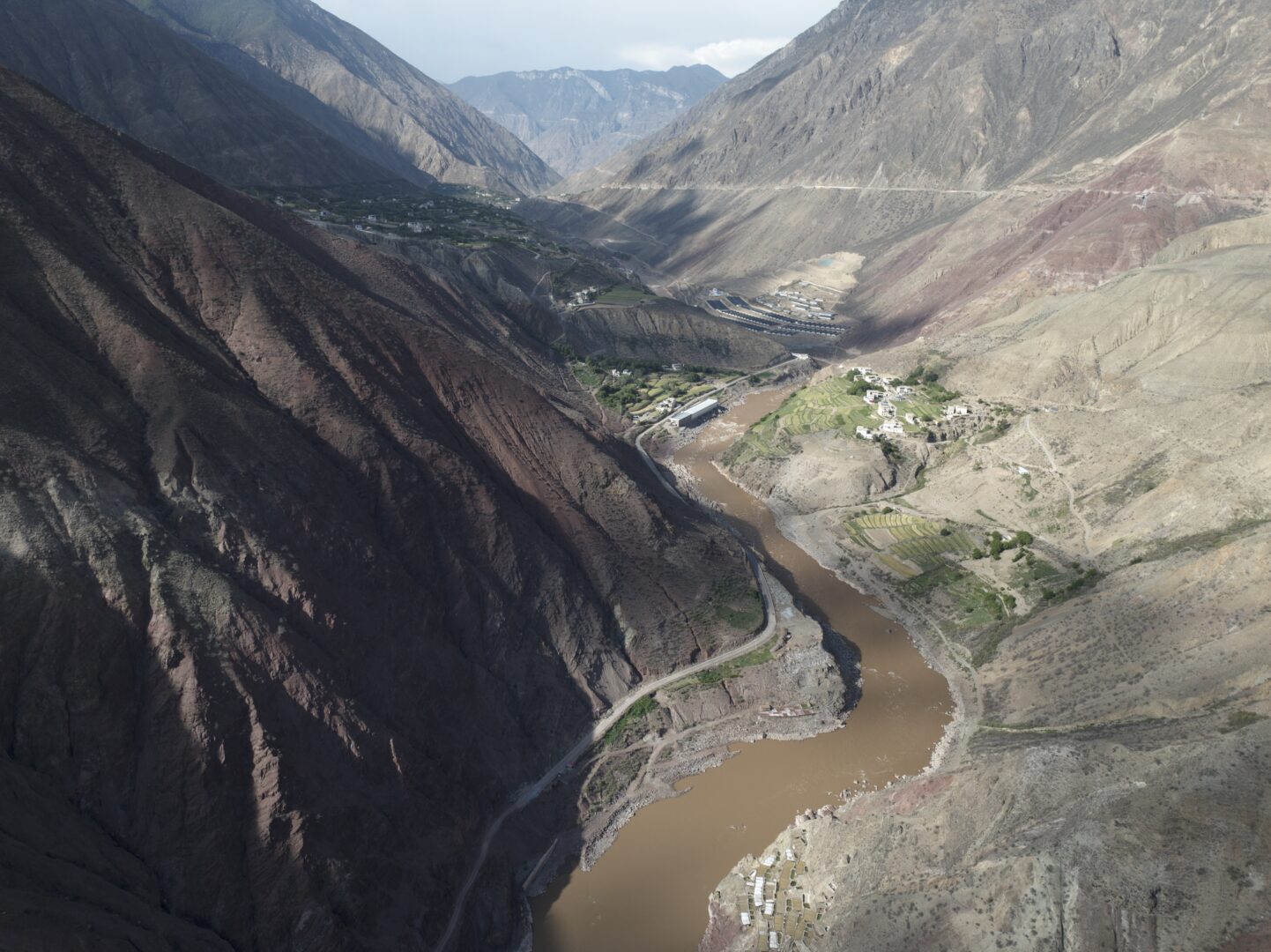
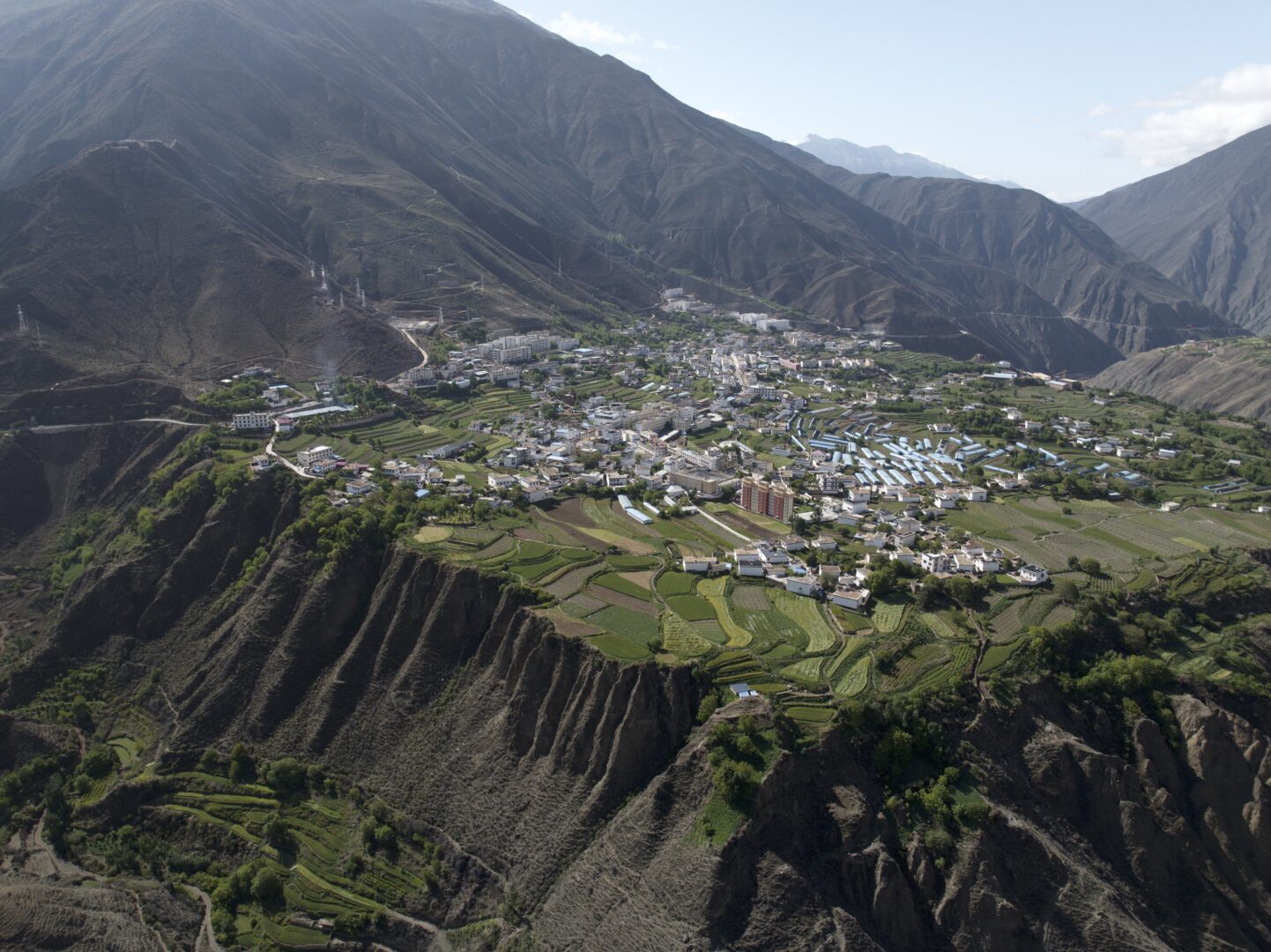
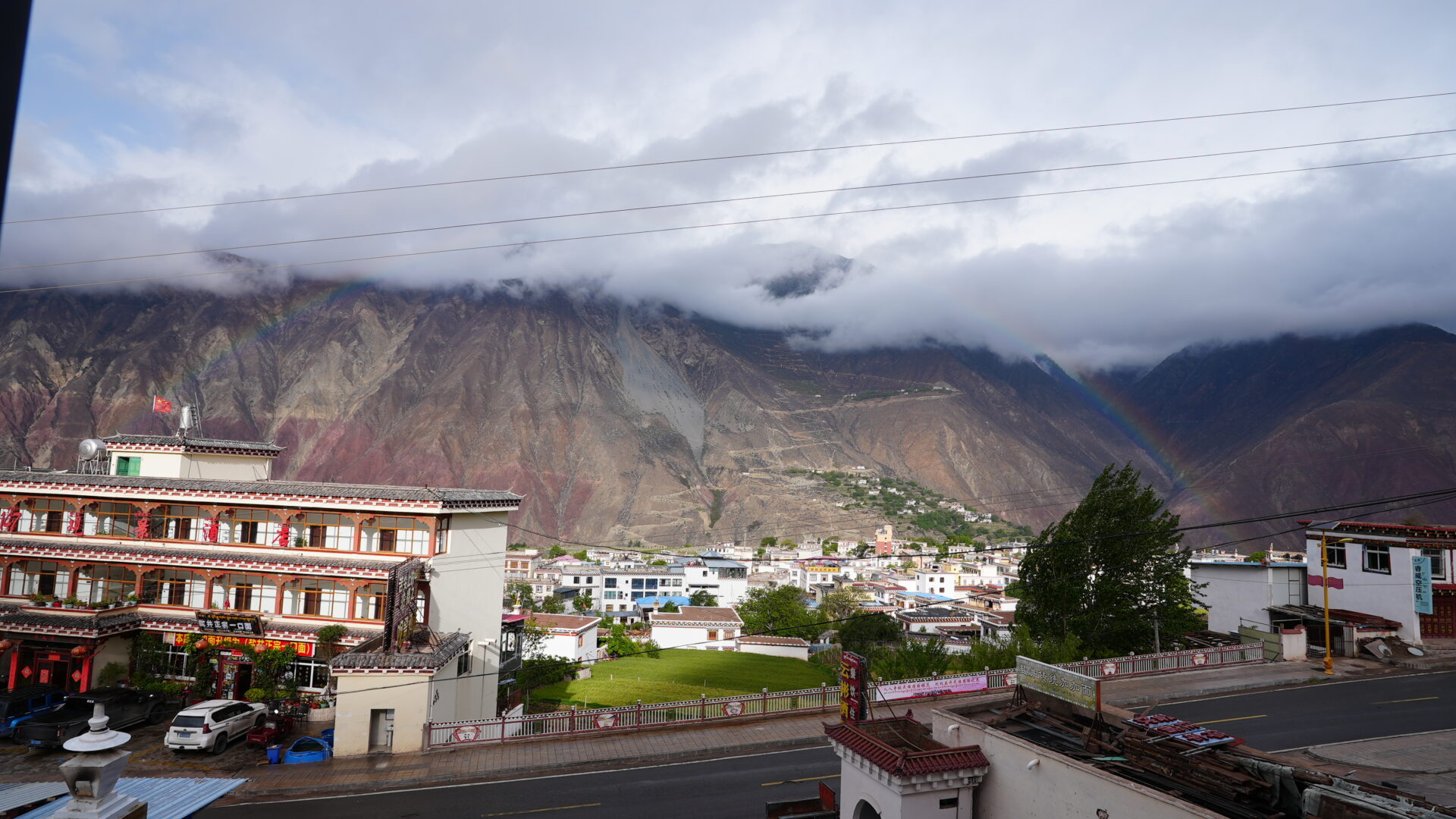
Chamdo — Qamdo — is the eastern third of the Tibet Autonomous Region, in the historic province of Kham, and it has a different feel from Lhasa and the west. This is river country rather than open plateau: the upper Mekong, Salween and Yangtze all run south through it in parallel gorges, so instead of horizon-to-horizon plateau you get a landscape of ridges, switchbacks and valleys.
Khampas have a reputation across the Tibetan world — traders, horsemen, tall, and not historically inclined to defer to anybody. It’s visible in how people carry themselves and in the sheer scale of the local monasteries.
Rural life at 3,200 metres
The economy is barley, wheat, potatoes and livestock — yak, sheep, some cattle — on terraces and pasture that run up to whatever altitude will still support them. Villages are stone and rammed earth with flat roofs stacked with fodder, prayer flags on every high point, and a mani wall on the approach.
The rhythm is agricultural and religious in equal measure, and the two aren’t really separable: the calendar is monastic, the fields are blessed, and the biggest gatherings of the year are festivals rather than markets.
Chamdo town’s Jampaling monastery is the major Gelug institution of Kham, and the assembly halls are on a different scale from anything in the countryside.
The salt fields at Yanjing
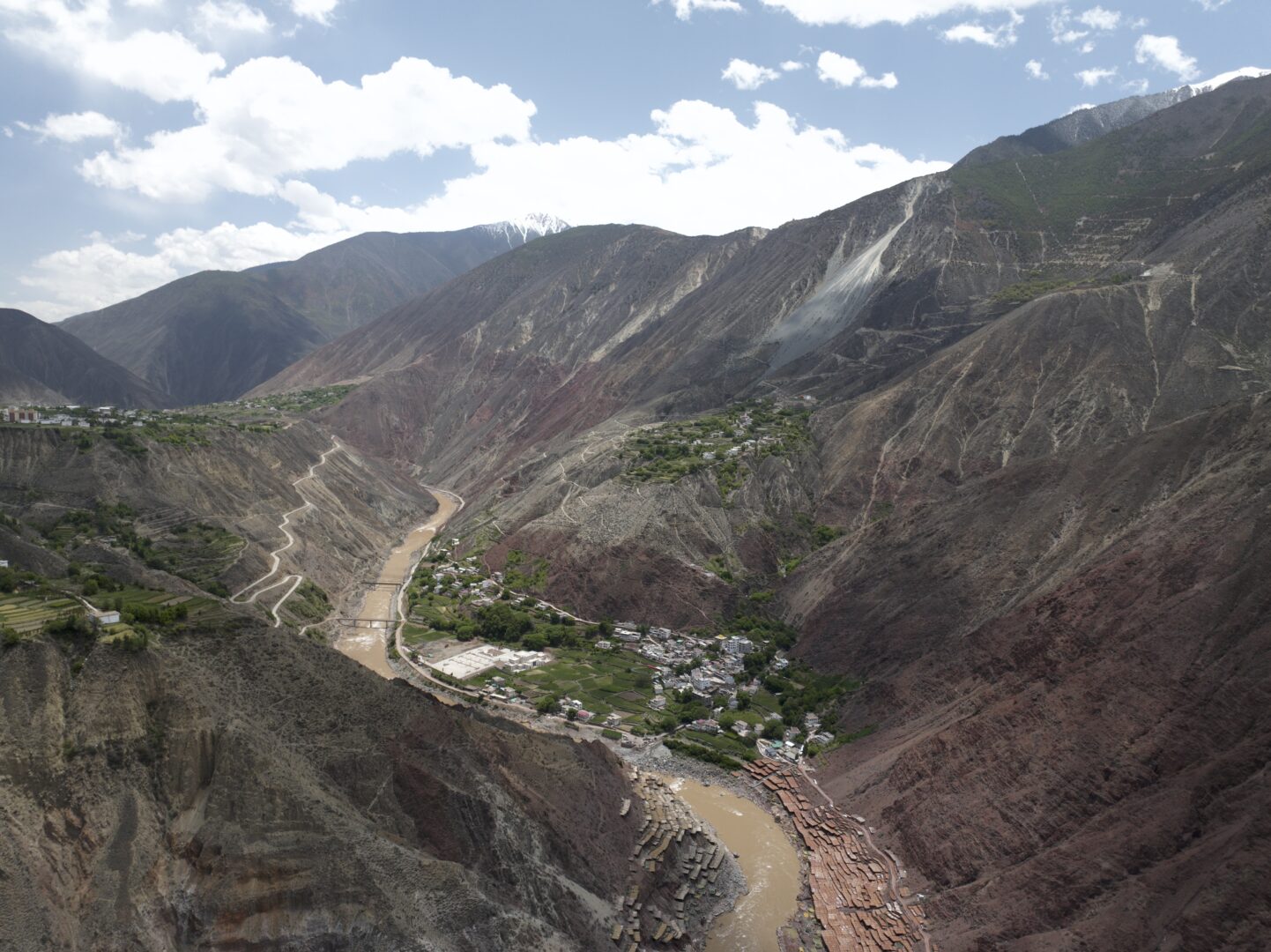
The most extraordinary thing in the prefecture is at its southern end, in Markam county where the Mekong runs toward Yunnan.
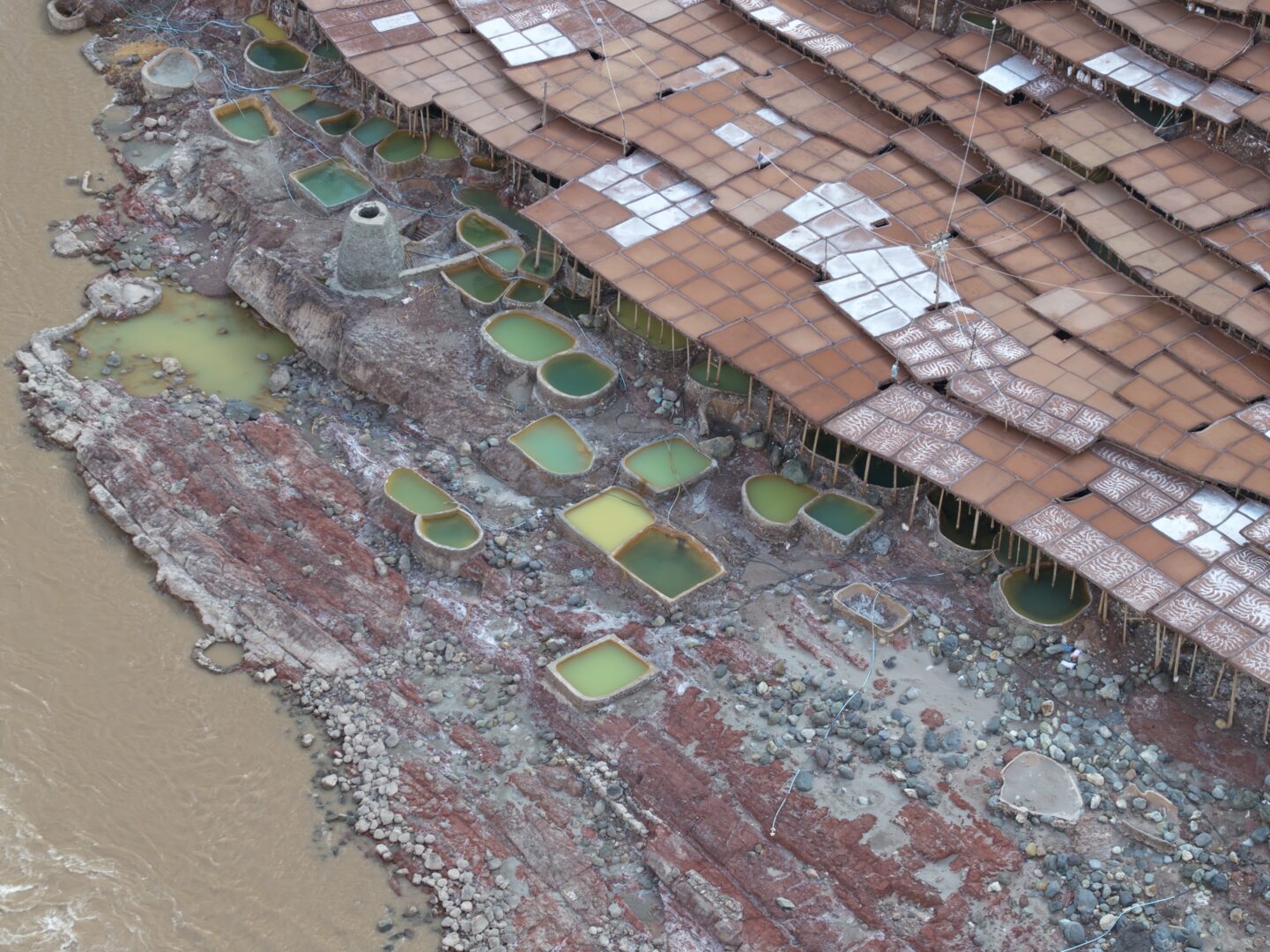
At Yanjing (盐井, Yerkalo), salt springs rise on both banks of the river. For over a thousand years people have carried the brine up by hand and poured it into terraced evaporation pans — thousands of them, built of timber and packed earth, stacked on the gorge sides above the water. The method has not changed. The salt is still harvested and still sold.
Which bank you’re on determines what colour your salt is, because of the soil: one side produces white, the other pink.
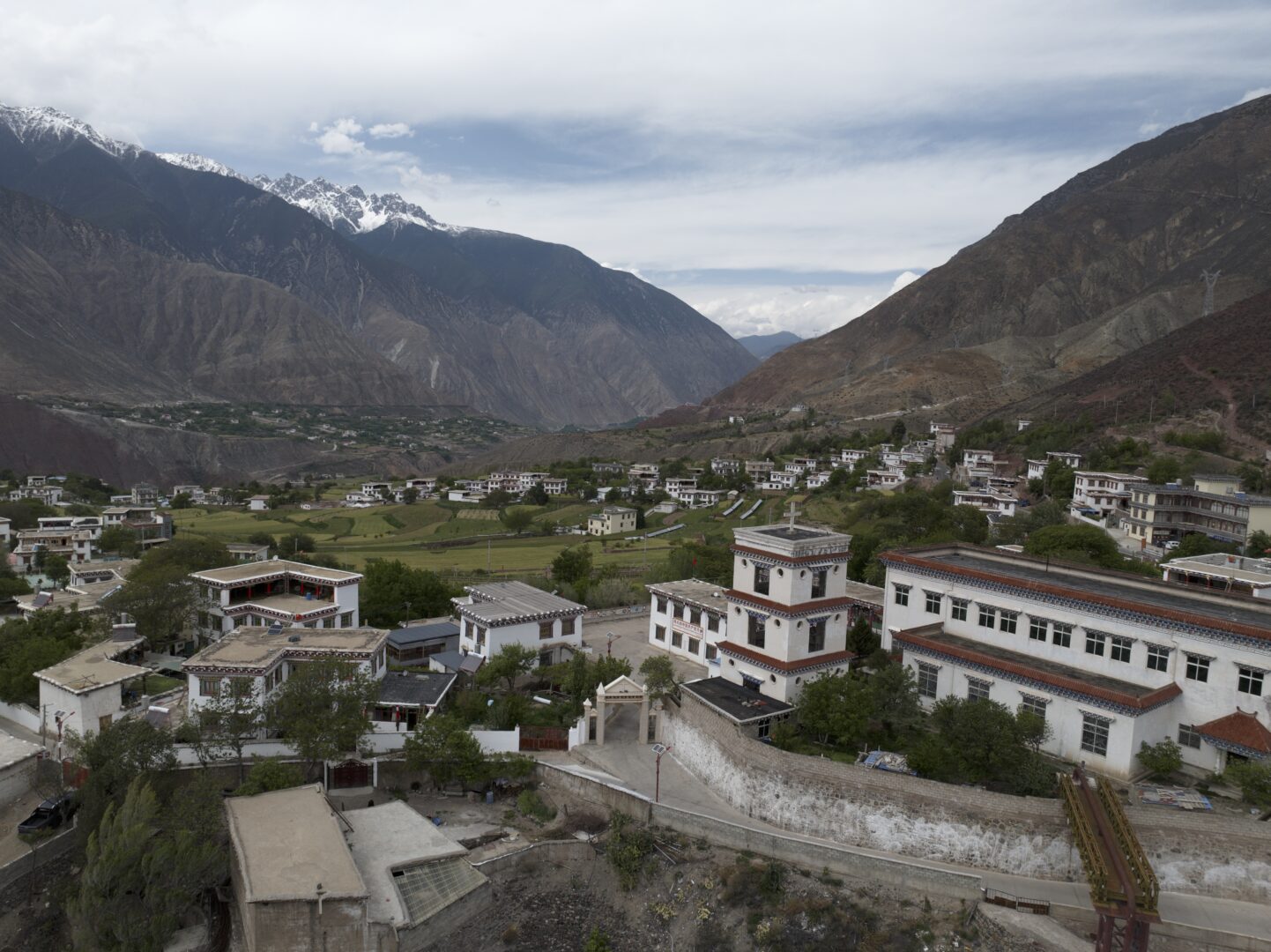
Yanjing’s church — the only Catholic parish in Tibet
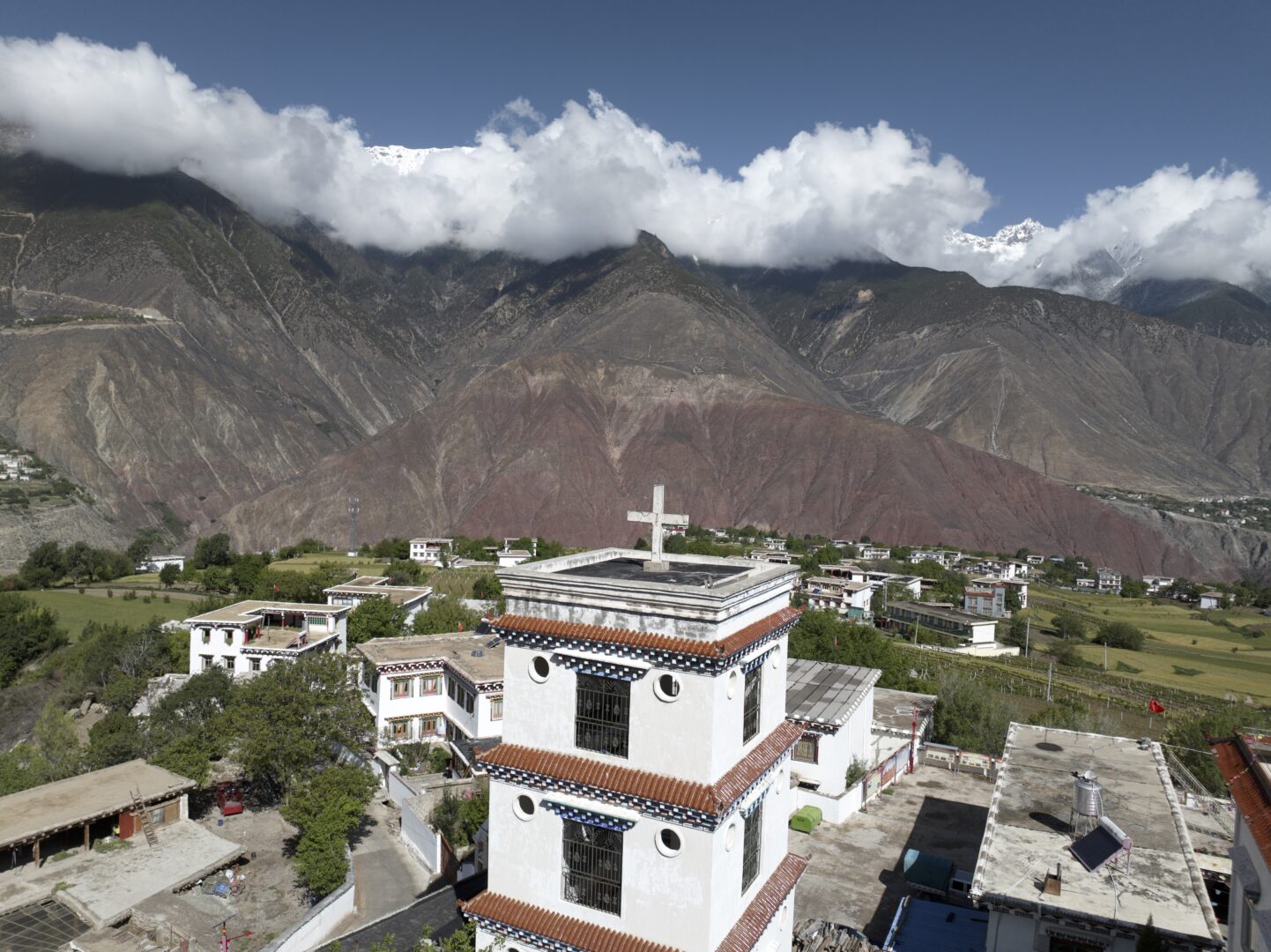
In the same village is a Catholic church, established by French missionaries in the 19th century and the only functioning Catholic parish in Tibet. The congregation is Tibetan, mass is said in Tibetan, and the neighbouring villages are Buddhist. Downstream in Yunnan the same mission built Cizhong, which has a church and a vineyard.
Wildlife
Chamdo’s high country is genuinely good habitat — Tibetan wolf, blue sheep, and snow leopard in the upper valleys, with vultures and lammergeier reliably overhead. Sightings of the cats are the preserve of camera traps and extreme luck, but the ecosystem that supports them is intact in a way most of China’s isn’t.
Practical notes
Getting there: Chamdo has an airport at Bamda — one of the highest in the world, at around 4,300 m, which is a rough introduction to the plateau. The overland route is the Sichuan–Tibet highway from Chengdu, several days and many passes.
Permits: Tibet Travel Permit plus additional permits for a route through Chamdo, arranged by a licensed agency. See restricted areas.
Altitude: the town is around 3,200 m and the passes go well over 4,500 m. Arriving by air at Bamda means starting high — take it slowly.
When: May to October. Winter closes passes and the Sichuan–Tibet road is prone to landslides in the summer rains.
Onward: Ranwu and the Laigu glacier are along the same highway west, and the road continues to Lhasa.
- #tibet
- #chamdo
- #kham
- #mekong
- #salt fields